How Cloud Hosting Supports Construction Project Management Platforms at Scale
August 26, 2026
The Complete Guide to Cloud Infrastructure for HR Technology Platforms
August 27, 2026
Why Agricultural Technology Companies Need Cloud Infrastructure for Precision Farming Data
In the rapidly evolving landscape of agriculture, precision farming has emerged as a transformative approach that leverages technology to optimize agricultural production. Agricultural technology companies are at the forefront of this revolution, harnessing vast amounts of data to enhance crop yields, reduce waste, and improve sustainability. However, to effectively manage and analyze this data, these companies need robust cloud infrastructure. In this article, we will explore the critical reasons why agricultural technology companies must adopt cloud solutions for precision farming data, the benefits of hybrid cloud models, and how MarQi Cloud can support these initiatives.
Understanding Precision Farming
Precision farming, also known as precision agriculture, involves the use of advanced technologies to monitor and manage field variability in crops. This includes using GPS, IoT sensors, and data analytics to collect and analyze data about soil conditions, weather patterns, and crop health. Precision farming can lead to significant increases in productivity and resource efficiency.
The Role of Cloud Infrastructure in Agriculture
Cloud infrastructure plays a pivotal role in enabling agricultural technology companies to store, process, and analyze the massive volumes of data generated by precision farming practices. Traditional on-premises data storage solutions often fall short due to limitations in scalability, accessibility, and cost. In contrast, cloud solutions offer flexibility, allowing businesses to scale their infrastructure according to their needs.
Advantages of Cloud Infrastructure
- Scalability: Agricultural technology companies can easily scale their resources up or down based on seasonal demands. This is particularly important during peak agricultural seasons when data influx is at its highest.
- Cost Efficiency: Cloud infrastructure typically operates on a pay-as-you-go model, enabling companies to reduce unnecessary expenses associated with maintaining physical servers.
- Accessibility: With cloud solutions, data can be accessed from anywhere, facilitating collaboration among teams across different locations.
Benefits of Cloud Solutions for Agricultural Technology
The integration of cloud infrastructure into precision farming practices offers numerous benefits, which can be broken down into several categories:
1. Enhanced Data Analytics
Cloud platforms facilitate advanced data analytics, allowing agricultural technology companies to derive actionable insights from their data. By utilizing machine learning algorithms and big data analytics, companies can predict crop yields, identify pest infestations, and optimize resource allocation.
2. Improved Collaboration and Communication
Cloud solutions enable real-time sharing of data and insights among stakeholders, including farmers, agronomists, and supply chain partners. This improved collaboration leads to more informed decision-making processes and enhances operational efficiency.
3. Disaster Recovery and Business Continuity
In the event of data loss or system failure, cloud solutions provide robust disaster recovery options. Agricultural technology companies can implement automated backups and recovery protocols, ensuring business continuity and minimizing downtime.
4. Environmental Sustainability
By optimizing resource usage and reducing waste, cloud infrastructure supports sustainability initiatives. Companies can use data to implement precision irrigation, reducing water consumption and minimizing environmental impact.
Hybrid Cloud vs. Traditional Hosting
When considering cloud solutions, agricultural technology companies often face a choice between hybrid cloud models and traditional hosting. Understanding the differences is crucial for making an informed decision.
| Feature | Hybrid Cloud | Traditional Hosting |
|---|---|---|
| Scalability | High, can easily scale resources | Limited, requires physical upgrades |
| Cost | Pay-as-you-go model | Fixed costs, may incur high maintenance fees |
| Flexibility | Adaptable to changing needs | Rigid, difficult to modify |
| Data Security | Customizable security protocols | Standard security measures |
| Accessibility | Remote access available | Access limited to physical location |
Data Security and Compliance Considerations
Data security is paramount in agriculture, especially with the increasing threat of cyberattacks. Agricultural technology companies must implement robust security measures to protect sensitive data. Cloud solutions, particularly those offered by providers like MarQi Cloud, supply security controls that support, but do not replace, your own compliance with industry regulations and standards.
Key Security Features
- Encryption: Data at rest and in transit should be encrypted to prevent unauthorized access.
- Access Controls: Implementing role-based access controls ensures that only authorized personnel can access sensitive information.
- Regular Audits: Conducting regular security audits helps identify vulnerabilities and ensure compliance with industry standards.
MarQi Cloud’s Solutions for Agricultural Technology
MarQi Cloud offers tailored cloud infrastructure solutions designed to meet the unique needs of agricultural technology companies. Our enterprise-grade infrastructure ensures that your precision farming data is secure, scalable, and accessible.
Key Services Offered
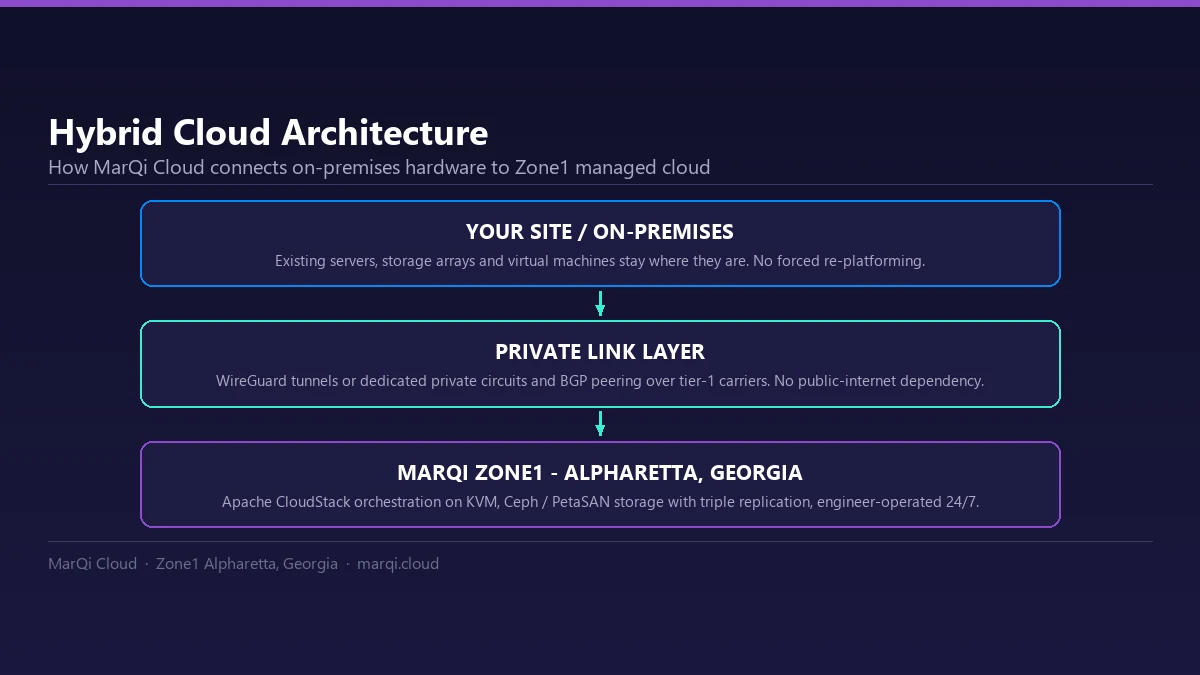
- Hybrid Cloud Infrastructure: Combine on-premises resources with cloud capabilities for optimal flexibility.
- Private Cloud Solutions: Maintain complete control over your data with dedicated resources.
- Disaster Recovery Solutions: Ensure business continuity with automated backups and recovery protocols.
For more information on how MarQi Cloud can support your agricultural technology initiatives, visit our solutions page.
Actionable Tips for Implementing Cloud Solutions
Implementing cloud solutions in agricultural technology requires careful planning and execution. Here are some actionable tips to ensure a smooth transition:
- Assess Your Needs: Evaluate your current infrastructure and determine what specific needs must be addressed.
- Choose the Right Provider: Select a cloud provider that specializes in agricultural technology and understands your unique challenges.
- Train Your Team: Invest in training for your team to ensure they are proficient in using the new cloud tools and technologies.
- Monitor Performance: Continuously monitor the performance of your cloud infrastructure to identify areas for improvement.
- Stay Compliant: Ensure that your cloud solutions meet industry regulations and compliance requirements.
Frequently Asked Questions
1. What is precision farming?
Precision farming is an agricultural practice that uses technology to monitor and manage field variability in crops, resulting in enhanced productivity and sustainability.
2. How does cloud infrastructure benefit agriculture?
Cloud infrastructure provides scalability, cost efficiency, data analytics capabilities, and improved collaboration among stakeholders in the agricultural sector.
3. What are hybrid cloud solutions?
Hybrid cloud solutions combine on-premises resources with cloud capabilities, offering flexibility and scalability for businesses.
4. How can agricultural companies ensure data security?
Implementing encryption, access controls, and conducting regular audits are essential measures for ensuring data security in agriculture.
5. What role does data analytics play in precision farming?
Data analytics allows agricultural technology companies to derive insights from data, predict crop yields, and optimize resource allocation.
6. Why is disaster recovery important for agricultural companies?
Disaster recovery ensures business continuity by allowing companies to recover data and systems quickly in the event of a failure.
7. How can cloud solutions support sustainability in agriculture?
Cloud solutions enable precision irrigation and optimized resource usage, contributing to environmental sustainability in agriculture.
8. What should companies look for when choosing a cloud provider?
Companies should seek a cloud provider that specializes in their industry, offers robust security features, and provides scalable solutions tailored to their needs.
Conclusion
In conclusion, agricultural technology companies must embrace cloud infrastructure to fully realize the benefits of precision farming data. The scalability, flexibility, and enhanced data analytics capabilities offered by cloud solutions are essential for driving productivity and sustainability in agriculture. By partnering with a trusted cloud provider like MarQi Cloud, companies can ensure their precision farming initiatives are equipped with the infrastructure necessary for success.