AI Inference at Scale: How to Host Models with Predictable Latency
February 25, 2026
The Hybrid Cloud Security Stack: VPN, Segmentation, IAM, Monitoring
February 26, 2026
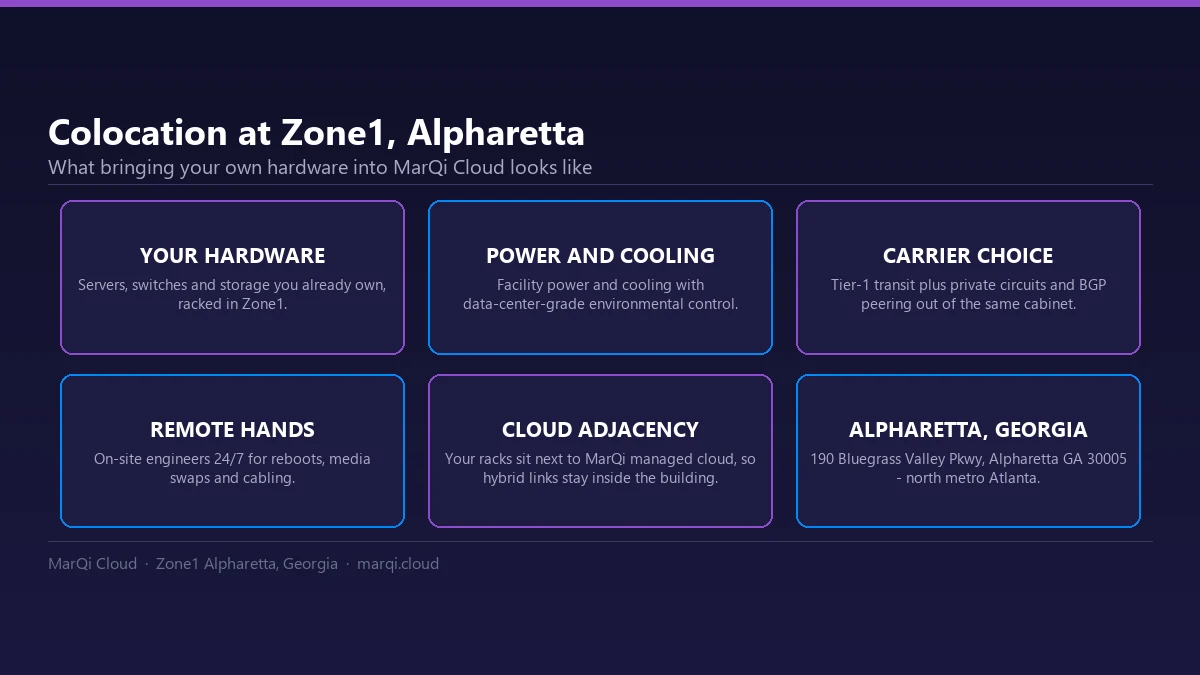
Colocation for MSPs in Georgia: How to Offer Private Cloud Solutions to Clients
In the rapidly evolving world of IT services, Managed Service Providers (MSPs) in Georgia are constantly seeking ways to enhance their offerings and provide more value to their clients. One of the most effective strategies to achieve this is through colocation services that enable MSPs to offer private cloud solutions. This article will delve into the intricacies of colocation, the benefits it presents for MSPs, and how they can leverage these services to provide tailored private cloud environments for their clients.
Understanding Colocation
Colocation, often referred to as “colo,” involves renting space in a data center to house your servers and networking equipment. This model allows businesses to benefit from the robust infrastructure, security, and connectivity of a professional data center while maintaining ownership and control of their hardware. For MSPs in Georgia, colocation offers a strategic advantage by enabling them to manage multiple client infrastructures from a centralized location.
The Advantages of Colocation for MSPs
1. Enhanced Security: Colocation facilities are equipped with advanced security features, including biometric access controls, surveillance cameras, and fire suppression systems. This level of security is often beyond what most businesses can provide in-house.
2. Scalability: As client needs grow, MSPs can easily scale their resources in a colocation facility. This flexibility allows for the addition of more servers or storage without the need for significant capital expenditures.
3. Cost Efficiency: Colocation can be more cost-effective than maintaining an on-premises data center. MSPs can save on energy costs, cooling systems, and physical space.
4. Reliable Connectivity: Colocation centers typically have multiple high-speed internet connections, ensuring optimal uptime and performance for your clients’ applications.
The Private Cloud Advantage
Offering private cloud solutions through colocation provides MSPs with an opportunity to deliver tailored services that meet specific client needs. A private cloud is a dedicated environment that is not shared with other organizations, offering enhanced security, customization, and control.
Benefits of Private Cloud for Clients
1. Improved Performance: Private clouds can be optimized for specific workloads, leading to better performance for applications compared to public cloud solutions.
2. Greater Control: Clients have full control over their private cloud environment, allowing for customized configurations that align with their business processes.
3. Enhanced Compliance: Many industries have strict regulatory compliance requirements. A private cloud can be configured to meet these standards, which is often challenging in a public cloud environment.
How to Get Started with Colocation and Private Cloud Services
For MSPs in Georgia looking to offer colocation and private cloud services, the following steps can help streamline the process:
1. Evaluate Your Needs
Before investing in colocation services, assess your current client base and identify potential demand for private cloud solutions. Understand the specific requirements of your clients and how a private cloud could address their needs.
2. Choose the Right Colocation Partner
Select a reliable colocation provider with a strong track record and the necessary certifications. Look for providers that offer enterprise-grade infrastructure, robust security measures, and scalable resources.
3. Design Your Private Cloud Architecture
Work with your colocation partner to design a private cloud architecture that meets your clients’ needs. Consider factors such as compute power, storage capacity, and network design.
4. Implement Security Measures
Security is paramount when offering private cloud solutions. Ensure that you have strong security protocols in place, including firewalls, intrusion detection systems, and regular security audits.
5. Develop Flexible Pricing Models
Offer flexible pricing structures that cater to different client budgets. Consider subscription-based models, pay-as-you-go options, or tiered pricing based on resource consumption.
Marketing Your Colocation and Private Cloud Services
To successfully market your colocation and private cloud offerings, consider the following strategies:
1. Highlight Security and Compliance
Emphasize the security features and compliance capabilities of your private cloud solutions in your marketing materials. This information is crucial for clients in regulated industries.
2. Showcase Case Studies
Share success stories of clients who have benefited from your colocation and private cloud services. Real-world examples can build trust and credibility with prospective clients.
3. Leverage Content Marketing
Create informative content that educates potential clients about the benefits of colocation and private cloud solutions. Blog posts, whitepapers, and webinars can position your MSP as an industry expert.
Conclusion
For MSPs in Georgia, colocation presents a valuable opportunity to enhance service offerings and meet the growing demand for private cloud solutions. By understanding the advantages of colocation, designing tailored private cloud environments, and effectively marketing these services, MSPs can position themselves as leaders in the competitive IT landscape.
FAQs
1. What is colocation?
Colocation is a service that allows businesses to rent space in a data center to house their servers and networking equipment while benefiting from the facility’s infrastructure and security.
2. How does colocation benefit MSPs?
Colocation allows MSPs to manage multiple client infrastructures from a centralized location, providing enhanced security, scalability, and cost efficiency.
3. What is a private cloud?
A private cloud is a dedicated computing environment that is not shared with other organizations, providing greater control, security, and customization for clients.
4. How can MSPs get started with colocation?
MSPs can start by evaluating their needs, choosing a reliable colocation partner, designing their private cloud architecture, implementing security measures, and developing flexible pricing models.
5. What factors should be considered when choosing a colocation provider?
Consider the provider’s track record, certifications, security measures, scalability options, and support services when selecting a colocation partner.
6. What are the costs associated with colocation?
Costs can vary based on factors such as space requirements, power consumption, bandwidth usage, and additional services. It’s essential to choose a provider with transparent pricing models.
7. Can colocation support disaster recovery solutions?
Yes, colocation facilities often provide options for business continuity and disaster recovery solutions, ensuring that client data is protected and recoverable in case of an emergency.
8. How can MSPs market their colocation and private cloud services?
MSPs can highlight security features, showcase case studies, and leverage content marketing to educate potential clients about the benefits of colocation and private cloud solutions.