Understanding the One VPC: Virtual + Physical Hybrid Design (KVM + Colocation Explained)
February 18, 2026
Private Circuits & Peering: How to Connect Your Data Center to Your Cloud (Without the Internet)
February 19, 2026
Colocation in Alpharetta/Atlanta: Your 30-Day Checklist for Moving Racks
Introduction
Moving your IT infrastructure to a colocation facility can be a strategic decision for your business. For companies in Alpharetta and Atlanta, the availability of enterprise-grade cloud infrastructure, hybrid deployment models, and secure hosting environments makes colocation an attractive option. However, the process can be daunting, especially when you have to move your racks within a tight timeframe. This article provides a comprehensive 30-day checklist to ensure a smooth transition to a colocation facility.
Understanding Colocation
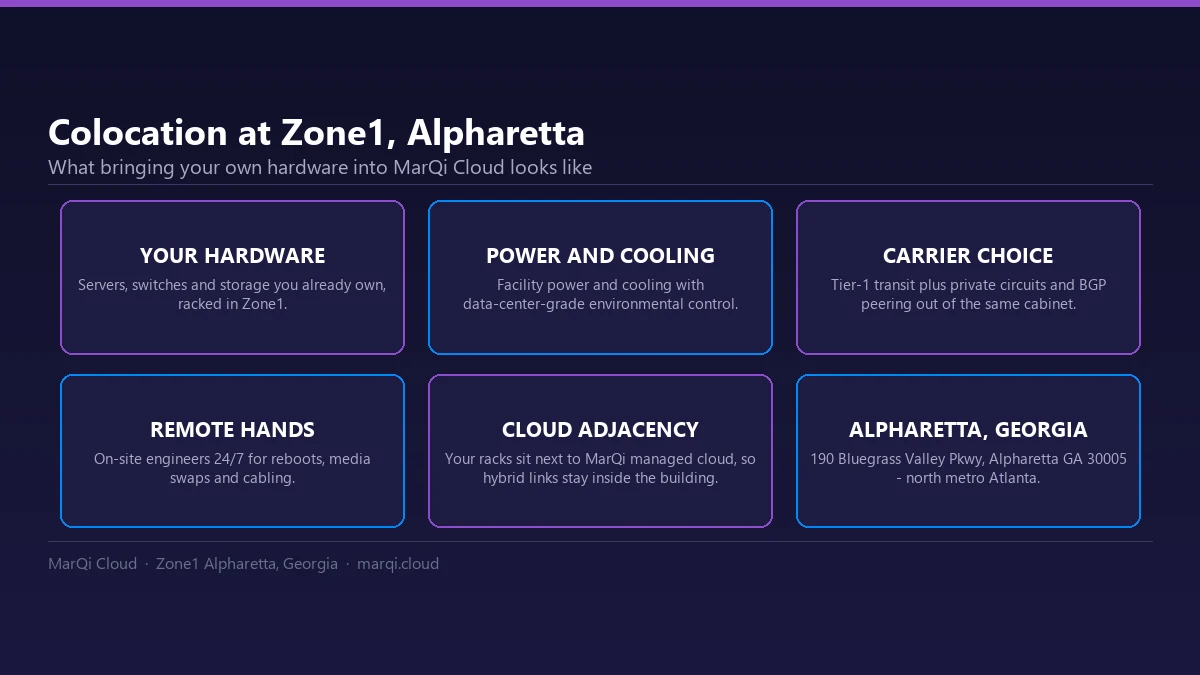
Before diving into the checklist, it’s essential to understand what colocation is. In simple terms, colocation involves renting space in a data center where you can house your servers and other IT equipment. This allows you to leverage the data center’s infrastructure, such as cooling, power, and security, while maintaining control over your hardware.
Benefits of Colocation
Colocation offers several advantages that can boost your business’s performance:
- Enterprise-grade cloud infrastructure
- Enhanced security and compliance
- Scalable compute and storage resources
- Improved network reliability
- Access to business continuity and disaster recovery solutions
30-Day Checklist for Moving Your Racks
Week 1: Planning and Assessment
1. Define Your Goals
Start by clarifying why you are moving to a colocation facility. Are you looking for better performance, scalability, or security? Understanding your goals will guide your decisions throughout the process.
2. Inventory Your Equipment
Make a detailed inventory of all your IT equipment that will be moved. This includes servers, switches, routers, and any other hardware. Ensure you note down the specifications, configurations, and any specific requirements.
3. Assess Your Current Infrastructure
Evaluate your current infrastructure to identify any potential issues that could arise during the move. Check for any outdated equipment that may need to be replaced before relocation.
4. Choose a Colocation Provider
Research colocation providers in the Alpharetta/Atlanta area. Look for features like US-based infrastructure, flexible pricing models, and support services that align with your business needs.
Week 2: Logistics and Preparation
5. Determine Your Space Requirements
Work with your chosen colocation provider to determine how much space you will need for your equipment. Consider future growth and scalability when deciding.
6. Plan for Cooling and Power
Discuss power and cooling requirements with your colocation provider. Ensure that the facility can accommodate your needs, especially for performance-driven infrastructure.
7. Create a Migration Timeline
Develop a detailed timeline for the move, including key milestones. Set deadlines for each task to ensure that you stay on track.
8. Prepare Your Team
Inform your IT team about the move and assign specific roles and responsibilities to ensure everyone is on the same page.
Week 3: Execution and Testing
9. Begin Equipment Packing
Start packing your equipment carefully. Use appropriate packing materials to protect your hardware during transport.
10. Schedule the Move
Coordinate with the colocation provider to schedule the move. Ensure that the transport team is aware of the layout and requirements of the new facility.
11. Transport Your Equipment
Transport your equipment to the colocation facility. Monitor the transport process to ensure that everything arrives safely.
12. Install and Configure Equipment
Once at the colocation facility, start installing and configuring your equipment according to your specifications. Work closely with the provider’s support team for any assistance needed.
Week 4: Testing and Finalization
13. Conduct Thorough Testing
After installation, conduct thorough testing of your systems to ensure everything is functioning correctly. Check network connectivity, power supplies, and cooling systems.
14. Implement Backup Solutions
Set up backup solutions to ensure data integrity and business continuity. Discuss disaster recovery options with your colocation provider.
15. Update Your Documentation
Update all documentation related to your IT infrastructure, including network diagrams, equipment lists, and configurations.
16. Train Your Team
Provide training for your team on the new systems and processes in place at the colocation facility.
Conclusion
Moving your racks to a colocation facility in Alpharetta/Atlanta can seem overwhelming, but with proper planning and execution, it can be a smooth process. Following this 30-day checklist will help ensure that your move is efficient and successful, allowing you to reap the benefits of enterprise-grade infrastructure and secure hosting environments.
FAQs
1. What is colocation?
Colocation is a service where businesses can rent space in a data center to house their servers and IT equipment while leveraging the facilities’ infrastructure.
2. What are the benefits of colocation?
Benefits include enhanced security, scalable resources, improved reliability, and access to advanced infrastructure.
3. How do I choose a colocation provider?
Consider factors like location, services offered, pricing, and customer support when choosing a colocation provider.
4. What equipment can I colocate?
You can colocate servers, networking devices, storage systems, and other IT equipment.
5. How long does the moving process take?
The moving process can typically take around 30 days if planned and executed properly.
6. What should I consider before moving?
Assess your current infrastructure, define your goals, and ensure you have a comprehensive inventory of your equipment.
7. How can I ensure data integrity during the move?
Implement backup solutions and thoroughly test your systems after installation to ensure data integrity.
8. What happens if my equipment is damaged during transport?
Ensure you have insurance coverage for your equipment and check the transport company’s policies regarding damages.
9. How do I set up disaster recovery in a colocation facility?
Discuss disaster recovery solutions with your colocation provider and implement regular backup procedures.
10. Can I scale my resources in a colocation facility?
Yes, colocation facilities typically offer scalable solutions allowing businesses to adjust their resources as needed.