Why Enterprises Are Choosing Open Source Cloud for Sovereign Infrastructure Projects
August 4, 2026
The Complete Guide to Cloud Cost Optimization Strategies for Enterprise IT Budgets
August 4, 2026
How to Build a Cost-Effective Cloud Infrastructure Without Sacrificing Performance
As businesses increasingly migrate to the cloud, the challenge of constructing a cost-effective cloud infrastructure without compromising performance becomes paramount. The cloud offers scalability, flexibility, and efficiency, but these benefits often come at a cost. In this comprehensive guide, we will explore proven strategies for building a cloud infrastructure that balances performance with budget constraints. By leveraging enterprise-grade solutions from providers like MarQi Cloud, organizations can optimize their cloud strategy to meet their unique requirements while ensuring high performance and reliability.
Understanding Cloud Infrastructure
Cloud infrastructure comprises the hardware and software components that enable cloud computing services. This includes servers, storage, networking, and virtualization technologies. Understanding these components is crucial for organizations looking to build a cost-effective cloud infrastructure. The cloud infrastructure can be categorized into three primary models: public, private, and hybrid cloud. Each model has its unique advantages and challenges.
Public Cloud
A public cloud is owned by a third-party cloud service provider and delivers computing resources over the internet. This model is cost-effective, as organizations only pay for what they use. However, it may not meet the compliance and security needs of all businesses.
Private Cloud
A private cloud is dedicated to a single organization, offering enhanced security and customization. Although it typically incurs higher costs, it may be necessary for industries with strict regulatory requirements, such as healthcare or finance.
Hybrid Cloud
The hybrid cloud model combines public and private clouds, allowing organizations to benefit from both. This flexibility can lead to cost savings while maintaining performance. For example, businesses can run sensitive applications on a private cloud while leveraging public cloud resources for less critical workloads. MarQi Cloud specializes in hybrid cloud solutions that cater to diverse business needs.
Key Components of Cost-Effective Cloud Infrastructure
To create a cost-effective cloud infrastructure, organizations must focus on several key components:
- Scalable Compute Resources: Organizations should choose cloud providers that offer scalable compute resources to adapt to changing demands without incurring unnecessary costs.
- Efficient Storage Solutions: Selecting the right storage architecture, such as object storage or block storage, can significantly impact costs. A detailed comparison of these storage types can be found in our article on storage solutions.
- Networking Infrastructure: A robust networking infrastructure is essential for performance. Utilizing dedicated circuits and cloud peering can enhance connectivity while reducing latency and costs.
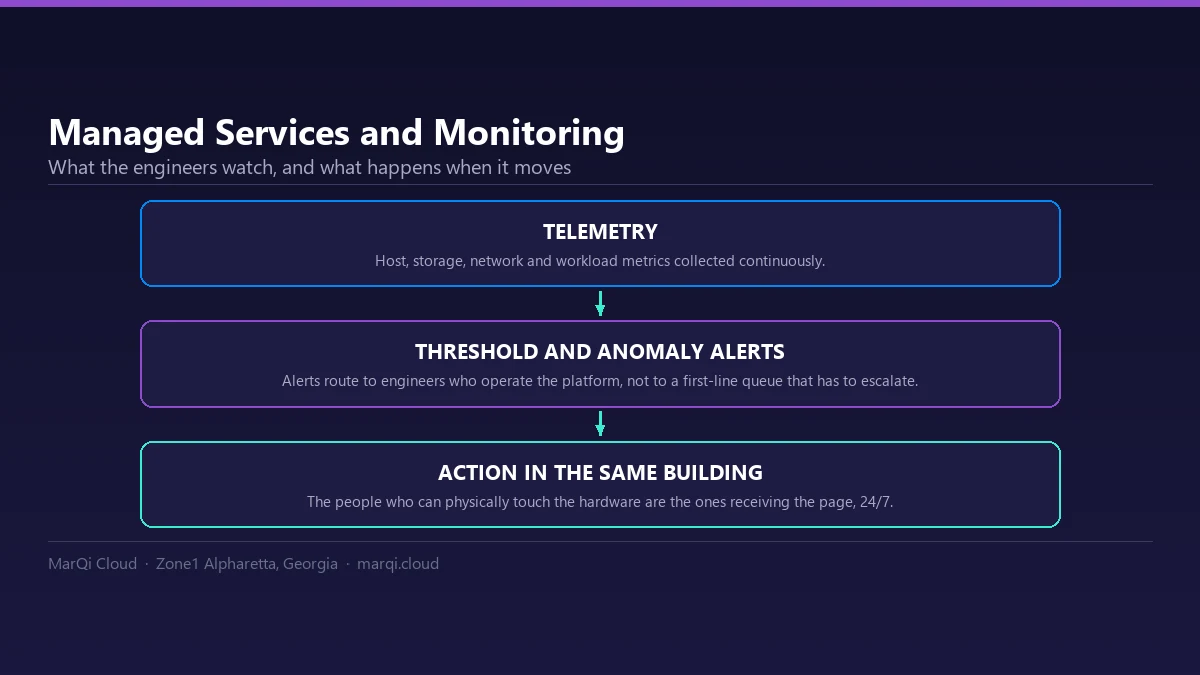
- Managed Services: Leveraging managed services can relieve in-house IT teams from routine maintenance, allowing them to focus on strategic initiatives.
Cost Management Strategies
Implementing effective cost management strategies is crucial for maintaining a budget-friendly cloud infrastructure. Here are several best practices:
1. Utilize Cost Monitoring Tools
Many cloud service providers offer cost monitoring and optimization tools. For example, MarQi Cloud provides transparent pricing models that help organizations understand their spending patterns and identify opportunities for cost savings. Regularly reviewing usage data can help identify underutilized resources that can be scaled down or terminated.
2. Implement Resource Tagging
Resource tagging allows organizations to categorize and track their cloud resources effectively. By tagging resources based on department, project, or environment, businesses can gain insights into spending and optimize resources accordingly.
3. Choose the Right Pricing Model
Many cloud providers offer various pricing models, including pay-as-you-go, reserved instances, and spot instances. By selecting the appropriate model based on workload types and usage patterns, organizations can maximize cost efficiency. For instance, reserved instances can provide significant savings for predictable workloads.
4. Leverage Automation
Automation can reduce operational costs by streamlining processes. Organizations can utilize automation tools to manage scaling, backups, and deployment, ensuring resources are only allocated when necessary.
Choosing the Right Cloud Model
Selecting the appropriate cloud model is a crucial step in building a cost-effective cloud infrastructure. Each model has unique advantages and drawbacks:
| Cloud Model | Advantages | Disadvantages |
|---|---|---|
| Public Cloud | Cost-effective, scalable, no maintenance | Less control, potential security concerns |
| Private Cloud | Enhanced security, full control | Higher costs, requires management |
| Hybrid Cloud | Flexibility, optimized costs | Complex management |
Organizations should assess their specific needs, compliance requirements, and budget constraints to determine the best cloud model. For example, a startup may benefit from a public cloud for cost efficiency, while a financial institution may require a private cloud for security and compliance.
Performance Optimization Techniques
Building a cost-effective cloud infrastructure does not mean sacrificing performance. Here are several techniques to optimize performance:
1. Use Content Delivery Networks (CDNs)
CDNs can reduce latency and improve the user experience by caching content closer to users. This is particularly beneficial for businesses with a global audience. Integrating a CDN with your cloud infrastructure can lead to faster load times and reduced bandwidth costs.
2. Optimize Application Performance
Regularly reviewing and optimizing application performance is crucial. This includes using efficient coding practices, optimizing database queries, and utilizing caching mechanisms. Performance monitoring tools can help identify bottlenecks and areas for improvement.
3. Implement Auto-Scaling
Auto-scaling allows organizations to automatically adjust their cloud resources based on traffic demands. This ensures that applications maintain performance during peak times while minimizing costs during low-traffic periods.
4. Utilize Load Balancers
Load balancers distribute incoming traffic across multiple servers, ensuring no single server is overwhelmed. This not only enhances performance but also increases redundancy and reliability.
Real-World Case Studies
Examining real-world case studies can provide valuable insights into building a cost-effective cloud infrastructure:
Case Study 1: E-Commerce Company
A mid-sized e-commerce company faced increased operational costs as its traffic surged during peak seasons. By migrating to a hybrid cloud model with MarQi Cloud, the company optimized its resource allocation, utilizing public cloud resources for peak traffic while maintaining sensitive customer data on a private cloud. This approach not only reduced costs but also improved performance during high-demand periods.
Case Study 2: Healthcare Provider
A healthcare provider required a secure, compliant cloud infrastructure to store sensitive patient data. By leveraging MarQi Cloud’s hybrid cloud solutions, the provider maintained compliance while enjoying the flexibility and cost benefits of a hybrid model. The provider also implemented automation and resource tagging to optimize costs effectively.
Conclusion
Building a cost-effective cloud infrastructure without sacrificing performance is achievable through careful planning and strategic implementation. By understanding the components of cloud infrastructure, implementing effective cost management strategies, and optimizing performance, organizations can create a cloud solution that meets their demands and budget. As businesses continue to navigate the complexities of cloud computing, leveraging expert solutions like MarQi Cloud can provide the necessary support to achieve their objectives.
FAQs
What is the most cost-effective cloud infrastructure model?
The most cost-effective model depends on your specific needs. Generally, public clouds are more cost-effective for variable workloads, while hybrid clouds can optimize costs for organizations with fluctuating demands.
How can I reduce cloud costs?
To reduce cloud costs, utilize cost monitoring tools, implement resource tagging, choose the right pricing model, and leverage automation.
What are the benefits of hybrid cloud solutions?
Hybrid cloud solutions offer flexibility, allowing organizations to optimize costs and maintain performance by utilizing both public and private cloud resources.
How can I ensure high performance in the cloud?
Ensure high performance by utilizing CDNs, optimizing application performance, implementing auto-scaling, and using load balancers.
Is managed cloud infrastructure worth it?
Yes, managed cloud infrastructure can relieve your IT team from routine maintenance, allowing them to focus on strategic initiatives, ultimately enhancing business productivity.
What is the role of automation in cloud cost management?
Automation helps streamline processes, ensuring resources are allocated efficiently and reducing operational costs.
How does resource tagging help with cloud costs?
Resource tagging allows organizations to categorize and track spending, providing insights that can lead to optimized resource allocation and reduced costs.
Can I migrate to the cloud without technical expertise?
Yes, many cloud providers, including MarQi Cloud, offer cloud migration services specifically designed to assist non-technical teams.