Expert Guide: Managing Identity and Access in Hybrid Cloud Environments
July 25, 2026
The Complete Guide to Hybrid Cloud Storage Tiering for Cost Optimization
July 26, 2026
How does edge computing enhance hybrid cloud capabilities?
Edge computing improves data processing speeds and reduces latency, enhancing the overall performance of hybrid cloud solutions.
Why Edge Computing Extends Hybrid Cloud Capabilities to Distributed Locations
As organizations strive to enhance their digital transformation strategies, edge computing has emerged as a pivotal technology that enhances hybrid cloud capabilities across distributed locations. This article explores how edge computing complements hybrid cloud solutions, particularly for enterprises with geographically dispersed operations. By leveraging the strengths of both technologies, organizations can optimize performance, improve data processing speeds, and ensure better scalability while maintaining security and compliance.
What is Edge Computing?
Edge computing refers to the practice of processing data closer to the source of data generation rather than relying solely on a centralized data center. By placing computing resources nearer to end-users, edge computing minimizes latency, reduces bandwidth use, and enhances the overall performance of applications and services. This decentralized approach is particularly beneficial for industries that depend on real-time data processing, such as manufacturing, healthcare, and financial services.
Understanding Hybrid Cloud Infrastructure
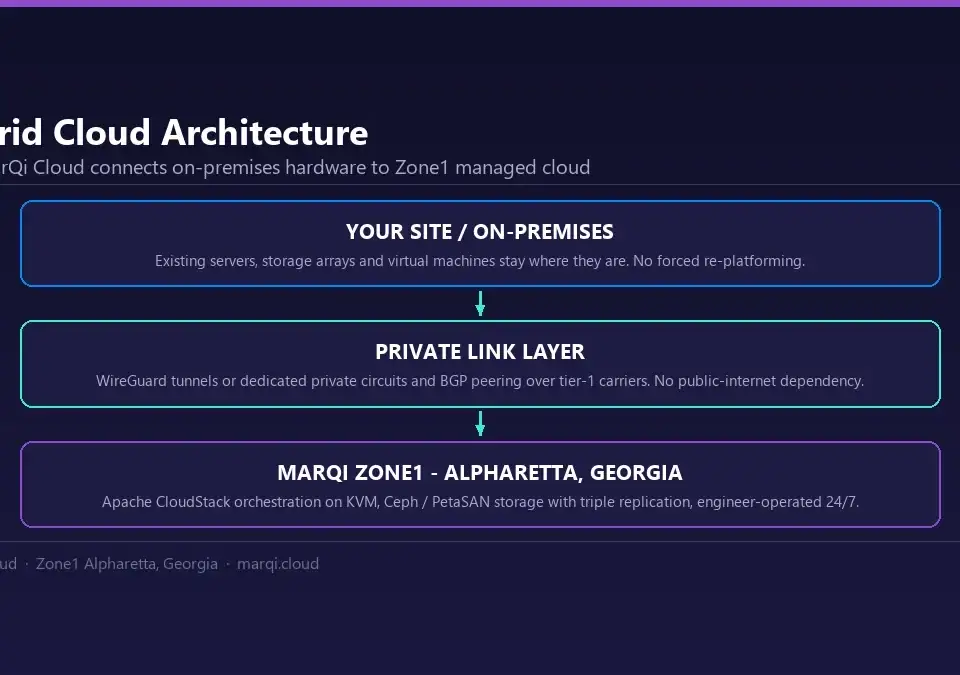
A hybrid cloud model combines on-premises infrastructure, or private clouds, with public cloud services, allowing data and applications to be shared between them. This configuration offers businesses the flexibility to scale their operations, optimize costs, and enhance performance. Enterprises can choose to run sensitive workloads on private clouds while leveraging the scalability of public clouds for less critical tasks.
Hybrid cloud has become the ordinary shape of enterprise infrastructure rather than the exception. This trend illustrates the growing reliance on hybrid infrastructures to meet diverse business needs.
Benefits of Edge Computing in Hybrid Cloud
Integrating edge computing into hybrid cloud environments yields several benefits:
- Reduced Latency: By processing data at the edge, organizations can significantly reduce the time it takes to access and analyze data. This is crucial for applications that require real-time processing, such as IoT devices and autonomous vehicles.
- Improved Bandwidth Utilization: Edge computing minimizes the amount of data that needs to be transported to the cloud, thus optimizing bandwidth usage. This is particularly beneficial for organizations with limited bandwidth or high data transfer costs.
- Enhanced Security: Edge computing can improve security by allowing sensitive data to be processed locally, reducing the risk of data breaches during transmission to centralized data centers.
- Scalability: Organizations can scale their edge computing resources as needed, allowing for greater flexibility in managing workloads across distributed locations.
- Business Continuity: Edge computing can enhance resilience by enabling data processing and storage at multiple locations, ensuring that services remain operational even if the central cloud experiences downtime.
Use Cases for Edge Computing in Hybrid Cloud Deployments
Several industries can benefit from the integration of edge computing with hybrid cloud solutions:
1. Healthcare
In the healthcare industry, edge computing can facilitate real-time patient monitoring and data analysis. For example, wearable devices can collect patient data and process it locally, sending only critical information to cloud-based systems. This approach ensures faster response times and improves patient outcomes.
2. Manufacturing
Manufacturers can leverage edge computing to optimize their operations by analyzing data from machinery and sensors in real time. This allows for predictive maintenance, reducing downtime and improving overall efficiency. Companies can integrate their edge computing solutions with hybrid cloud environments to store historical data and run advanced analytics.
3. Retail
Retailers can utilize edge computing for inventory management and customer analytics. By processing data at the store level, businesses can quickly respond to customer preferences and optimize inventory levels. Additionally, integrating edge computing with hybrid cloud solutions can facilitate seamless data sharing between stores and centralized systems.
4. Smart Cities
Smart cities can benefit from edge computing by enabling real-time data collection and analysis from various IoT devices. This information can be processed locally to make immediate decisions, such as adjusting traffic signals or managing public transportation systems. The hybrid cloud can serve as a centralized hub for long-term data storage and analytics.
Security and Compliance Considerations
While edge computing offers numerous advantages, organizations must also address security and compliance challenges:
1. Data Protection
Organizations should implement robust encryption methods to protect data both at rest and in transit. Edge devices, being closer to data sources, should be secured against unauthorized access and potential attacks.
2. Compliance with Regulations
Businesses must ensure that their edge computing solutions comply with industry regulations, such as HIPAA for healthcare or PCI DSS for payment processing. This may involve implementing specific security measures and maintaining data integrity.
3. Monitoring and Management
Continuous monitoring of edge devices is essential to identify and mitigate potential security threats. Organizations can utilize centralized management tools to oversee their edge computing infrastructure and ensure compliance with security policies.
Implementing Edge Computing in Your Hybrid Cloud Strategy
To successfully integrate edge computing into a hybrid cloud strategy, organizations should follow these steps:
1. Assess Business Needs
Identify the specific use cases that can benefit from edge computing and understand the data processing requirements for each application.
2. Choose the Right Infrastructure
Select the appropriate edge computing infrastructure that aligns with your hybrid cloud model. This may include on-premises edge devices, cloud services, or a combination of both.
3. Ensure Interoperability
Ensure that edge computing solutions can seamlessly integrate with existing hybrid cloud environments. This may involve leveraging APIs and standardized protocols for data exchange.
4. Implement Security Measures
Establish security protocols to protect data at the edge and ensure compliance with relevant regulations.
5. Monitor and Optimize
Continuously monitor the performance of edge computing solutions and optimize them based on changing business needs and technological advancements.
The Future of Edge Computing and Hybrid Cloud
The future of edge computing is promising, with advancements in technologies such as 5G, AI, and IoT driving its growth. As more devices become interconnected, the demand for real-time data processing at the edge will increase. Organizations that effectively integrate edge computing into their hybrid cloud strategies will be better positioned to leverage these advancements and maintain a competitive edge.
| Edge Computing vs. Cloud Computing | Edge Computing | Cloud Computing |
|---|---|---|
| Latency | Low | Higher |
| Data Processing | Local | Centralized |
| Bandwidth Use | Optimized | Higher |
| Security | Improved Local Security | Centralized Security Risks |
Frequently Asked Questions
1. What is edge computing?
Edge computing refers to the practice of processing data closer to the source of data generation, reducing latency and bandwidth use.
2. How does edge computing enhance hybrid cloud capabilities?
Edge computing improves data processing speeds and reduces latency, enhancing the overall performance of hybrid cloud solutions.
3. What industries benefit most from edge computing?
Industries such as healthcare, manufacturing, retail, and smart cities can significantly benefit from integrating edge computing into their operations.
4. What are the security concerns with edge computing?
Organizations must ensure robust security measures, such as encryption and monitoring, to protect data processed at the edge.
5. How can organizations implement edge computing?
Organizations can implement edge computing by assessing business needs, selecting the right infrastructure, ensuring interoperability, and establishing security protocols.
6. Is edge computing suitable for all businesses?
While edge computing offers numerous benefits, it may not be necessary for all businesses. Organizations should evaluate their specific use cases.
7. How does edge computing affect data compliance?
Businesses must ensure that their edge computing solutions comply with industry regulations, which may involve implementing specific security measures.
8. What is the future of edge computing?
The future of edge computing is bright, with advancements in technologies such as 5G, AI, and IoT driving its growth and demand for real-time data processing.