The Complete Guide to Hybrid Cloud Data Synchronization Strategies
July 28, 2026
Why Private Cloud Hosting Provides Control That Public Cloud Cannot Match
July 28, 2026
Evaluating Hybrid Cloud: Is It the Right Architecture for Your Organization?
The digital landscape is constantly evolving, and organizations are increasingly faced with the challenge of choosing the right IT architecture that meets their specific needs. One such architecture that has gained prominence is the hybrid cloud model, which combines the benefits of both public and private cloud environments. In this article, we will explore how to evaluate whether hybrid cloud is the right architecture for your organization. You will learn about the key considerations, benefits, potential challenges, and actionable steps to make an informed decision. With insights from MarQi Cloud, a leader in enterprise cloud provider solutions, we will guide you through this complex yet rewarding journey.
Understanding Hybrid Cloud
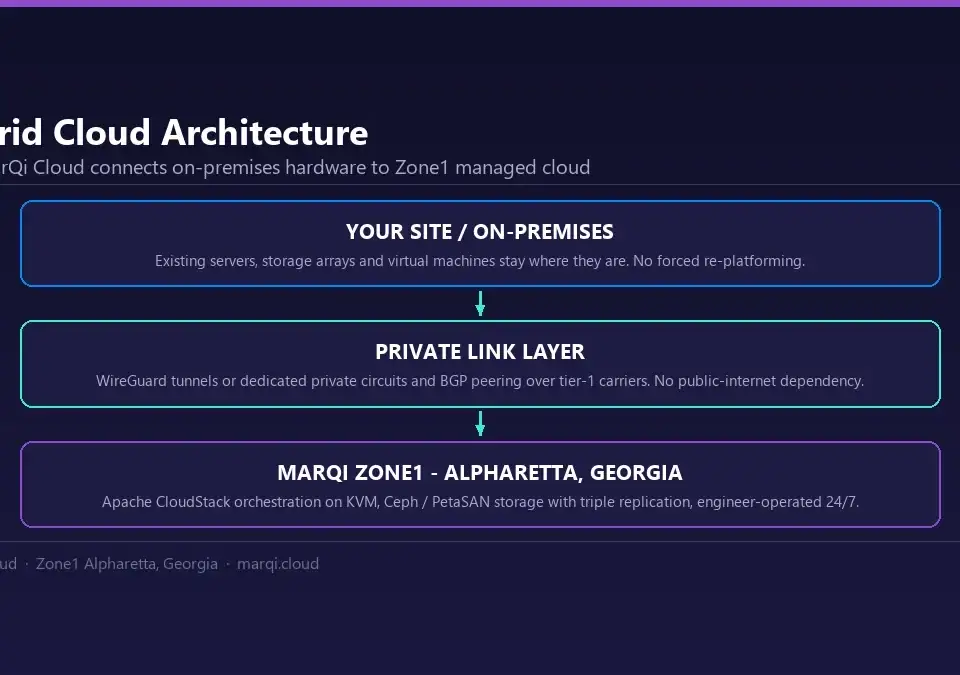
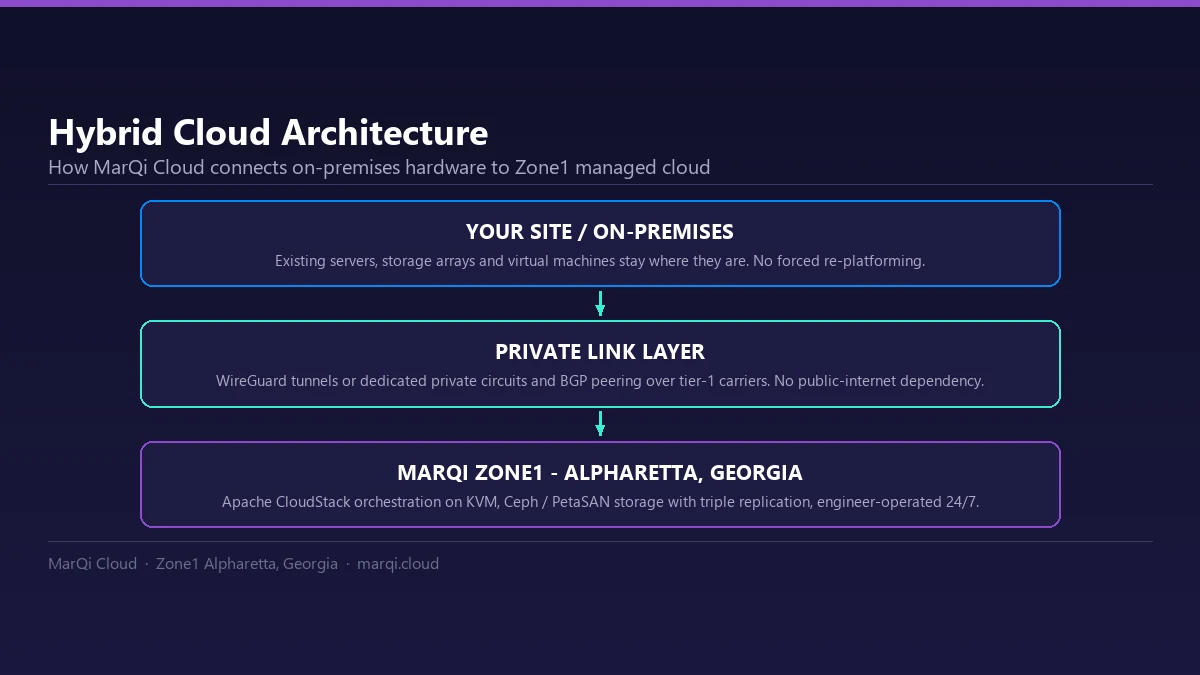
Hybrid cloud architecture combines private cloud infrastructure with public cloud services, allowing organizations to benefit from both environments. This architecture enables businesses to maintain sensitive data in a secure private cloud while leveraging the scalability and cost-effectiveness of public cloud resources for less sensitive workloads. A growing share of organizations plan to increase their hybrid cloud usage, highlighting the growing trend towards this architecture.
Benefits of Hybrid Cloud
Understanding the benefits of a hybrid cloud architecture is essential for evaluating its suitability for your organization. Here are some of the key advantages:
- Scalability: Hybrid cloud solutions allow organizations to scale resources up or down based on demand, ensuring they can handle varying workloads without overprovisioning.
- Cost-Effectiveness: By utilizing public cloud resources for non-sensitive workloads, organizations can reduce costs associated with maintaining a fully private cloud environment.
- Flexibility: Hybrid cloud architecture provides the flexibility to choose where to run workloads based on compliance, performance, and cost considerations.
- Improved Disaster Recovery: With the right hybrid cloud strategy, organizations can enhance their disaster recovery capabilities, leveraging public cloud resources for backup and recovery.
- Increased Security: Sensitive data can be kept in a secure private cloud while less critical applications can run on the public cloud, providing a balanced security posture.
Challenges of Hybrid Cloud
While the benefits of hybrid cloud are compelling, it is equally important to understand the challenges that may arise:
- Complexity: Managing a hybrid cloud environment can be complex, requiring skilled personnel and robust management tools.
- Compliance and Security Risks: Organizations must ensure that their hybrid cloud solutions comply with industry regulations and standards, which can be challenging.
- Integration Issues: Integrating on-premises infrastructure with cloud services can present technical challenges, particularly if legacy systems are involved.
Evaluating Your Organization’s Needs
Before deciding on a hybrid cloud architecture, organizations should evaluate their unique needs. Here are some questions to consider:
- What are your primary business goals? Identify how a hybrid cloud solution can help achieve these goals.
- What are your data security requirements? Assess the sensitivity of your data and determine where it should be stored.
- What is your budget? Analyze the cost implications of moving to a hybrid cloud model versus maintaining your current infrastructure.
- What compliance regulations do you need to meet? Ensure that your hybrid cloud strategy aligns with any industry-specific regulations.
Key Considerations for Hybrid Cloud
When evaluating whether hybrid cloud is the right architecture for your organization, consider the following:
- Workload Compatibility: Determine which workloads are suitable for the hybrid cloud model. Workloads requiring high security may be better suited for a private cloud, while less sensitive tasks can benefit from public cloud scalability.
- Vendor Selection: Choose a reputable hybrid cloud provider that offers transparent pricing, reliable support, and a robust infrastructure. At MarQi Cloud, we provide enterprise-grade cloud infrastructure with flexible pricing models to meet diverse business needs.
- Management Tools: Invest in management tools that simplify the orchestration of workloads across environments. Tools that offer a single-pane-of-glass view can reduce complexity.
- Training and Skills: Ensure your IT team has the necessary skills to manage a hybrid cloud environment effectively. Consider training programs or hiring experts if needed.
Actionable Steps to Transition
Transitioning to a hybrid cloud architecture requires careful planning. Here are actionable steps to guide your organization:
- Conduct a Cloud Readiness Assessment: Evaluate your current infrastructure and determine what can be migrated to the cloud.
- Define Your Hybrid Cloud Strategy: Establish a clear strategy outlining which workloads will be moved to the hybrid cloud and the rationale behind those decisions.
- Choose the Right Provider: Research and select a hybrid cloud provider that aligns with your organizational goals. MarQi Cloud offers tailored solutions for businesses looking to implement hybrid cloud architectures.
- Implement Security Measures: Ensure robust security measures are in place, including encryption and access controls, to protect sensitive data.
- Monitor and Optimize: Continuously monitor your hybrid cloud environment and optimize performance based on usage patterns and costs.
Case Studies: Successful Hybrid Cloud Implementations
To illustrate the effectiveness of hybrid cloud architectures, here are a few case studies:
Case Study 1: A Financial Services Firm
A leading financial services firm transitioned to a hybrid cloud model to enhance its data processing capabilities while ensuring compliance with stringent regulations. By utilizing private cloud resources for sensitive data and public cloud for analytics, the firm achieved a 30% reduction in operational costs and improved data processing speeds.
Case Study 2: A Healthcare Provider
A healthcare provider adopted a hybrid cloud solution to manage patient data securely while leveraging public cloud resources for non-sensitive applications. This approach allowed for improved patient care through better data access while maintaining compliance with HIPAA regulations.
Frequently Asked Questions
1. What is hybrid cloud architecture?
Hybrid cloud architecture combines public and private cloud resources, allowing organizations to leverage the benefits of both environments.
2. What are the main benefits of hybrid cloud?
The main benefits include scalability, cost-effectiveness, flexibility, improved disaster recovery, and increased security.
3. What challenges does hybrid cloud present?
Challenges include complexity, compliance and security risks, and integration issues with existing infrastructure.
4. How do I know if hybrid cloud is right for my organization?
Evaluate your organization’s goals, data security requirements, budget, and compliance regulations to determine suitability.
5. What should I consider when choosing a hybrid cloud provider?
Consider reputation, pricing transparency, support services, and the provider’s infrastructure capabilities.
6. How can I successfully transition to hybrid cloud?
Conduct a cloud readiness assessment, define your strategy, choose the right provider, implement security measures, and continuously monitor performance.
7. Can hybrid cloud help with disaster recovery?
Yes, hybrid cloud solutions can enhance disaster recovery capabilities by utilizing public cloud resources for backup and recovery.
8. What industries benefit from hybrid cloud?
Industries such as finance, healthcare, and e-commerce benefit significantly from hybrid cloud due to their unique data security and compliance needs.