Understanding Private DNS and Service Discovery in Hybrid Cloud Environments
March 8, 2026
Hosting LLMs Privately: Security and Cost Benefits for US Companies
March 8, 2026
GPU Cloud for AI Startups in the USA: Training vs Inference
The landscape of artificial intelligence (AI) is evolving at an unprecedented pace, with startups at the forefront of this technological revolution. As these companies strive to create innovative solutions, the demand for robust computational resources has surged. GPU cloud services have emerged as a critical component in the AI ecosystem, particularly for startups looking to harness the power of machine learning (ML) and deep learning (DL). This article will delve into the intricacies of GPU cloud computing, focusing on the differences between training and inference, and how these processes impact AI startups in the USA.
Understanding GPU Cloud Computing
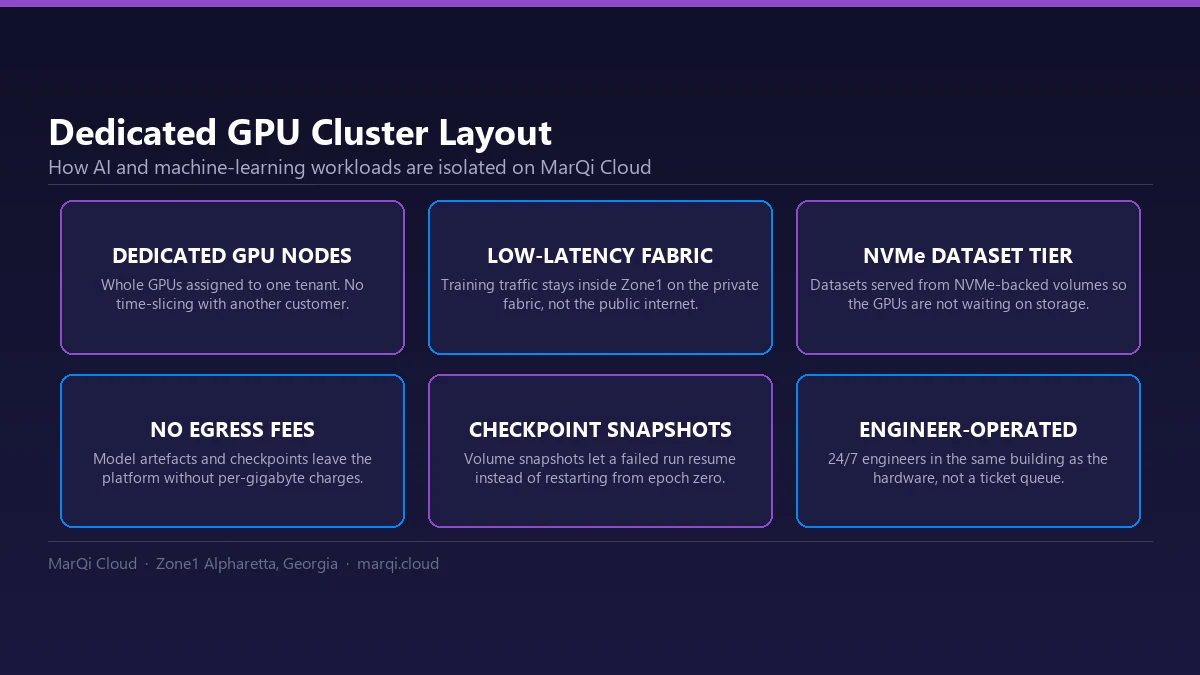
GPU cloud computing refers to the provision of scalable, on-demand compute resources powered by Graphics Processing Units (GPUs) over the internet. Unlike traditional CPU-based systems, GPUs are designed to handle parallel processing tasks efficiently, making them ideal for the heavy computational workloads associated with AI applications.
Benefits of GPU Cloud for Startups
- Cost-Effectiveness: Startups often face budget constraints. GPU cloud services allow them to access high-performance computing resources without investing in expensive hardware.
- Scalability: As a startup grows, its computing needs may change. GPU cloud services offer the flexibility to scale resources up or down based on demand.
- Accessibility: With GPU cloud services, startups can leverage cutting-edge technology without geographic limitations, accessing resources from anywhere in the USA.
- Focus on Development: Offloading infrastructure management to cloud providers enables startups to concentrate on developing their AI models and applications.
The Role of GPUs in AI: Training vs Inference
In the context of AI, GPU cloud computing plays two crucial roles: training models and running inference. Understanding the differences between these processes is essential for AI startups to optimize their resources effectively.
Training AI Models
Training is the process of teaching an AI model to recognize patterns and make predictions based on input data. During this phase, the model learns from a large dataset by adjusting its internal parameters to minimize the error in its predictions. This process typically involves:
- Data Preparation: Cleaning and organizing data to ensure its suitability for training.
- Model Selection: Choosing the appropriate architecture for the AI model, whether it’s a neural network, decision tree, or another type.
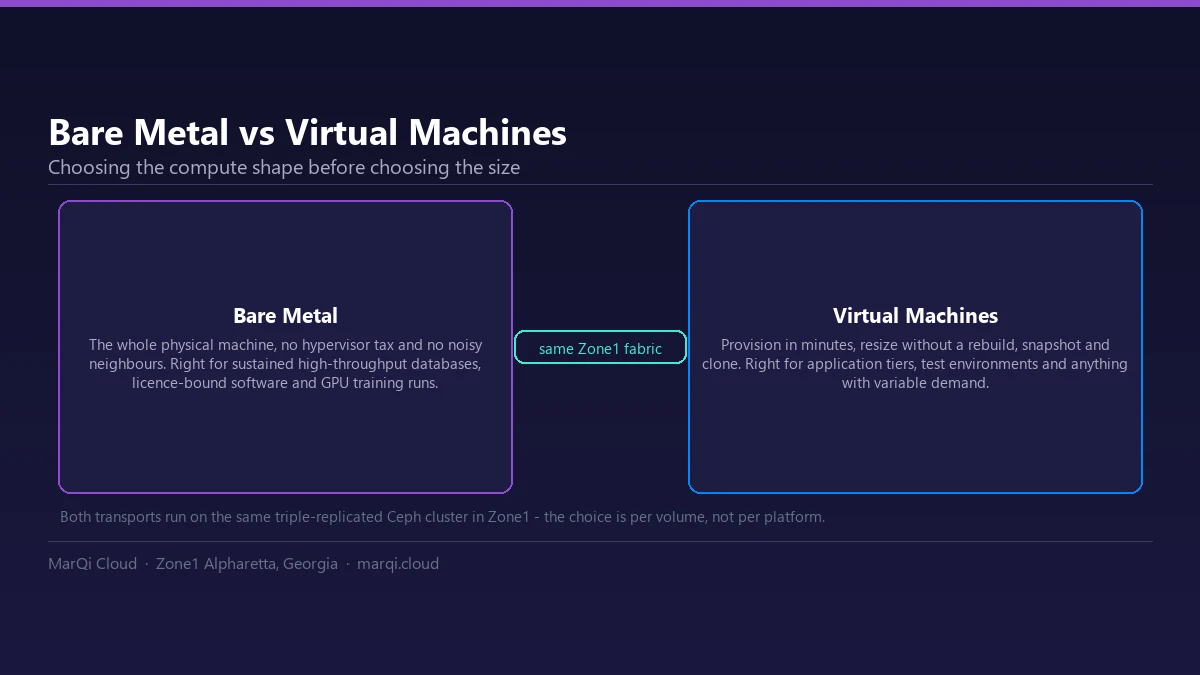
- Training Process: Running the selected model on the dataset, which requires intensive computational resources. This is where GPUs shine, as their parallel processing capabilities enable faster training times.
Inference in AI
Inference is the process of using a trained model to make predictions on new, unseen data. This phase is crucial for deploying AI applications in real-world scenarios. The inference process involves:
- Input Data: Feeding new data into the trained model.
- Model Execution: Running the model to generate predictions based on the input data. While this process is less computationally intensive than training, it still benefits from the acceleration provided by GPUs, especially in applications requiring real-time insights.
- Output Generation: Delivering the predictions to the end-user or system.
Choosing the Right GPU Cloud Solution
For AI startups in the USA, selecting the right GPU cloud provider can significantly impact their operational efficiency and overall success. Here are some key considerations:
Performance Needs
Startups should assess their specific performance requirements based on their unique use cases. For heavy training workloads, high-performance GPUs with substantial memory and processing power are essential.
Cost Structure
Understanding the pricing model of GPU cloud services is crucial for startups. Many providers offer flexible pricing options, including pay-as-you-go and subscription models. Startups should evaluate which model aligns best with their budget and usage patterns.
Support and Infrastructure
Reliable support and robust infrastructure are vital for minimizing downtime and ensuring smooth operations. Startups should choose a provider with a strong reputation for customer service and a reliable network.
Data Security
Given the sensitivity of data involved in AI applications, data security is a paramount concern. Startups should look for GPU cloud providers that offer secure hosting environments and compliant practices to protect their intellectual property and user data.
Case Studies: Successful AI Startups Leveraging GPU Cloud
Several AI startups in the USA have successfully harnessed GPU cloud technology to enhance their capabilities:
Startup A: Accelerating Medical Diagnosis
This healthcare AI startup utilized GPU cloud services to train its deep learning models for medical image analysis. By leveraging the parallel processing power of GPUs, they reduced training time from weeks to days, allowing for faster deployment of their diagnostic tools.
Startup B: Real-Time Language Translation
An AI-powered language translation startup employed GPU cloud infrastructure to handle real-time inference requests. With the scalability of cloud resources, they managed to provide seamless translation services across multiple languages and platforms.
The Future of GPU Cloud in AI
The future of GPU cloud computing in AI is promising, with emerging trends shaping its trajectory:
Increased Accessibility
As technology advances, GPU cloud services will become more accessible to startups of all sizes, democratizing access to powerful computing resources.
AI Democratization
With the growth of no-code and low-code platforms, even those without extensive technical expertise will be able to leverage GPU cloud for AI development.
Hybrid Cloud Solutions
Startups may increasingly adopt hybrid cloud models, combining on-premises infrastructure with GPU cloud services to optimize performance and manage costs effectively.
Conclusion
For AI startups in the USA, GPU cloud computing represents a game-changing opportunity to access the computational resources necessary for both training and inference processes. By understanding the distinctions between these two critical functions and selecting the right GPU cloud provider, startups can enhance their capabilities, accelerate innovation, and ultimately drive growth in the competitive AI landscape.
FAQ
1. What is GPU cloud computing?
GPU cloud computing is the provision of scalable, on-demand computing resources powered by Graphics Processing Units (GPUs) over the internet.
2. How does GPU cloud benefit AI startups?
It offers cost-effectiveness, scalability, accessibility, and allows startups to focus on development rather than infrastructure management.
3. What is the difference between training and inference?
Training involves teaching an AI model using large datasets, while inference is the process of making predictions with a trained model on new data.
4. Why are GPUs preferred for training AI models?
GPUs excel in parallel processing, making them significantly faster for training complex AI models compared to traditional CPUs.
5. What should startups consider when choosing a GPU cloud service?
Startups should evaluate performance needs, cost structure, support and infrastructure, and data security when selecting a provider.
6. Can GPU cloud services help with real-time applications?
Yes, GPU cloud services can accelerate inference processes, enabling real-time applications like language translation and image recognition.
7. How can startups ensure data security in the cloud?
Startups should select cloud providers that offer secure hosting environments, encryption, and compliance with data protection regulations.
8. What is the future of GPU cloud computing in AI?
The future includes increased accessibility, AI democratization through low-code platforms, and the adoption of hybrid cloud solutions.