Secure Hybrid Cloud Architecture in Georgia: Unlocking Business Potential with MarQi Cloud
March 18, 2026
The Ultimate Guide to Dedicated GPU Servers Near You in Atlanta
March 18, 2026
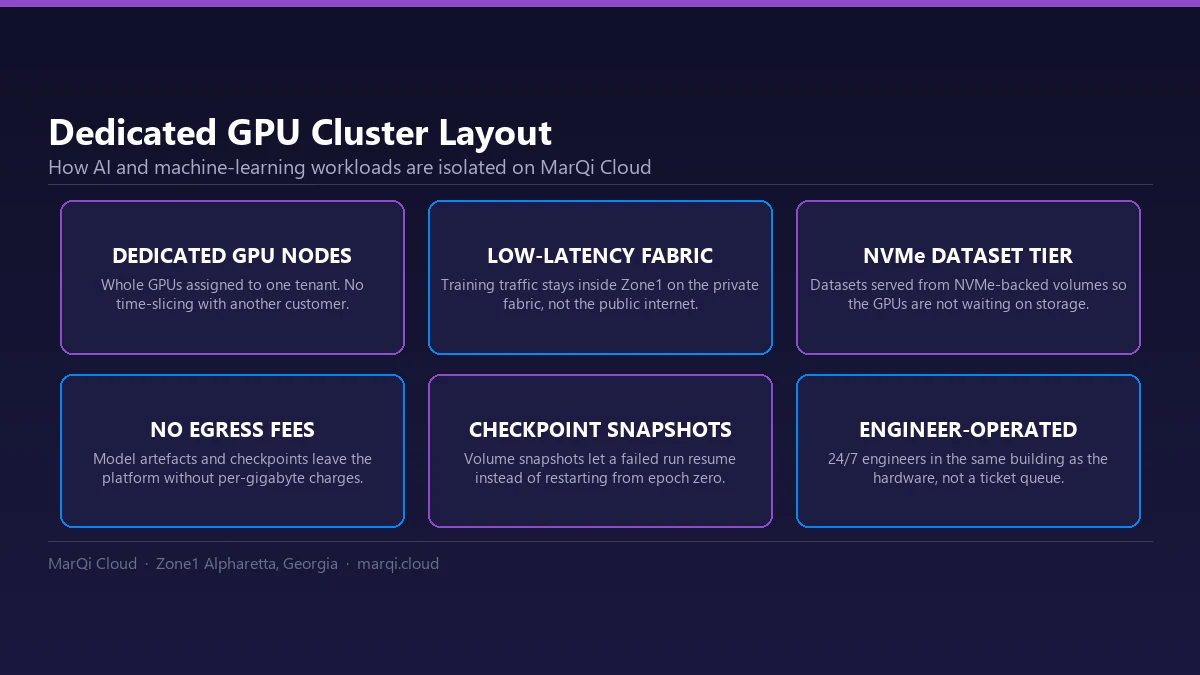
GPU Hosting for Computer Vision Startups: Empowering Innovation and Efficiency
In today’s rapidly evolving technological landscape, computer vision has emerged as a pivotal component driving innovation across various industries. From autonomous vehicles to healthcare diagnostics, the applications of computer vision are vast and transformative. For startups in this domain, leveraging powerful computational resources is essential for developing and deploying advanced algorithms. This is where GPU hosting comes into play, offering the necessary infrastructure that can support the demanding workloads associated with computer vision tasks.
Understanding GPU Hosting
Graphics Processing Units (GPUs) are specialized hardware designed to accelerate the processing of complex computations, particularly those involved in rendering images and processing visual data. Unlike traditional Central Processing Units (CPUs), GPUs can handle thousands of threads simultaneously, making them ideal for tasks that require parallel processing, such as machine learning and computer vision.
What is GPU Hosting?
GPU hosting refers to the provision of computing resources that utilize GPUs to deliver enhanced performance for tasks requiring significant computational power. This service is particularly beneficial for startups engaged in computer vision, as it allows them to scale their operations without the need for substantial upfront investments in hardware.
The Importance of GPU Hosting for Computer Vision Startups
For computer vision startups, the choice of hosting infrastructure can significantly impact their ability to innovate and compete in the market. Here are several reasons why GPU hosting is crucial for these enterprises:
1. Enhanced Performance
The most compelling advantage of GPU hosting is the enhanced performance it provides. Computer vision algorithms, such as deep learning models, require extensive computational resources for training and inference. By utilizing GPUs, startups can significantly reduce the time taken to train models, thereby accelerating the development cycle.
2. Scalability
As a startup grows, so do its computational needs. GPU hosting offers a scalable solution, allowing businesses to easily adjust their resources based on demand. This flexibility enables startups to respond quickly to market changes and customer needs without the burden of managing physical infrastructure.
3. Cost Efficiency
Investing in high-performance GPUs can be prohibitively expensive for startups. GPU hosting eliminates the need for large capital expenditures by providing a pay-as-you-go model. This flexible pricing allows startups to allocate their budgets more effectively, enabling them to focus on innovation rather than infrastructure.
4. Access to Latest Technology
The field of computer vision is constantly evolving, with new algorithms and techniques emerging regularly. GPU hosting providers often invest in the latest technology, ensuring that startups have access to cutting-edge hardware and software tools. This access can be a significant competitive advantage.
Choosing the Right GPU Hosting Provider
Not all GPU hosting services are created equal. When selecting a provider, startups should consider several key factors:
1. Performance and Specifications
Startups should assess the performance specifications of the GPUs offered by the hosting provider. Look for providers that offer high-performance GPUs capable of handling complex computations efficiently.
2. Flexibility and Scalability
The ideal GPU hosting solution should allow for easy scalability. Startups should select providers that offer flexible plans, enabling them to scale resources up or down based on their current needs.
3. Security and Compliance
Given the sensitive nature of data processed in computer vision applications, security is a paramount concern. Startups should choose providers that prioritize data protection, offering secure hosting environments and compliance with relevant regulations.
4. Support and Expertise
Having access to knowledgeable support staff can make a significant difference in the success of a startup. Look for providers that offer robust customer support and have expertise in GPU hosting and computer vision applications.
Key Use Cases of GPU Hosting in Computer Vision
Several key use cases illustrate the power of GPU hosting in the realm of computer vision:
1. Image Classification
Startups developing image classification systems benefit greatly from GPU hosting. The ability to process large datasets quickly allows for faster training of models that can accurately classify images.
2. Object Detection
GPU hosting accelerates the training of object detection algorithms, which are crucial for applications such as autonomous driving and surveillance. Startups can leverage this technology to enhance their detection capabilities.
3. Facial Recognition
Facial recognition technology relies on complex algorithms that require substantial computational power. GPU hosting enables startups to develop and refine these algorithms efficiently.
4. Augmented Reality (AR) and Virtual Reality (VR)
Startups working on AR and VR applications can utilize GPU hosting to render graphics and process visual data in real-time, providing users with immersive experiences.
Implementing GPU Hosting for Your Startup
Transitioning to GPU hosting requires careful planning. Here are some steps startups can take to successfully implement GPU hosting:
1. Assess Your Needs
Start by evaluating your startup’s specific computational requirements. Identify workloads that would benefit from GPU acceleration and determine how much resource allocation is needed.
2. Research Providers
Conduct thorough research to identify potential GPU hosting providers. Consider their performance, scalability, security measures, and customer support.
3. Test the Environment
Before making a long-term commitment, take advantage of trial periods or demo environments to test the provider’s GPU hosting capabilities. Ensure that the infrastructure meets your performance expectations.
4. Monitor and Optimize
Once you have transitioned to GPU hosting, continuously monitor performance metrics and optimize your workloads. This ongoing assessment will help you make informed decisions about resource allocation and scaling.
Future Trends in GPU Hosting for Computer Vision
The landscape of GPU hosting is continually evolving, driven by advancements in technology and the growing demand for computer vision applications. Some emerging trends include:
1. Increased Adoption of Cloud-Native Architectures
As more startups embrace cloud-native architectures, the demand for GPU hosting solutions that integrate seamlessly with cloud environments will rise.
2. Greater Emphasis on AI and ML
AI and machine learning will continue to play a crucial role in computer vision, leading to increased reliance on GPU hosting for training and deploying models.
3. Enhanced Security Features
As security concerns grow, GPU hosting providers will likely enhance their security offerings, ensuring that startups can trust their data is protected.
Conclusion
For computer vision startups, the advantages of GPU hosting are undeniable. By leveraging the power of GPUs, these startups can accelerate their development processes, scale their operations, and ultimately drive innovation in the computer vision space. As technology continues to advance, staying ahead of the curve with the right hosting solution will be essential for success in this competitive landscape.
Frequently Asked Questions (FAQ)
1. What is GPU hosting?
GPU hosting refers to the provision of computing resources that utilize Graphics Processing Units (GPUs) to enhance performance for computationally intensive tasks, such as those found in computer vision.
2. Why do startups in computer vision need GPU hosting?
Startups need GPU hosting to access the computational power required for training and deploying complex algorithms efficiently, enabling faster innovation and development cycles.
3. How does GPU hosting improve performance?
GPUs are designed for parallel processing, allowing them to handle multiple computations simultaneously, which significantly speeds up tasks like model training in computer vision.
4. What factors should I consider when choosing a GPU hosting provider?
Consider performance specifications, flexibility and scalability, security measures, and the level of customer support offered by the provider.
5. Can GPU hosting help reduce costs for startups?
Yes, GPU hosting provides a pay-as-you-go model, allowing startups to access high-performance resources without large upfront capital expenditures.
6. What are some common use cases for GPU hosting in computer vision?
Common use cases include image classification, object detection, facial recognition, and augmented reality applications.
7. How can startups implement GPU hosting effectively?
Startups should assess their needs, research potential providers, test the environment, and continuously monitor and optimize their workloads after transitioning.
8. What future trends should startups watch for in GPU hosting?
Emerging trends include increased adoption of cloud-native architectures, greater emphasis on AI and machine learning, and enhanced security features from hosting providers.