The Ultimate Non-Technical Business Owner’s Guide to MarQi Cloud Infrastructure
July 5, 2026Unlocking Enterprise-Grade Infrastructure: How MarQi Cloud Makes It Accessible to Everyone
July 5, 2026
How MarQi Cloud Helps SaaS Companies Achieve 99.99% Uptime
For Software as a Service (SaaS) companies, achieving high availability is not just a goal; it’s a necessity. In today’s competitive landscape, where every second of downtime can lead to lost revenue and diminished customer trust, ensuring that your services remain operational is paramount. That’s where MarQi Cloud comes in. With our enterprise-grade cloud infrastructure and commitment to performance, we empower SaaS providers to reach an impressive 99.99% uptime. This article will explore how MarQi Cloud achieves this high availability, the technologies we employ, and the best practices SaaS companies can adopt to ensure their services remain uninterrupted.
Understanding Uptime and Its Importance
Uptime is a critical metric for any online service, particularly for SaaS companies that rely on constant availability to serve their customers. Uptime is typically expressed as a percentage of time that a service is operational and accessible. A 99.99% uptime translates to approximately 52.56 minutes of downtime per year, while a 99.9% uptime represents about 8.76 hours of downtime annually. The difference may seem minor, but to customers, it can be monumental.
Research shows that businesses lose significant revenue during downtime. IT downtime carries a cost for every minute a service is unavailable. This figure can vary significantly based on the size of the business and the industry, but it highlights the financial implications of service disruptions.
The MarQi Cloud Infrastructure
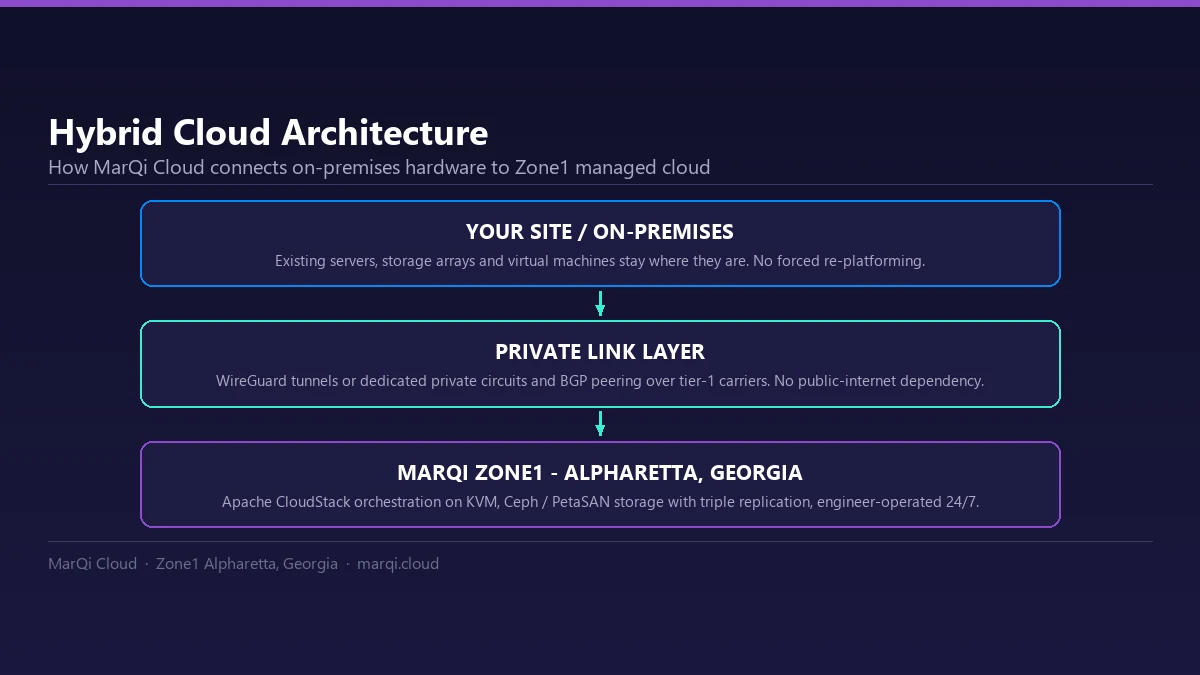
MarQi Cloud’s infrastructure is designed from the ground up to support high availability and resilience. Our enterprise-grade cloud solutions leverage a hybrid cloud model, combining the flexibility of public cloud resources with the security and control of private cloud environments. This approach allows us to provide scalable compute and storage resources while maintaining stringent security and compliance standards.
Our infrastructure is based in the United States, ensuring that we can deliver low-latency connections and high-performance computing capabilities to our clients. With multiple data centers across the country, MarQi Cloud can efficiently distribute workloads and manage redundancy, further enhancing uptime.
Key Features of MarQi Cloud’s Infrastructure
- Geo-Redundancy: Our data centers are strategically located in multiple regions, allowing for seamless failover and load balancing. This means that if one data center experiences an issue, traffic can be automatically rerouted to another, minimizing downtime.
- Scalable Resources: With MarQi Cloud, SaaS companies can scale their infrastructure up or down based on demand. This elasticity ensures that during peak usage times, applications can handle increased loads without compromising performance.
- Performance Monitoring: Our advanced monitoring tools provide real-time insights into system performance. This allows for proactive maintenance and quick identification of potential issues before they impact uptime.
Key Technologies Enabling 99.99% Uptime
Achieving 99.99% uptime requires a combination of robust technologies and best practices. At MarQi Cloud, we utilize several key technologies that play a vital role in ensuring high availability:
1. Virtualization Services
Virtualization allows for the efficient use of physical resources by creating multiple virtual instances on a single physical server. This not only optimizes resource use but also enhances failover capabilities. If one virtual instance goes down, others can continue to operate without disruption.
2. Load Balancing
Load balancing distributes incoming traffic across multiple servers, preventing any single server from becoming overwhelmed. This ensures that applications remain responsive and available, even during periods of high demand.
3. Disaster Recovery Solutions
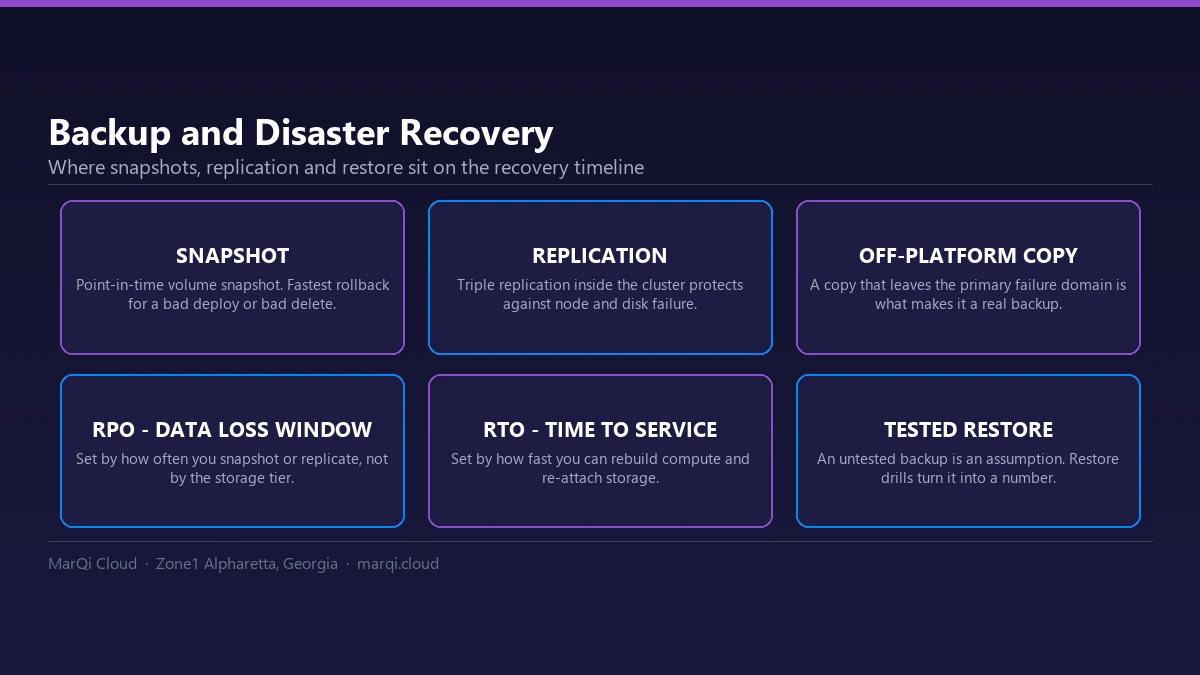
MarQi Cloud offers comprehensive disaster recovery solutions that ensure data is backed up and can be quickly restored in the event of a failure. Our disaster recovery strategies include regular backups, real-time data replication, and automated failover processes.
4. Redundant Power and Network Connections
To mitigate the risks of hardware failure, our data centers are equipped with redundant power supplies and network connections. This means that even if one power source or network path fails, another is available to maintain service continuity.
5. Regular Maintenance and Updates
Keeping software and hardware up to date is crucial for preventing vulnerabilities and ensuring optimal performance. MarQi Cloud conducts regular maintenance and updates to all systems, minimizing the risk of downtime due to outdated technology.
Best Practices for SaaS Companies
While leveraging MarQi Cloud’s infrastructure and technologies is essential for achieving high uptime, SaaS companies should also adopt best practices to further enhance their service availability:
1. Implement a Robust Monitoring System
Utilizing monitoring tools to track application performance and user experience can help identify potential issues before they escalate into downtime. Services like Datadog provide comprehensive monitoring capabilities.
2. Optimize Application Architecture
Designing applications with fault tolerance in mind can significantly improve uptime. This includes using microservices architecture, which isolates services and allows them to operate independently.
3. Conduct Regular Load Testing
SaaS companies should regularly test their applications under various load conditions to identify performance bottlenecks and improve overall resilience.
4. Create a Disaster Recovery Plan
Having a well-defined disaster recovery plan ensures that your team knows how to respond in the event of an outage. This should include backup procedures and communication plans for informing users.
5. Train Your Team
Regular training for your technical team on how to manage and troubleshoot your infrastructure is essential. This ensures that they can respond quickly to potential issues and maintain high uptime.
Case Studies: Success Stories
Several SaaS companies have successfully leveraged MarQi Cloud to achieve remarkable uptime rates. Here are a few examples:
Case Study 1: SaaS Company A
Company A, a leading provider of customer relationship management (CRM) software, experienced significant downtime during peak sales seasons due to server overload. After migrating to MarQi Cloud, they implemented load balancing and disaster recovery solutions, resulting in a 99.99% uptime rate and a 30% increase in customer satisfaction.
Case Study 2: SaaS Company B
Company B, specializing in project management tools, faced challenges with data loss during outages. With MarQi Cloud’s geo-redundancy and real-time data replication, they not only achieved 99.99% uptime but also reduced data recovery times from hours to minutes.
Conclusion
MarQi Cloud is committed to providing SaaS companies with the infrastructure and technologies needed to achieve a remarkable 99.99% uptime. By leveraging our enterprise-grade cloud solutions, implementing best practices, and focusing on continuous improvement, SaaS providers can ensure they remain operational and competitive in the ever-evolving digital landscape. If you’re ready to enhance your service availability, contact us today to learn more about how MarQi Cloud can help your business thrive.
Frequently Asked Questions (FAQ)
1. What is uptime in cloud services?
Uptime refers to the percentage of time that a service is operational and accessible. It is a critical metric for assessing the reliability of cloud services.
2. How does MarQi Cloud achieve 99.99% uptime?
MarQi Cloud achieves 99.99% uptime through a combination of geo-redundancy, load balancing, disaster recovery solutions, and regular maintenance.
3. What are the consequences of downtime for SaaS companies?
Downtime can lead to lost revenue, decreased customer satisfaction, and damage to brand reputation, making high availability essential for SaaS companies.
4. How can SaaS companies improve their uptime?
SaaS companies can improve uptime by implementing robust monitoring systems, optimizing application architecture, conducting load testing, and creating disaster recovery plans.
5. What technologies does MarQi Cloud use to ensure high availability?
MarQi Cloud uses virtualization, load balancing, redundant power and network connections, and disaster recovery solutions to ensure high availability.
6. How often should SaaS companies conduct load testing?
SaaS companies should conduct load testing regularly, especially before major updates or during peak usage periods, to identify and resolve performance issues.
7. What is geo-redundancy?
Geo-redundancy is the practice of distributing data and services across multiple geographic locations to enhance reliability and reduce the risk of downtime.
8. How does MarQi Cloud support disaster recovery?
MarQi Cloud supports disaster recovery through real-time data replication, automated failover processes, and regular backups.