MarQi Cloud Infrastructure Audit: Optimize Your Stack for 2027
July 5, 2026
Unlocking Enterprise-Grade Infrastructure: How MarQi Cloud Makes It Accessible to Everyone
July 5, 2026
The Ultimate Non-Technical Business Owner’s Guide to MarQi Cloud Infrastructure
In today’s fast-paced digital landscape, understanding cloud infrastructure is crucial for business owners, even those without a technical background. If you are a non-technical business owner looking to leverage MarQi Cloud Infrastructure for your enterprise, this comprehensive guide will break down complex concepts into digestible insights. By the end of this article, you will be equipped with the knowledge to make informed decisions about cloud solutions that can enhance your business operations, ensure data security, and drive growth.
Understanding Cloud Infrastructure
Cloud infrastructure refers to the components that are needed to support the computing requirements of a cloud computing model. This includes hardware, storage, and network resources, along with the software that manages these resources. Businesses today are increasingly adopting cloud solutions for several reasons, including flexibility, scalability, and cost-effectiveness.
To put it simply, cloud infrastructure allows you to store and access data over the internet instead of relying solely on local servers. This shift enables businesses to operate more efficiently and respond to changing market demands without the need for significant capital investment in physical hardware.
Why Choose MarQi Cloud?
MarQi Cloud stands out as an enterprise-grade cloud infrastructure provider, particularly for mid-sized to large organizations. Here are some compelling reasons why you should consider MarQi Cloud for your business:
- Enterprise-Grade Infrastructure: MarQi Cloud offers robust infrastructure that is designed to handle the needs of large businesses, ensuring high performance and reliability.
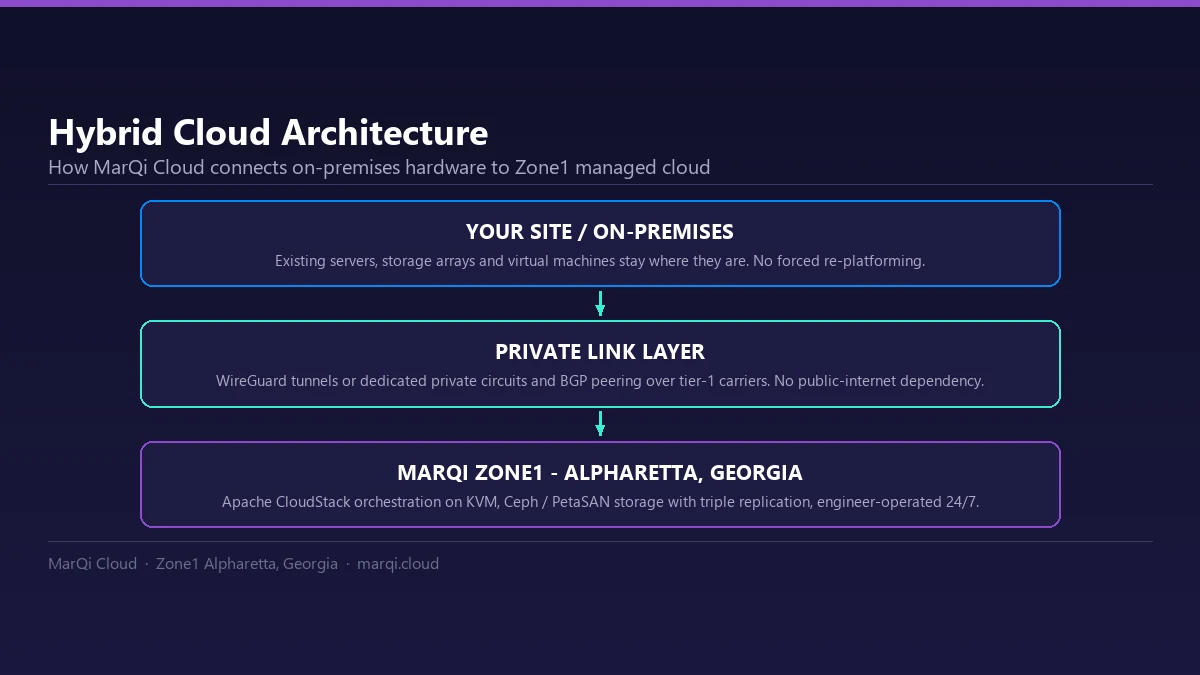
- Hybrid Cloud Deployment: With a focus on hybrid cloud solutions, MarQi Cloud allows you to seamlessly integrate both private and public cloud environments, giving you the flexibility to optimize your resources.
- Security and Compliance: MarQi Cloud prioritizes security, providing private and secure hosting environments that meet various compliance standards, including HIPAA for healthcare and PCI-DSS for payment processing.
Key Features of MarQi Cloud Infrastructure
Understanding the key features of MarQi Cloud can help you leverage its full potential. Here’s an overview:
- Scalable Compute and Storage: MarQi Cloud offers scalable resources that can grow with your business. You only pay for what you use, making it a cost-effective option for businesses of all sizes.
- Zero Lock-In and Egress Fees: Unlike many cloud providers, MarQi Cloud doesn’t impose lock-in contracts or egress fees, allowing you to switch providers or scale your services without incurring additional costs.
- White-Glove Managed Services: For business owners who prefer to focus on their core operations, MarQi Cloud provides managed services that take care of the technical aspects, ensuring smooth operations.
Benefits of Hybrid Cloud Solutions
Hybrid cloud solutions combine the best of both worlds: private and public cloud environments. Here are some key benefits:
- Flexibility: Businesses can choose where to store their data and applications, allowing for optimal performance and cost management.
- Improved Security: Sensitive data can be kept on private clouds while less critical data can be stored on public clouds, providing a balanced approach to data security.
- Cost-Effectiveness: By using a hybrid model, businesses can optimize their cloud spending by utilizing public resources when demand is low and private resources when demand spikes.
Comparison Table: Private Cloud vs. Public Cloud
| Feature | Private Cloud | Public Cloud |
|---|---|---|
| Cost | Higher initial investment; lower ongoing costs | Lower initial investment; pay-as-you-go model |
| Security | More secure; dedicated resources | Less secure; shared resources |
| Control | Full control over infrastructure | Limited control; dependent on the provider |
| Scalability | Scalable but requires manual intervention | Highly scalable; on-demand resources |
How to Migrate to MarQi Cloud
Migrating to a cloud infrastructure like MarQi Cloud can seem daunting, especially for non-technical business owners. However, with a structured approach, you can ensure a smooth transition. Here’s a step-by-step guide:
- Assess Your Current Infrastructure: Evaluate your existing systems and identify what needs to be migrated. This includes applications, databases, and other resources.
- Define Your Goals: Determine what you want to achieve with the migration. Whether it’s cost savings, improved performance, or enhanced security, having clear goals will guide your process.
- Plan Your Migration Strategy: Choose a migration strategy that fits your business needs. Options include rehosting, replatforming, or refactoring your applications.
- Engage Experts: If you are not comfortable with the technical aspects, consider hiring professionals or utilizing MarQi Cloud’s managed services to assist with the migration.
- Test and Validate: After migration, thoroughly test your applications and data to ensure everything is functioning as expected.
- Monitor and Optimize: Once fully migrated, continuously monitor your cloud environment and optimize your resources for performance and cost-effectiveness.
Disaster Recovery and Business Continuity
One of the significant advantages of using MarQi Cloud is its focus on disaster recovery and business continuity. Here’s how MarQi Cloud ensures your business remains operational even in the face of unexpected events:
- Automated Backups: MarQi Cloud provides automated backup solutions that ensure your data is always safe and recoverable.
- Geographic Redundancy: With multiple data centers across the United States, your data is stored in geographically diverse locations, minimizing the risk of data loss.
- Business Continuity Planning: MarQi Cloud works with businesses to develop specific business continuity plans that address potential risks and ensure minimal downtime.
Cost Management in Cloud Services
Understanding how to manage costs in cloud services is crucial for non-technical business owners. Here are some actionable tips:
- Monitor Usage: Regularly review your cloud usage to identify any resources that are underutilized or unused.
- Leverage Reserved Instances: Consider using reserved instances for predictable workloads, as they often come at a lower cost compared to on-demand pricing.
- Implement Auto-Scaling: Enable auto-scaling features to automatically adjust resources based on demand, which can help control costs during low-usage periods.
FAQ
What is cloud infrastructure?
Cloud infrastructure refers to the hardware and software components that support cloud computing, including servers, storage, and networking.
Why should I choose MarQi Cloud?
MarQi Cloud offers enterprise-grade infrastructure, hybrid deployment options, and robust security, making it an ideal choice for businesses of all sizes.
What are hybrid cloud solutions?
Hybrid cloud solutions combine private and public cloud resources, allowing businesses to optimize their IT infrastructure for performance and cost.
How can I migrate to MarQi Cloud?
To migrate, assess your current infrastructure, define goals, plan your strategy, engage experts, test and validate, and monitor your new environment.
What is disaster recovery?
Disaster recovery is the process of restoring IT operations after a disaster, ensuring minimal downtime and data loss.
How can I manage cloud costs?
Monitor usage, leverage reserved instances, and implement auto-scaling to manage cloud costs effectively.
What security measures does MarQi Cloud provide?
MarQi Cloud offers automated backups, geographic redundancy, and compliance with industry standards to ensure data security.
Is MarQi Cloud suitable for small businesses?
Yes, MarQi Cloud provides scalable solutions that can accommodate businesses of all sizes, including small businesses.