Key Features to Look for in an Open Source Hybrid Cloud Provider
December 26, 2025
Building Enterprise-Ready Hybrid Cloud Storage Architecture
January 2, 2026

Introduction
Enterprise IT costs continue to rise as businesses handle growing amounts of data and more complex systems. Traditional storage solutions often come with high setup, licensing, and maintenance costs, making them hard to scale over time. To overcome these challenges, many organizations are choosing open source cloud storage as a cost-effective and flexible alternative. It allows businesses to reduce expenses, scale storage as needed, and adjust easily to changing requirements, making cloud adoption smoother and more efficient.
What Is Open Source Cloud Storage?
Open source cloud storage is the best way to store, sync, and manage files using software whose source code is publicly available. It allows users to have full control over their data while offering cloud features similar to popular proprietary services, but with more transparency and flexibility.
Key Features and Benefits
- Transparency and Control
- The source code is open and can be reviewed or modified
- Users know exactly how and where their data is handled
- Self-Hosting Options
- Open source cloud storage can be hosted on your own servers
- Keeps sensitive data private and fully under your control
- Data Sovereignty
- You decide where your data is stored
- Reduces dependence on large cloud vendors
- Security and Privacy
- Uses strong encryption and access controls
- Helps protect files from unauthorized access
Customization and Scalability
- Open source cloud storage can be customized with plugins and integrations
- Supports private, public, or hybrid cloud setups
- Platforms like OpenStack help manage large-scale cloud environments
Collaboration and Popular Platforms
- Includes tools for file sharing and teamwork
- Supports calendars and real-time document editing
- Popular solutions include Nextcloud and ownCloud
- Open source cloud storage is improved continuously by a global developer community
Open source cloud hosting
Open source cloud hosting is a flexible and cost-effective way to build and manage cloud infrastructure using freely available software such as Linux, OpenStack, and Kubernetes. It allows organizations to create public, private, or hybrid cloud environments with full control over their systems. By relying on open technologies, businesses gain transparency, adaptability, and long-term savings while avoiding dependence on a single cloud vendor.
Key Benefits of Open Source Cloud Hosting
- Transparency and reliability
- The source code is publicly available and can be reviewed or audited
- Improves trust, security visibility, and system reliability
- Lower IT costs
- No expensive licensing or renewal fees
- Predictable budgeting with enterprise-grade capabilities
- Flexible deployment options
- Can be deployed on-premises, in private clouds, or hybrid environments
- Open source cloud hosting allows infrastructure to be designed around actual business needs
- Customization and scalability
- Software can be modified to match specific workloads
- Dynamic scaling improves performance and reduces hardware waste
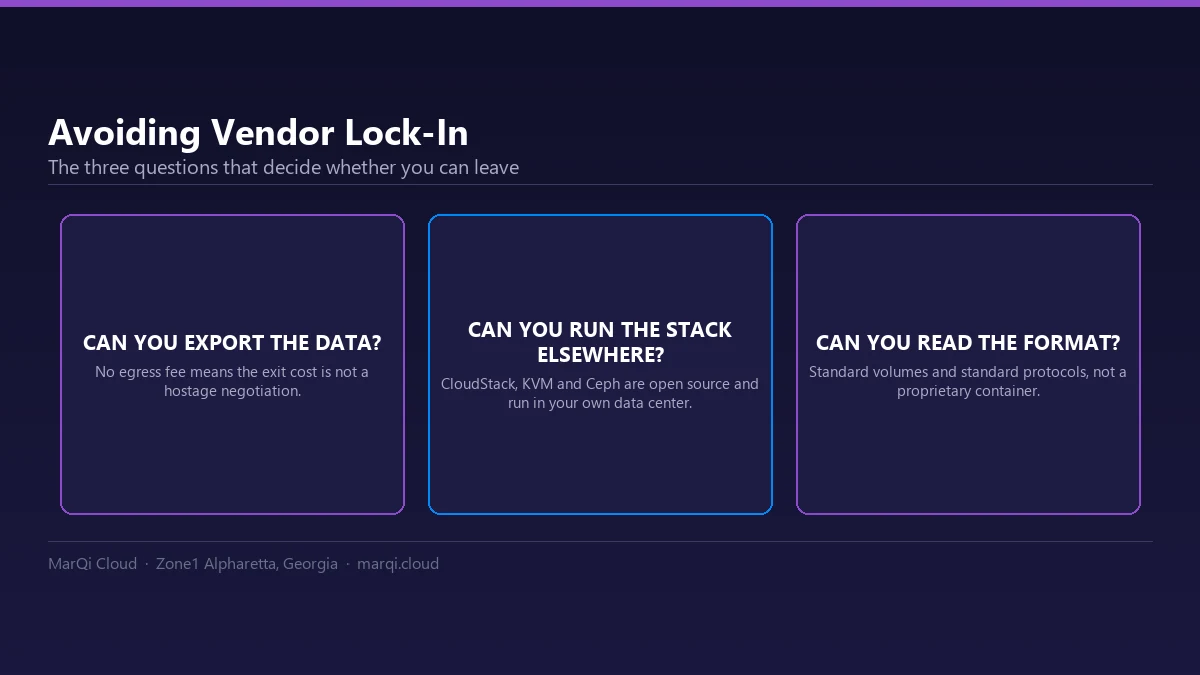
- No vendor lock-in
- Freedom to migrate, expand, or customize without restrictions
- Open source cloud hosting supports long-term technology independence
Overall, open source cloud hosting is an ideal choice for organizations seeking control, flexibility, and cost efficiency, supported by continuous innovation from a global open-source community.
Open Source Hybrid Cloud Provider Overview
An open source hybrid cloud provider helps businesses connect on-premises systems with private and public clouds using open technologies like Linux, Kubernetes, and OpenStack. This approach offers flexibility, better control over data, and cost savings, while allowing workloads to move easily between different environments without vendor restrictions.
Simple and Key Features
- No vendor lock-in
- Freedom to switch tools or providers easily
- Flexible cloud setup
- Use on-premises, private, and public clouds together
- An open source hybrid cloud provider supports smooth workload movement
- Customizable and transparent
- Open code allows easy customization and security checks
- Easy workload portability
- Applications run the same across all cloud environments
- Cost-efficient
- Better workload placement reduces infrastructure and storage costs
- Community-driven innovation
- Regular updates and improvements from global developers
Overall, an open source hybrid cloud provider gives organizations a simple, flexible, and scalable way to manage hybrid cloud environments while staying in control of their technology and costs.
Cloud Transformation Services Made Simple
Cloud transformation services help businesses move their data, applications, and IT systems from traditional on-premise setups to the cloud in a smarter and more modern way. Instead of just shifting files or software, these services focus on improving how technology works across the business so teams can be more flexible, scalable, and cost-efficient.
What These Services Do
- Move systems to the cloud
- Transfer data, applications, and software from local servers to cloud platforms
- Use different approaches like lift-and-shift or modern cloud-native setups
- Modernize IT infrastructure
- Redesign systems to take full advantage of cloud features
- Improve performance, reliability, and scalability
- Improve how teams work
- Introduce agile processes and modern workflows
- Help teams adapt to faster, cloud-based operations
- Plan and optimize cloud use
- Create a clear roadmap for cloud adoption
- Continuously manage costs and improve performance
Key Benefits for Businesses
- Easy scaling
- Increase or reduce resources based on demand
- Lower costs
- Reduce spending on hardware and manage expenses better
- Faster innovation
- Launch new services and update more quickly
- Greater agility
- Respond faster to market and customer needs
- Stronger security and reliability
- Better data protection and business continuity
How It’s Different from Cloud Migration
- Cloud migration only moves data or apps to the cloud
- Cloud transformation services improve systems, processes, and strategy to help businesses fully benefit from the cloud
In simple terms, cloud transformation services help organizations modernize their technology, work more efficiently, and stay competitive by making the most of the cloud.
Why Enterprises Choose MarQi Cloud
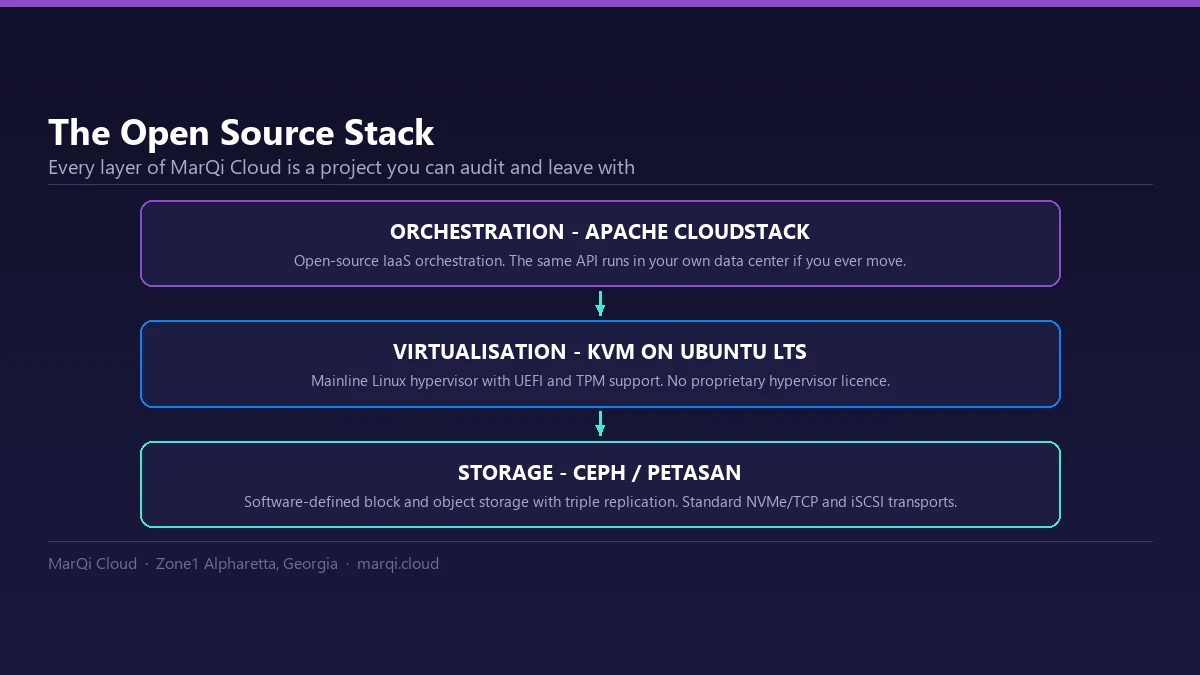
Enterprises choose MarQi Cloud because it delivers secure, reliable, and cost-effective cloud storage without unnecessary complexity. By using open-source technology and operating its own infrastructure, MarQi Cloud gives businesses greater control, stability, and flexibility.
Independent Data Center Infrastructure
- Operates its own independent data center
- Full control over performance, security, and compliance
- No reliance on third-party cloud providers
Reliable Storage and Network Architecture
- Dedicated storage clusters designed for high availability
- Redundant network systems to reduce downtime
- Ensures smooth and uninterrupted business operations
Cost-Efficient Open Source Cloud Storage
- Uses enterprise-grade open-source cloud storage
- Scalable solutions that grow with business needs
- Lower costs by avoiding expensive licensing fees
Conclusion
Open-source cloud storage helps enterprises reduce IT costs while maintaining flexibility and control. Compared to proprietary platforms, it offers better transparency, scalability, and long-term value. MarQi Cloud combines reliable infrastructure, secure storage, and cost efficiency to support businesses with dependable cloud storage solutions built for growth.