How Open Source Cloud Storage Reduces Enterprise IT Costs
January 2, 2026
Best Practices for Hybrid Cloud Reference Architecture Design
January 8, 2026

Building Enterprise-Ready Hybrid Cloud Storage Architecture
What is an enterprise-ready hybrid cloud storage architecture?
It combines on-premises storage with public cloud resources in one connected system, so sensitive or frequently used data stays under your control while the cloud absorbs growth, backups and archives. Unified orchestration tools place data by performance, cost or compliance need and move workloads between the two environments without re-architecting.
Why are enterprises adopting hybrid cloud storage architecture?
Enterprises today are dealing with increasing amounts of data and higher expectations for speed, security, and reliability. To meet these needs, many organizations are adopting a hybrid cloud storage architecture that combines on-premise systems with cloud storage. This model offers more flexibility than traditional storage while keeping important data under control.
Managing data growth, maintaining strong security, and delivering consistent performance can be challenging with a single storage approach. On-premise systems may lack scalability, while fully cloud-based solutions can create concerns around cost and compliance.
What Is Hybrid Cloud Storage Architecture?
Hybrid cloud storage architecture helps enterprises manage their data by combining on-premises storage with public cloud resources in one connected system. This approach allows businesses to keep sensitive data under their own control while using the cloud to handle growth, backups, and less critical workloads.
- Hybrid cloud storage architecture links private and public storage environments so data and applications can move smoothly between them.
- It supports smart data placement, allowing organizations to store critical or frequently used data on-premises while using cloud storage for archives and high-volume needs through a hybrid cloud storage architecture.
- With unified management and orchestration tools, hybrid cloud storage architecture makes it easier to scale storage, control costs, and move workloads based on performance or business requirements.
- By offering flexibility, security, disaster recovery, and compliance support, a hybrid cloud storage architecture is a strong choice for enterprises that need both control and scalability in their storage strategy.
How Hybrid Cloud Storage Differs from Public and Private Cloud
- Public cloud offers easy scalability but less control over sensitive data.
- Private cloud provides strong security but can be costly and harder to scale.
- Hybrid cloud combines both, keeping critical data private while using the public cloud for growth and backups.
- It is ideal for enterprise workloads that need security, flexibility, and scalability.
Real-World Use Cases of Enterprise Hybrid Cloud Storage
- Backup and storage
Keep important data on your own systems and use the cloud for extra storage. - Data analysis
Store data locally and utilize the cloud for handling large-scale data processing. - Application updates
Move and upgrade applications between on-premise and cloud without issues.
Multi Cloud Orchestration for Storage Management
Multi-cloud orchestration allows enterprises to manage storage and data across multiple cloud providers through a single, centralized system. It helps simplify a complex hybrid environment by automating how data is deployed, scaled, and managed while keeping policies and security consistent.
- Enables centralized management of storage across different cloud platforms
- Supports data movement between providers based on cost, performance, or availability
- Automates storage provisioning and scaling to reduce manual effort
Benefits of Centralized Orchestration
- Improved visibility and control over all storage resources
- Reduced operational complexity by managing everything from one platform
- Better cost and performance optimization using Multi-cloud orchestration
By bringing automation and control together, Multi-cloud orchestration helps enterprises avoid vendor lock-in, improve disaster recovery, and build a more flexible and efficient storage environment.
Designing a Scalable Hybrid Cloud Reference Architecture
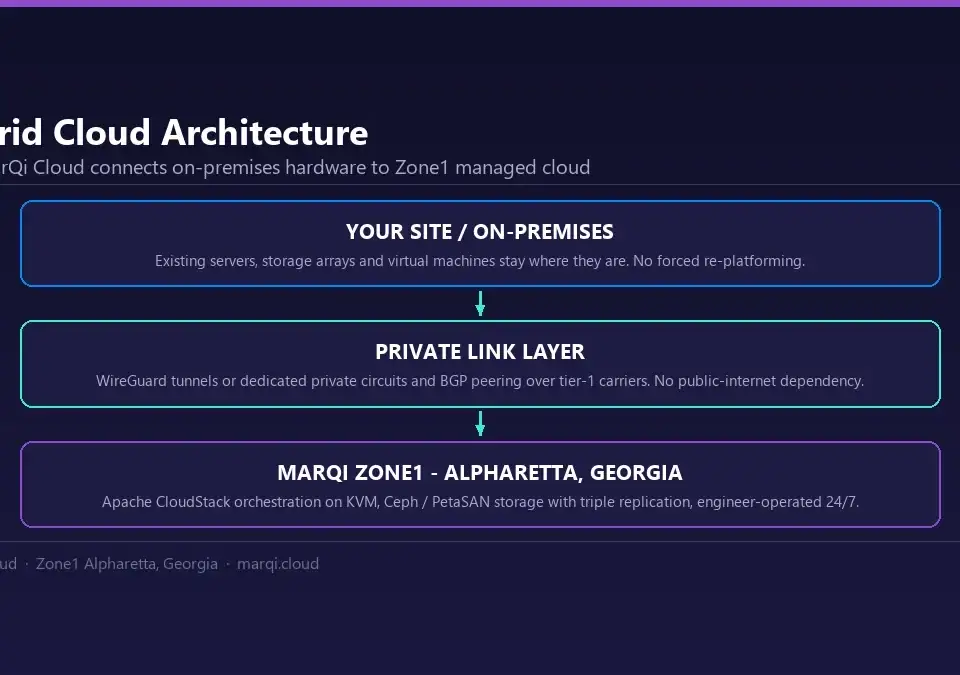
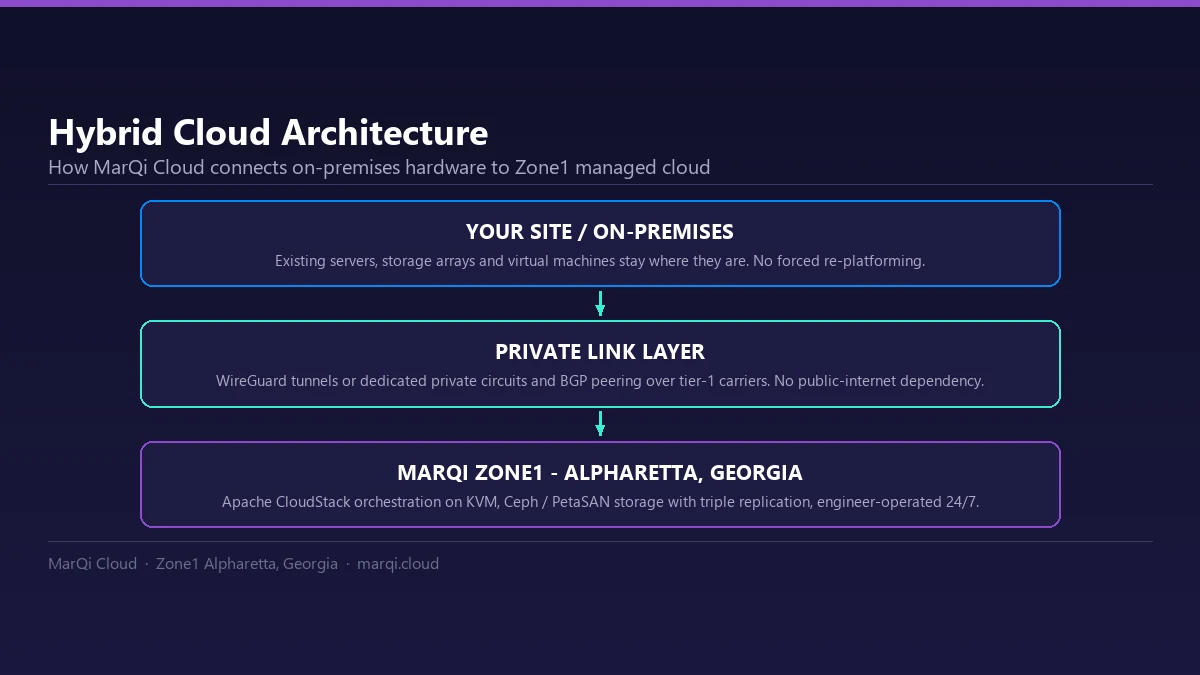
A hybrid cloud reference architecture helps enterprises connect on-premises systems with public cloud services in a clear and structured way. It supports secure data movement, better scalability, and cost control while keeping sensitive workloads private.
- Hybrid cloud reference architecture provides standard guidelines for building and managing hybrid environments
- Enables smart data placement between on-premises and public cloud
- Helps balance performance, scalability, and cost
- Improves security, compliance, and disaster recovery
- Supports high availability and fault tolerance for enterprise storage.
Core Components of an Enterprise-Ready Hybrid Cloud Storage Architecture
A strong hybrid cloud storage setup is built using a few essential components that help businesses stay secure, flexible, and scalable.
- On-premise storage infrastructure
This is local storage hosted in a company’s own data center. It is mainly used for sensitive data and critical applications that need high performance and full control. - Cloud storage platforms and services
Cloud storage is used to handle growing data needs, backups, and non-critical workloads, making it easier to scale without high upfront costs. - Secure connectivity between environments
Safe and reliable network connections allow data to move smoothly between on-premise systems and the cloud. - Centralized management and monitoring tools
These tools help teams manage storage, monitor performance, and apply consistent policies from one place.
Role of Open Source Cloud Server in Hybrid Environments
An open source cloud server is a cloud platform built using open technologies that give businesses more control and flexibility.
- It allows customization based on business needs
- It reduces software licensing costs
- It avoids vendor lock-in and supports long-term flexibility
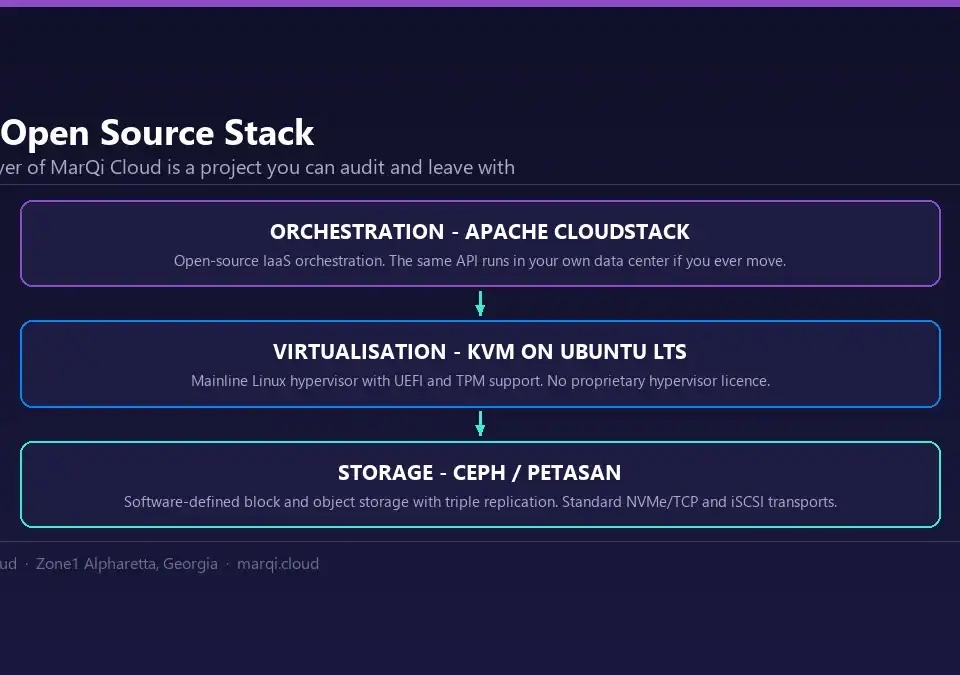
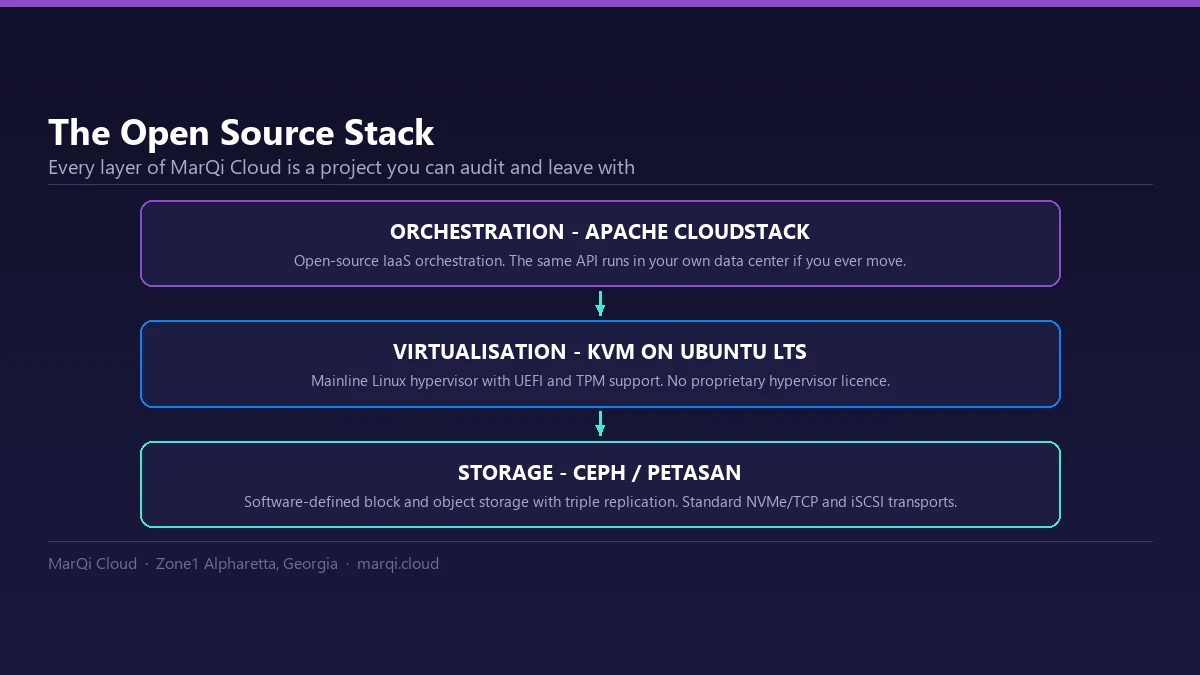
- It uses trusted open-source technologies like OpenStack, Kubernetes, and Ceph
Open Source Cloud Server by MarQi Cloud
MarQi Cloud offers an open source cloud server powered by its independent data center, dedicated storage cluster, and redundant network fabric. This setup helps businesses build secure and scalable hybrid cloud environments while keeping full control over their data.
Why MarQi Cloud for Hybrid Cloud Storage?
- Independent data center provider focused on secure and reliable infrastructure
- Operates its own data center for better control and performance
- Designed to support enterprise-level workloads
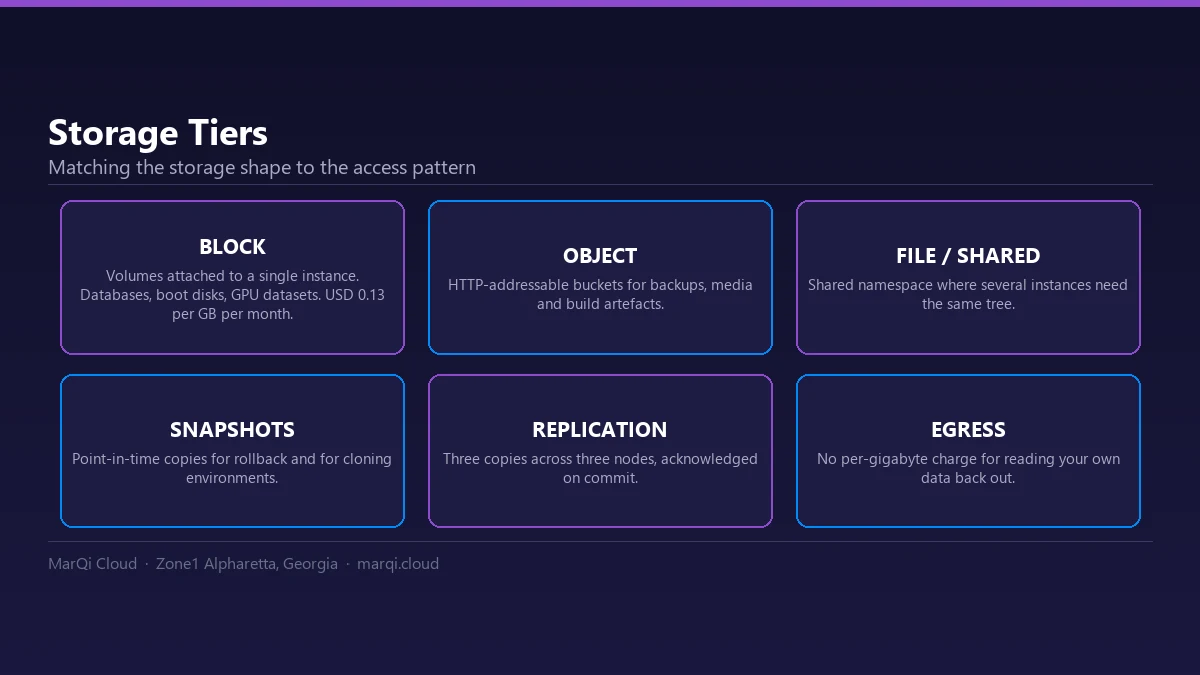
- Uses a dedicated storage cluster for high performance and scalability
- Built with a redundant network fabric to ensure high availability
- Minimizes downtime and improves system reliability
- Supports enterprise-ready hybrid cloud storage architecture
- Allows businesses to keep sensitive data on-premise while scaling with cloud resources
Conclusion
As enterprise data continues to grow, businesses need storage solutions that offer both control and flexibility. A hybrid cloud storage architecture allows organizations to keep important data secure on-premises while using the cloud to scale, back up data, and support changing workloads.
By following a well-planned hybrid cloud reference architecture, companies can build reliable systems that balance performance, cost, and security. Multi-cloud orchestration helps simplify management across different cloud platforms, and using an open source cloud server adds flexibility while reducing dependency on a single vendor.
With the right hybrid strategy in place, enterprises can build a strong, future-ready data infrastructure that supports growth, reliability, and long-term success.
Frequently Asked Questions
What is hybrid cloud storage architecture?
It combines on-premises storage with public cloud resources in one connected system. A business keeps sensitive data under its own control while using the cloud for growth, backups and less critical workloads, and data and applications can move between the two environments.
How is hybrid storage different from public or private cloud alone?
Public cloud scales easily but gives less control over sensitive data. Private cloud gives strong security but costs more and is harder to scale. Hybrid keeps critical data private and uses the public cloud for growth and backups, which suits enterprise workloads that need security, flexibility and scale at the same time.
What does multi-cloud orchestration do for storage?
It lets an enterprise manage storage and data across several cloud providers from one central system. Deployment, scaling and security policy stay consistent, data can move between providers based on cost, performance or availability, and provisioning is automated instead of manual.