The MarQi Cloud Log Management Guide: Centralize, Search, and Alert on Everything
April 7, 2026
MarQi Cloud Backup Automation: How to Never Manually Snapshot Again
April 8, 2026
How to Build a MarQi Cloud Disaster Recovery Plan That Actually Works
In today’s fast-paced digital world, the importance of having a robust disaster recovery (DR) plan cannot be overstated. With an increasing reliance on cloud infrastructure, businesses must ensure that they are prepared for any eventuality that could disrupt their operations. At MarQi Cloud, we offer enterprise-grade cloud infrastructure and business continuity solutions that can help you design a disaster recovery plan that not only meets your needs but also functions effectively when you need it most.
Understanding Disaster Recovery
Before delving into the specifics of building a disaster recovery plan, it’s essential to understand what disaster recovery entails. Disaster recovery refers to the strategies and processes that an organization puts in place to recover from disruptive events—whether natural disasters, cyberattacks, or hardware failures. A well-structured DR plan ensures that your organization can maintain or quickly resume mission-critical functions.
The Importance of a Disaster Recovery Plan
The significance of a disaster recovery plan cannot be underestimated. Here are a few key reasons why having a DR plan is vital:
1. Minimizes Downtime
Downtime can be detrimental to any business. A solid disaster recovery plan minimizes downtime by outlining specific recovery procedures, allowing your organization to resume operations as quickly as possible.
2. Protects Your Data
Data is an organization’s most valuable asset. An effective DR plan includes strategies for data backup and recovery, ensuring that critical data is not lost during a disaster.
3. Compliance and Regulations
Many industries are subject to compliance regulations regarding data protection and disaster recovery. Having a DR plan in place helps ensure compliance with these regulations.
4. Builds Customer Trust
Customers expect businesses to be prepared for emergencies. A well-crafted disaster recovery plan demonstrates your commitment to service continuity and builds trust with your clients.
Steps to Build an Effective Disaster Recovery Plan
Building a disaster recovery plan that works involves several critical steps. Below, we outline a comprehensive approach to creating a DR plan tailored to your organization’s specific needs.
Step 1: Conduct a Business Impact Analysis (BIA)
A Business Impact Analysis is a crucial first step in developing a disaster recovery plan. It involves identifying critical business functions and the impact that disruptions could have on your organization. This analysis helps prioritize recovery efforts and allocate resources effectively.
Step 2: Identify Risks and Threats
Understand the potential risks and threats your organization faces. This could include natural disasters (floods, earthquakes), technological failures (server crashes), or human-related incidents (cyberattacks). Assess the likelihood and potential impact of each risk to inform your planning.
Step 3: Define Recovery Objectives
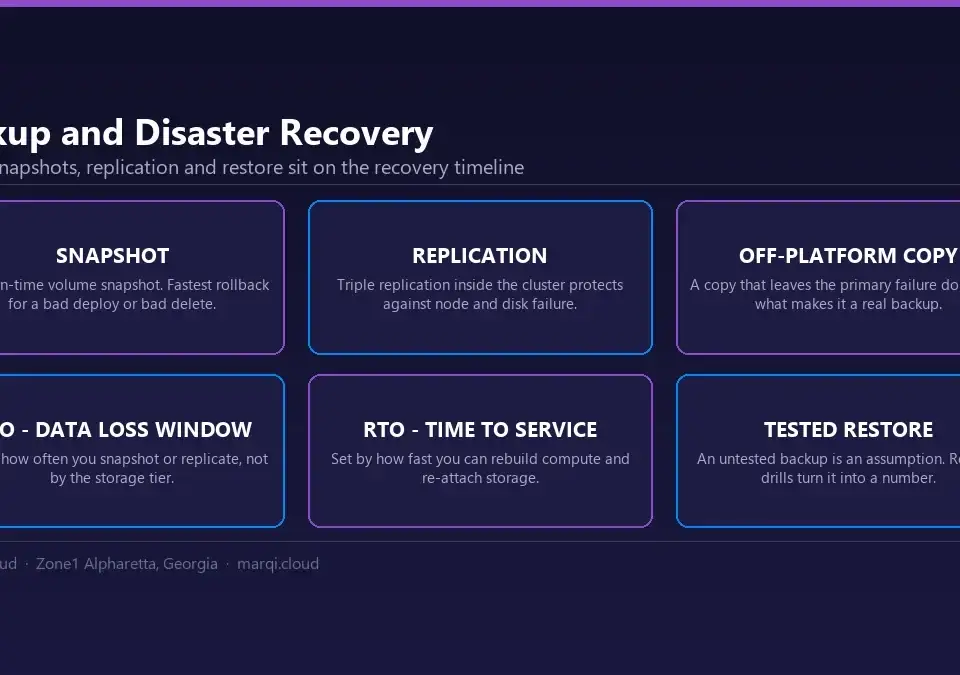
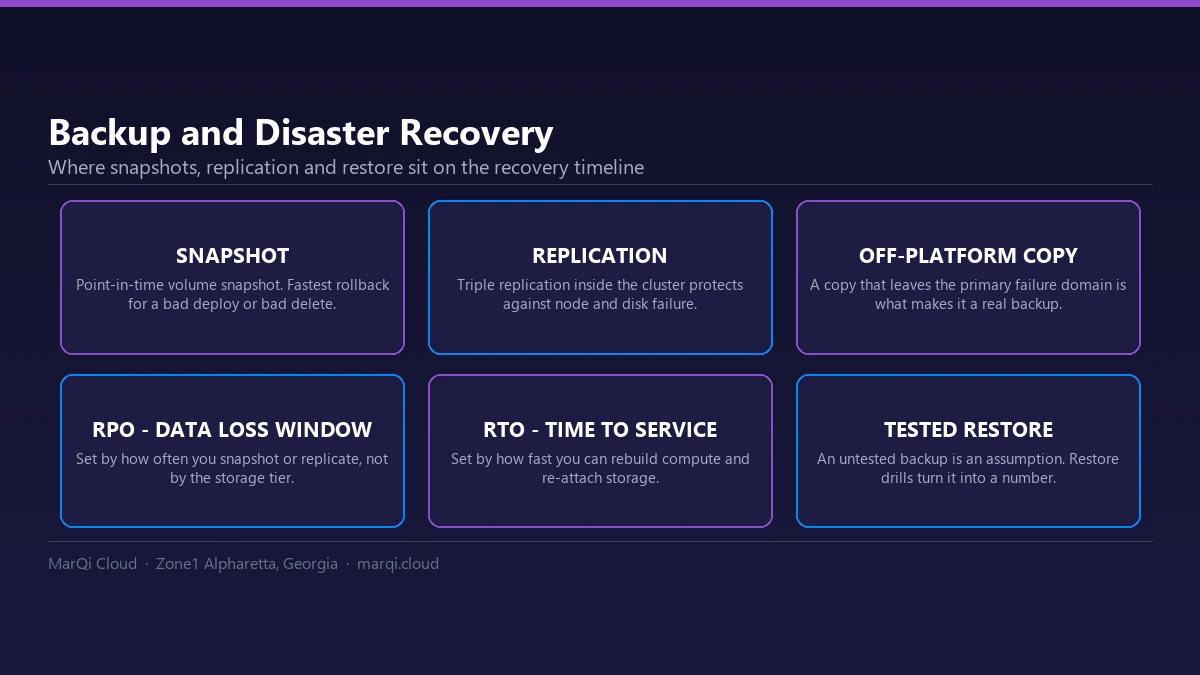
Establish clear recovery objectives, including Recovery Time Objectives (RTO) and Recovery Point Objectives (RPO). RTO defines the maximum acceptable downtime, while RPO indicates the maximum acceptable data loss. These metrics will guide your recovery strategies.
Step 4: Develop Recovery Strategies
Once you have identified critical functions and recovery objectives, the next step is to develop specific recovery strategies. Consider the following options:
1. Data Backup Solutions
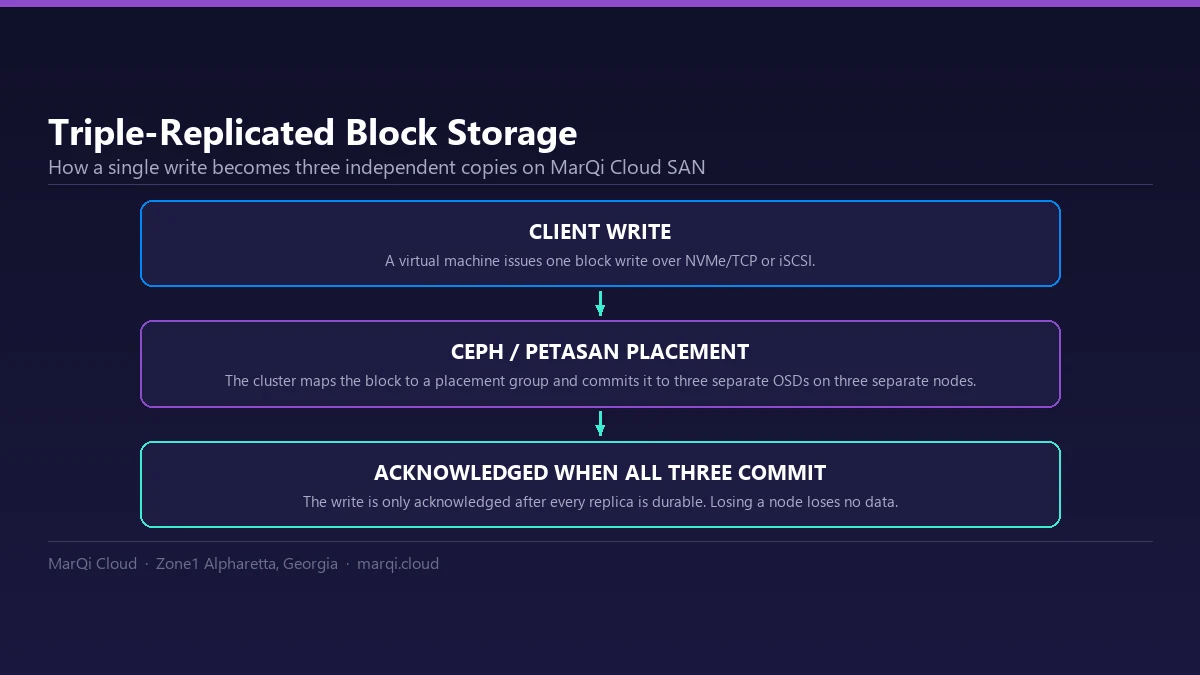
Utilize MarQi Cloud’s scalable compute and storage resources to implement regular data backups. This can include full backups, incremental backups, or continuous data protection, depending on your organization’s needs.
2. Cloud-Based Recovery Solutions
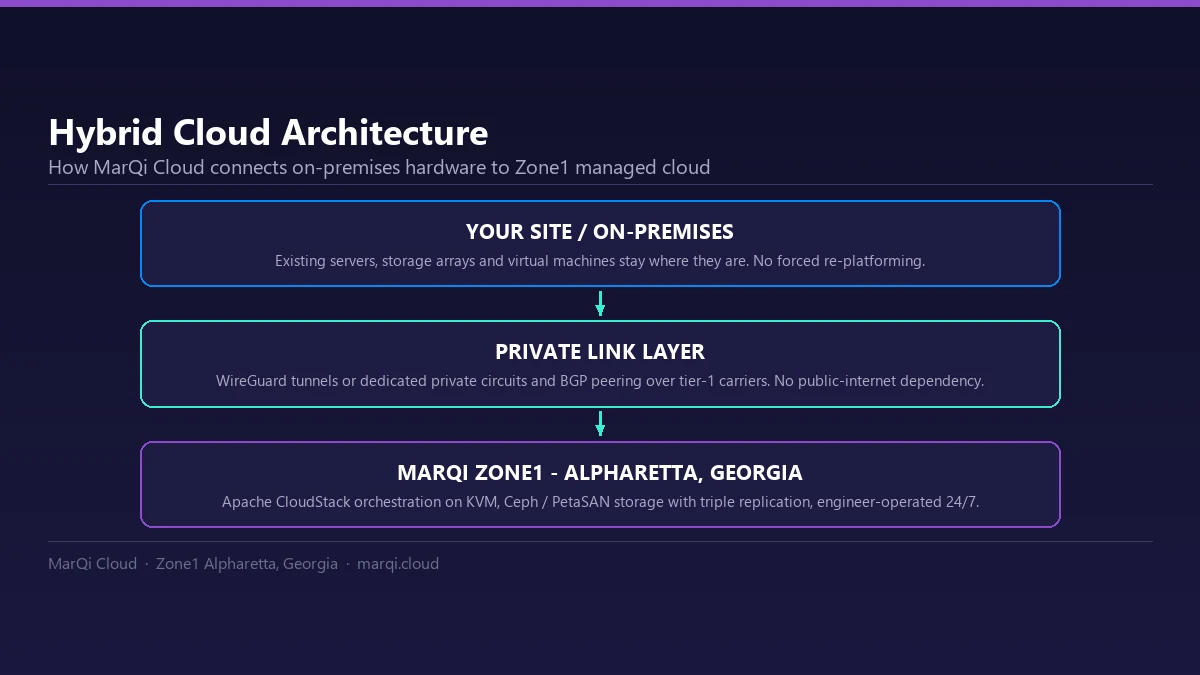
Leverage MarQi Cloud’s hybrid cloud deployment models to create a flexible and resilient IT environment. This allows for seamless recovery of services, enabling you to restore operations quickly.
3. Testing and Validation
Regularly test your recovery strategies to ensure they work as intended. Conduct drills and simulations to identify any gaps in your plan and make necessary adjustments.
Step 5: Document Your Plan
Documentation is critical to disaster recovery. Create a comprehensive DR plan that outlines roles, responsibilities, recovery procedures, and contact information. This document should be easily accessible to all relevant personnel.
Step 6: Train Your Team
Ensure that your team is well-versed in the disaster recovery plan. Conduct training sessions to familiarize them with the procedures, roles, and responsibilities outlined in the plan. This preparation is key to a successful response during a disaster.
Step 7: Review and Update Regularly
Technology and business needs evolve over time, so it’s essential to review and update your disaster recovery plan regularly. Schedule periodic reviews to ensure that your DR plan remains relevant and effective.
Leveraging MarQi Cloud for Disaster Recovery
MarQi Cloud offers a variety of services designed to enhance your disaster recovery strategy:
1. Enterprise-Grade Cloud Infrastructure
Our robust cloud infrastructure provides the foundation for your disaster recovery plan, ensuring that you have the resources needed for rapid recovery.
2. Private and Secure Hosting Environments
With MarQi Cloud, your data is housed in secure environments that comply with industry standards, protecting your information from breaches and unauthorized access.
3. Business Continuity Solutions
Our business continuity and disaster recovery solutions are tailored to meet the unique needs of your organization, ensuring that you can maintain operations during a crisis.
4. Performance-Driven Infrastructure Design
Our performance-driven infrastructure design ensures optimal resource allocation and scalability, allowing your organization to adapt to changes in demand quickly.
Conclusion
Building a disaster recovery plan that works requires careful planning, execution, and ongoing management. By following the steps outlined above and leveraging the services provided by MarQi Cloud, you can create a robust disaster recovery strategy that minimizes downtime, protects critical data, and ensures business continuity. Don’t leave your organization’s future to chance—invest in a comprehensive disaster recovery plan today.
FAQs
1. What is a Disaster Recovery Plan?
A disaster recovery plan outlines the procedures and strategies an organization takes to recover from disruptive events that affect operations.
2. Why is a Disaster Recovery Plan Important?
It minimizes downtime, protects data, ensures compliance, and builds customer trust.
3. What is a Business Impact Analysis?
A Business Impact Analysis identifies critical business functions and assesses the impact of disruptions on those functions.
4. What are RTO and RPO?
Recovery Time Objective (RTO) is the maximum acceptable downtime, while Recovery Point Objective (RPO) is the maximum acceptable data loss.
5. How often should I test my Disaster Recovery Plan?
Regular testing is essential; it is recommended to conduct tests at least twice a year.
6. Can MarQi Cloud help with Disaster Recovery?
Yes, MarQi Cloud offers enterprise-grade cloud infrastructure and tailored business continuity solutions to enhance your disaster recovery strategy.
7. How do I back up my data effectively?
Utilize a combination of full backups, incremental backups, and continuous data protection tailored to your needs.
8. What should I include in my Disaster Recovery documentation?
Your documentation should include recovery procedures, contact information, roles and responsibilities, and any relevant recovery strategies.