How to Run Elasticsearch at Scale on MarQi Cloud Without Index Bottlenecks
April 7, 2026
How to Build a MarQi Cloud Disaster Recovery Plan That Actually Works
April 7, 2026
The MarQi Cloud Log Management Guide: Centralize, Search, and Alert on Everything
In the age of digital transformation, organizations are generating vast amounts of data every second. Log data, in particular, is a crucial component of this data landscape, providing insights into application performance, security incidents, and operational health. For businesses leveraging cloud infrastructure, effective log management becomes essential. This guide will explore log management in the context of MarQi Cloud, focusing on how to centralize, search, and alert on everything seamlessly.
Understanding Log Management
Log management refers to the process of collecting, storing, analyzing, and monitoring log data from various systems and applications. Logs are generated by servers, applications, and network devices, serving as a record of events that occur within an IT environment. Effective log management helps organizations to:
- Identify and troubleshoot issues quickly.
- Enhance security by monitoring for suspicious activity.
- Comply with regulatory requirements.
- Gain insights into system performance and user behavior.
The Importance of Log Management in Cloud Environments
As businesses transition to cloud-based infrastructures, the complexity of managing logs increases. Cloud environments often comprise multiple services, applications, and infrastructures that can generate different types of logs. Managing these logs effectively is not just about storage; it is also about accessibility, searchability, and actionable insights.
Benefits of Log Management in the Cloud
MarQi Cloud provides enterprise-grade cloud infrastructure with specialized log management solutions that offer numerous advantages, including:
- Centralized Log Collection: Collect logs from various sources into a single, centralized platform, simplifying management and analysis.
- Scalability: Easily scale your log management capabilities as your organization grows without compromising performance.
- Enhanced Security: Monitor logs in real-time to detect and respond to security incidents promptly.
- Compliance Support: Meet regulatory compliance requirements by maintaining detailed records of log data.
- Flexible Pricing Models: Choose pricing options that fit your budget and usage needs.
Centralizing Log Data with MarQi Cloud
Centralization of log data is the first step towards effective log management. MarQi Cloud offers a robust log collection and aggregation solution that allows organizations to centralize their logs from various sources.
Integrating Log Sources
To centralize log management, organizations must first integrate all their log sources, which may include:
- Application logs
- Server logs
- Network device logs
- Security logs
MarQi Cloud provides APIs and connectors that facilitate the seamless integration of these log sources, allowing businesses to pull data into a unified platform effortlessly.
Storing Log Data Securely
Once logs are collected, they need to be stored securely. MarQi Cloud offers private and secure hosting environments, ensuring that your log data is protected against unauthorized access. This security is crucial not only for data integrity but also for compliance with various regulatory standards.
Searching and Analyzing Log Data
Centralization is just the beginning. The real power of log management lies in the ability to search and analyze this data.
Effective Search Capabilities
MarQi Cloud provides advanced search features that allow users to query their logs using various parameters. This functionality is vital for quickly identifying issues or trends within log data.
Utilizing Data Analytics
In addition to searching, employing data analytics can unlock deeper insights from log data. MarQi Cloud enables organizations to analyze patterns and anomalies in their logs, helping to predict potential issues before they escalate.
Building Alerts for Proactive Monitoring
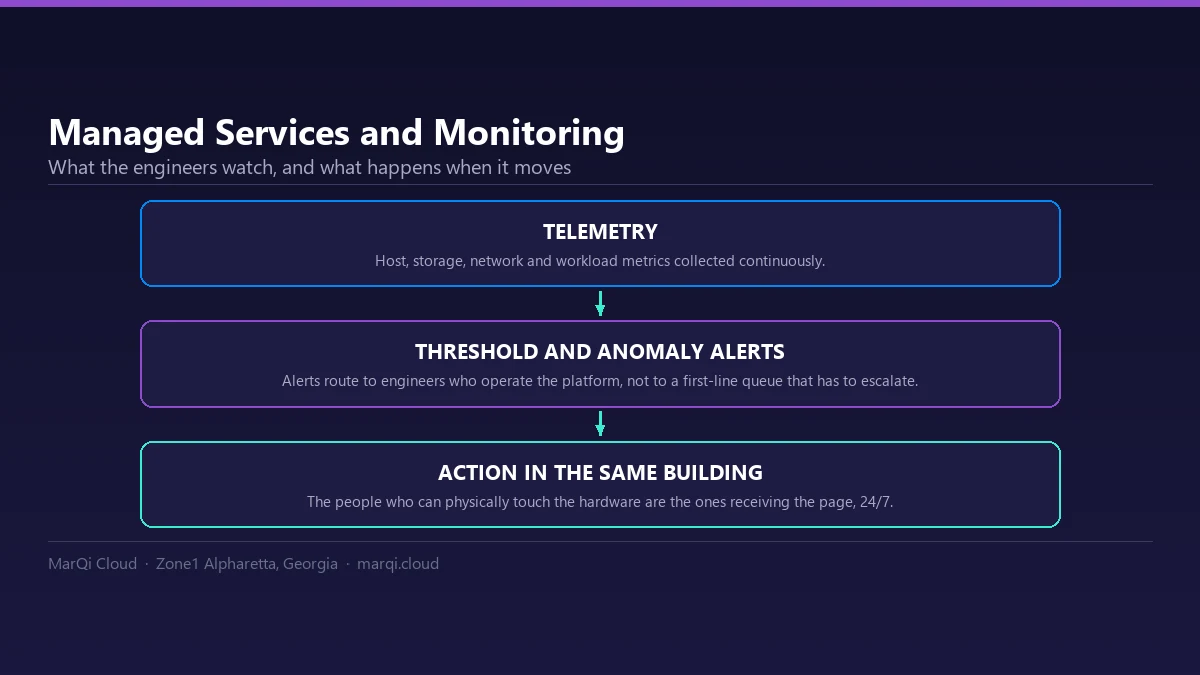
One of the key components of effective log management is the ability to set up alerts. Alerts can notify IT teams of potential issues in real-time, allowing them to respond proactively.
Configuring Alert Rules
With MarQi Cloud’s log management system, organizations can easily configure alert rules based on specific criteria, such as:
- Thresholds (e.g., error rates, latency)
- Patterns (e.g., repeated login failures)
- Specific events (e.g., changes in configuration)
Receiving Alerts
Alerts can be delivered through various channels, including email, SMS, or integrated into existing incident management systems. This flexibility ensures that your team can respond swiftly to any potential issues.
Best Practices for Log Management
To maximize the effectiveness of your log management strategy, consider implementing the following best practices:
- Define Clear Objectives: Understand what you want to achieve with your log management solution.
- Regularly Review Log Data: Schedule routine reviews of log data to identify trends and anomalies.
- Keep Logs Retained Appropriately: Configure retention policies that comply with regulatory requirements while ensuring access to historical log data.
- Train Your Team: Ensure that your IT teams are trained in using the log management tools effectively.
Conclusion
Effective log management is crucial for organizations leveraging cloud infrastructure, and MarQi Cloud provides the tools necessary to centralize, search, and alert on log data efficiently. By implementing robust log management practices, businesses can enhance their operational efficiency, improve security, and ensure compliance with regulatory standards. For more information on how MarQi Cloud can assist in your log management journey, contact us at +1 770-369-9321.
FAQ Section
1. What is log management?
Log management is the process of collecting, storing, analyzing, and monitoring log data generated by various systems and applications.
2. Why is log management important in cloud environments?
Log management is crucial in cloud environments due to the complexity and volume of data generated, which aids in troubleshooting, security monitoring, and compliance.
3. How does MarQi Cloud help in log management?
MarQi Cloud offers centralized log collection, secure storage, advanced search capabilities, and alerting features for effective log management.
4. What types of logs can I manage with MarQi Cloud?
You can manage application logs, server logs, network device logs, and security logs, among others, using MarQi Cloud’s log management solutions.
5. Can I customize alert settings in MarQi Cloud?
Yes, MarQi Cloud allows you to configure customizable alert rules based on specific criteria to monitor your logs effectively.
6. How long can log data be retained in MarQi Cloud?
Log data retention in MarQi Cloud can be configured based on your organization’s compliance requirements and data access needs.
7. Is training available for using MarQi Cloud’s log management tools?
MarQi Cloud provides resources and training to help your team effectively utilize its log management tools.
8. How can I get started with log management on MarQi Cloud?
To get started, contact MarQi Cloud at +1 770-369-9321 for assistance in setting up your log management solution.