How MarQi Cloud’s Monitoring Dashboard Gives Real-Time Infrastructure Visibility
June 11, 2026
Why MarQi Cloud Is the Best Base for a Multi-Cloud Architecture in 2026
June 12, 2026
How to Build a Multi-Cloud Strategy With MarQi Cloud as Your Foundation
Introduction
In today’s competitive business environment, leveraging multiple cloud services has become essential for organizations looking to enhance flexibility, performance, and reliability. A multi-cloud strategy allows businesses to choose the best services from various providers, ensuring that they can scale efficiently while maintaining control over their resources. In this article, we will explore how to build an effective multi-cloud strategy, using MarQi Cloud as the foundation for your cloud infrastructure.
Understanding Multi-Cloud Strategy
A multi-cloud strategy involves using multiple cloud computing services from different vendors to meet specific business needs. This approach not only increases redundancy but also mitigates risks associated with vendor lock-in. By diversifying cloud services, organizations can optimize costs, enhance performance, and ensure business continuity.
Benefits of a Multi-Cloud Strategy
- Flexibility: By integrating different cloud providers, businesses can select the best services tailored to their unique requirements.
- Cost Efficiency: Organizations can optimize their expenditures by choosing cost-effective solutions across multiple platforms.
- Performance Optimization: Accessing the best features from various providers helps enhance overall performance.
- Improved Resilience: A multi-cloud setup offers redundancy and lowers the risk of downtime.
- Regulatory Compliance: Different regions may have specific compliance requirements, which can be met by utilizing various cloud providers.
Why Choose MarQi Cloud?
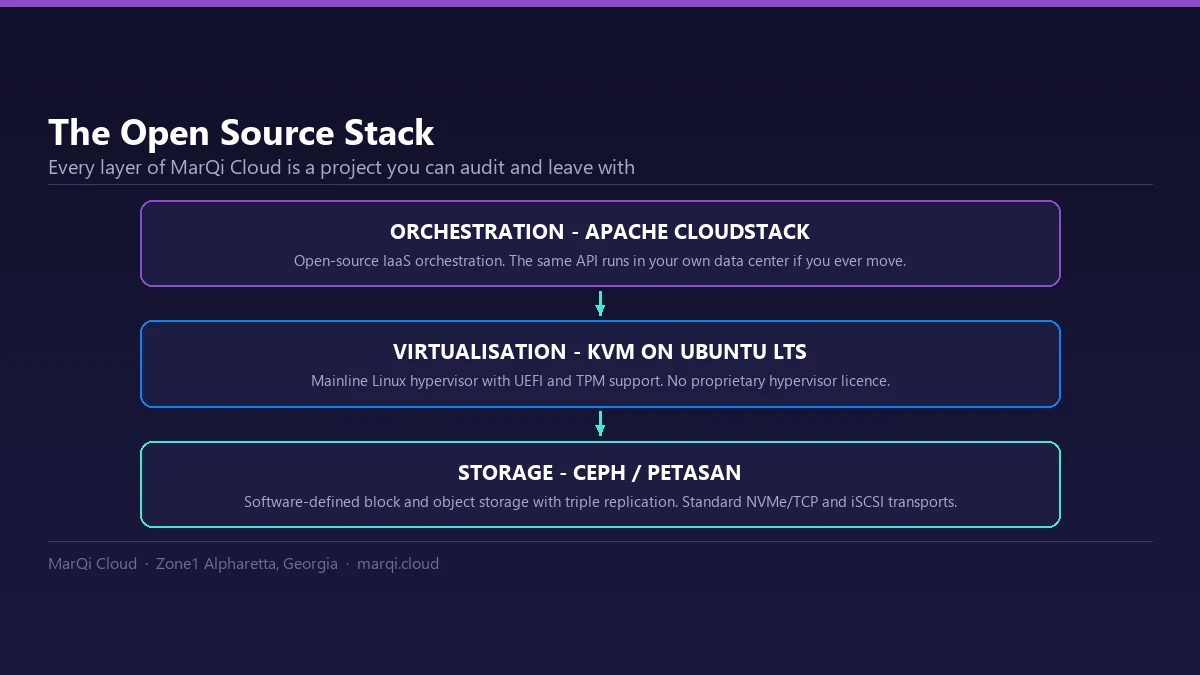
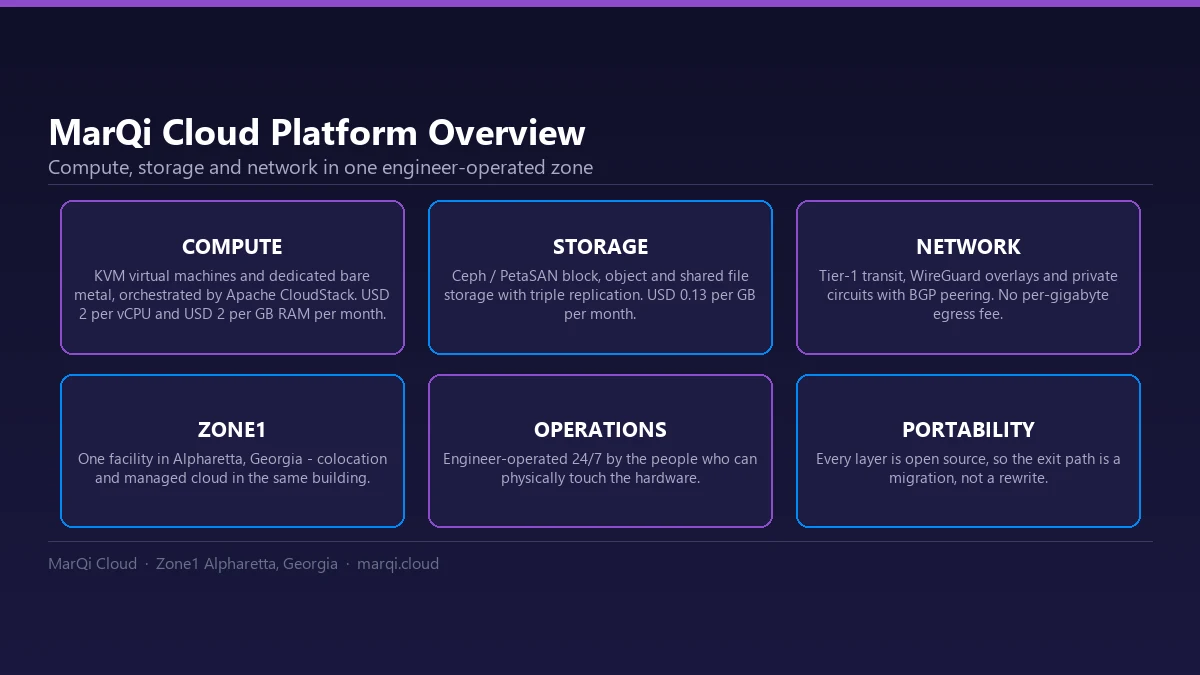
MarQi Cloud is an ideal foundation for your multi-cloud strategy due to its enterprise-grade cloud infrastructure and range of services. Here are a few compelling reasons to consider MarQi Cloud:
Enterprise-Grade Cloud Infrastructure
MarQi Cloud provides a robust infrastructure designed to support enterprise applications and workloads. This ensures high availability, security, and performance for your mission-critical applications.
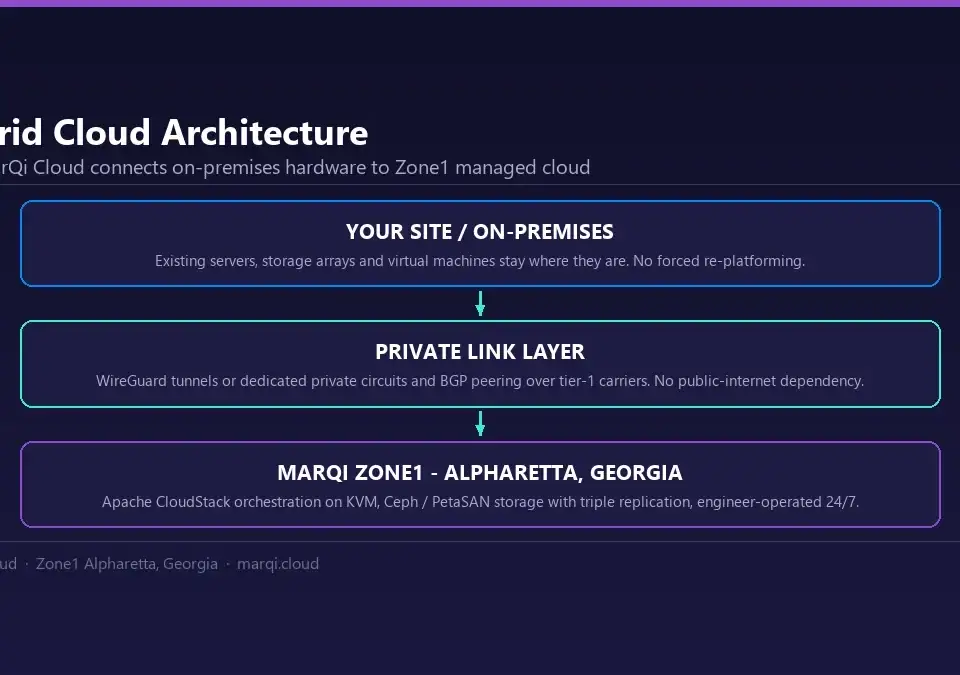
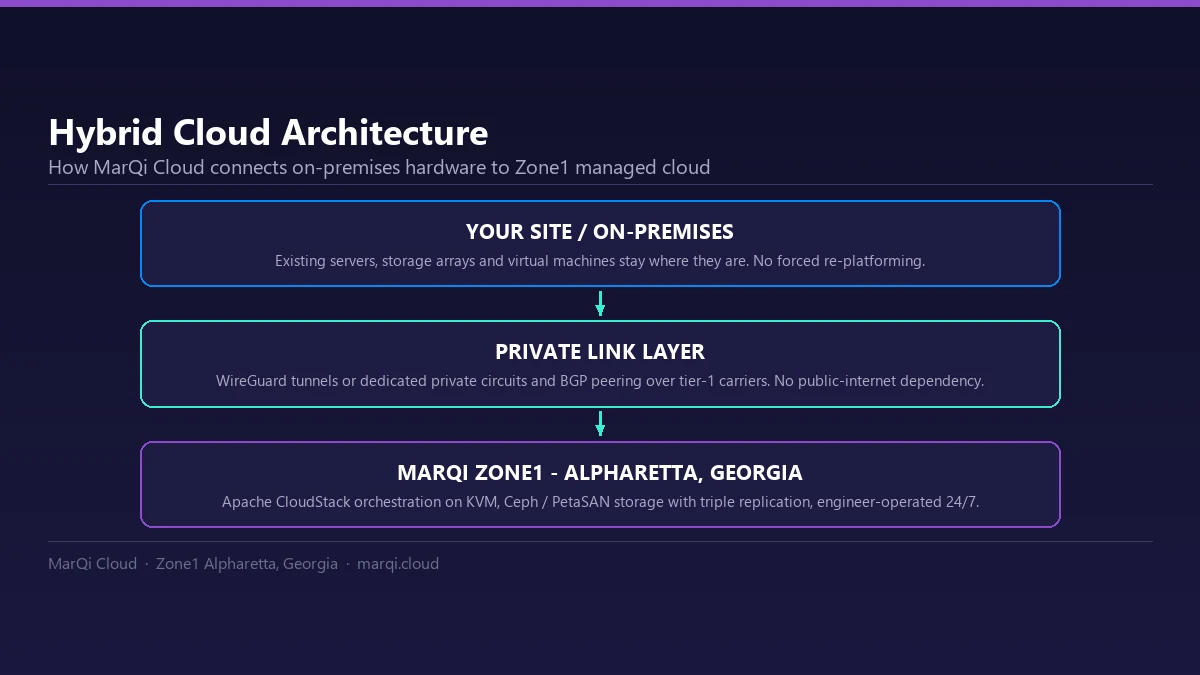
Hybrid Cloud Deployment Models
The flexibility of hybrid cloud models allows businesses to run applications across multiple environments, enabling seamless data transfer and integration between on-premises and cloud resources.
Private and Secure Hosting Environments
MarQi Cloud prioritizes security, offering private and secure hosting environments that protect sensitive data and meet compliance requirements.
Scalable Compute and Storage Resources
As your business grows, MarQi Cloud’s scalable compute and storage resources allow you to expand your infrastructure quickly and efficiently without compromising performance.
Business Continuity and Disaster Recovery Solutions
MarQi Cloud provides comprehensive business continuity and disaster recovery solutions, ensuring your data is safe and recoverable in the event of an incident.
Performance-Driven Infrastructure Design
The infrastructure design at MarQi Cloud is performance-driven, allowing businesses to achieve optimal speeds and reliability, crucial for today’s demanding applications.
US-Based Infrastructure and Support
With a US-based infrastructure, MarQi Cloud offers reliable support and services tailored to the needs of businesses operating in the region.
Flexible Pricing Models
MarQi Cloud’s flexible pricing models cater to businesses of all sizes, providing cost-effective solutions without compromising service quality.
Steps to Build Your Multi-Cloud Strategy
1. Assess Your Current Infrastructure
Begin by evaluating your existing infrastructure to identify gaps and areas for improvement. Consider your current workloads, data management practices, and application needs.
2. Identify Key Business Objectives
Define your business objectives and how a multi-cloud strategy aligns with them. This may include improving application performance, enhancing security, or achieving regulatory compliance.
3. Choose the Right Cloud Providers
Research and select cloud providers that align with your business goals. MarQi Cloud can serve as your primary infrastructure provider, while you can augment it with services from other vendors.
4. Develop a Governance Framework
Establish a governance framework that defines policies for resource management, compliance, and security across your multi-cloud environment.
5. Implement Integration Solutions
Utilize integration tools and APIs to ensure seamless interoperability between different cloud services, facilitating data exchange and application performance.
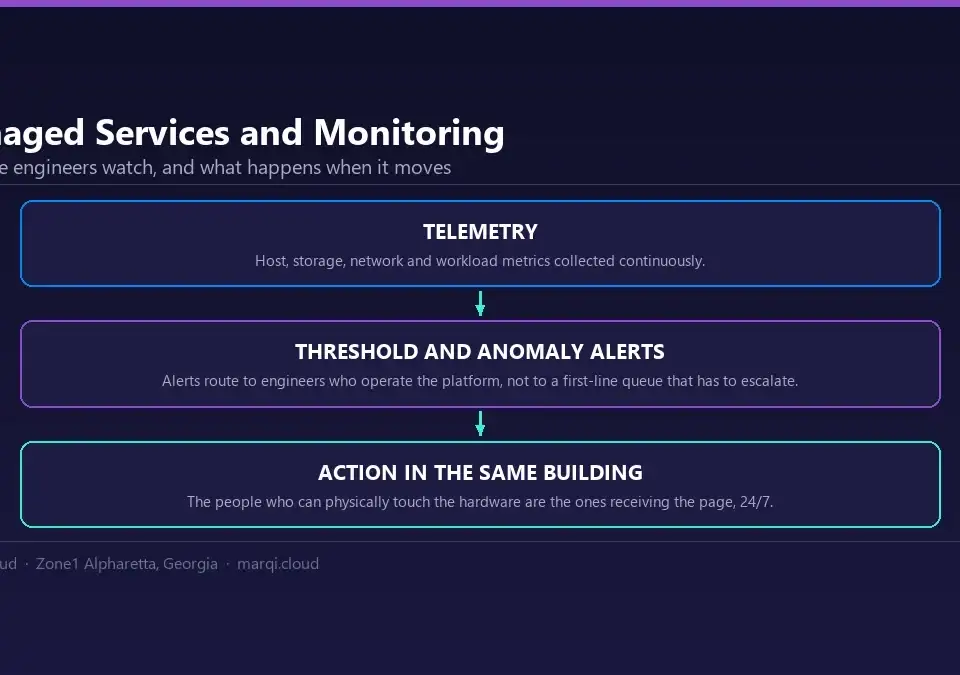
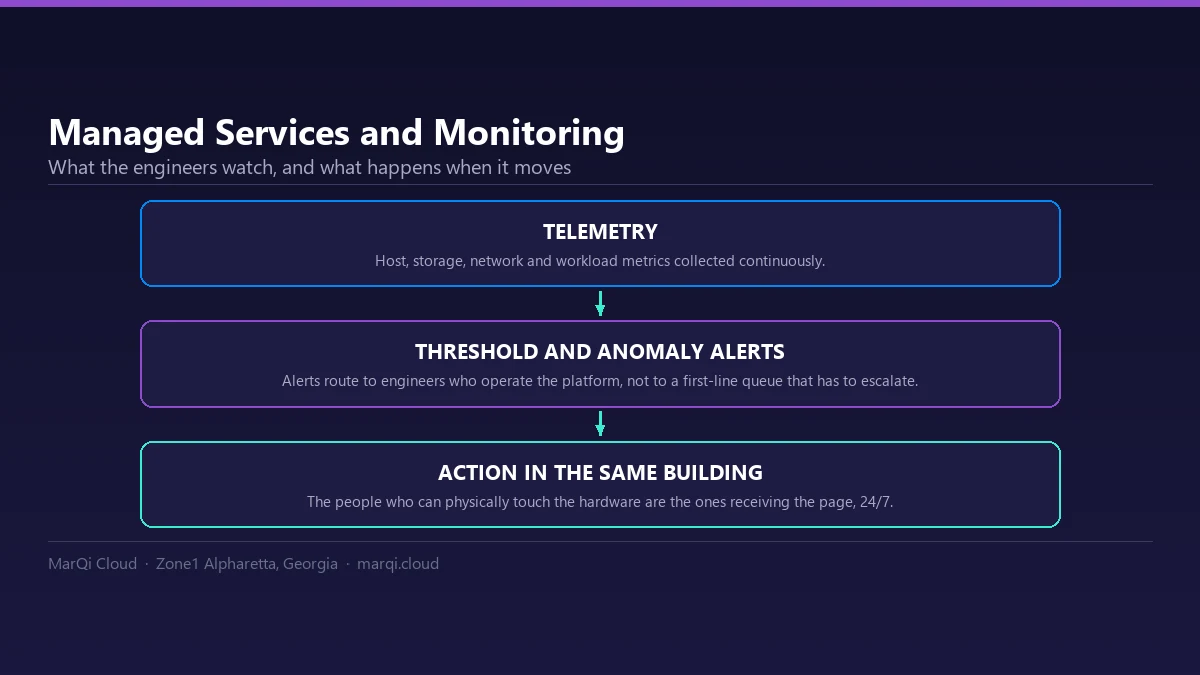
6. Monitor Performance and Security
Establish monitoring solutions to track the performance of your multi-cloud environment and identify potential security threats.
7. Optimize Costs
Regularly review your cloud expenditures to ensure you are getting the best value for your investment. Adjust your resources as necessary to maintain cost efficiency.
8. Train Your Team
Ensure your team is well-trained in multi-cloud management practices and technologies to maximize the benefits of your strategy.
Challenges in Multi-Cloud Strategy
Implementing a multi-cloud strategy can come with its share of challenges. Here are a few common obstacles organizations may face:
1. Complexity in Management
Managing multiple cloud services can be complex, requiring sophisticated tools and processes to ensure efficiency.
2. Data Security Concerns
With data spread across various cloud platforms, maintaining security and compliance can become challenging.
3. Integration Issues
Integrating different cloud services can lead to compatibility issues, potentially affecting performance.
4. Increased Costs
While multi-cloud strategies can be cost-effective, they can also lead to increased costs if not managed properly.
Frequently Asked Questions (FAQ)
1. What is a multi-cloud strategy?
A multi-cloud strategy involves utilizing multiple cloud services from different providers to meet specific business needs, enhancing flexibility and performance.
2. Why should I choose MarQi Cloud for my multi-cloud strategy?
MarQi Cloud offers enterprise-grade infrastructure, flexible pricing, and a range of services tailored for business continuity, security, and performance.
3. How can I ensure data security in a multi-cloud environment?
Implement strong security measures, such as encryption and access controls, and regularly monitor your cloud environment for potential threats.
4. What are the cost implications of a multi-cloud strategy?
While a multi-cloud strategy can optimize costs, it requires careful management to avoid overspending on resources.
5. How do I choose the right cloud providers?
Assess your business needs, research different cloud providers, and select those that offer the best services for your requirements.
6. What challenges might I face with a multi-cloud strategy?
Challenges may include complexity in management, data security concerns, integration issues, and increased costs.
7. How can I integrate different cloud services?
Utilize integration tools and APIs to facilitate seamless data exchange and interoperability between various cloud services.
8. Is training necessary for managing a multi-cloud environment?
Yes, training your team in multi-cloud management practices is crucial to maximizing the benefits of your multi-cloud strategy.
Conclusion
Building a multi-cloud strategy can significantly enhance your organization’s flexibility, performance, and resilience. With MarQi Cloud as your foundation, you can harness the benefits of enterprise-grade cloud infrastructure while enjoying the flexibility of hybrid models and secure environments. By following the steps outlined in this article and addressing the potential challenges, you can create a robust multi-cloud strategy that drives your business forward.