How to Deploy a Node.js App on MarQi Cloud VPS in 15 Minutes Flat
May 19, 2026The Complete Guide to Setting Up cPanel on MarQi Cloud VPS
May 19, 2026
How to Run a High-Performance MySQL Database on MarQi Cloud
In today’s data-driven world, businesses rely heavily on databases to manage their information effectively. MySQL has established itself as a leading relational database management system (RDBMS) known for its reliability and performance. When combined with MarQi Cloud’s enterprise-grade infrastructure, your MySQL database can achieve exceptional performance and scalability. In this article, we will explore how to run a high-performance MySQL database on MarQi Cloud, covering everything from infrastructure setup to optimization techniques.
Understanding MySQL and Its Importance
MySQL is an open-source RDBMS that uses Structured Query Language (SQL) for database management. It is widely used for web applications, data warehousing, and e-commerce solutions due to its flexibility, speed, and reliability. With features like ACID compliance, replication, and partitioning, MySQL supports high-availability environments and can handle large amounts of data. Implementing MySQL on MarQi Cloud’s infrastructure can further enhance its capabilities, providing businesses with a robust platform for their data needs.
Why Choose MarQi Cloud for MySQL?
MarQi Cloud offers a range of benefits that make it an ideal choice for hosting your MySQL database:
1. Enterprise-Grade Cloud Infrastructure
MarQi Cloud’s infrastructure is built to meet the demands of modern businesses. It provides high availability, low latency, and exceptional performance, ensuring that your MySQL database runs smoothly even under heavy loads.
2. Hybrid Cloud Deployment Models
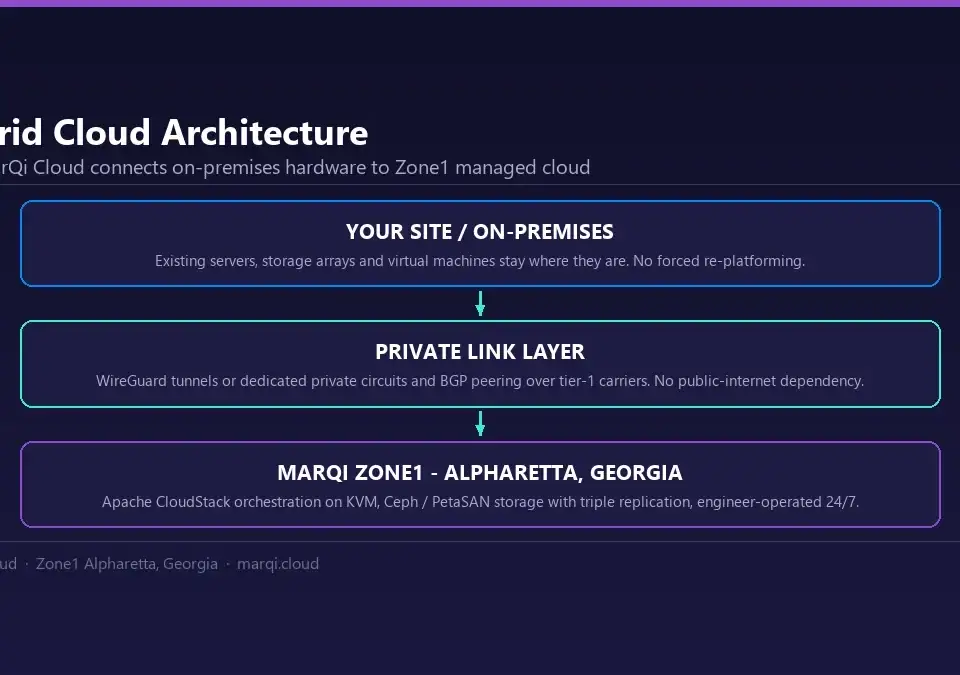
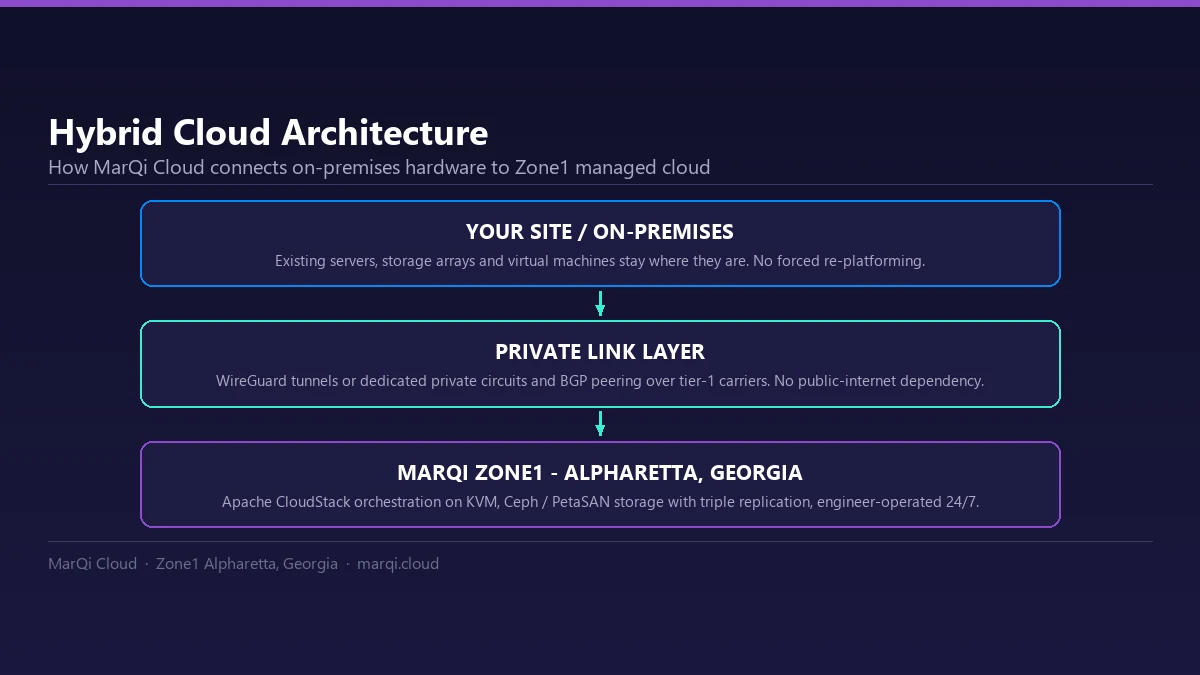
With MarQi Cloud, you can choose between public, private, or hybrid cloud deployment models, allowing you to customize your environment based on your specific needs and compliance requirements.
3. Private and Secure Hosting Environments
Data security is a top priority for any business. MarQi Cloud offers secure hosting environments with advanced security protocols, ensuring that your MySQL data is protected from unauthorized access.
4. Scalable Compute and Storage Resources
As your business grows, so do your data needs. MarQi Cloud provides scalable compute and storage resources, allowing you to seamlessly adjust your MySQL environment as required.
5. Business Continuity and Disaster Recovery Solutions
MarQi Cloud ensures that your MySQL database is always available, with robust backup and disaster recovery solutions that keep your data safe and accessible.
6. Performance-Driven Infrastructure Design
Designed for performance, MarQi Cloud’s infrastructure features high-speed networking and optimized storage solutions that enhance the speed and efficiency of your MySQL database.
7. US-Based Infrastructure and Support
With US-based infrastructure and support, you can expect responsive service and assistance whenever you need it, ensuring your MySQL database operates at peak performance.
8. Flexible Pricing Models
MarQi Cloud offers flexible pricing models that cater to businesses of all sizes, allowing you to choose a plan that fits your budget while still providing the resources you need for a high-performance MySQL database.
Setting Up Your MySQL Database on MarQi Cloud
Step 1: Choose Your Deployment Model
Decide whether you want to deploy your MySQL database on a public cloud, private cloud, or a hybrid solution. Each option has its benefits, and the choice should align with your business requirements and compliance standards.
Step 2: Provision Your Resources
Using the MarQi Cloud dashboard, provision the necessary compute and storage resources for your MySQL database. Ensure that you select instances with adequate CPU and RAM to support your expected workload.
Step 3: Install MySQL
Once your resources are provisioned, you can install MySQL on your cloud instance. This can typically be done using package managers or by downloading the MySQL installer directly from the official website.
Step 4: Configure MySQL Settings
After installation, configure your MySQL settings for optimal performance. This includes adjusting parameters such as buffer pool size, query cache size, and connection limits based on your application requirements.
Optimizing MySQL for Performance
1. Indexing
Proper indexing is crucial for improving the speed of data retrieval operations. Analyze your queries and create indexes on columns that are frequently used in WHERE clauses or JOIN conditions.
2. Query Optimization
Regularly review and optimize your SQL queries. Avoid SELECT * statements and instead retrieve only the columns you need. Use EXPLAIN to analyze query execution plans and identify bottlenecks.
3. Utilizing Caching
Implement caching mechanisms to reduce the load on your MySQL database. This can include query caching or using a dedicated caching layer like Redis or Memcached to store frequently accessed data.
4. Connection Pooling
Utilize connection pooling to manage database connections efficiently. This reduces the overhead of establishing new connections and improves the overall performance of your application.
5. Regular Maintenance
Perform regular maintenance tasks such as updating statistics, optimizing tables, and cleaning up unused data. This helps maintain the performance of your MySQL database over time.
Monitoring and Managing Your MySQL Database
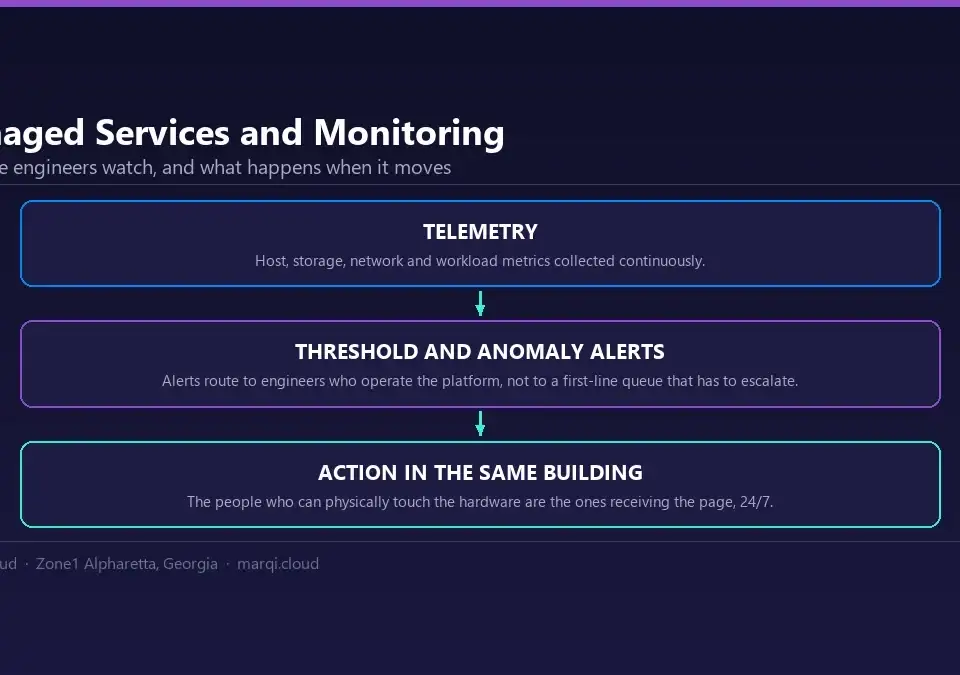
Effective monitoring and management are essential for maintaining a high-performance MySQL database. Utilize monitoring tools to track performance metrics such as query response times, CPU usage, and memory consumption. Set up alerts for critical performance thresholds and regularly review logs to identify potential issues before they escalate. MarQi Cloud offers integrated monitoring solutions that provide real-time insights into your database performance.
Conclusion
Running a high-performance MySQL database on MarQi Cloud is not only achievable but can provide significant advantages to your business. By leveraging MarQi Cloud’s infrastructure, optimizing your MySQL setup, and implementing best practices for performance, you can ensure that your database meets your organization’s needs today and into the future. If you have any questions or need assistance with your MySQL database on MarQi Cloud, don’t hesitate to reach out to our support team at +1 770-369-9321.
FAQ
1. What is the best deployment model for MySQL on MarQi Cloud?
The best deployment model depends on your specific business needs. Public cloud is ideal for flexibility and cost, while private cloud offers enhanced security, and hybrid provides a balance of both.
2. How can I ensure the security of my MySQL database on MarQi Cloud?
Utilize strong authentication methods, encrypt sensitive data, and regularly update your MySQL installation to protect against vulnerabilities.
3. What are the key performance metrics to monitor for MySQL?
Key performance metrics include query response times, CPU and memory usage, disk I/O rates, and connection counts.
4. How often should I perform maintenance on my MySQL database?
Regular maintenance should be performed at least once a month, including updating statistics and optimizing tables.
5. Can I scale my MySQL database resources easily on MarQi Cloud?
Yes, MarQi Cloud allows you to scale your compute and storage resources seamlessly as your needs grow.
6. What tools can I use for monitoring MySQL performance?
There are several tools available, including MySQL Workbench, Percona Monitoring and Management, and MarQi Cloud’s integrated monitoring solutions.
7. Is it possible to run multiple MySQL instances on MarQi Cloud?
Yes, you can run multiple MySQL instances on MarQi Cloud by provisioning separate resources for each instance.
8. How can I optimize MySQL queries for better performance?
Optimize queries by creating proper indexes, avoiding SELECT *, and using EXPLAIN to analyze execution plans.
9. What should I do if my MySQL database performance degrades?
Investigate performance metrics, review query execution plans, and consider scaling resources or optimizing your database configuration.
10. How can I contact MarQi Cloud support for assistance?
You can reach MarQi Cloud support at +1 770-369-9321 for any assistance with your MySQL database or cloud infrastructure.