MarQi Cloud + Cloudflare: The Performance Stack That Defeats Any Traffic Spike
April 6, 2026
MarQi Cloud and Nginx: The Ultimate High-Performance Web Server Setup
April 6, 2026
How to Use MarQi Cloud Object Storage as a CDN Backend
In today’s digital landscape, businesses are increasingly relying on content delivery networks (CDNs) to enhance the performance and reliability of their web applications. MarQi Cloud offers enterprise-grade cloud infrastructure that can seamlessly integrate with CDN solutions, ensuring efficient content delivery. In this article, we will explore how to utilize MarQi Cloud Object Storage as a CDN backend, optimizing your online presence and user experience.
Understanding CDN and Its Importance
A Content Delivery Network (CDN) is a network of servers distributed across various geographical locations, designed to deliver content to users quickly and efficiently. By caching copies of content closer to users, CDNs reduce latency, enhance load times, and improve overall website performance.
Benefits of Using a CDN
- Improved Load Times: CDNs reduce the distance between users and server locations, resulting in faster content delivery.
- Increased Reliability: By distributing content across multiple servers, CDNs provide redundancy and reduce the risk of downtime.
- Enhanced Security: CDNs can help mitigate DDoS attacks and provide secure connections through HTTPS.
- Better Scalability: CDNs can handle sudden spikes in traffic, ensuring that your website remains accessible under heavy load.
What is MarQi Cloud Object Storage?
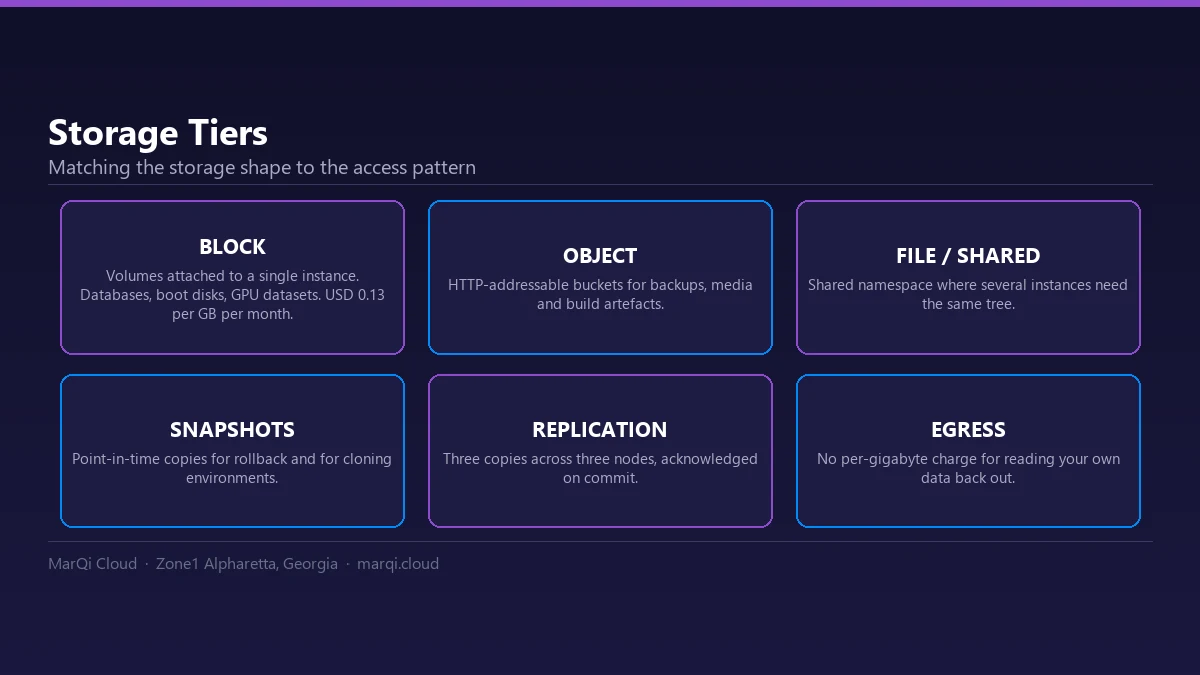
MarQi Cloud Object Storage is a scalable and secure solution designed to store and manage large volumes of unstructured data. It provides a flexible and reliable storage environment suitable for various applications, including media files, backups, and web content. With features like high availability, strong security protocols, and US-based infrastructure, MarQi Cloud Object Storage is an ideal choice for businesses looking to enhance their content delivery capabilities.
Key Features of MarQi Cloud Object Storage
- Scalable Compute and Storage Resources: Easily scale your storage needs based on demand without compromising performance.
- Private and Secure Hosting Environments: Ensure your data is protected with advanced security measures.
- Flexible Pricing Models: Choose a pricing plan that aligns with your business needs and budget.
- Business Continuity and Disaster Recovery Solutions: Safeguard your data with robust backup and recovery options.
Setting Up MarQi Cloud Object Storage as a CDN Backend
To leverage MarQi Cloud Object Storage as a CDN backend, follow these steps:
1. Create a MarQi Cloud Account
Start by signing up for a MarQi Cloud account. This will give you access to the cloud infrastructure and object storage services. Once your account is set up, you can log in to the MarQi Cloud dashboard to manage your resources.
2. Create an Object Storage Bucket
After logging in, navigate to the Object Storage section to create a new storage bucket. This bucket will hold all the content you wish to serve through the CDN. When creating the bucket, consider the following:
- Bucket Name: Choose a unique name for easy identification.
- Region: Select a region that is closest to your primary audience for optimum latency.
- Access Permissions: Set the appropriate access permissions based on your content delivery needs.
3. Upload Your Content
Once your bucket is created, you can start uploading your content. This could include images, videos, stylesheets, scripts, and other static files that your web application requires. MarQi Cloud’s interface allows you to upload files easily or manage them through APIs for automated workflows.
4. Configure CDN Settings
With your content uploaded, the next step is to configure the CDN settings. If you are using a third-party CDN provider, you will need to:
- Point the CDN to Your MarQi Cloud Object Storage: In your CDN provider’s settings, specify your MarQi Cloud bucket URL as the origin server.
- Set Cache Rules: Configure caching rules to determine how long content should be cached on the CDN servers.
- Enable HTTPS: Ensure secure delivery of your content by enabling HTTPS for your CDN.
5. Test the Setup
After configuring the CDN settings, it’s crucial to test the setup to ensure everything is functioning as expected. Access your content through the CDN URL and verify that it loads correctly and efficiently. Utilize tools like Pingdom or GTmetrix to analyze load times and performance metrics.
6. Monitor and Optimize
Once your MarQi Cloud Object Storage is successfully integrated with your CDN, ongoing monitoring and optimization are essential. Use analytics tools provided by your CDN and MarQi Cloud to track performance, identify bottlenecks, and make necessary adjustments to improve delivery speeds.
Best Practices for Using MarQi Cloud Object Storage with a CDN
- Optimize Your Files: Compress images and minify CSS and JavaScript files to reduce file sizes, enhancing load times.
- Use a Versioning System: Implement versioning for your files to manage updates and ensure users receive the latest content.
- Leverage Caching: Utilize CDN caching features to minimize requests to your MarQi Cloud Object Storage, improving efficiency.
- Regularly Review Your Setup: Periodically check your CDN and MarQi Cloud configurations to ensure optimal performance and security.
Conclusion
Using MarQi Cloud Object Storage as a CDN backend is an effective way to enhance your website’s performance and user experience. By leveraging the scalable and secure infrastructure offered by MarQi Cloud, combined with the fast delivery capabilities of a CDN, businesses can ensure that their content reaches users quickly and reliably. Implement the steps outlined in this article to set up your MarQi Cloud Object Storage as a CDN backend and take your content delivery to the next level.
Frequently Asked Questions (FAQs)
1. What is MarQi Cloud Object Storage?
MarQi Cloud Object Storage is a scalable and secure cloud storage solution designed to store large volumes of unstructured data, ideal for applications such as media files and web content.
2. How does a CDN work?
A CDN works by distributing content across multiple servers globally, caching copies of content closer to users to reduce latency and improve load times.
3. Why should I use MarQi Cloud Object Storage with a CDN?
Using MarQi Cloud Object Storage with a CDN enhances content delivery speed, improves website performance, and provides a reliable and secure hosting environment.
4. How do I create a storage bucket in MarQi Cloud?
Log in to your MarQi Cloud account, navigate to the Object Storage section, and follow the prompts to create a new storage bucket with your preferred settings.
5. Can I use third-party CDNs with MarQi Cloud?
Yes, MarQi Cloud Object Storage can be integrated with various third-party CDNs by specifying the storage bucket URL as the origin server.
6. What security measures does MarQi Cloud offer?
MarQi Cloud provides strong security protocols, including data encryption, access controls, and private hosting environments to protect your data.
7. How do I monitor the performance of my CDN?
You can use analytics tools provided by your CDN and MarQi Cloud to track performance metrics, such as load times, request counts, and error rates.
8. What are the pricing options for MarQi Cloud Object Storage?
MarQi Cloud offers flexible pricing models tailored to your business needs, allowing you to choose a plan that fits your budget and usage requirements.
9. How can I optimize my files for faster delivery?
You can optimize files by compressing images, minifying CSS and JavaScript, and implementing caching strategies to reduce file sizes and improve load times.
10. Is MarQi Cloud Object Storage suitable for enterprise use?
Yes, MarQi Cloud Object Storage is designed to meet enterprise-grade requirements, providing scalable, secure, and high-performance storage solutions.