Why Single-Pane-of-Glass Management Simplifies Hybrid Cloud Operations
July 27, 2026
How Hybrid Cloud Enables Gradual Migration Without Disrupting Operations
July 27, 2026
The Complete Guide to Hybrid Cloud Cost Allocation and Chargeback Models
As organizations increasingly adopt hybrid cloud solutions, understanding cost allocation and chargeback models becomes crucial for effective financial management. This comprehensive guide will delve into the intricacies of hybrid cloud cost allocation, helping you maximize your investment in enterprise cloud services while ensuring transparency and accountability across your organization. Whether you’re an IT manager or a finance executive, this guide will equip you with the knowledge to implement effective chargeback models that align with your business objectives.
What is Hybrid Cloud?
Hybrid cloud is a cloud computing environment that combines public cloud services and private cloud infrastructure. This model allows organizations to leverage the scalability and cost-effectiveness of public cloud resources while maintaining control over sensitive data and applications in a private cloud. The global public cloud services market has continued to grow year over year, emphasizing the importance of hybrid cloud solutions.
Importance of Cost Allocation in Hybrid Cloud
Effective cost allocation is vital for organizations utilizing hybrid cloud solutions for several reasons:
- Transparency: Clear cost allocation helps in understanding where resources are being utilized, which can enhance accountability.
- Budgeting: By accurately allocating costs, organizations can budget more effectively, avoiding overspending and facilitating better financial planning.
- Optimization: Understanding which services are driving costs enables organizations to optimize their cloud usage and identify areas for improvement.
In a hybrid cloud environment, cost allocation can become complex due to the combination of on-premises infrastructure, public cloud services, and private cloud resources. Therefore, adopting a structured approach to cost allocation is essential for organizations to manage their hybrid cloud expenses effectively.
Understanding Chargeback Models
Chargeback models are financial mechanisms used by organizations to allocate costs to specific departments or business units based on their usage of cloud resources. Chargeback models allow organizations to track and report costs accurately, fostering accountability and encouraging responsible resource usage.
Benefits of Chargeback Models
Implementing chargeback models offers several benefits:
- Encourages Resource Optimization: Departments are more likely to optimize their usage when they are directly responsible for the costs incurred.
- Increases Accountability: Chargeback models promote accountability among teams, ensuring that resources are used efficiently and effectively.
- Improves Financial Planning: By understanding cloud costs, organizations can make informed financial decisions and allocate budgets appropriately.
Types of Chargeback Models
There are several chargeback models organizations can adopt, each with its advantages and challenges. The choice of model will depend on the organization’s structure, goals, and cloud usage patterns.
1. Showback Model
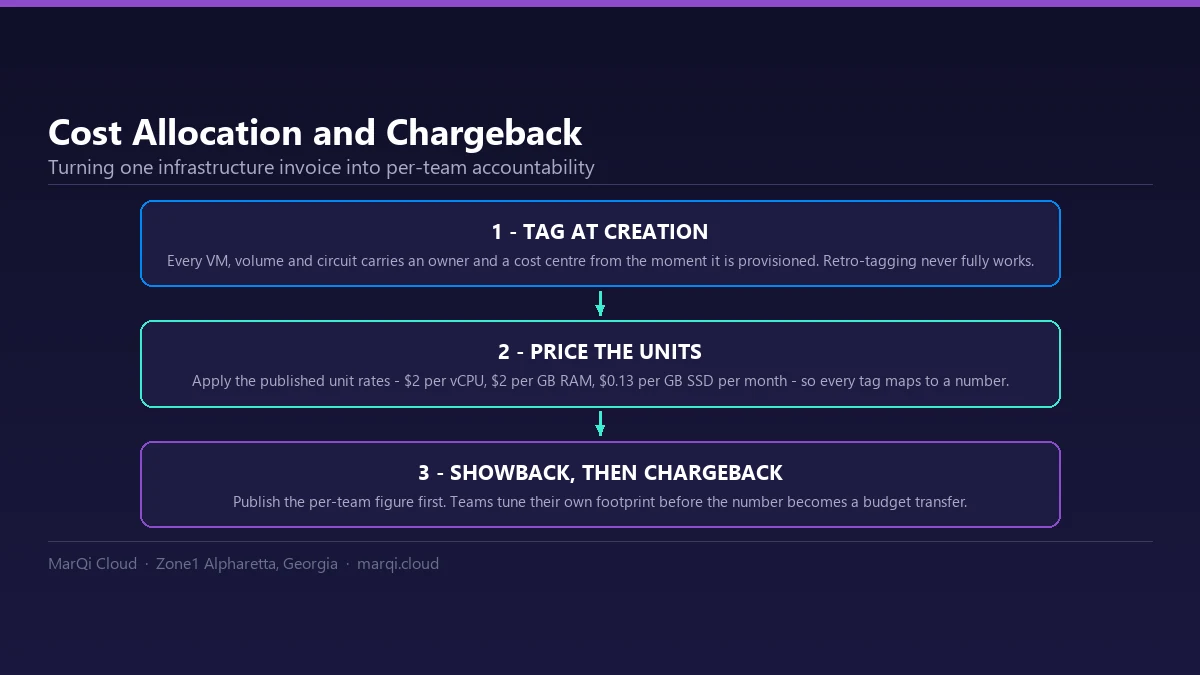
The showback model provides visibility into cloud costs without charging departments directly. It allows organizations to track usage and costs, presenting reports to departments for awareness. This model is ideal for organizations looking to inform teams about their resource usage without enforcing immediate financial accountability.
2. Chargeback Model
The chargeback model allocates costs directly to departments based on their actual usage of cloud resources. This model requires accurate tracking and reporting mechanisms to ensure transparency and fairness. Chargeback models can be based on various metrics, such as CPU usage, storage consumption, or data transfer.
3. Allocation Model
Allocation models distribute costs based on predefined rules or ratios rather than actual usage. For example, organizations may allocate costs based on the number of employees in a department or the size of the budget. While this model simplifies cost allocation, it may not reflect actual resource usage accurately.
4. Hybrid Chargeback Model
The hybrid chargeback model combines elements of chargeback and allocation models. It allows organizations to allocate a portion of costs based on actual usage while distributing the remainder based on predefined rules. This model provides flexibility and can be tailored to meet the unique needs of the organization.
Best Practices for Cost Allocation
To implement effective cost allocation in a hybrid cloud environment, organizations should consider the following best practices:
- Establish Clear Metrics: Define the metrics that will be used to measure resource usage, such as compute hours, storage consumption, and data transfer rates.
- Utilize Automation: Leverage automation tools to track usage and costs in real-time, reducing manual effort and minimizing errors.
- Regular Reporting: Implement regular reporting mechanisms to provide visibility into cloud costs and usage for all stakeholders.
- Engage Stakeholders: Involve key stakeholders from IT, finance, and business units in the cost allocation process to ensure alignment and buy-in.
- Iterate and Improve: Continuously review and refine cost allocation models based on feedback and changing organizational needs.
Implementing Chargeback in Your Organization
Implementing a chargeback model requires careful planning and execution. Here are the steps to successfully implement chargeback in your organization:
Step 1: Assess Current Cloud Usage
Begin by assessing your organization’s current cloud usage patterns. Identify which departments are utilizing cloud resources and the types of services they are consuming.
Step 2: Define Chargeback Metrics
Determine the metrics that will be used for chargeback calculations. Common metrics include CPU hours, storage used, and data transfer rates. Ensure that the selected metrics align with your organization’s objectives.
Step 3: Choose a Chargeback Model
Select the appropriate chargeback model based on your organization’s structure and goals. Consider factors such as ease of implementation, transparency, and alignment with financial objectives.
Step 4: Implement Tracking Mechanisms
Set up tracking mechanisms to monitor resource usage accurately. This may involve utilizing cloud management platforms or custom-built tools to collect and report data in real-time.
Step 5: Communicate with Stakeholders
Engage with stakeholders to communicate the chargeback model and its benefits. Provide training and resources to ensure that all teams understand how the model works and how it will affect their budgets.
Step 6: Monitor and Optimize
After implementing the chargeback model, continuously monitor its effectiveness. Gather feedback from stakeholders and make adjustments as needed to improve transparency and accountability.
Tools and Software for Cost Management
Several tools and software solutions can assist organizations in managing hybrid cloud costs effectively:
- Cloud Management Platforms: Platforms like CloudHealth and AWS Cost Management provide tools for tracking usage, analyzing costs, and optimizing cloud spending.
- Financial Management Software: Integrating financial management software like Oracle ERP or SAP can enhance financial visibility and reporting capabilities.
- Custom Solutions: Organizations may choose to develop custom solutions tailored to their specific needs, allowing for greater flexibility in tracking and reporting costs.
Case Studies and Examples
Examining real-world examples can provide valuable insights into effective hybrid cloud cost allocation and chargeback models:
Case Study 1: A Financial Services Firm
A leading financial services firm implemented a chargeback model based on resource usage metrics to improve accountability. By tracking cloud costs and allocating them to specific business units, the firm was able to reduce cloud spending by 15% within the first year.
Case Study 2: A Healthcare Provider
A healthcare provider adopted a hybrid chargeback model to allocate costs based on a combination of usage and predefined ratios. This approach allowed the organization to maintain control over sensitive data while optimizing resource allocation, resulting in a 20% reduction in overall cloud costs.
Frequently Asked Questions
1. What is hybrid cloud cost allocation?
Hybrid cloud cost allocation refers to the process of distributing cloud costs across different departments or business units based on their usage of cloud resources.
2. Why is chargeback important in hybrid cloud environments?
Chargeback models promote accountability and transparency, encouraging departments to optimize their resource usage and manage budgets effectively.
3. What are the common chargeback models?
The most common chargeback models include showback, chargeback, allocation, and hybrid chargeback models.
4. How can organizations track cloud costs effectively?
Organizations can track cloud costs using cloud management platforms, financial management software, or custom-built solutions tailored to their needs.
5. What metrics should be used for chargeback calculations?
Common metrics for chargeback calculations include CPU usage, storage consumption, and data transfer rates.
6. How can organizations ensure transparency in cost allocation?
Establishing clear metrics, utilizing automation, and implementing regular reporting mechanisms can enhance transparency in cost allocation.
7. What are the benefits of using a hybrid chargeback model?
A hybrid chargeback model provides flexibility, allowing organizations to allocate costs based on actual usage while also applying predefined rules.
8. How can organizations optimize their hybrid cloud spending?
By monitoring usage, implementing chargeback models, and leveraging cloud management tools, organizations can identify areas for optimization and reduce costs.
9. What role do stakeholders play in chargeback implementation?
Stakeholders from IT, finance, and business units should be involved in the chargeback implementation process to ensure alignment and buy-in.
10. How can organizations improve their cost allocation models over time?
Organizations should continuously gather feedback, review their cost allocation models, and make adjustments based on changing needs and organizational goals.
11. What is the difference between showback and chargeback?
Showback provides visibility into costs without charging departments directly, while chargeback allocates costs based on actual usage.
12. What tools can help with cloud cost management?
Cloud management platforms, financial management software, and custom solutions can assist organizations in managing hybrid cloud costs effectively.
Conclusion
Understanding hybrid cloud cost allocation and chargeback models is essential for organizations looking to optimize their cloud spending. By implementing effective chargeback models and adhering to best practices, organizations can achieve greater transparency, accountability, and financial management. As the demand for hybrid cloud solutions continues to grow, leveraging these strategies will ensure your organization remains competitive and efficient in the ever-evolving cloud landscape.