The Complete Guide to Building a Reliable CI/CD Pipeline on MarQi Cloud
August 17, 2026
Why SRE Practices on Cloud Infrastructure Enhance Service Reliability
August 17, 2026
How Infrastructure Drift Detection Prevents Configuration Inconsistencies in Cloud
In the rapidly evolving landscape of cloud computing, maintaining consistent configurations across cloud infrastructure is paramount for the security, performance, and reliability of enterprise systems. Infrastructure drift detection emerges as a vital practice that helps organizations identify and rectify configuration inconsistencies before they escalate into significant issues. This article delves into the concept of infrastructure drift, the importance of detecting it, and how businesses can keep their cloud environment consistent on MarQi Cloud, with evidence they can use in their own compliance work.
Understanding Infrastructure Drift
Infrastructure drift refers to the gradual divergence of a system’s infrastructure from its intended configuration over time. This can happen due to various factors, including manual changes, automated updates, or even external factors like compliance requirements. In cloud environments, where resources may be provisioned and decommissioned at a rapid pace, drift can lead to inconsistencies that can jeopardize security and operational efficiency.
For instance, consider a scenario where a virtual machine (VM) is launched with specific security settings. Over time, if updates are applied manually without proper tracking, the VM may no longer align with the organization’s security policies. This misalignment can expose the organization to vulnerabilities and compliance issues.
Importance of Drift Detection
Detecting infrastructure drift is crucial for several reasons:
- Security: Configuration inconsistencies can lead to security vulnerabilities. For example, a firewall rule that is altered unintentionally can expose sensitive data to unauthorized access.
- Compliance: Many industries are subject to strict regulatory requirements. Drift detection ensures that configurations remain compliant with standards such as HIPAA, GDPR, and PCI-DSS.
- Operational Efficiency: Consistent configurations lead to predictable performance. Drift can cause unexpected behavior in applications, resulting in downtime or degraded service.
- Cost Management: Misconfigured resources can lead to unnecessary costs. For instance, over-provisioned resources due to drift can inflate cloud bills.
As organizations increasingly adopt hybrid and multi-cloud strategies, the need for effective drift detection becomes even more critical. MarQi Cloud offers enterprise-grade solutions designed to address these complexities.
How Drift Detection Works
Drift detection typically involves several key steps:
- Baseline Configuration: The first step is to establish a baseline configuration that accurately reflects the desired state of the infrastructure. This serves as a reference point for future comparisons.
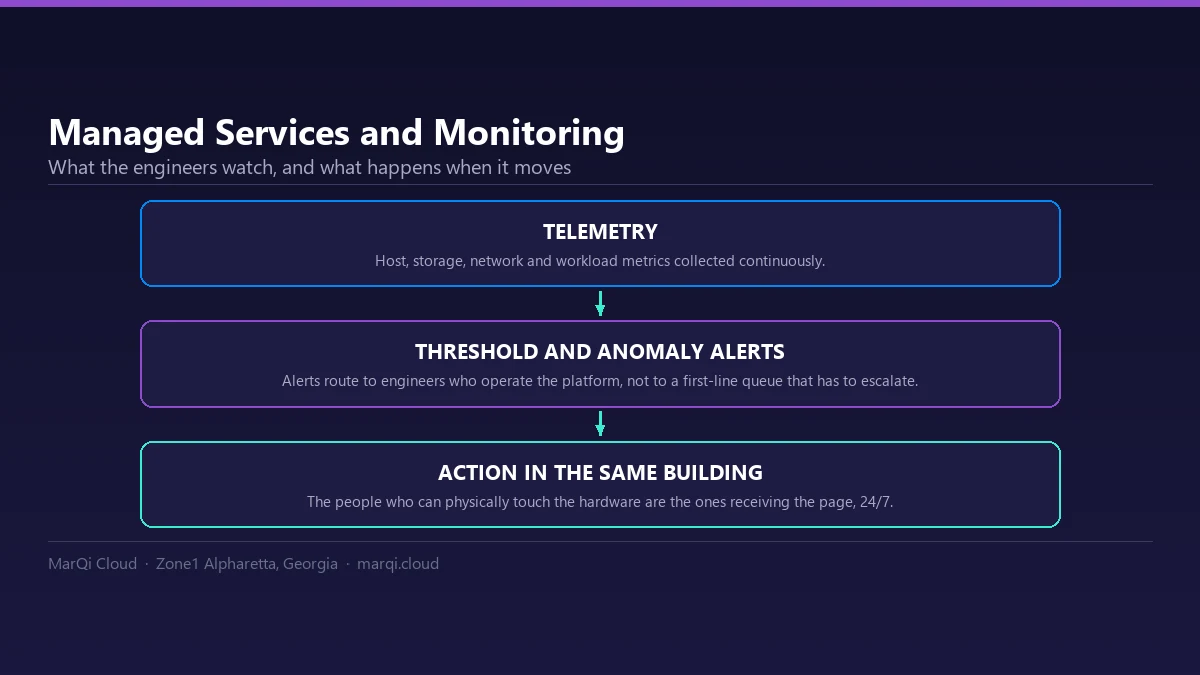
- Continuous Monitoring: Next, tools continuously monitor the infrastructure for changes. This can include tracking configurations, permissions, and resource states.
- Alerts and Reporting: When drift is detected, alerts are generated, and reports are created to inform IT teams. This allows for prompt investigation and remediation.
- Remediation Actions: Depending on the organization’s policies, remediation can involve manual corrections or automated processes to reconcile drift.
Tools for Drift Detection
There are various tools available for drift detection, each offering unique features and capabilities. Some popular options include:
| Tool | Key Features | Best For |
|---|---|---|
| Terraform | Infrastructure as Code, State Management | Organizations using IaC |
| CloudFormation | Template Management, Integrated with AWS | AWS-centric environments |
| Puppet | Configuration Management, Reporting | Complex environments requiring automation |
| Chef | Compliance Automation, Drift Reporting | DevOps teams focused on compliance |
| GitOps Tools (e.g., ArgoCD) | Version Control, Continuous Delivery | Teams using Git for deployment |
For businesses utilizing MarQi Cloud’s hybrid cloud solutions, integrating these tools can enhance the effectiveness of drift detection, ensuring a consistent and secure environment.
Best Practices for Implementing Drift Detection
To effectively implement drift detection, consider the following best practices:
- Define Clear Policies: Establish clear policies for configuration management and drift detection. This should include guidelines on who is responsible for monitoring and remediation.
- Automate Where Possible: Utilize automation tools to continuously monitor configurations and trigger alerts. Automation reduces the risk of human error and improves response times.
- Regular Audits: Conduct regular audits of your infrastructure to ensure compliance with established standards. This can help identify potential drift before it becomes a significant issue.
- Integrate with CI/CD Pipelines: Incorporate drift detection into your Continuous Integration/Continuous Deployment (CI/CD) pipelines. This ensures that any changes made during deployment are monitored and validated.
- Educate Your Team: Provide training for your IT staff on the importance of drift detection and the tools available. A well-informed team is crucial for maintaining configuration consistency.
MarQi Cloud’s Approach to Drift Detection
At MarQi Cloud, we understand the challenges associated with maintaining configuration consistency in cloud environments. Our managed services include comprehensive drift detection solutions tailored to your enterprise needs.
We leverage state-of-the-art tools and practices to ensure your infrastructure remains compliant, secure, and efficient. Our team of experts works closely with clients to establish baseline configurations, continuously monitor changes, and implement automated remediation strategies.
For example, our approach involves utilizing advanced monitoring tools that integrate seamlessly with existing cloud infrastructure, allowing for real-time visibility into configuration changes. This proactive monitoring helps prevent drift and ensures compliance with industry regulations.
Example Scenarios
The scenarios below are illustrative, not customer case studies.
Scenario 1: Financial Services Firm
A financial services firm that monitors its infrastructure continuously for drift would be alerted when a firewall rule changes outside the approved pipeline, and could revert the change before it exposes customer data or breaks a compliance control.
Scenario 2: E-commerce Business
An e-commerce company whose outages trace back to hand-edited resources would use drift detection to find where running configuration differs from the declared state, then fix the source definitions so the same drift does not return.
Scenario 3: Healthcare Provider
A healthcare provider would include drift checks in the evidence it gathers for its own HIPAA program, showing that the configuration protecting patient data matches what was reviewed and approved.
FAQ
What is infrastructure drift?
Infrastructure drift refers to the gradual divergence of a system’s infrastructure from its intended configuration, often due to manual changes or automated updates.
Why is drift detection important?
Drift detection is crucial for maintaining security, compliance, operational efficiency, and cost management in cloud environments.
How does drift detection work?
Drift detection involves establishing a baseline configuration, continuous monitoring for changes, alerting IT teams, and implementing remediation actions when drift is detected.
What tools are available for drift detection?
Popular tools for drift detection include Terraform, CloudFormation, Puppet, Chef, and GitOps tools like ArgoCD.
How can I implement drift detection in my organization?
To implement drift detection, define clear policies, automate monitoring, conduct regular audits, integrate with CI/CD pipelines, and educate your team.
What are the consequences of not detecting infrastructure drift?
Failure to detect infrastructure drift can lead to security vulnerabilities, compliance issues, operational inefficiencies, and increased costs.
Can drift detection tools automate remediation?
Yes, many drift detection tools can automate remediation actions to ensure configurations are reconciled with the desired state.
How does MarQi Cloud assist with drift detection?
MarQi Cloud’s managed services provide 24/7 engineer-run operations and monitoring; configuration drift checks can be built into that work, and they support, rather than guarantee, compliance and security.