How Infrastructure Drift Detection Prevents Configuration Inconsistencies in Cloud
August 17, 2026
Ultimate Guide to Optimize Cloud VPS Performance for High-Traffic Applications
August 18, 2026
Why SRE Practices on Cloud Infrastructure Enhance Service Reliability
In the rapidly evolving world of cloud computing, organizations face the pressing challenge of maintaining high service reliability while adapting to user demands and technological advancements. Site Reliability Engineering (SRE) practices have emerged as a robust solution to enhance service reliability over time. By leveraging SRE methodologies, companies can ensure that their cloud infrastructure remains resilient, scalable, and efficient. This article will delve into how SRE practices applied to cloud infrastructure can significantly improve service reliability, drawing insights from MarQi Cloud’s experience in providing enterprise cloud solutions.
Understanding SRE Practices
Site Reliability Engineering (SRE) is a discipline that incorporates aspects of software engineering and applies them to infrastructure and operations problems. It aims to create scalable and highly reliable software systems. The SRE role was developed by Google and has since been adopted by numerous organizations to improve the reliability of their services through engineering solutions rather than manual operations.
SRE involves defining service level objectives (SLOs), monitoring systems, automating operations, and implementing a culture of continuous improvement. By focusing on these areas, SRE practices help organizations transition from traditional operations to a more agile, resilient, and automated approach.
Importance of SRE in Cloud Infrastructure
As organizations increasingly migrate to cloud environments, the need for robust reliability practices becomes paramount. SRE practices are particularly important for cloud infrastructure due to the dynamic nature of cloud services, where resources can be scaled up or down based on demand. Here are a few reasons why SRE is crucial in cloud environments:
- Dynamic Scaling: Cloud infrastructure enables businesses to scale resources dynamically. SRE practices ensure that scaling is managed effectively, maintaining performance and reliability.
- High Availability: With the potential for service interruptions in cloud environments, SRE practices focus on building redundancy and failover mechanisms to enhance service availability.
- Cost Efficiency: By automating operations and optimizing resource utilization, SRE can help organizations reduce costs associated with downtime and inefficient resource management.
- Faster Incident Response: SRE teams are trained to respond quickly to incidents, minimizing downtime and ensuring that services are restored promptly.
Core SRE Practices for Reliability
Implementing effective SRE practices involves several key components that contribute to improved service reliability:
1. Defining Service Level Objectives (SLOs)
Service Level Objectives (SLOs) are critical metrics that define the expected reliability and performance of a service. SLOs provide a benchmark against which service reliability can be measured and improved. By establishing clear SLOs, organizations can focus their efforts on meeting user expectations and maintaining service quality.
2. Monitoring and Alerting
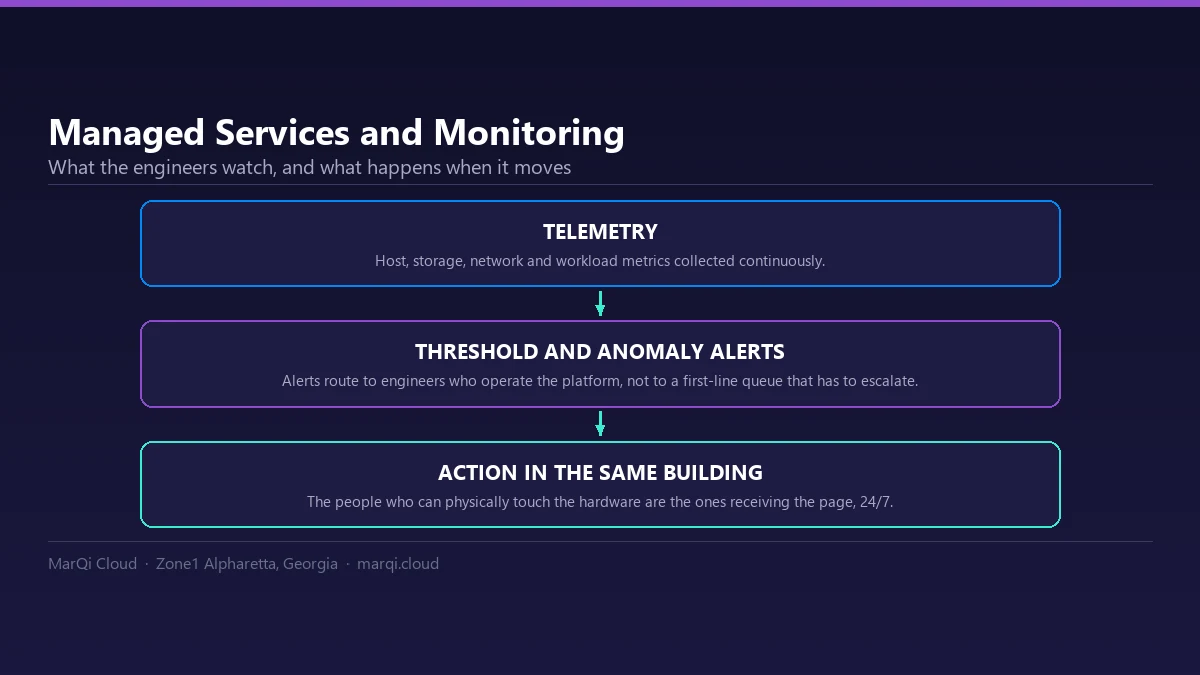
Effective monitoring is essential for identifying potential issues before they impact users. SRE teams implement comprehensive monitoring solutions to track system performance, resource utilization, and user experience. Automated alerting systems notify SRE teams of any anomalies, enabling swift incident response.
3. Incident Management
Incident management is a cornerstone of SRE practices. This process involves detecting, responding to, and resolving incidents that affect service reliability. SRE teams utilize post-incident reviews to analyze the root causes of incidents and implement preventive measures to avoid future occurrences.
4. Automation
Automation plays a vital role in SRE practices. By automating routine tasks and processes, organizations can reduce human error, improve efficiency, and allocate resources more effectively. Automated deployment, scaling, and monitoring tools are essential for maintaining a reliable cloud infrastructure.
5. Capacity Planning
Capacity planning involves forecasting future resource needs based on user demand and scaling infrastructure accordingly. SRE teams analyze historical data and trends to ensure that the cloud infrastructure can handle anticipated loads without compromising performance.
| Core SRE Practice | Description | Benefit |
|---|---|---|
| Defining SLOs | Establishing clear performance metrics | Aligns team efforts with user expectations |
| Monitoring and Alerting | Tracking system health and performance | Enables proactive incident response |
| Incident Management | Responding to and resolving incidents | Makes services more resilient |
| Automation | Streamlining operational tasks | Reduces human error and improves efficiency |
| Capacity Planning | Forecasting resource needs | Ensures infrastructure can handle demand |
Measuring Service Reliability
Measuring service reliability is essential for understanding how well SRE practices are working. Key metrics include:
- Availability: The percentage of time a service is operational and accessible to users.
- Latency: The time it takes for a service to respond to a request.
- Error Rate: The percentage of requests that result in errors.
- Incident Frequency: The number of incidents occurring over a specific period.
By continuously monitoring these metrics, organizations can gauge their service reliability and make informed improvements. For example, if the error rate exceeds the defined SLO, the SRE team can investigate and implement changes to enhance performance.
Implementing SRE at MarQi Cloud
At MarQi Cloud, we apply SRE practices to our hybrid cloud infrastructure to ensure that our clients receive the highest level of service reliability. Our approach includes:
- Establishing clear SLOs tailored to the unique needs of our enterprise clients.
- Implementing comprehensive monitoring solutions that provide real-time insights into system performance.
- Conducting post-incident reviews to learn from every incident and improve our processes.
- Utilizing automation tools to streamline operations and reduce the risk of human error.
- Engaging in proactive capacity planning to anticipate and meet client demands.
By integrating these SRE practices, MarQi Cloud can offer secure, enterprise-grade hosting solutions that are resilient and reliable, ensuring our clients can focus on their core business without worrying about infrastructure issues.
Benefits of SRE Practices
Implementing SRE practices yields numerous benefits for organizations, including:
- Improved Service Reliability: By focusing on SRE principles, organizations can enhance the reliability of their services, leading to higher customer satisfaction.
- Faster Incident Resolution: With efficient incident management processes in place, organizations can resolve issues more quickly, minimizing downtime.
- Cost Savings: Automation and optimization reduce operational costs associated with manual processes and downtime.
- Enhanced Collaboration: SRE practices foster collaboration between development and operations teams, breaking down silos and improving communication.
- Continuous Improvement: The iterative nature of SRE encourages a culture of continuous improvement, where teams learn from incidents and make incremental enhancements.
Common Challenges in SRE Adoption
While the benefits of SRE practices are clear, organizations may face challenges during adoption:
- Cultural Resistance: Shifting from traditional operations to SRE may encounter resistance from teams accustomed to established processes.
- Skill Gaps: Implementing SRE requires specific skills and knowledge that may not be present in all teams.
- Tooling Complexity: The variety of tools available for SRE can be overwhelming, making it challenging to select the right solutions.
- Defining Clear SLOs: Establishing effective SLOs requires careful consideration and alignment with business objectives.
Organizations must address these challenges to successfully implement SRE practices and enjoy the resulting reliability benefits.
Frequently Asked Questions
1. What is Site Reliability Engineering (SRE)?
Site Reliability Engineering (SRE) is a discipline that applies software engineering principles to infrastructure and operations challenges, aiming to create scalable and reliable systems.
2. How does SRE improve service reliability?
SRE improves service reliability by defining clear performance metrics (SLOs), implementing effective monitoring and incident management, and fostering a culture of continuous improvement.
3. What are Service Level Objectives (SLOs)?
Service Level Objectives (SLOs) are specific metrics that define the expected reliability and performance of a service, serving as benchmarks for measuring success.
4. Why is automation important in SRE?
Automation reduces human error, increases efficiency, and allows teams to focus on higher-value tasks, all of which contribute to improved service reliability.
5. How can organizations measure service reliability?
Organizations can measure service reliability through metrics such as availability, latency, error rate, and incident frequency to gauge performance and identify areas for improvement.
6. What challenges do organizations face when adopting SRE?
Common challenges include cultural resistance, skill gaps, tooling complexity, and difficulties in defining clear SLOs.
7. How can MarQi Cloud help with SRE implementation?
MarQi Cloud offers enterprise-grade cloud infrastructure and hybrid solutions, applying SRE practices to ensure high service reliability for our clients.
8. Where can I learn more about cloud reliability practices?
For authoritative resources on cloud reliability, consider visiting the National Institute of Standards and Technology or the Google Cloud Platform.
Conclusion
Adopting SRE practices on cloud infrastructure is essential for organizations seeking to enhance service reliability over time. By focusing on defining SLOs, implementing effective monitoring and incident management, and fostering a culture of continuous improvement, organizations can ensure that their services remain resilient and efficient. At MarQi Cloud, we are committed to leveraging SRE methodologies to provide secure, enterprise-grade hosting solutions that meet the needs of our clients. Embrace SRE practices today to unlock the full potential of your cloud infrastructure.