The Complete Guide to Managed Cloud Network Design and Optimization
August 30, 2026
Why Vendor Management Through a Managed Cloud Provider Simplifies Multi-Vendor Environments
August 30, 2026
How Managed Cloud Migration Services De-Risk Complex Infrastructure Projects
In today’s digital landscape, the shift to cloud computing is not just a trend; it’s a necessity for businesses looking to enhance agility, scalability, and security. However, the journey to the cloud can be fraught with challenges, particularly for mid-size to enterprise-level organizations with complex infrastructure needs. This is where managed cloud migration services come into play, offering tailored solutions that mitigate risks associated with such transitions. In this article, we will explore how these services de-risk complex infrastructure projects, ensuring a smoother transition to a hybrid or private cloud environment.
Understanding Cloud Migration
Cloud migration refers to the process of transferring data, applications, and other business elements from on-premises infrastructure to the cloud. This transition can take various forms, including lift-and-shift migrations, re-platforming, or complete re-architecting of applications to be cloud-native. Companies are increasingly opting for hybrid cloud solutions to benefit from both public and private cloud environments, allowing for flexibility and enhanced control over sensitive data.
Why Managed Cloud Migration Services Matter
Managed cloud migration services provide businesses with expert guidance and technical support throughout the migration process. By partnering with a managed service provider (MSP) like MarQi Cloud, organizations can leverage the expertise of seasoned cloud engineers and architects. This collaboration is crucial, especially when navigating the complexities of hybrid deployments and ensuring compliance with relevant regulations.
The Importance of Risk Management
Risk management is a vital aspect of cloud migration. Cloud migration projects often run into trouble because of poor planning and execution. Managed cloud migration services help address these risks through:
- Comprehensive Assessment: Analyzing existing infrastructure to identify potential pitfalls.
- Strategic Planning: Developing a tailored migration strategy that aligns with business objectives.
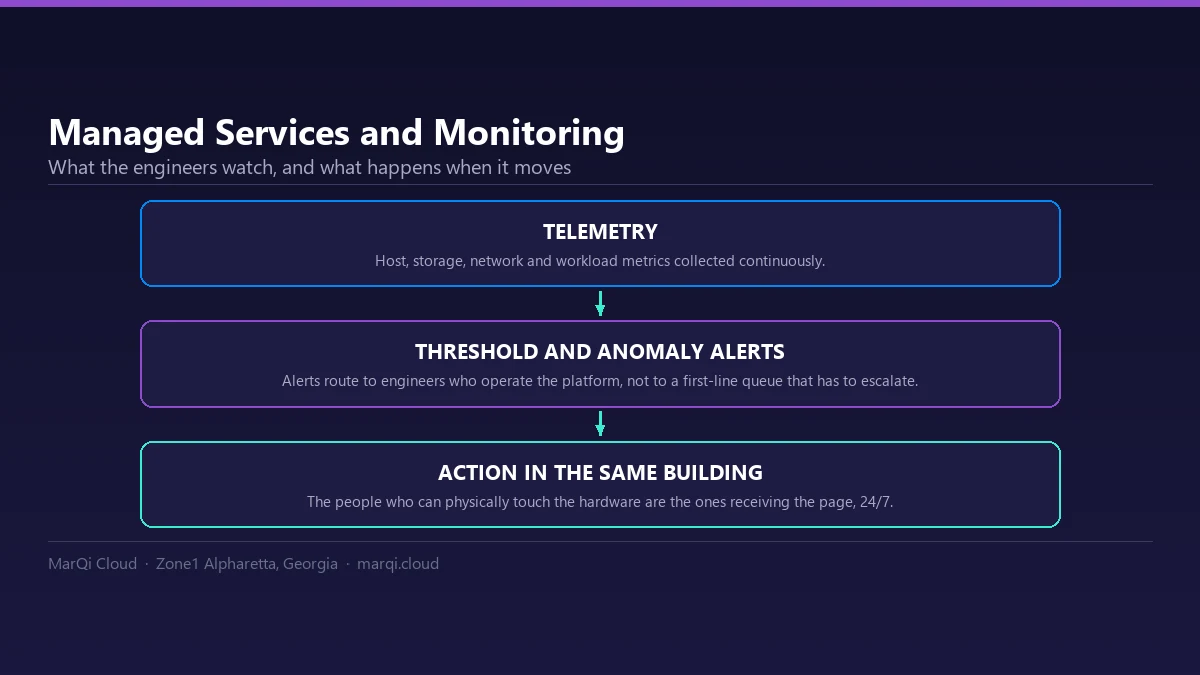
- Continuous Monitoring: Tracking performance and addressing issues in real-time.
Key Benefits of Managed Cloud Migration Services
When organizations engage managed cloud migration services, they unlock several key benefits that contribute to a successful transition:
1. Enhanced Security and Compliance
Security is a top concern for enterprises moving to the cloud. Managed service providers implement robust security measures, including data encryption, access controls, and compliance with industry standards such as HIPAA for healthcare or PCI DSS for payment processing. For healthcare workloads, MarQi Cloud supplies infrastructure controls such as isolated VPCs, replication and monitoring (see MarQi Cloud for healthcare); HIPAA compliance itself remains your organization’s responsibility.
2. Cost Efficiency
Transitioning to the cloud can lead to significant cost savings when done correctly. Managed cloud migration services help organizations avoid common pitfalls that lead to unexpected expenses, such as:
- Over-provisioning of resources
- Downtime during migration
- Compliance fines
3. Minimal Downtime
One of the major risks during migration is the potential for downtime, which can disrupt business operations and lead to lost revenue. Managed migration services utilize best practices and tools to minimize downtime, ensuring that businesses can continue to operate smoothly throughout the process.
4. Expertise and Support
As previously mentioned, the expertise of managed service providers is invaluable. They bring a wealth of experience in handling various migration scenarios, enabling them to anticipate and mitigate potential issues effectively. They also provide ongoing support post-migration, ensuring that businesses can leverage their new cloud infrastructure effectively.
5. Scalability
Managed cloud migration services enable organizations to scale their cloud infrastructure as needed. This scalability is particularly beneficial for businesses experiencing rapid growth or seasonal fluctuations. By utilizing services like MarQi Cloud’s managed services, companies can adapt their resources to meet changing demands without compromising performance.
The Role of Expertise in Migration
Engaging a managed service provider with deep expertise in cloud migration is crucial for success. These experts not only understand the technical requirements but also the business implications of various migration strategies. For instance, they can help determine whether a lift-and-shift approach or a complete re-architecture is more suitable based on the organization’s goals and existing infrastructure.
Understanding Cloud Architecture
The architecture of the cloud environment plays a significant role in its performance and cost-effectiveness. Managed cloud migration services ensure that the architecture is designed to optimize resources and minimize latency. This includes considerations like:
- Choosing the right instance types for applications
- Implementing a multi-region strategy for high availability
- Utilizing cost-effective storage solutions
How to Choose the Right Managed Service Provider
Selecting the right managed service provider is a critical step in de-risking cloud migration projects. Here are some key factors to consider:
1. Experience and Expertise
Look for a provider with a proven track record in managing cloud migrations, particularly in your industry. Check for case studies and client testimonials.
2. Comprehensive Services
Ensure the provider offers a full range of services, from initial assessment and planning to ongoing support and optimization. MarQi Cloud, for example, offers a variety of solutions tailored to meet diverse business needs.
3. Security Measures
Inquire about the security protocols the provider has in place. This includes data encryption, compliance certifications, and incident response plans.
4. Flexibility and Scalability
Choose a provider that can adapt to your changing needs. Scalability is crucial for businesses that anticipate growth or seasonal spikes in demand.
5. Transparent Pricing
Look for transparent pricing models that avoid hidden fees, such as egress fees or overage charges. Providers like MarQi Cloud offer flexible pricing models that align with your budget.
Example Scenarios
The scenarios below are illustrative, not customer case studies.
Scenario 1: Healthcare Provider Migration
A mid-sized healthcare provider moving off a legacy system would use a managed migration to land on an isolated private cloud environment with encryption and access logging in place, which is the technical groundwork a HIPAA programme is built on. MarQi Cloud does not hold or claim a HIPAA certification; the compliance programme and its evidence stay with the healthcare organisation.
Scenario 2: E-Commerce Company
An e-commerce company whose outdated infrastructure struggles during peak sales would use a managed migration to move to capacity that can be scaled ahead of known peaks, rehearsing the cutover outside the busy season so the move itself does not cause downtime.
Best Practices for Cloud Migration
To ensure a successful migration, consider the following best practices:
1. Perform a Thorough Assessment
Before migrating, conduct a comprehensive assessment of your existing infrastructure, identifying dependencies and potential challenges.
2. Develop a Clear Migration Strategy
Create a detailed migration plan that outlines timelines, responsibilities, and key performance indicators (KPIs) to measure success.
3. Implement a Testing Phase
Test the migration in a controlled environment to identify any issues before executing the full migration.
4. Monitor and Optimize Post-Migration
After migration, continuously monitor performance and optimize resources to ensure the cloud environment operates efficiently.
FAQs
What is managed cloud migration?
Managed cloud migration refers to the process of transferring data and applications to the cloud with the assistance of a managed service provider, which helps mitigate risks and optimize the migration process.
Why should I use managed cloud migration services?
Using managed cloud migration services helps ensure a smoother transition, minimizes downtime, enhances security, and provides expert support throughout the process.
How long does a cloud migration take?
The duration of a cloud migration varies based on the complexity of the infrastructure and the migration strategy employed. On average, it can take anywhere from a few weeks to several months.
What are the risks of cloud migration?
Common risks include data loss, downtime, compliance issues, and unexpected costs. Engaging managed services can significantly reduce these risks.
How can I ensure compliance during migration?
To ensure compliance, work with a managed service provider that understands the regulatory requirements relevant to your industry and implements appropriate security measures.
Can I migrate to the cloud without downtime?
While it is challenging to achieve zero downtime during migration, managed cloud migration services employ strategies to minimize downtime and ensure business continuity.
What are the costs associated with cloud migration?
Costs can vary widely based on the complexity of the migration, the chosen service provider, and the resources required. It’s essential to understand the pricing model and any potential hidden fees.
How do I choose the right cloud migration strategy?
The right strategy depends on your business goals, the current infrastructure, and the applications being migrated. A managed service provider can help determine the best approach.
Conclusion
Managed cloud migration services play a pivotal role in de-risking complex infrastructure projects, ensuring that organizations can transition to the cloud with confidence. By leveraging the expertise of seasoned professionals, businesses can navigate the intricacies of cloud migration, enhancing security, minimizing downtime, and achieving cost efficiencies. As the demand for cloud solutions continues to grow, choosing the right managed service provider is essential for future-proofing your organization’s IT infrastructure.