MarQi Cloud Case Study: How a Startup Cut AWS Costs by 55% in 60 Days
June 14, 2026
I Switched From DigitalOcean to MarQi Cloud — Here’s My Honest Take
June 14, 2026
MarQi Cloud Case Study: From On-Premise Chaos to Hybrid Cloud Clarity
The digital landscape is ever-evolving, and businesses are continuously searching for ways to optimize their operations and enhance their performance. One particular challenge that many organizations face is the transition from traditional on-premise systems to more modern cloud solutions. In this case study, we will explore how MarQi Cloud helped a mid-sized enterprise transform from on-premise chaos to hybrid cloud clarity, demonstrating the benefits of cloud adoption and the effectiveness of MarQi’s enterprise-grade solutions.
Understanding the Challenge
The client, a mid-sized manufacturing company, had been relying on an on-premise IT infrastructure for years. As the business grew, so did the complexity of their IT environment. Challenges included:
- Scalability Issues: The existing infrastructure struggled to keep pace with the increasing demand for computing and storage resources.
- High Maintenance Costs: The on-premise systems required constant maintenance and updates, leading to escalating costs.
- Data Security Concerns: With sensitive data stored on-site, the company faced potential risks related to data breaches and loss.
- Disaster Recovery Limitations: The existing backup solutions were inadequate, leaving the company vulnerable to data loss.
The management team recognized that a more flexible and secure solution was necessary to support their ongoing growth and operational efficiency. After researching various options, they decided to engage with MarQi Cloud for a comprehensive cloud transformation strategy.
MarQi Cloud’s Solution
MarQi Cloud proposed a hybrid cloud deployment model tailored to meet the specific needs of the manufacturing company. The solution included the following key components:
1. Enterprise-Grade Cloud Infrastructure
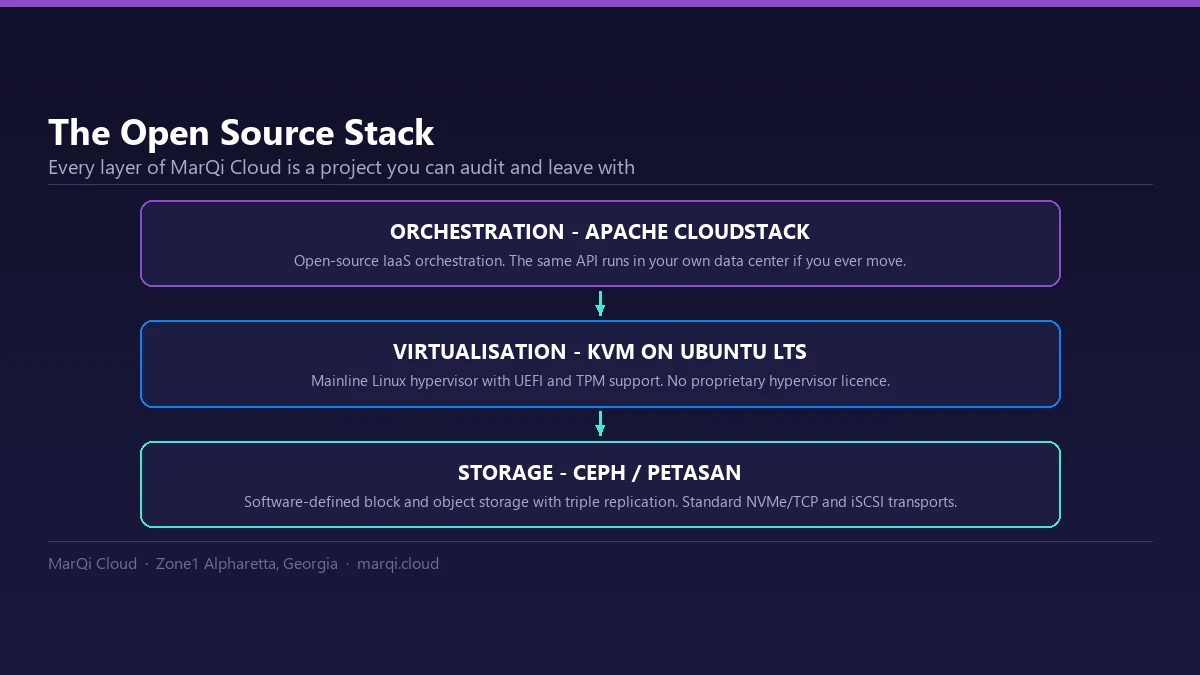
MarQi Cloud provided a robust and reliable cloud infrastructure that ensured high availability and performance. This infrastructure was designed to support the company’s current and future workloads, allowing for seamless scaling as business needs evolved.
2. Hybrid Cloud Deployment Models
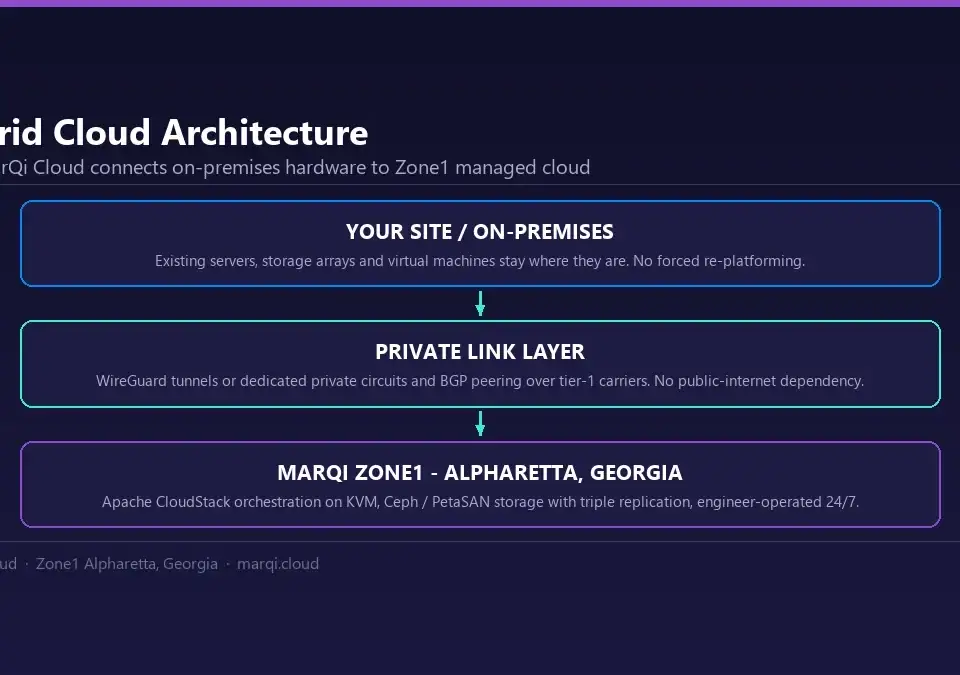
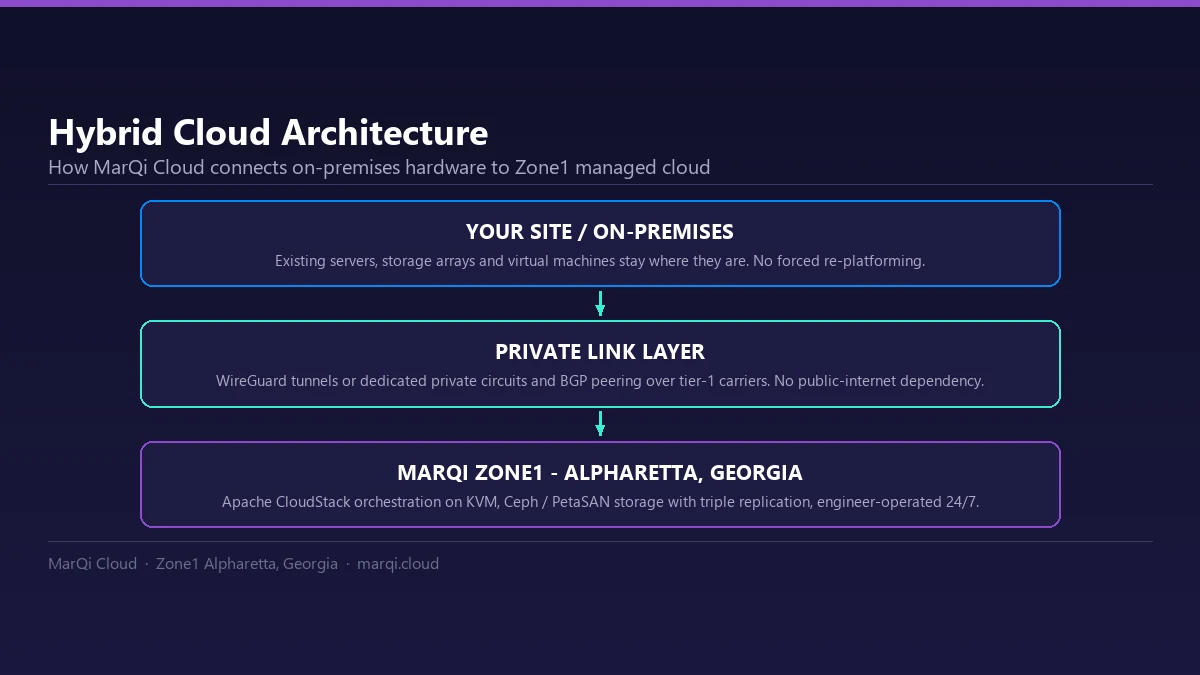
The hybrid cloud model allowed the client to maintain critical applications on-premise while migrating non-essential workloads to the cloud. This approach provided the flexibility needed to balance workloads across environments based on performance and cost considerations.
3. Private and Secure Hosting Environments
To address security concerns, MarQi Cloud utilized private cloud solutions that offered enhanced security protocols and encryption. This ensured that sensitive data remained protected while complying with industry regulations.
4. Scalable Compute and Storage Resources
With MarQi Cloud’s scalable resources, the manufacturing company could easily adjust its computing and storage capabilities to meet fluctuating demands. This adaptability eliminated the need for over-provisioning and reduced unnecessary costs.
5. Business Continuity and Disaster Recovery Solutions
MarQi Cloud implemented a comprehensive disaster recovery plan that included automated backups and failover solutions. This significantly improved the company’s resilience against data loss and ensured business continuity in case of unexpected events.
The Implementation Process
The transition from on-premise to a hybrid cloud environment was executed in several phases to minimize disruption and ensure a smooth migration:
1. Assessment and Planning
The MarQi Cloud team conducted a thorough assessment of the existing infrastructure, identifying critical applications and data that needed to be prioritized during the migration process.
2. Design and Development
After assessing the needs, the team designed a tailored hybrid cloud architecture that aligned with the company’s operational goals and compliance requirements.
3. Migration
The migration was executed in stages, with non-critical applications moved to the cloud first. This phased approach allowed the team to monitor performance and make adjustments as needed.
4. Testing and Validation
After the migration, rigorous testing was conducted to ensure that all systems were functioning as expected. This included performance testing, security assessments, and user acceptance testing.
5. Training and Support
MarQi Cloud provided training for the IT staff and end-users to ensure they were comfortable with the new environment. Ongoing support was also established to address any issues that arose post-migration.
Results Achieved
The implementation of MarQi Cloud’s hybrid cloud solution yielded significant results for the manufacturing company:
1. Enhanced Scalability
The company was able to scale its resources up or down based on demand, resulting in improved operational efficiency and cost savings.
2. Cost Reduction
By transitioning to a hybrid cloud model, the company reduced its IT maintenance costs significantly while optimizing resource allocation.
3. Improved Security
With a robust security framework in place, the organization gained peace of mind knowing that their sensitive data was protected from potential breaches.
4. Business Continuity
The implementation of a comprehensive disaster recovery plan ensured that the company could quickly recover from any data loss incidents, minimizing downtime.
Conclusion
The transformation journey from on-premise chaos to hybrid cloud clarity was a resounding success for the manufacturing company. By leveraging MarQi Cloud’s enterprise-grade solutions, the organization achieved greater scalability, reduced costs, and enhanced security. This case study exemplifies the transformative power of cloud technology and underscores the importance of partnering with a reliable cloud service provider like MarQi Cloud.
FAQ
1. What is a hybrid cloud model?
A hybrid cloud model combines on-premise infrastructure with cloud resources, allowing businesses to leverage the benefits of both environments.
2. How does MarQi Cloud ensure data security?
MarQi Cloud utilizes private cloud solutions, encryption, and industry-standard security protocols to protect sensitive data.
3. What are the benefits of using cloud infrastructure?
Cloud infrastructure provides scalability, cost savings, enhanced security, and improved disaster recovery options.
4. How long does a cloud migration typically take?
The duration of a cloud migration can vary based on the complexity of the existing infrastructure and the scope of the migration, but it is typically executed in phases to minimize disruption.
5. What is business continuity?
Business continuity refers to the processes and strategies that ensure an organization can continue operating during and after a disruptive event.
6. Can I customize my cloud solutions?
Yes, MarQi Cloud offers customizable cloud solutions tailored to meet the specific needs of each business.
7. What support does MarQi Cloud provide post-migration?
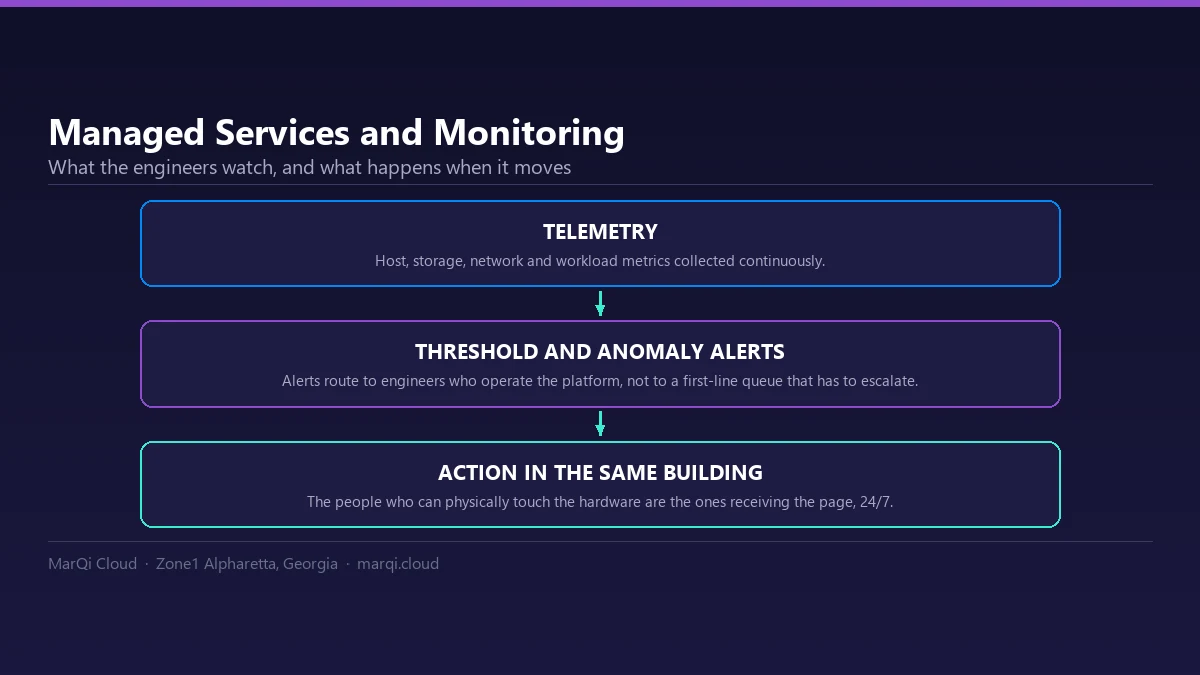
MarQi Cloud provides ongoing support, including technical assistance, training, and regular system monitoring after migration.
8. Is cloud hosting cost-effective?
Yes, cloud hosting can be cost-effective due to its pay-as-you-go pricing model, allowing businesses to pay only for the resources they use.