How to Deploy a WordPress Site on MarQi Cloud VPS in 15 Minutes
June 24, 2026
How MarQi Cloud Supports Hybrid Work Environments for Remote Teams
June 25, 2026
MarQi Cloud Dedicated GPU vs. Cloud GPU Rentals: Which Is Right for You?
In the rapidly evolving world of cloud computing, businesses are increasingly turning to GPU (Graphics Processing Unit) resources to power their applications, from AI and machine learning to graphic rendering and gaming. With the rise of GPU usage in the cloud, many organizations face a crucial decision: should they opt for dedicated GPUs or cloud GPU rentals? At MarQi Cloud, we understand the complexities of this choice and aim to guide you through the considerations that will help you determine the best fit for your needs.
Understanding GPU Types
Before diving into the comparison, it’s important to understand what dedicated GPUs and cloud GPU rentals entail.
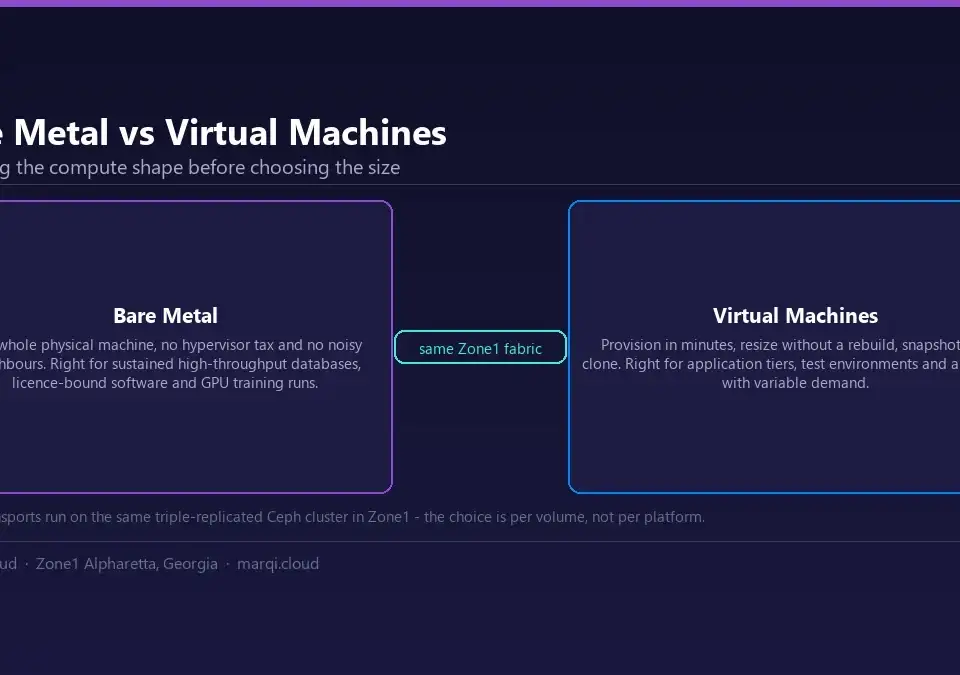
Dedicated GPUs
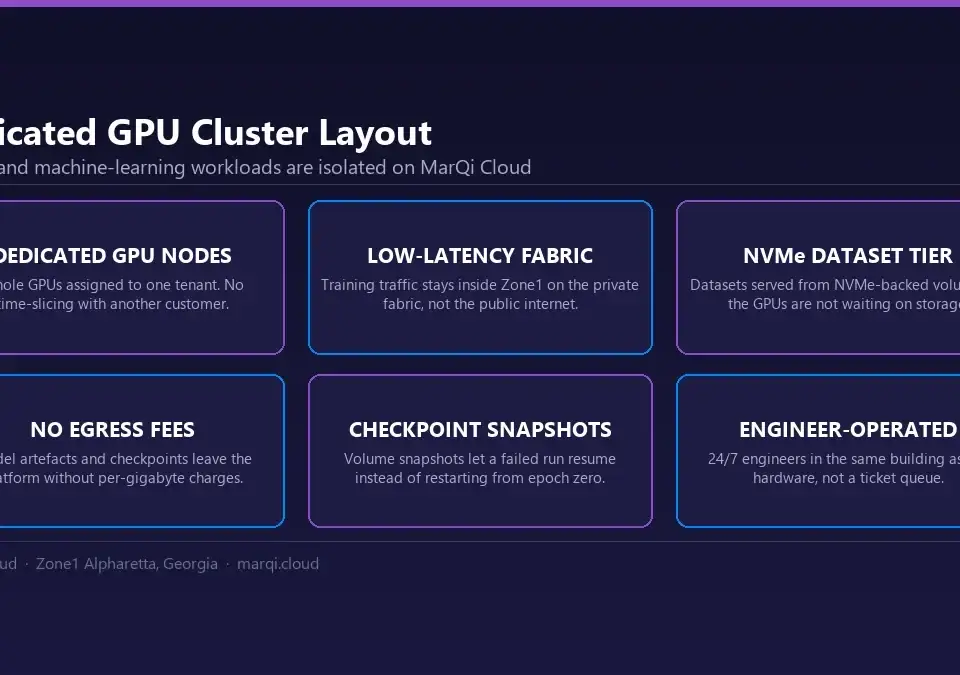
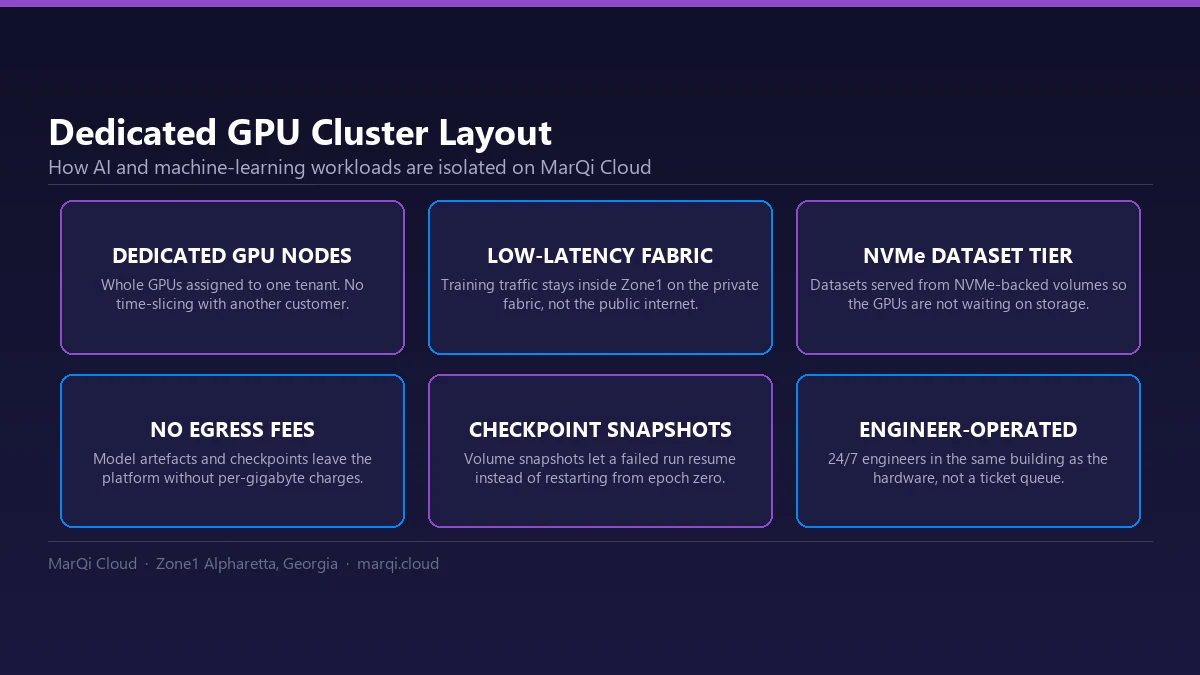
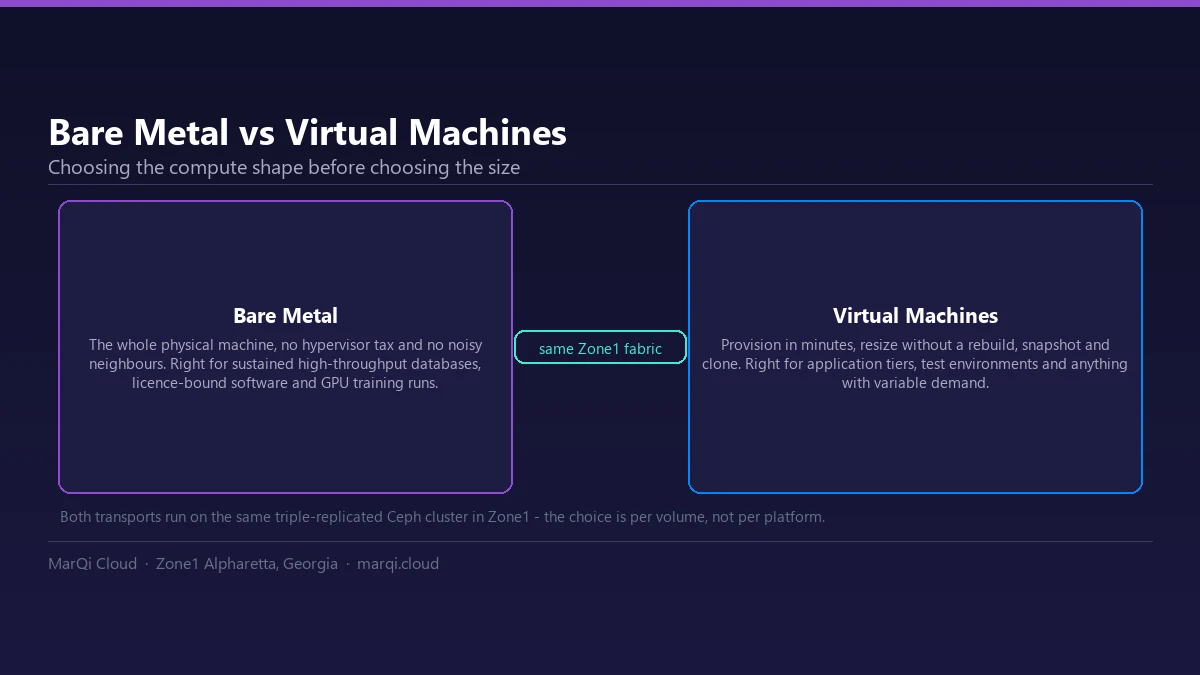
Dedicated GPUs are hardware resources that are exclusively allocated to a single user or application. This means that the performance is consistent and predictable, making dedicated GPUs ideal for resource-intensive tasks that require maximum computational power.
Cloud GPU Rentals
On the other hand, cloud GPU rentals refer to resources that are shared among multiple users. These are typically more flexible and cost-effective, allowing users to pay for what they need on a rental basis. While they can handle various workloads, performance may vary depending on the amount of shared resources available at any given time.
Key Differences Between Dedicated GPUs and Cloud GPU Rentals
Performance
Performance is one of the most crucial factors when selecting between dedicated GPUs and cloud GPU rentals. Dedicated GPUs offer higher performance due to their exclusive nature, which means you won’t have to compete for resources with other users. This can be vital for applications requiring consistent high-performance computing, such as real-time rendering or deep learning.
Conversely, cloud GPU rentals may experience performance fluctuations based on the current demand and resource allocation. For many applications, this variability may not be a significant issue, but for performance-critical tasks, it can lead to inefficiencies.
Cost
Cost is another major consideration. Dedicated GPUs generally come at a higher upfront cost since you’re paying for exclusive access to the hardware. This investment can be justified for businesses that have continuous high-demand computing needs and can utilize the GPU resources fully.
Cloud GPU rentals, however, offer a pay-as-you-go model which can be more budget-friendly, especially for startups or businesses with fluctuating workloads. This flexibility allows organizations to scale their resources according to their needs, minimizing waste.
Scalability
Scalability is essential for businesses looking to grow. Dedicated GPUs can be less scalable since adding more resources often requires significant investment in new hardware. In contrast, cloud GPU rentals allow for easy scaling. Users can quickly add or remove resources based on current project demands, ensuring they only pay for what they use.
Management and Maintenance
Another aspect to consider is management and maintenance. With dedicated GPUs, the responsibility for managing hardware and ensuring its performance falls entirely on the user. This can be a burden for businesses without dedicated IT resources.
Cloud GPU rentals typically come with managed services provided by the cloud provider, reducing the operational burden on users. This means that businesses can focus more on their core activities rather than IT management.
Use Cases for Dedicated GPUs
Dedicated GPUs are best suited for scenarios where consistent performance is critical. Here are some common use cases:
Heavy Machine Learning Tasks
When training complex machine learning models, dedicated GPUs provide the necessary power to speed up computation and facilitate faster iterations.
Real-time Rendering
Industries such as gaming, film, and architecture require real-time rendering capabilities that necessitate dedicated GPU resources for optimal performance.
High-Performance Computing (HPC)
HPC applications often demand the highest levels of computational power, making dedicated GPUs the preferred choice for research institutions and organizations involved in scientific simulations.
Use Cases for Cloud GPU Rentals
Cloud GPU rentals are ideal for businesses with varying workloads or those testing new applications. Some common scenarios include:
Development and Testing
For developers and teams needing temporary resources for application testing, renting GPUs can provide significant cost savings and flexibility.
Seasonal Workloads
Businesses with seasonal spikes in demand, such as e-commerce sites during holiday sales, can benefit from the scalability of cloud GPU rentals without the need for long-term commitments.
Smaller Projects
For smaller projects or startups, cloud GPU rentals allow access to powerful resources without the upfront investment of dedicated GPUs.
MarQi Cloud’s GPU Solutions
At MarQi Cloud, we offer both dedicated GPU options and cloud GPU rentals to meet the diverse needs of our clients. Our enterprise-grade cloud infrastructure is designed to provide:
Hybrid Cloud Deployment Models
Utilize both dedicated and rental options to create a hybrid model that best suits your operational needs.
Private and Secure Hosting Environments
Ensure that your data and applications are hosted in a secure environment, whether you choose dedicated or rental solutions.
Flexible Pricing Models
We offer competitive pricing structures that allow you to choose the best financial model for your business.
Conclusion
The decision between dedicated GPUs and cloud GPU rentals ultimately depends on your specific business needs, workload requirements, and budget considerations. Dedicated GPUs offer high performance and reliability for demanding tasks, while cloud GPU rentals provide flexibility and cost-effectiveness for varying workloads. At MarQi Cloud, we are committed to helping you navigate these options and find the solution that fits your operational goals.
FAQ
1. What is a GPU and why is it important?
A GPU, or Graphics Processing Unit, is a specialized processor designed to accelerate graphics rendering and computation tasks. It’s essential for applications in gaming, AI, and machine learning.
2. What are the benefits of using dedicated GPUs?
Dedicated GPUs provide consistent performance, higher reliability, and are ideal for resource-intensive applications.
3. How do cloud GPU rentals work?
Cloud GPU rentals allow you to access GPU resources on a pay-as-you-go basis, providing flexibility for varying workloads.
4. Can I switch from cloud GPU rentals to dedicated GPUs later?
Yes, many cloud providers, including MarQi Cloud, offer the option to switch between dedicated and rental resources as your needs evolve.
5. Are dedicated GPUs more expensive than cloud GPU rentals?
Generally, yes. Dedicated GPUs require a higher upfront investment, while cloud GPU rentals operate on a flexible, pay-as-you-go model.
6. What industries benefit from dedicated GPUs?
Industries such as gaming, film production, scientific research, and machine learning often benefit from dedicated GPU resources.
7. Is it possible to use both dedicated and cloud GPU resources simultaneously?
Yes, many businesses choose to implement hybrid solutions that combine both dedicated and rental GPUs for optimal performance and flexibility.
8. How can MarQi Cloud help my business with GPU resources?
MarQi Cloud offers tailored GPU solutions, including both dedicated and rental options, along with managed services and flexible pricing to meet your needs.