How to Train a Machine Learning Model on MarQi Cloud GPU Clusters
June 1, 2026The Complete Guide to Running AI Workloads on MarQi Cloud in 2026
June 1, 2026
MarQi Cloud GPU Clusters vs. Renting GPU VMs: Which Is Actually Cheaper?
In the ever-evolving landscape of cloud computing, the demand for powerful processing capabilities has surged, particularly in fields such as artificial intelligence (AI), machine learning (ML), and data analytics. This has led to a growing interest in Graphics Processing Units (GPUs), which are essential for executing complex computations. Businesses now face a critical decision: should they invest in dedicated GPU clusters through a cloud provider like MarQi Cloud, or opt for renting GPU Virtual Machines (VMs)? In this article, we will explore the cost implications of both options, helping you determine which is actually cheaper for your specific needs.
Understanding GPU Clusters and GPU VMs
Before diving into the financial aspects, it’s essential to understand what GPU clusters and GPU VMs are and how they differ.
What Are GPU Clusters?
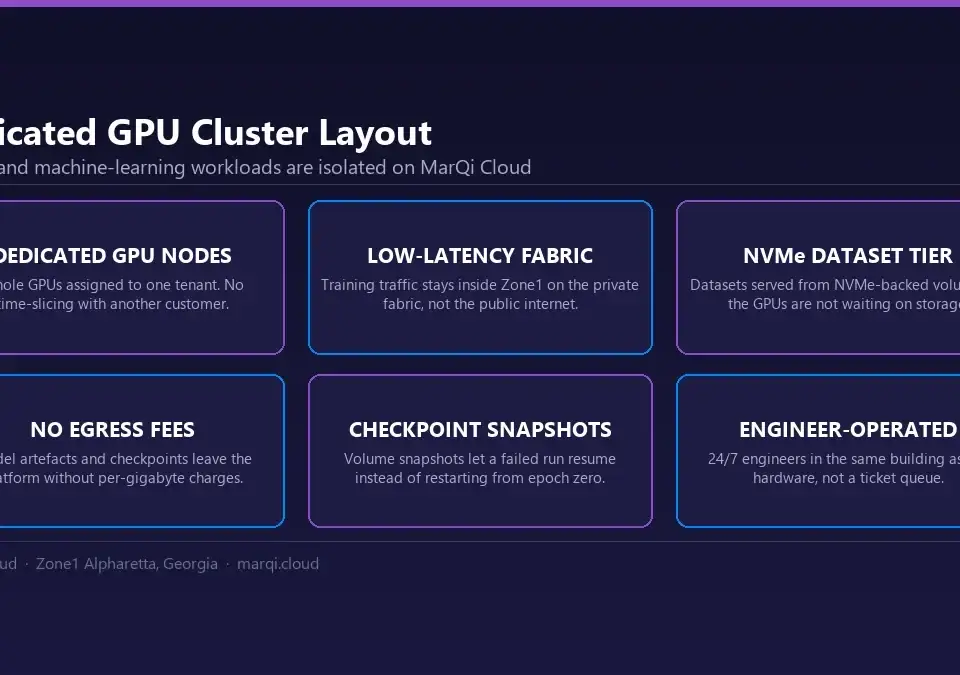
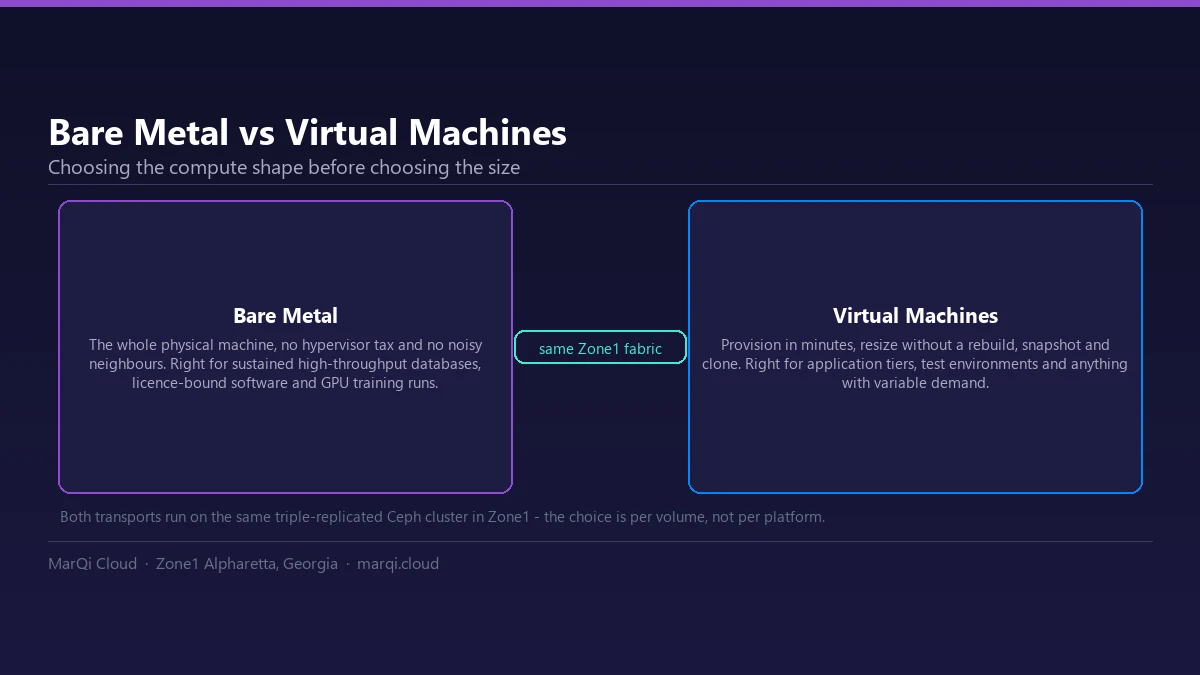
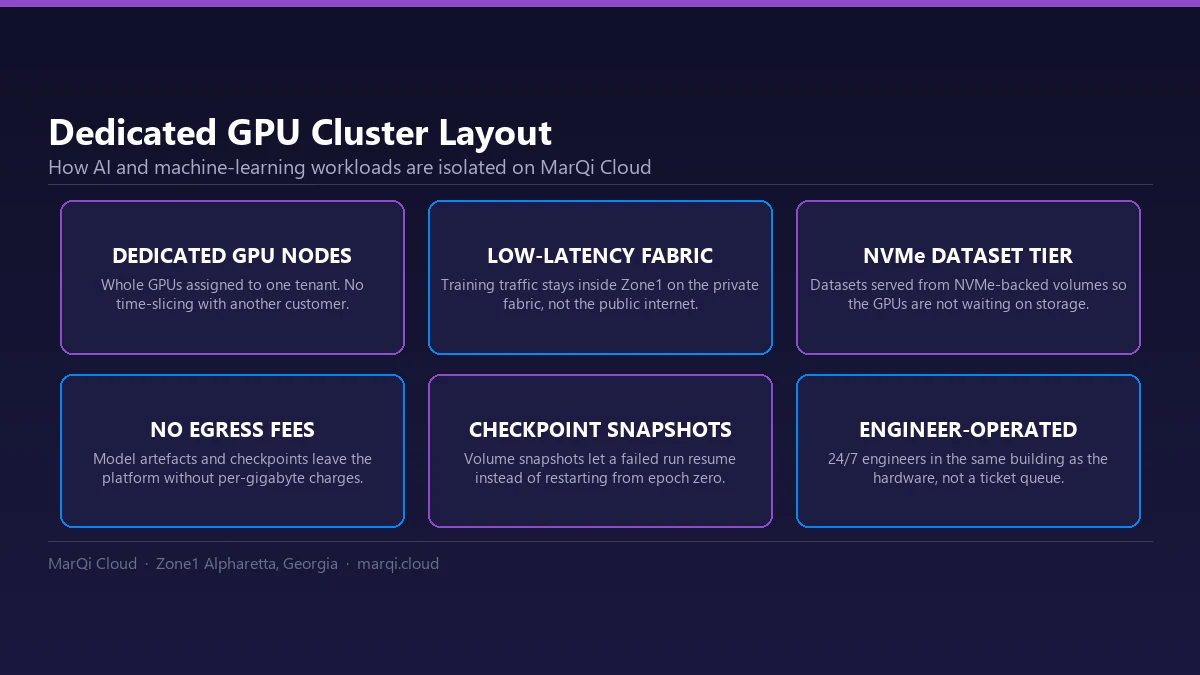
GPU clusters are powerful computing systems comprised of multiple GPUs connected together to work on parallel tasks. These clusters are designed for high-performance computing (HPC) and are ideal for tasks that require extensive computational resources, such as deep learning training and large-scale simulations. MarQi Cloud offers enterprise-grade GPU clusters that are scalable, secure, and optimized for performance, ensuring that businesses can leverage the full potential of GPU technology.
What Are GPU VMs?
On the other hand, GPU Virtual Machines (VMs) are instances of virtual servers that utilize GPU resources on a pay-as-you-go basis. Businesses can rent these VMs for specific tasks, paying only for the hours they use. This flexibility makes GPU VMs an attractive option for companies that have fluctuating workloads or those that need GPU resources for short durations.
Cost Analysis: GPU Clusters vs. Renting GPU VMs
Now that we have a foundational understanding of GPU clusters and VMs, let’s analyze the cost implications of each option.
Initial Setup Costs
When considering GPU clusters, initial setup costs can be significant. Businesses must invest in hardware, software, and infrastructure. However, MarQi Cloud mitigates these costs by offering enterprise-grade GPU clusters with flexible pricing models, allowing businesses to pay for what they use without substantial upfront investment.
In contrast, renting GPU VMs generally incurs lower initial costs. Companies can quickly spin up VMs without the need for extensive infrastructure investment, making it easier to budget for short-term projects.
Operating Costs
Operating costs for GPU clusters include maintenance, power consumption, cooling, and personnel expenses. With MarQi Cloud’s GPU clusters, the operating costs are typically included in the pricing model, which simplifies budgeting and ensures predictable expenses.
Renting GPU VMs also involves operating costs, but these are usually limited to the rental fees. However, over time, the cumulative costs of renting VMs for extended periods can exceed the costs associated with owning a GPU cluster.
Scalability and Resource Utilization
Scalability is a crucial factor when considering costs. MarQi Cloud’s GPU clusters offer the ability to scale resources up or down based on demand, ensuring that businesses only pay for what they need. This is especially beneficial for enterprises with fluctuating workloads.
With GPU VMs, scalability can be more challenging. While you can rent additional VMs, there may be restrictions on availability, and costs can escalate quickly if you need to manage multiple instances for high-demand tasks.
Long-Term vs. Short-Term Needs
For businesses with long-term GPU processing needs, investing in a GPU cluster through MarQi Cloud can be more cost-effective in the long run. The initial investment may be higher, but the return on investment (ROI) can be favorable due to reduced operating costs and increased efficiency.
Conversely, for organizations with short-term or project-based needs, renting GPU VMs may be the more economical choice. The flexibility of only paying for what you use allows companies to manage their budgets effectively without incurring long-term commitments.
Performance Considerations
While cost is a significant factor, performance cannot be overlooked. The efficiency and speed of computations can directly impact project timelines and overall productivity.
Performance of GPU Clusters
GPU clusters provided by MarQi Cloud are optimized for high-performance computing tasks, ensuring that businesses can achieve superior performance for resource-intensive applications. The dedicated nature of clusters allows for better resource allocation and faster processing times.
Performance of GPU VMs
On the other hand, GPU VMs may have limitations in performance compared to dedicated clusters. Since resources are shared among multiple users, there can be variability in performance based on demand and other factors. This can lead to longer processing times for critical tasks.
Security and Compliance
Security is a paramount concern for businesses, especially when handling sensitive data. MarQi Cloud offers private and secure hosting environments for its GPU clusters, ensuring that data is protected and compliant with industry standards.
When renting GPU VMs, security measures can vary by provider. Businesses must evaluate the security protocols in place to ensure that their data remains secure and compliant, which may add to overall costs for additional security measures.
Conclusion: Which Is Actually Cheaper?
Determining whether MarQi Cloud GPU clusters or renting GPU VMs is cheaper ultimately depends on your specific business needs. For organizations with long-term and consistent GPU processing requirements, investing in dedicated GPU clusters may be more cost-effective over time. However, for those with short-term needs or fluctuating workloads, renting GPU VMs may present a more affordable solution.
As you weigh your options, consider factors such as initial setup costs, operating expenses, scalability, performance, and security. By aligning your choice with your business goals and workload requirements, you can make a more informed decision that will benefit your organization in the long run.
FAQ
1. What are GPU clusters used for?
GPU clusters are primarily used for high-performance computing tasks such as AI training, data analytics, and simulations that require extensive computational resources.
2. How do GPU clusters compare to GPU VMs in terms of cost?
GPU clusters generally have higher initial setup costs but can be more cost-effective in the long run for continuous workloads, while GPU VMs offer lower initial costs but can become expensive over time for prolonged use.
3. Can I scale my resources with GPU VMs?
Yes, GPU VMs can be scaled, but availability may vary, and costs can increase if multiple instances are needed.
4. What security measures are in place for MarQi Cloud GPU clusters?
MarQi Cloud offers private and secure hosting environments with robust security protocols to protect sensitive data.
5. Are there any performance differences between GPU clusters and GPU VMs?
Yes, GPU clusters typically provide better performance for resource-intensive tasks due to dedicated resources, while GPU VMs may experience variability in performance.
6. Which option is better for short-term projects?
Renting GPU VMs is often better for short-term projects due to lower initial costs and flexibility.
7. How can I calculate the total cost of ownership for GPU clusters?
Consider initial setup costs, operating expenses, maintenance, and potential savings from increased efficiency when calculating total cost of ownership.
8. What industries benefit most from GPU clusters?
Industries such as healthcare, finance, research, and technology benefit significantly from GPU clusters due to their need for high-performance computing.