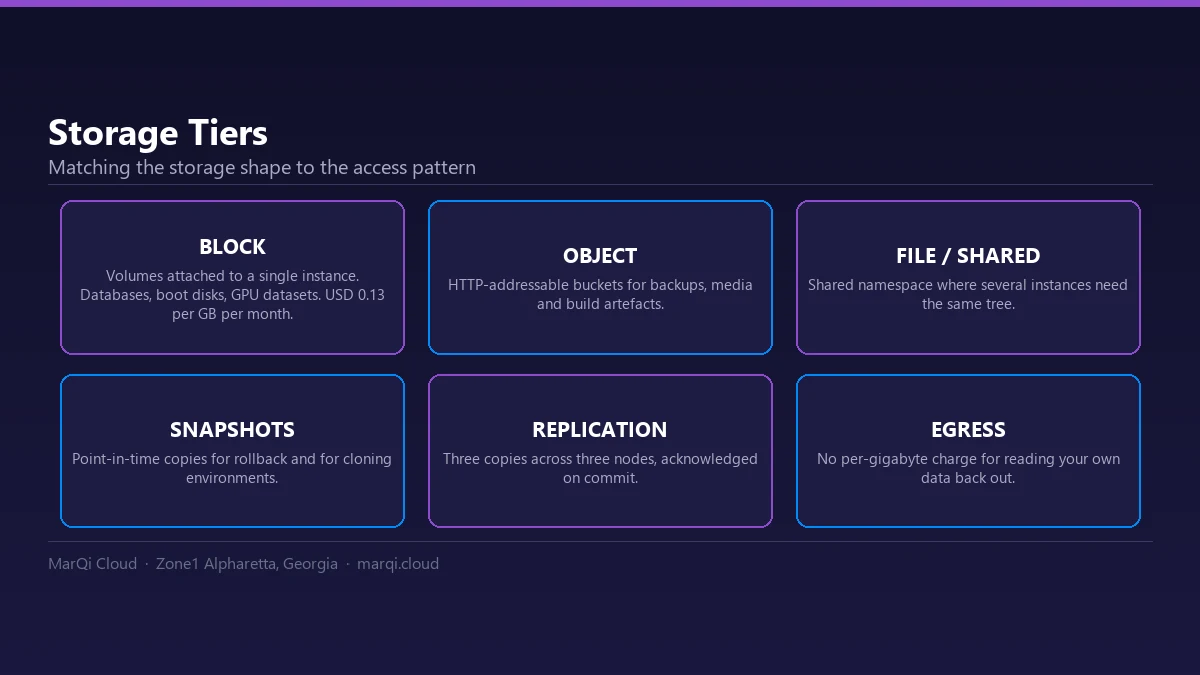
AI-Ready Storage: Understanding the Impact of High-IOPS Block Storage on Model Training
February 20, 2026
Multi-Site Connectivity: Encrypted Inter-Zone Links—What to Ask Your Provider
February 21, 2026

Private Cloud vs Hybrid Cloud: Which One Fits Your Compliance Requirements?
In today’s digital landscape, businesses face an array of compliance requirements that dictate how they must handle sensitive data. As companies increasingly turn to cloud solutions for their IT infrastructure, the choice between private cloud and hybrid cloud models becomes crucial. This article will explore the key differences between private and hybrid cloud deployments, analyze their respective compliance capabilities, and help you determine which model is best suited for your organization.
Understanding Cloud Deployment Models
Before diving into compliance requirements, it’s essential to understand the two main cloud deployment models: private cloud and hybrid cloud.
What is a Private Cloud?
A private cloud is a cloud computing environment that is exclusively used by a single organization. It can be located on-premises or hosted by a third-party provider. The primary advantage of a private cloud is its enhanced security and control, as all resources are dedicated to one organization. This model is ideal for businesses that handle sensitive information and require strict data governance.
What is a Hybrid Cloud?
A hybrid cloud combines both public and private cloud infrastructures, allowing data and applications to be shared between them. This flexibility enables organizations to leverage the best of both worlds, using the public cloud for less sensitive operations while maintaining critical workloads in a private cloud. The hybrid model is particularly beneficial for businesses that experience fluctuating workloads or need increased scalability.
Compliance Requirements in the Cloud
Compliance requirements vary significantly based on industry regulations and geographical locations. Understanding these requirements is crucial when choosing between a private and hybrid cloud environment. Common compliance regulations include:
- HIPAA: The Health Insurance Portability and Accountability Act requires strict controls on the handling of personal health information.
- GDPR: The General Data Protection Regulation governs data privacy and protection for individuals within the European Union.
- PCI DSS: The Payment Card Industry Data Security Standard sets requirements for organizations that handle credit card transactions.
- SOX: The Sarbanes-Oxley Act mandates financial transparency and accuracy for publicly traded companies.
Comparing Compliance Capabilities
Now that we understand the cloud models and compliance regulations, let’s explore how private and hybrid clouds stack up in meeting these requirements.
Private Cloud Compliance Advantages
1. Enhanced Security: Since a private cloud is dedicated to a single organization, it allows for stricter security protocols tailored to specific compliance needs.
2. Greater Control: Organizations have complete control over their infrastructure, making it easier to implement compliance measures and audit processes.
3. Customization: Private clouds can be customized to meet specific regulatory requirements, allowing businesses to align their cloud environments with compliance mandates.
Hybrid Cloud Compliance Advantages
1. Flexibility: Hybrid clouds allow businesses to maintain sensitive data in a private cloud while leveraging the public cloud for less critical operations, ensuring compliance across workloads.
2. Cost-Effectiveness: By using the public cloud for non-sensitive data, organizations can reduce costs while still meeting compliance requirements for critical data.
3. Scalability: Hybrid clouds offer the ability to scale resources as needed, which can be beneficial for businesses that experience seasonal or unexpected spikes in workloads.
Factors to Consider When Choosing Your Cloud Model
When deciding between private and hybrid cloud models, organizations should consider the following factors:
1. Level of Control Required
If your organization requires complete control over its data and compliance measures, a private cloud may be the better option.
2. Cost Constraints
Assess your budget and determine whether a private cloud’s higher upfront costs are justifiable compared to a hybrid cloud’s flexibility and cost savings.
3. Type of Data
Evaluate the sensitivity of the data you handle. Organizations with highly sensitive data may prioritize a private cloud for its enhanced security.
4. Compliance Regulations
Identify the compliance regulations that apply to your business and determine which cloud model can best meet those requirements.
5. Future Growth
Consider your organization’s growth trajectory and how easily each cloud model can adapt to increasing data and compliance needs.
Example Scenarios
The scenarios below are illustrative examples of how organizations typically apply these practices; they do not describe specific MarQi Cloud customers or measured results.
To better illustrate the differences between private and hybrid cloud models in compliance, let’s examine a couple of case studies.
Example Scenario 1: Healthcare Provider Using Private Cloud
A large healthcare provider opted for a private cloud solution to maintain control over sensitive patient data. By implementing a private cloud, they could tailor their security measures to meet HIPAA requirements, resulting in improved patient data protection and compliance.
Example Scenario 2: Retail Company Utilizing Hybrid Cloud
A retail company with fluctuating seasonal demands chose a hybrid cloud model. By maintaining customer data and payment processing in a private cloud, they ensured PCI DSS compliance while using the public cloud for marketing and analytics, optimizing their resources and costs.
Conclusion
Choosing between a private cloud and a hybrid cloud model is a significant decision that hinges on your organization’s compliance requirements. While private clouds offer enhanced security and control, hybrid clouds provide flexibility and cost savings. Assess your business needs, regulatory obligations, and growth plans to determine which cloud deployment model best fits your compliance landscape. Whether you opt for a private cloud or a hybrid cloud, ensuring that your infrastructure meets compliance requirements is vital for the long-term success and integrity of your organization.
FAQ
1. What is the main difference between private cloud and hybrid cloud?
The main difference lies in the infrastructure; a private cloud is dedicated to a single organization, while a hybrid cloud combines both private and public cloud resources.
2. Which cloud model offers better security?
A private cloud typically offers better security as it is solely dedicated to one organization, allowing for tailored security measures.
3. Can a hybrid cloud meet compliance requirements?
Yes, a hybrid cloud can meet compliance requirements by maintaining sensitive data in a private cloud while using the public cloud for less critical data.
4. What are some common compliance regulations?
Common compliance regulations include HIPAA, GDPR, PCI DSS, and SOX.
5. Which cloud model is more cost-effective?
A hybrid cloud can be more cost-effective as it allows organizations to utilize public cloud resources for non-sensitive data, reducing overall costs.
6. How do I know which cloud model is right for my business?
Consider factors such as the level of control required, cost constraints, data sensitivity, compliance regulations, and future growth when deciding.
7. Can I switch from private cloud to hybrid cloud?
Yes, organizations can migrate from a private cloud to a hybrid cloud model as their needs and compliance requirements evolve.
8. What industries benefit most from private clouds?
Industries such as healthcare, finance, and government that handle sensitive data often benefit most from private clouds due to their strict compliance requirements.
9. Are there any downsides to using a private cloud?
Private clouds can have higher upfront costs and may require more resources to manage compared to hybrid clouds.
10. What are the scalability options in a hybrid cloud?
Hybrid clouds offer significant scalability options, allowing organizations to adjust resources based on current demands without compromising compliance.