How Cloud Native App Development Supports DevOps Practice
March 12, 2026
Optimizing Machine Learning with GPU Server Hosting in Georgia
March 12, 2026

Role of Kubernetes in Open Source Hybrid Cloud Environments
Introduction:
Hybrid cloud combines private and public cloud environments, giving businesses greater control, flexibility, and scalability. Open-source technologies make it easier to customize solutions according to specific needs. Kubernetes helps automate application deployment and scaling, making cloud management more efficient. With its own storage and network infrastructure, MarQi Cloud provides reliable open-source hybrid cloud solutions that businesses can trust.
Why are businesses adopting an Open Source Hybrid Cloud Provider?
An open source hybrid cloud provider is a system that combines private data centers with public cloud service using open-source software like OpenStack, Kubernetes, or OpenNebula. This setup gives businesses flexibility, lowers costs, and avoids being tied to a single vendor. Workload can move easily between private and public environments while staying safe.
Key Points about an Open Source Hybrid Cloud Provider:
- Basic Explanation: It mixes private on-premises data centers with public clouds like AWS, Azure, or Google Cloud to manage applications on one platform.
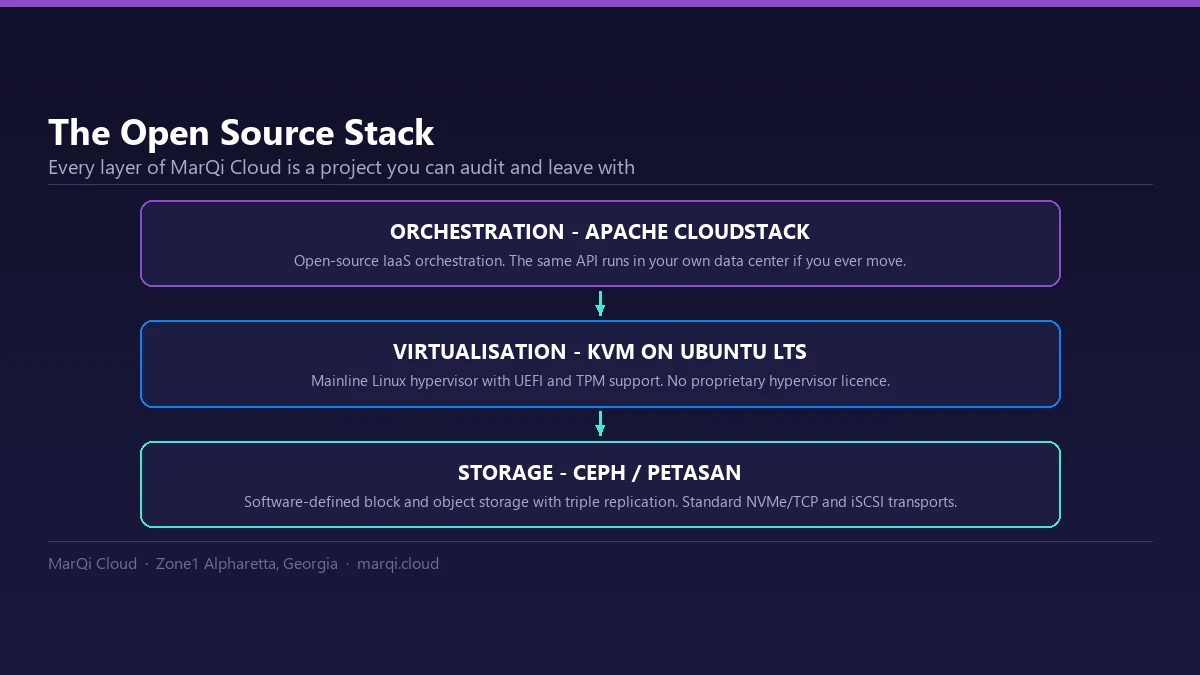
- Technologies Used: Popular tools include OpenStack (private clouds), Kubernetes (container management), Apache CloudStack, and OpenNebula.
- Benefits:
- No Vendor Lock-in: Avoids dependency on proprietary software or hardware.
- Flexibility: Sensitive data stays private while public clouds handle extra workloads.
- Cost Savings: Open-source tools reduce licensing fees.
- Integration: Works well with different systems and third-party tools.
Why do companies use Hybrid Cloud?
- Combines on-premises and cloud systems for flexibility.
- Let companies move workloads gradually to public clouds.
- Keeps sensitive or latency-sensitive data on-premises.
- Helps follow important rules and standards like GDPR, HIPAA, and PCI DSS.
- Reduces costs by paying only for what is used in the cloud.
- Enables fast scaling during high demand and access to advanced tech like AI.
Top Open Source Hybrid Cloud Platforms:
- OpenStack: Builds private clouds that connect to public clouds.
- Kubernetes: Manages containerized applications across multiple environments.
- Red Hat OpenShift: Enterprise-grade platform for hybrid cloud apps.
- Eucalyptus: Creates AWS-compatible private clouds.
- StarlingX: Supports edge computing and IoT hybrid setups.
- Apache OpenWhisk: Runs serverless code across multiple clouds.
Challenges to consider:
- Running on-premises data centers can be expensive.
- Managing multiple clouds requires careful planning and integration.
- Developers must handle deployments across both private and public systems.
- Moving data can take time and sometimes cost extra.
An open source hybrid cloud provider helps businesses keep sensitive data safe while still benefiting from the flexibility of public cloud services. Tools like OpenStack, Kubernetes, and Red Hat OpenShift make it easier to manage workloads across different environments. It is a safe, scalable, and cost-effective solution for modern IT needs.
Open Source Cloud Services
Open-source cloud services are cloud platforms and tools that are built using open-source code. This means the code is available for anyone to see, use, and modify. Businesses can use these services to create cloud environments for computing, storage, and networking without depending on one specific vendor. This makes it easier for companies to build flexible and cost-effective cloud systems.
Many organizations prefer open source cloud services because they offer more control and freedom. Since the technology is open, businesses can customize it based on their needs. It also helps them avoid vendor lock-in, which means they are not tied to one cloud provider. Another advantage is that these services are supported by a global developer community that continues to improve and update the technology.
Some key benefits of open source cloud services include:
- Transparency and security: The open code allows developers to review and improve security.
- Customization: Businesses can adjust the platform to match their requirements.
- No vendor lock-in: Companies can change or expand their cloud systems more easily.
- Cost savings: Open-source platforms reduce licensing and software costs.
- Community support: Developers around the world help improve the technology.
Popular platforms used in open source cloud services include:
- OpenStack: A popular platform used to build public and private cloud environments.
- Apache CloudStack: Helps manage large networks of virtual machines.
- OpenNebula: A flexible platform for managing private, public, and hybrid clouds.
- Eucalyptus: An open-source platform designed to work with AWS-compatible systems.
These platforms are often used in data centers to manage computing power, storage, and networking while providing an alternative to large proprietary cloud providers.
Kubernetes in Open Source Cloud Services
Kubernetes is an important technology used with open source cloud services. It is a container orchestration platform that helps businesses manage and run applications more easily in cloud environments.
How Kubernetes supports hybrid cloud infrastructure:
- Automates the deployment of applications across different cloud environments.
- Helps manage workloads in hybrid cloud systems.
- Improves efficiency by organizing resources better.
Key features of Kubernetes:
- Automatic scaling when application demand increases
- Self-healing systems that restart failed applications
- Load balancing to distribute traffic evenly
- Easy updates and rollbacks when changes are needed
These features help businesses run cloud applications smoothly and manage modern cloud environments more efficiently.
Why Businesses Are Adopting Hybrid Cloud Solutions
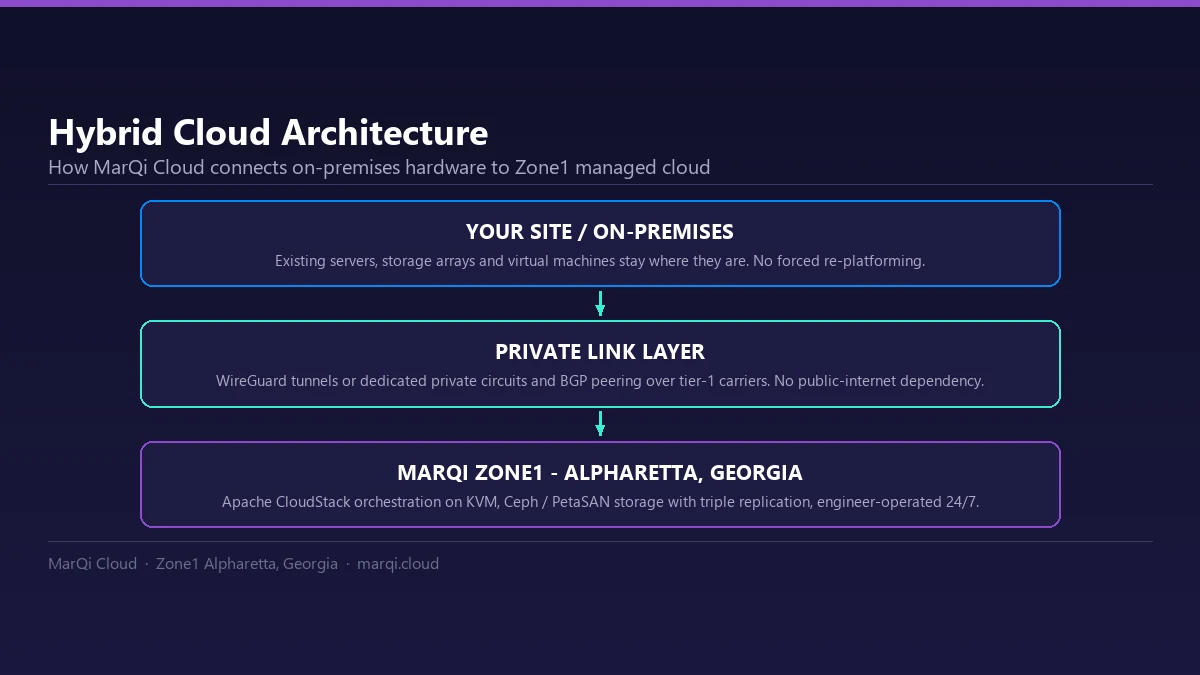
Hybrid cloud solutions bring together public clouds (like AWS or Azure), private clouds, and on-premises data centers into a single, unified IT system. This approach allows businesses to move workloads and data safely between environments, giving them flexibility, better performance, and cost savings.
Key Features of Hybrid Cloud Solutions:
- Centralized Management: Manage applications and data across private, public, and on-premises environments from a single control plane.
- Flexible Infrastructure: Combines multiple cloud platforms for an agile and adaptable IT setup.
- Portability: Applications and data can move freely between environments for seamless operations.
- Scalability: Easily scale resources in the public cloud during peak demand without investing in extra hardware.
- Cost Efficiency: Optimize IT spending by placing workloads in the most suitable environment.
- Enhanced Security: Sensitive data stays in private clouds, while less critical workloads run on public cloud resources.
How Kubernetes Enhances Hybrid Cloud Solutions:
- Smooth Workload Management: Enables applications to move efficiently across private and public clouds.
- Automatic Scaling: Adjusts resources automatically based on application demand.
- Optimized Performance: Makes efficient use of resources to improve system performance.
- High Reliability: Self-healing capabilities keep applications running without interruption.
Benefits of Hybrid Cloud Solutions:
- Flexible workload distribution across environments
- Better control and compliance of data
- Improved scalability and system performance
- Cost-effective IT management
Hybrid cloud solutions allow businesses to enjoy the control of private environments while taking advantage of the scalability and agility of public clouds, making them perfect for modern IT strategies.
Hybrid Cloud Infrastructure
Hybrid cloud infrastructure combines public clouds, private clouds, and on-premises data centers into a single, flexible system. This setup lets businesses move data and applications between environments easily, giving them both the speed of public clouds and the security of private systems, all while saving costs.
Benefits of Hybrid Cloud Infrastructure:
- Flexibility: Workloads can move between private and public clouds as needed.
- Scalability: Public cloud handles high-demand periods without extra hardware.
- Cost Efficiency: Save money by using the public cloud for non-sensitive tasks.
- Security & Compliance: Sensitive data stays private while other workloads run in the cloud.
- Modernization: Supports new technologies like containers and microservices while keeping legacy systems.
Common Uses:
- Data Storage: Keep sensitive data private, and less critical data in public clouds.
- Application Development: Develop in private cloud, deploy to public cloud for scaling.
- Disaster Recovery: Use public cloud as a backup to protect data.
How Kubernetes Supports Hybrid Cloud Infrastructure:
- Automates deploying applications across private and public clouds.
- Manages workloads efficiently for smooth operations.
- Supports microservices by breaking large applications into smaller, manageable parts.
Hybrid cloud infrastructure gives businesses the best of both worlds, secure, private systems and scalable public clouds, while keeping operations efficient, flexible, and cost-effective.
MarQi Cloud – A Reliable Open Source Hybrid Cloud Provider
MarQi Cloud is a dependable open source hybrid cloud provider that helps businesses run their cloud environments efficiently and securely. Its independent data center is built for high performance and consistency, ensuring that critical workloads are always available.
Key features of MarQi Cloud:
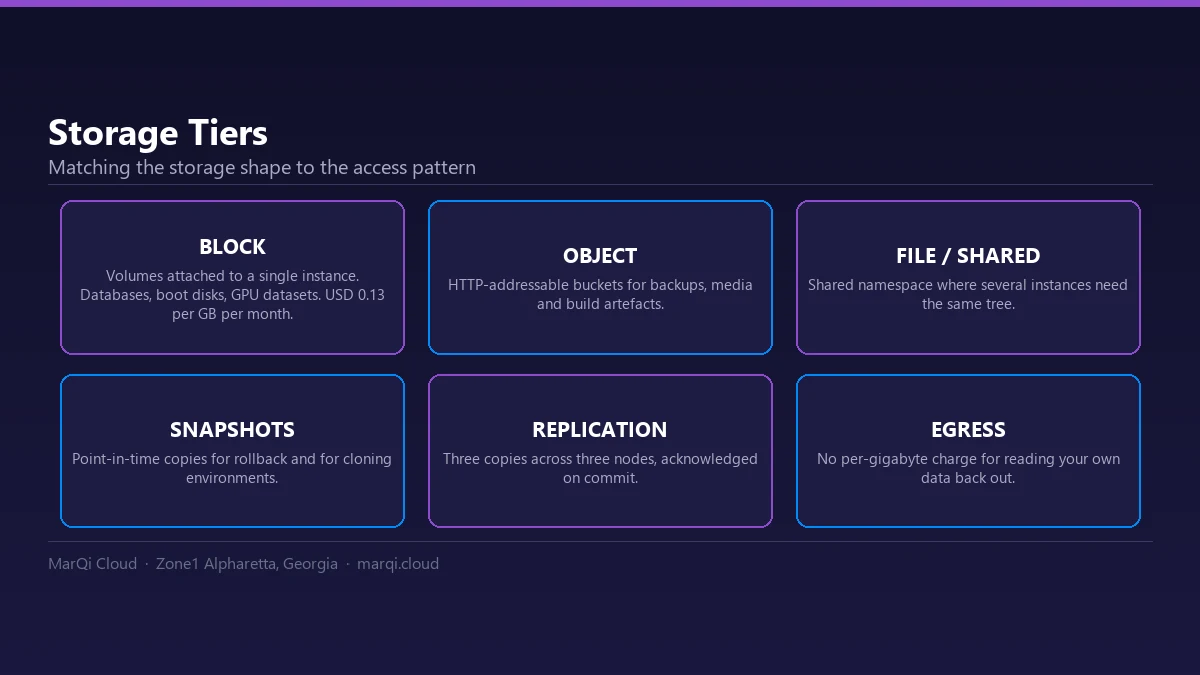
- Secure Storage Cluster: Dedicated storage for safe and scalable data management.
- Redundant Network: Provides stable connectivity and high availability for all services.
- Flexible Cloud Solutions: Offers robust open source cloud services and hybrid cloud solutions to meet modern business needs.
MarQi Cloud enables organizations to simplify cloud management, scale operations easily, and take advantage of automation while keeping their data protected.
Conclusion
Kubernetes plays a key role in open source hybrid cloud environments, helping automate application deployment, manage workloads efficiently, and improve scalability.
Working with a reliable open source hybrid cloud provider like MarQi Cloud allows businesses to adopt modern hybrid cloud solutions with confidence. Companies can improve performance, optimize costs, and ensure smooth, uninterrupted operations with a stable and efficient cloud infrastructure.