The IT Manager’s Ultimate Guide to Cloud Infrastructure TCO Analysis
July 11, 2026
Why Dedicated Cloud Resources Outperform Shared Tenancy for Mission-Critical Applications
July 11, 2026
What makes a storage solution genuinely scalable?
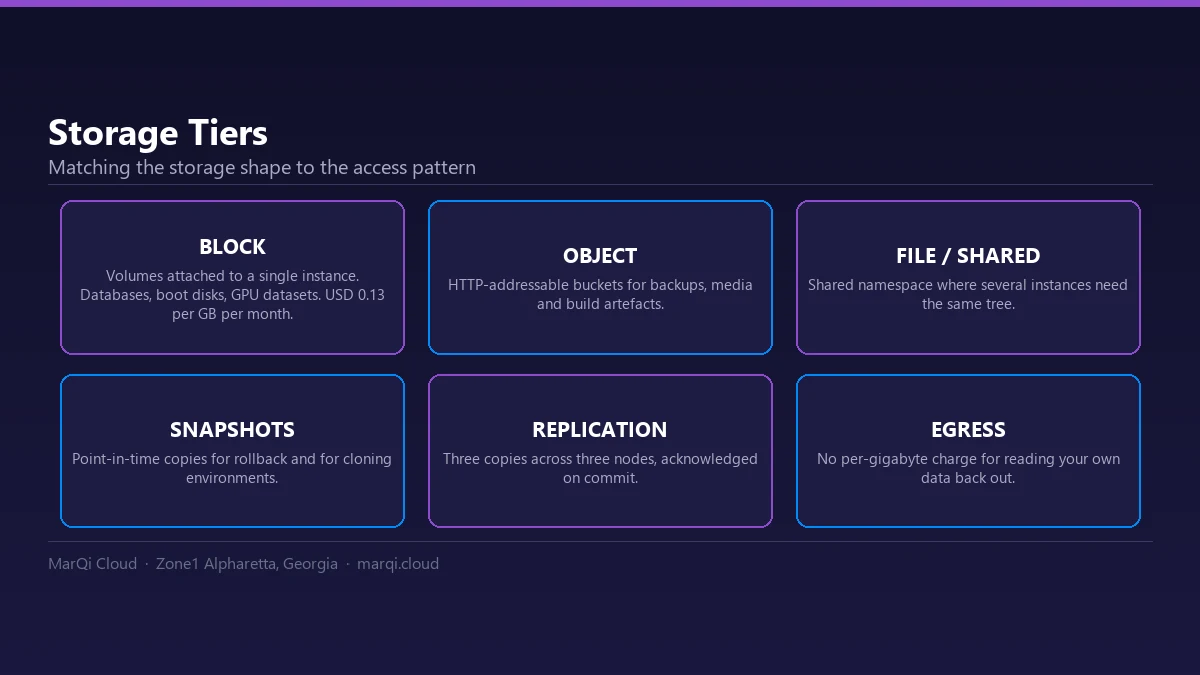
Scalability is not capacity — it is whether adding capacity keeps performance and cost linear. Look for a scale-out cluster where new nodes add both space and throughput, replication that rebuilds without downtime, and a published per-GB rate so growth does not quietly change the unit economics.
How Scalable Storage Solutions Adapt to Growing Enterprise Data Requirements
In today’s digital landscape, enterprises face an unprecedented surge in data generation and storage needs. As companies expand, their data requirements evolve, necessitating flexible and scalable storage solutions. This article delves into how scalable storage solutions are designed to adapt to growing enterprise data requirements, ensuring businesses can meet their operational goals while maintaining efficiency and security. By the end of this comprehensive guide, you will understand the importance of scalable storage, the various solutions available, and best practices for implementation.
What is Scalable Storage?
Scalable storage refers to storage solutions that can grow in capacity and performance as an organization’s data needs increase. Unlike traditional storage systems, which may require significant investment and downtime to expand, scalable storage solutions allow businesses to seamlessly add resources without significant disruption. This flexibility is crucial for enterprises that are continually evolving, whether they are adding new applications, expanding their operations, or responding to increased customer demand.
The Importance of Scalable Storage Solutions
In the era of big data, the ability to scale storage efficiently is paramount. Here are several reasons why scalable storage solutions are essential for growing enterprises:
- Adaptability: Businesses can adjust their storage capacity according to real-time data needs without overcommitting resources.
- Cost Efficiency: Organizations can avoid the costs associated with over-provisioning by only paying for the storage they need at any given time.
- Performance Optimization: Scalable storage solutions often provide enhanced performance as they can distribute workloads across multiple resources, ensuring optimal data access speeds.
- Future-Proofing: As technology evolves, scalable storage solutions are designed to integrate with new technologies, ensuring ongoing relevance and utility.
Types of Scalable Storage Solutions
There are various types of scalable storage solutions available, each with its unique advantages:
1. Cloud Storage
Cloud storage offers businesses the flexibility to scale their storage needs on-demand. Providers like MarQi Cloud enable organizations to easily increase or decrease storage capacity based on current requirements. This model eliminates the need for physical infrastructure investments and allows for rapid deployment of resources.
2. Object Storage
Object storage is designed to handle vast amounts of unstructured data. It uses a flat address space, which allows for easy scalability. This type of storage is particularly useful for companies dealing with big data analytics, multimedia content, and backup solutions. For an in-depth comparison of different storage types, refer to our article on Object Storage vs. Block Storage vs. File Storage.
3. Block Storage
Block storage is ideal for applications requiring high-performance data access, such as databases and enterprise applications. It allows for quick scaling by adding more blocks as needed, which is crucial for businesses experiencing rapid growth.
4. File Storage
File storage systems are suitable for businesses that need to manage and share files easily, such as media companies and collaborative teams. While less scalable than object storage, it can be expanded by adding more file servers.
5. Hybrid Solutions
Hybrid storage solutions combine on-premises infrastructure with cloud storage, providing the best of both worlds. Organizations can store sensitive data locally while leveraging the cloud for scalability and flexibility. MarQi Cloud specializes in hybrid cloud solutions that meet the specific needs of enterprises.
Implementing Scalable Storage Solutions
| Storage type | What it is best at | Typical workload | On MarQi Cloud |
|---|---|---|---|
| Cloud storage | Adding capacity without buying hardware | General-purpose growth | Ceph-based capacity in Zone1 |
| Object storage | Flat, HTTP-addressable namespace | Backups, media, dataset archives | Ceph-based object storage |
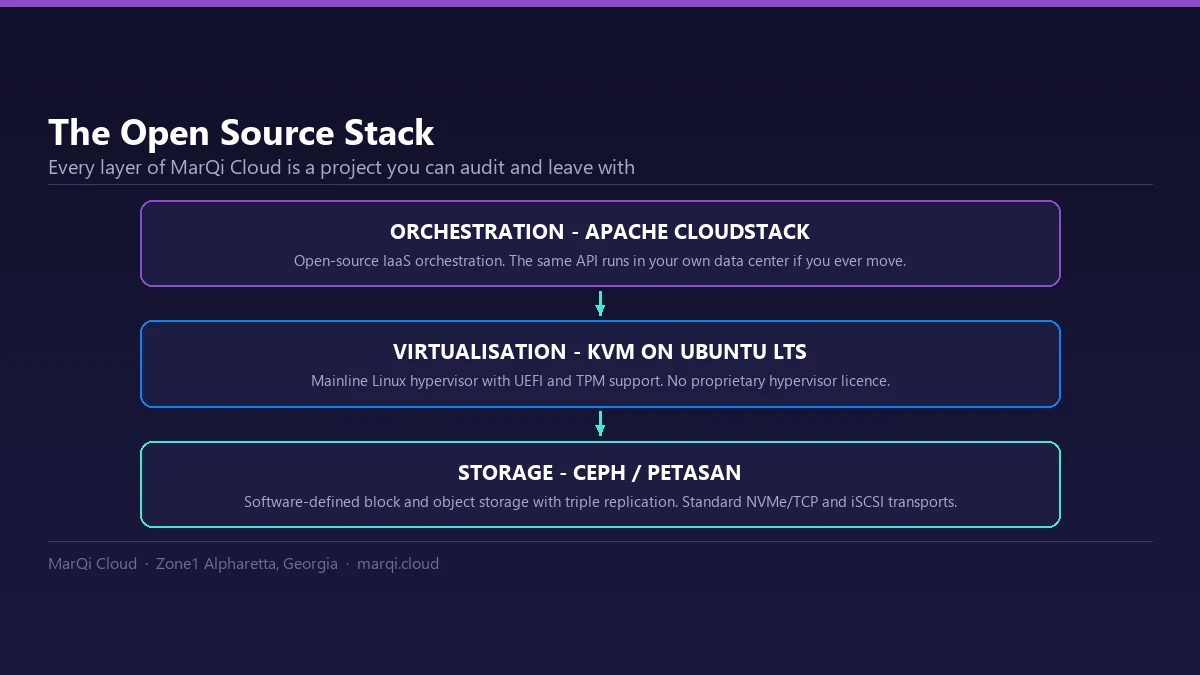
| Block storage | Low-latency volumes attached to one instance | Databases, boot disks, GPU datasets | NVMe/TCP or iSCSI, triple replicated |
| File storage | A shared namespace several instances mount | Shared application state | File storage on the same cluster |
| Hybrid | Keeping some data on-premises | Data gravity or compliance constraints | Private circuits into Zone1 |
Implementing scalable storage solutions requires a strategic approach. Here are steps to consider:
- Assess Current Needs: Evaluate your current storage requirements and identify areas for growth. This assessment should consider current data volume, anticipated growth, and application performance needs.
- Choose the Right Solution: Based on your assessment, select a storage solution that aligns with your business objectives. Consider factors such as scalability, cost, and performance.
- Plan for Integration: Ensure that the new storage solution can integrate smoothly with your existing IT infrastructure. This may involve collaboration with IT teams to ensure compatibility and performance.
- Implement Gradually: Rather than a wholesale switch, consider a phased implementation. This allows for testing and adjustments without disrupting business operations.
- Monitor and Optimize: Continuously monitor the performance of your storage solution. Make adjustments as needed to optimize performance and manage costs.
Scalable Storage and Data Security
As enterprises scale their storage solutions, data security must remain a top priority. Here are key considerations:
- Data Encryption: Ensure that data is encrypted both in transit and at rest to protect sensitive information from unauthorized access.
- Access Controls: Implement strict access controls and user authentication measures to limit access to sensitive data.
- Regular Audits: Conduct regular security audits and vulnerability assessments to identify and address potential risks.
- Compliance: Ensure that your storage solution meets industry compliance standards, such as HIPAA for healthcare or GDPR for businesses operating in Europe.
MarQi Cloud provides secure enterprise hosting solutions that prioritize data security and compliance, allowing businesses to focus on growth without compromising safety. For more information on how we handle data security, check out our article on Cloud Security in 2026.
Cost Management in Scalable Storage Solutions
While scalable storage solutions provide flexibility, managing costs effectively is crucial. Here are strategies to consider:
- Pay-as-You-Go Models: Many cloud providers offer pay-as-you-go pricing models, allowing businesses to pay only for the storage they use. This can significantly reduce costs.
- Capacity Planning: Regularly assess your storage needs and adjust capacity accordingly to avoid over-provisioning.
- Utilize Tiered Storage: Implement tiered storage solutions that allow you to store frequently accessed data on high-performance storage while archiving less frequently accessed data on lower-cost options.
- Monitor Usage: Use monitoring tools to track storage usage and identify areas where costs can be cut.
Best Practices for Scalable Storage Implementation
To maximize the benefits of scalable storage solutions, consider the following best practices:
- Regular Training: Ensure that your IT team is trained on the latest storage technologies and best practices.
- Vendor Support: Choose a provider that offers robust support and managed services, such as MarQi Cloud, to help you navigate complexities.
- Documentation: Maintain up-to-date documentation of your storage architecture and policies for easy reference.
- Engage Stakeholders: Involve key stakeholders in the planning and implementation process to ensure alignment with business goals.
Frequently Asked Questions
1. What is scalable storage?
Scalable storage refers to storage solutions that can easily expand in capacity and performance to accommodate growing data needs without significant disruptions.
2. Why is scalable storage important for businesses?
Scalable storage is crucial as it allows businesses to adapt to changing data requirements, optimize costs, and ensure high performance.
3. What are the types of scalable storage solutions?
The main types of scalable storage solutions include cloud storage, object storage, block storage, file storage, and hybrid solutions.
4. How can I implement scalable storage in my organization?
Start by assessing your current needs, choosing the right solution, planning for integration, implementing gradually, and continuously monitoring performance.
5. What security measures should I consider for scalable storage?
Key security measures include data encryption, access controls, regular audits, and compliance with industry standards.
6. How can I manage costs associated with scalable storage?
Utilize pay-as-you-go models, conduct capacity planning, implement tiered storage, and monitor usage to manage costs effectively.
7. What are some best practices for implementing scalable storage?
Best practices include regular training for your IT team, choosing a supportive vendor, maintaining documentation, and engaging stakeholders in the process.
8. How does MarQi Cloud support scalable storage solutions?
MarQi Cloud provides enterprise-grade cloud infrastructure and managed services that facilitate scalable storage solutions tailored to your business needs.
9. Can scalable storage help with disaster recovery?
Yes, scalable storage solutions can enhance disaster recovery strategies by allowing businesses to quickly scale resources as needed to ensure data availability.
10. What is the difference between cloud storage and on-premises storage?
Cloud storage is managed off-site and allows for easy scalability, while on-premises storage requires physical infrastructure and may have limitations in scalability.
11. How can businesses ensure compliance with scalable storage solutions?
Businesses should choose storage solutions that meet industry compliance standards and conduct regular audits to ensure ongoing compliance.
12. What role does data visibility play in scalable storage?
Data visibility allows businesses to track storage usage and performance, facilitating better decision-making regarding scalability and resource allocation.