How MarQi Cloud Sources Only the Fastest NVMe Storage on the Market
April 1, 2026
Is Investing in Dedicated GPU Clusters Worth It for Startups?
April 1, 2026
The MarQi Cloud Network Topology Deep Dive: How Data Moves Inside the Platform
As businesses increasingly migrate to cloud services, understanding the underlying architecture of these platforms becomes paramount. At MarQi Cloud, we pride ourselves on offering enterprise-grade cloud infrastructure designed with performance, security, and reliability in mind. This article will take a deep dive into the network topology of MarQi Cloud, illustrating how data moves within our platform and the benefits this brings to your organization.
What is Network Topology?
Network topology refers to the arrangement of various elements (links, nodes, etc.) in a computer network. It dictates how data is transmitted and received across the network, influencing performance, scalability, and security. By understanding network topology, organizations can optimize their cloud infrastructure for better resource allocation and performance.
An Overview of MarQi Cloud’s Network Topology
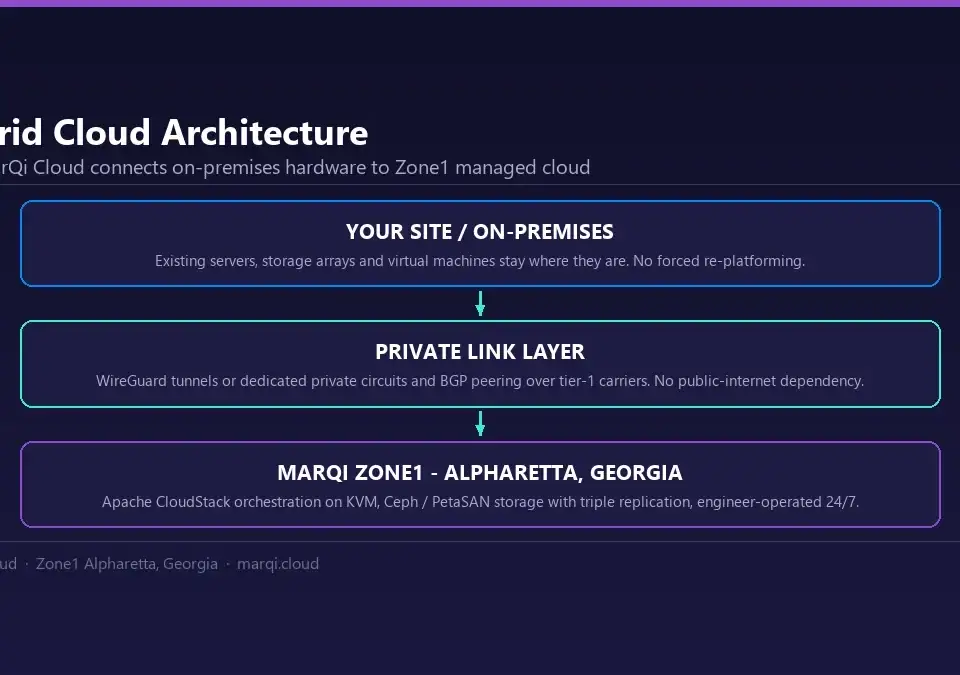
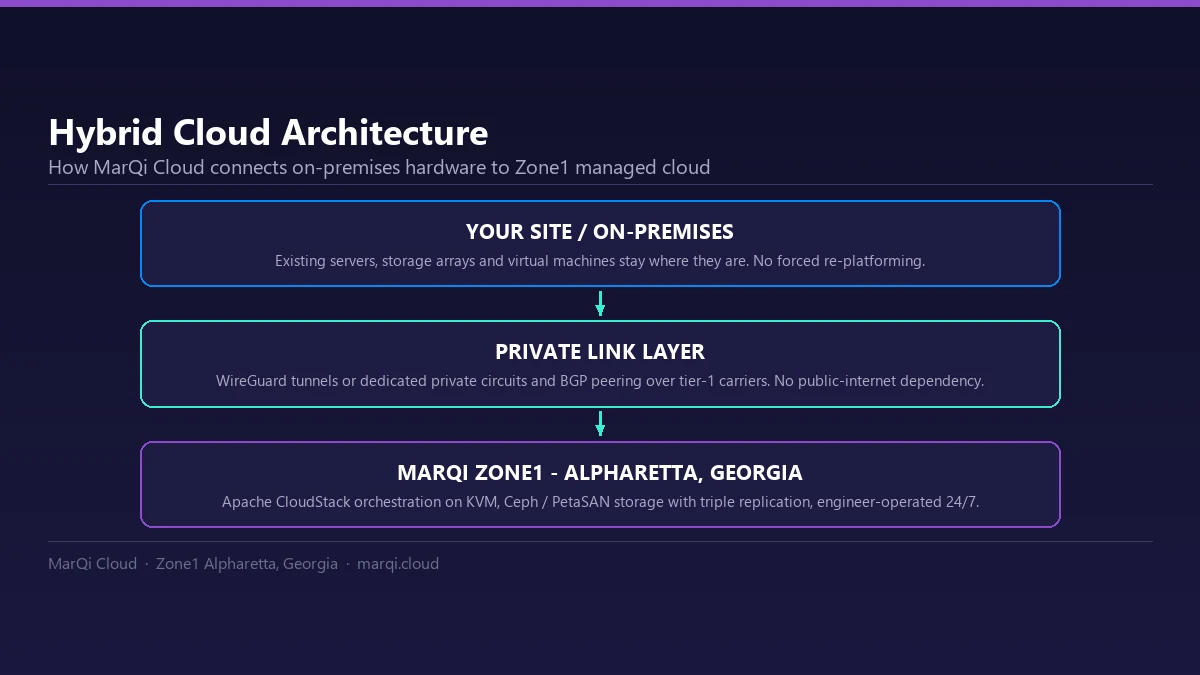
MarQi Cloud’s network topology is designed to provide robust, flexible, and secure data movement capabilities. Our platform utilizes a hybrid cloud deployment model that seamlessly integrates private and public cloud resources, ensuring that data flows efficiently and securely between them. The following sections will detail the key components of our network topology.
1. Core Network Architecture
At the heart of MarQi Cloud’s infrastructure is our core network architecture. This architecture consists of high-speed routers and switches that enable rapid data transfer and minimize latency. The core network is designed to handle large volumes of data traffic, ensuring that applications run efficiently and without interruption.
2. Data Centers and Redundancy
MarQi Cloud operates multiple data centers across the United States, each equipped with enterprise-grade hardware and high-speed internet connections. The distributed nature of our data centers allows for redundancy, meaning that if one center experiences an issue, another can take over, ensuring business continuity and disaster recovery. This redundancy is crucial for maintaining uptime and availability for our clients.
3. Hybrid Cloud Deployment
The hybrid cloud model employed by MarQi Cloud enables organizations to leverage both private and public cloud resources. This model allows for greater flexibility in resource allocation, allowing businesses to scale their compute and storage resources up or down based on their needs. With a hybrid cloud, data can move seamlessly between private and public environments, ensuring that sensitive information remains secure while benefiting from the scalability of public cloud resources.
4. Secure Hosting Environments
Security is a top priority at MarQi Cloud. Our network topology incorporates multiple layers of security measures, including firewalls, intrusion detection systems, and data encryption. This layered approach ensures that data remains protected as it moves across our platform, providing a secure hosting environment for our clients.
5. Performance-Driven Infrastructure Design
MarQi Cloud’s network topology is optimized for performance. By utilizing advanced routing protocols and load balancing techniques, we ensure that data is transmitted efficiently, minimizing latency and maximizing throughput. This performance-driven design is essential for businesses that require high-speed access to data and applications.
6. Scalable Compute and Storage Resources
One of the most significant advantages of MarQi Cloud’s network topology is its scalability. Organizations can easily scale their compute and storage resources to meet changing demands without experiencing downtime or performance degradation. This scalability is particularly beneficial for businesses that experience fluctuating workloads or seasonal spikes in demand.
How Data Moves Within the MarQi Cloud Platform
Understanding how data moves within the MarQi Cloud platform is vital for organizations looking to optimize their cloud operations. The following sections outline the flow of data through our network topology.
1. Data Ingress
Data ingress refers to the process of data entering the MarQi Cloud platform. This can occur through various means, including direct uploads, API calls, or data replication from on-premises systems. Once data enters the platform, it is immediately routed through our core network architecture, where it is subjected to security checks and validation.
2. Data Processing
After data ingress, the information is processed within our compute resources. Depending on the application requirements, data may be processed in real-time or stored for later use. This processing phase is where MarQi Cloud’s performance-driven infrastructure design shines, allowing for rapid data manipulation and analysis.
3. Data Egress
Data egress is the process of data leaving the MarQi Cloud platform. This can occur when users access information via web applications, APIs, or data exports. Similar to data ingress, egress traffic is routed through our core network and monitored for security and compliance. This ensures that all data leaving the platform is authorized and secure.
Benefits of MarQi Cloud’s Network Topology
By leveraging our unique network topology, businesses can experience a range of benefits:
1. Enhanced Performance
Our performance-driven infrastructure design ensures that data is transmitted quickly and efficiently, resulting in improved application performance and user experience.
2. Increased Security
With multiple layers of security measures in place, businesses can trust that their data is protected as it moves through our platform, minimizing the risk of data breaches.
3. Greater Flexibility
The hybrid cloud deployment model allows organizations to adjust their resources based on demand, providing the flexibility needed to support evolving business needs.
4. Reliable Business Continuity
With redundant data centers and comprehensive disaster recovery solutions, businesses can ensure that their operations remain uninterrupted, even in the face of potential challenges.
Conclusion
Understanding the network topology of MarQi Cloud is essential for organizations looking to maximize their cloud investment. Our enterprise-grade infrastructure, combined with a hybrid cloud deployment model, enables seamless data movement while providing the security and performance needed for success. For more information about how MarQi Cloud can support your business, contact us today at +1 770-369-9321.
FAQ
1. What is network topology?
Network topology is the arrangement and structure of various elements in a computer network, influencing how data is transmitted and received.
2. How does MarQi Cloud’s network topology enhance performance?
Our performance-driven infrastructure design utilizes advanced routing protocols and load balancing to ensure efficient data transmission and minimized latency.
3. What security measures are in place at MarQi Cloud?
MarQi Cloud utilizes firewalls, intrusion detection systems, and data encryption to protect data as it moves through our platform.
4. How does the hybrid cloud deployment model work?
The hybrid cloud model combines both private and public cloud resources, allowing organizations to scale their resources as needed while ensuring data security.
5. What does data ingress refer to?
Data ingress is the process of data entering the MarQi Cloud platform through various means, such as uploads or API calls.
6. How does MarQi Cloud ensure business continuity?
We operate multiple data centers with redundancy and disaster recovery solutions to maintain operations even during unexpected challenges.
7. Can I scale my resources with MarQi Cloud?
Yes, MarQi Cloud offers scalable compute and storage resources to meet changing business demands without downtime.
8. Who can I contact for more information about MarQi Cloud?
For more information, you can reach us at +1 770-369-9321.