How MarQi Cloud Supports Multi-Tenant Applications Without Compromising Performance
June 26, 2026
How to Use MarQi Cloud WireGuard VPN for Secure Remote Infrastructure Access
June 26, 2026
The Real Cost of Cloud Egress Fees — And Why MarQi Cloud Doesn’t Charge Them
In the rapidly evolving world of cloud computing, businesses are continually looking for ways to optimize their costs and maximize their return on investment (ROI). One of the oft-overlooked aspects of cloud pricing is egress fees—the costs associated with transferring data out of a cloud provider’s infrastructure. In this article, we will delve into the real cost of cloud egress fees, explore why they can significantly impact your budget, and explain how MarQi Cloud differentiates itself by not charging these fees.
Understanding Cloud Egress Fees
Cloud egress fees are charges imposed by cloud service providers when data is transferred out of their cloud environment to another destination, such as a different cloud provider, on-premises systems, or end-user devices. These fees can vary dramatically depending on the provider and the volume of data being transferred.
Types of Data Transfer
Data transfer from the cloud can occur for various reasons, including:
- Backup and Disaster Recovery: Businesses often need to back up data or replicate it to another site for disaster recovery purposes.
- Data Migration: Organizations may decide to switch cloud providers or move data back on-premises.
- Application Integration: Many businesses use multiple cloud services that need to communicate with each other, leading to data transfer costs.
- User Access: End-users accessing applications hosted in the cloud will also incur egress fees as they download data.
The Hidden Costs of Egress Fees
While egress fees may seem minor at first glance, they can accumulate quickly, leading to significant expenses that can strain a company’s budget. Let’s explore the hidden costs associated with cloud egress fees.
1. Impact on Budgeting
Many businesses underestimate the cost of data transfer when planning their cloud budgets. Unexpected egress charges can lead to budget overruns and financial strain. Without proper forecasting, organizations may find themselves facing unanticipated costs that can disrupt their financial planning.
2. Complicated Pricing Models
Cloud providers often have complex pricing structures that make it challenging for businesses to estimate their egress fees accurately. Pricing may vary based on the volume of data transferred, geographic region, and the specific service plan. This complexity can lead to confusion and miscalculations, further complicating budget management.
3. Reduced Efficiency
High egress fees can discourage businesses from utilizing the cloud to its full potential. Organizations may hesitate to transfer large datasets required for analytics or operational efficiency due to fear of incurring additional charges, ultimately limiting their growth and innovation.
4. Vendor Lock-In
Significant egress fees can create a dependency on a single cloud provider. If businesses are concerned about the costs associated with leaving a provider, they may feel trapped, making it difficult to switch vendors or adopt a multi-cloud strategy, which can limit their flexibility and bargaining power.
Real-World Examples of Egress Fees
To put the costs of egress fees into perspective, let’s look at some hypothetical scenarios:
Scenario 1: A Growing E-commerce Business
An e-commerce company hosts its website and customer data on a major cloud provider. As their business grows, they need to transfer large amounts of customer data to run analytics. With egress fees of $0.10 per GB, transferring 1 TB of data would cost them $100. If they need to do this monthly, that’s $1,200 annually just for data transfer.
Scenario 2: A Media Company
A media company utilizing cloud services for video storage and streaming faces egress fees when delivering content to users. If their data transfer rates run high, they could incur egress fees amounting to thousands of dollars per month, severely affecting their operational budget.
Why MarQi Cloud Doesn’t Charge Egress Fees
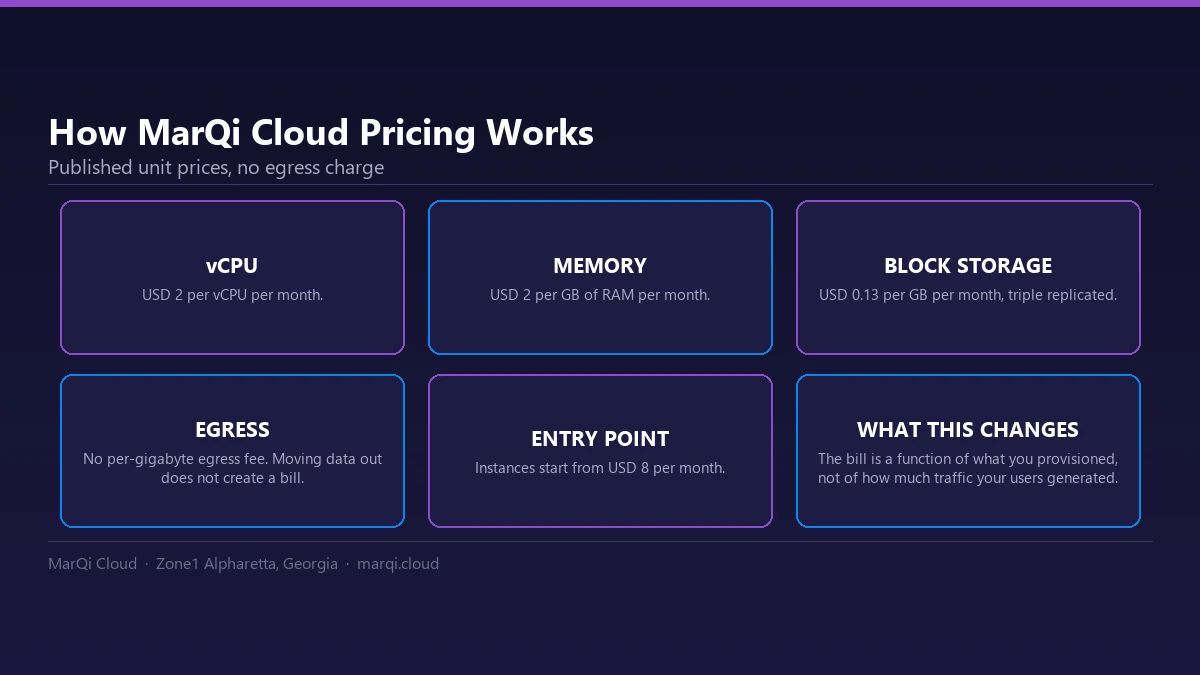
At MarQi Cloud, we believe in transparency and fairness in pricing. Our approach to cloud services is designed to eliminate the burden of egress fees, allowing businesses to focus on their growth without the anxiety of hidden costs.
1. Transparent Pricing Models
We offer flexible and straightforward pricing models that allow businesses to understand their costs clearly. By not charging egress fees, we make it easier for our clients to budget and plan their cloud expenditures without fear of unexpected charges.
2. Supporting Business Growth
MarQi Cloud is committed to supporting the growth of our clients. By eliminating egress fees, we encourage businesses to leverage their data more effectively, whether for analytics, backups, or migrations, without worrying about the costs associated with transferring their data.
3. Enhancing Flexibility
Our no-egress-fee policy allows businesses to adopt a multi-cloud strategy if desired, enhancing their flexibility and operational efficiency. Clients can move data freely between different environments without the fear of incurring exorbitant fees.
4. US-Based Infrastructure and Support
With our enterprise-grade cloud infrastructure based in the US, clients can rest assured that their data is stored securely and managed by a dedicated support team. This local support enhances the reliability of our services and ensures that businesses have access to the help they need when they need it.
Conclusion
The real cost of cloud egress fees can weigh heavily on organizations, affecting their budget, operational efficiency, and overall cloud strategy. By choosing MarQi Cloud, businesses can avoid these hidden costs and focus on what truly matters—growing their operations and driving innovation. With our commitment to transparent pricing and support for hybrid cloud deployment models, we provide a flexible and scalable solution that meets the needs of modern enterprises.
FAQ
1. What are cloud egress fees?
Cloud egress fees are charges imposed by cloud providers for transferring data out of their cloud environment to other locations.
2. Why do cloud providers charge egress fees?
Cloud providers charge egress fees to cover the costs associated with data transfer and to manage their infrastructure resources effectively.
3. How can egress fees impact my cloud budget?
Egress fees can accumulate quickly, leading to unexpected costs that can strain your budget and disrupt financial planning.
4. What is the typical range for egress fees?
Egress fees vary widely among providers but can range from a few cents to over $0.10 per GB transferred, depending on the service and volume.
5. How can I avoid egress fees?
Choosing a cloud provider that does not charge egress fees, like MarQi Cloud, can help you avoid these costs altogether.
6. What are the benefits of not having egress fees?
Eliminating egress fees allows businesses to transfer data freely, enhances budgeting accuracy, and provides greater flexibility in cloud strategy.
7. Can egress fees lead to vendor lock-in?
Yes, high egress fees can discourage businesses from switching providers, creating a dependency on one vendor.
8. How can I ensure my data is secure in the cloud?
Choosing a cloud provider that offers a secure and compliant infrastructure, such as MarQi Cloud’s US-based services, can help ensure your data is protected.
9. What is MarQi Cloud’s approach to pricing?
MarQi Cloud offers transparent pricing models without egress fees, making it easier for businesses to manage their cloud costs effectively.
10. How can I get in touch with MarQi Cloud for more information?
You can contact MarQi Cloud at +1 770-369-9321 for more information about our services and pricing options.