GPU Colocation: Can You Bring Your Own GPUs and Still Use Cloud Storage?
February 27, 2026
Building a Cost-Optimized Hybrid Lab for Dev/Test Teams
February 27, 2026
Understanding Tier-1 Network Providers: What It Means and What It Doesn’t
In the ever-evolving landscape of the internet, the term ‘Tier-1 network providers’ is often thrown around. For businesses and organizations seeking reliable internet connectivity, understanding what Tier-1 providers are, their significance, and how they differ from other types of network providers is crucial. This article delves into the world of Tier-1 network providers, explaining their role, what it means to be Tier-1, and what misconceptions may arise.
What is a Tier-1 Network Provider?
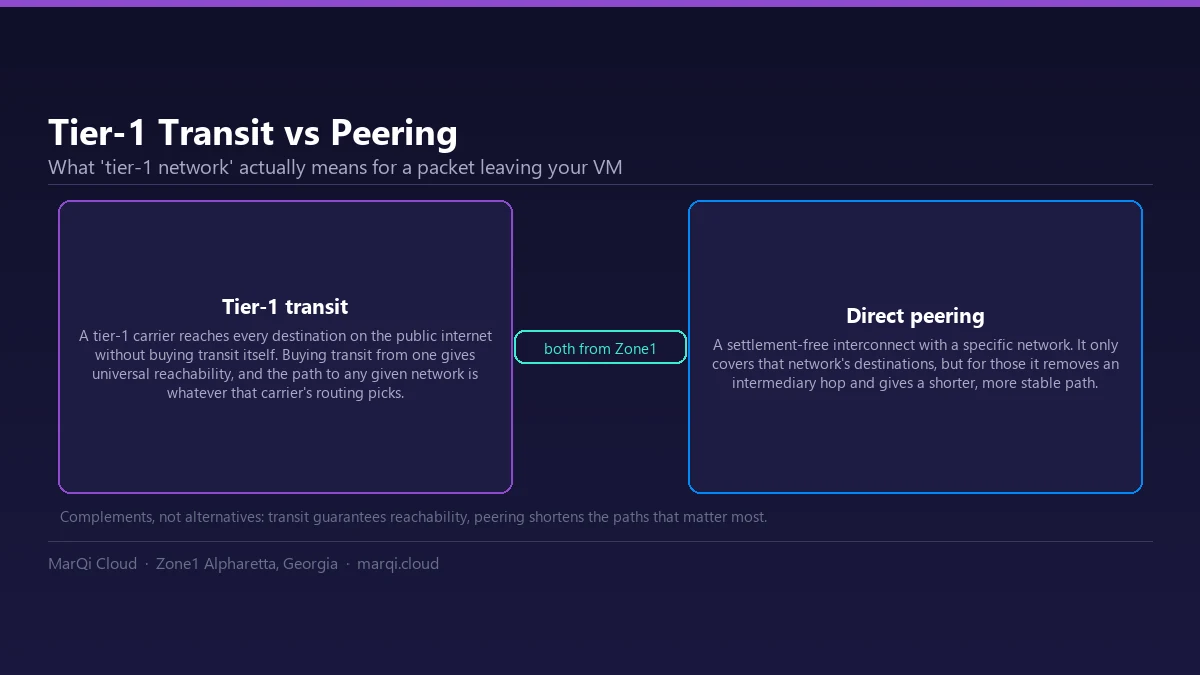
A Tier-1 network provider is a telecommunications company that can reach every other network on the internet without having to purchase IP transit. In simpler terms, Tier-1 providers have extensive networks that interconnect with one another, allowing them to offer global internet connectivity. These providers are crucial for the backbone of the internet, ensuring that data can flow seamlessly across various networks.
Characteristics of Tier-1 Providers
Tier-1 providers possess specific characteristics that set them apart from Tier-2 and Tier-3 providers:
- Global Reach: They have a vast network that spans multiple continents, connecting with many other networks.
- No Peering Costs: Tier-1 providers do not pay for internet transit; they exchange traffic with other Tier-1 networks for free.
- Infrastructure Ownership: They own significant portions of the infrastructure, including data centers, fiber optic cables, and routers.
- Reliability: Due to their large-scale operations and investment in infrastructure, Tier-1 networks typically offer high reliability and low latency.
The Importance of Tier-1 Network Providers
Understanding the importance of Tier-1 network providers can help businesses make informed decisions regarding internet connectivity and service providers. Here are several reasons why Tier-1 networks are considered vital:
1. Enhanced Connectivity
When a business partners with a Tier-1 provider, it gains access to a broad global network. This connectivity is essential for organizations that require reliable access to other networks, whether for data transfer, online services, or cloud computing.
2. Improved Performance
Tier-1 providers invest heavily in their infrastructure, ensuring optimal performance. This means lower latency and faster data transmission, which is crucial for businesses that rely on real-time data and applications.
3. Scalability
As a business grows, its internet connectivity needs may evolve. Tier-1 providers offer scalable solutions, allowing organizations to expand their bandwidth and services without significant disruptions.
4. Redundancy and Reliability
Tier-1 networks provide extensive redundancy, which means that even if one route fails, data can still be transmitted through alternative paths. This reliability is critical for maintaining business operations and minimizing downtime.
What Tier-1 Does Not Mean
While Tier-1 providers play a significant role in the internet ecosystem, it is essential to clarify what being a Tier-1 provider does not entail:
1. Not All Providers are Created Equal
Just because a provider claims to be a Tier-1 provider does not mean they offer the same level of service or infrastructure as others. It is vital to assess their actual connectivity, reliability, and performance metrics.
2. Not Limited to Internet Backbone
Tier-1 providers are primarily associated with the internet backbone, but many other providers focus on regional or local connectivity, offering services that may not require Tier-1 characteristics.
3. Misconceptions about Pricing
Some businesses may believe that partnering with a Tier-1 provider guarantees the lowest prices. However, Tier-1 services often come at a premium due to the extensive infrastructure and support provided.
4. Not a Guarantee of Security
While Tier-1 providers have robust infrastructures, they are not immune to security threats. Businesses must still implement their security measures to protect their data and operations.
How to Choose a Tier-1 Network Provider
When seeking a Tier-1 network provider, businesses should consider several factors:
1. Evaluate Network Reach
Assess the provider’s global reach and the number of peering agreements they have. This information is crucial for understanding potential connectivity and performance.
2. Review Performance Metrics
Look for metrics related to latency, uptime, and throughput. Providers should be transparent about their performance statistics.
3. Investigate Customer Support
Reliable customer support is essential. Ensure that the provider offers robust support options, including 24/7 availability.
4. Analyze Scalability Options
Consider how easily the provider can scale services to meet future business needs. Flexibility in pricing and capacity is vital.
Conclusion
Understanding Tier-1 network providers is essential for businesses looking to establish reliable and robust internet connectivity. These providers play a crucial role in the global internet landscape, offering unparalleled reach, performance, and reliability. However, it is important to recognize that not all Tier-1 providers are equal, and businesses must conduct thorough research to find the right fit. By considering factors such as network reach, performance metrics, customer support, and scalability, organizations can make informed decisions that contribute to their long-term success.
Frequently Asked Questions (FAQ)
1. What exactly defines a Tier-1 network provider?
A Tier-1 network provider is a telecommunications company that can access the entire internet without having to pay for IP transit. They interconnect with other Tier-1 networks and provide global connectivity.
2. How do Tier-1 providers differ from Tier-2 and Tier-3 providers?
Tier-2 and Tier-3 providers typically pay for internet transit and may not have the extensive infrastructure or global reach of Tier-1 providers.
3. What are the benefits of using a Tier-1 network provider?
Benefits include enhanced connectivity, improved performance, scalability, and redundancy, which help ensure reliable internet access for businesses.
4. Do Tier-1 providers guarantee the lowest prices?
Not necessarily. Tier-1 providers may charge a premium for their services due to their extensive infrastructure and superior offerings.
5. Can Tier-1 providers ensure data security?
While Tier-1 providers have robust infrastructures, they cannot guarantee complete security. Businesses should implement their security measures.
6. How can I evaluate a Tier-1 network provider?
Evaluate their network reach, performance metrics, customer support options, and scalability to determine if they meet your business needs.
7. Are all Tier-1 providers the same?
No, not all Tier-1 providers offer the same level of service or infrastructure. It’s essential to assess each provider individually.
8. Why is redundancy important in a Tier-1 network?
Redundancy ensures that if one connection fails, data can still be transmitted through alternative routes, maintaining reliability and minimizing downtime.