Secure GPU Hosting in Atlanta – Compliance & Best Practices
March 13, 2026
How Atlanta’s Fiber Network Improves AI Performance
March 14, 2026
Unlocking the Power of High-Density GPU Clusters in the Southeast: A Comprehensive Guide
In the realm of modern computing, high-density GPU clusters have emerged as a transformative force, providing the necessary computational power for a variety of industries. From artificial intelligence to complex simulations, these clusters are integral to pushing the boundaries of technology. In this article, we will explore the significance of high-density GPU clusters, particularly in the Southeast United States, and how they empower businesses across various sectors.
What Are High-Density GPU Clusters?
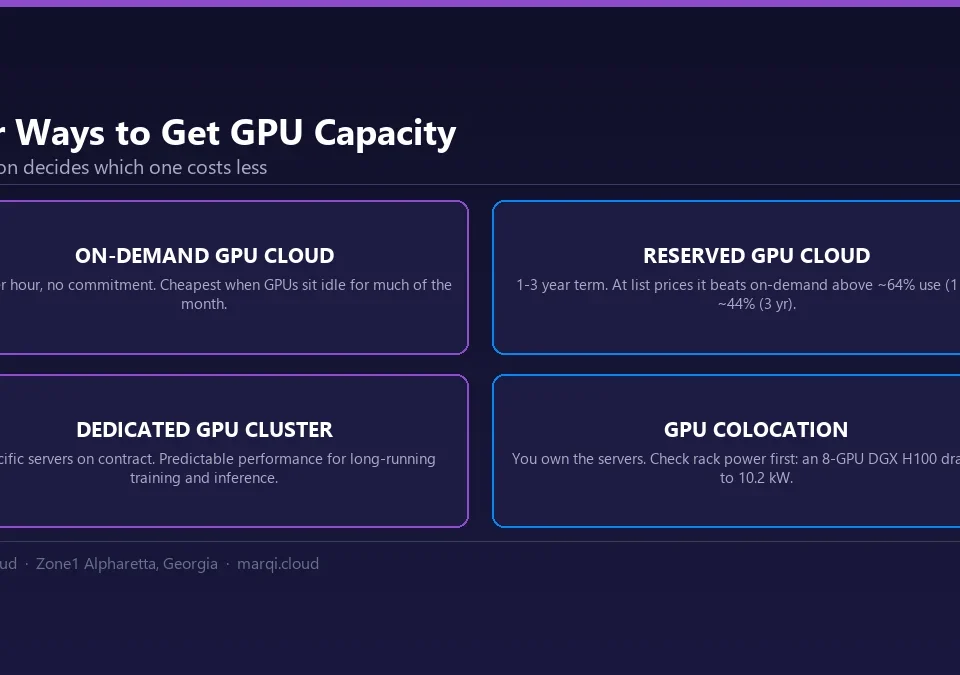
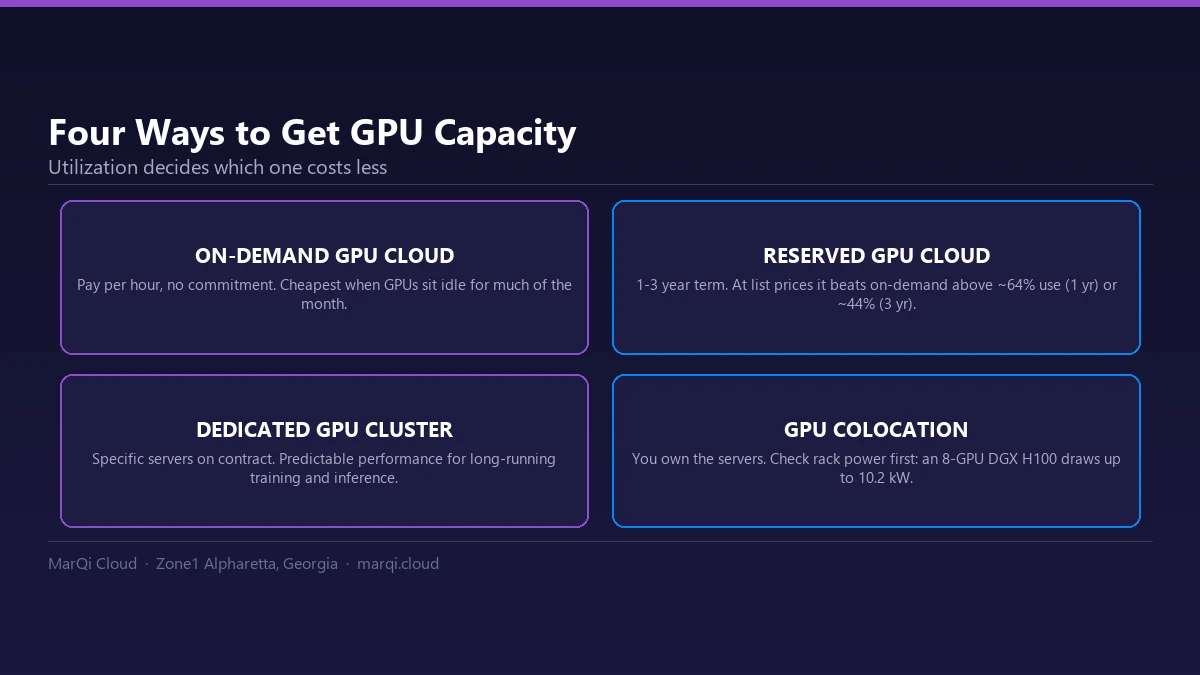
High-density GPU clusters are collections of graphics processing units (GPUs) that work together to perform parallel processing tasks. Unlike traditional CPU-based systems, GPUs are designed to handle numerous operations simultaneously, making them ideal for tasks that require heavy computational power such as machine learning, scientific modeling, and rendering. On MarQi Cloud that shape is sold as dedicated, non-oversubscribed GPU clusters rather than a shared slice of a card.
The Rise of High-Density GPU Clusters
As industries increasingly turn to data-driven solutions, the demand for high-performance computing systems has surged. The proliferation of big data, coupled with advancements in artificial intelligence and machine learning, has created a perfect storm for the adoption of GPU clusters. High-density GPU clusters provide the scalability, performance, and efficiency necessary to meet these growing demands.
Key Benefits of High-Density GPU Clusters
- Enhanced Performance: By leveraging the parallel processing capabilities of GPUs, organizations can achieve significantly faster processing times for complex tasks.
- Scalability: High-density configurations allow businesses to expand their compute resources easily, accommodating growing workloads without significant infrastructure overhauls.
- Cost Efficiency: Although the initial investment may be substantial, the long-term savings in operational costs and improved productivity often justify the expense.
- Energy Efficiency: High-density GPU clusters are designed to maximize performance while minimizing energy consumption, a crucial factor for environmentally-conscious organizations.
The Southeast: A Growing Hub for High-Density GPU Clusters
The Southeast United States has become a burgeoning center for technology and innovation, particularly in the realm of high-density GPU clusters. The region boasts numerous advantages that make it an attractive location for businesses looking to implement or expand their GPU capabilities.
Infrastructure and Connectivity
The Southeast is home to a robust infrastructure, including high-speed internet connectivity and data centers equipped to support high-density GPU clusters. This infrastructure enables businesses to tap into the power of cloud computing and high-performance resources effectively.
Access to Talent
With a growing number of universities and research institutions focusing on technology and engineering, the Southeast has a rich talent pool. This access to skilled professionals is essential for companies seeking to leverage high-density GPU clusters for their operations.
Cost Advantages
The cost of doing business in the Southeast is often lower than that in other tech hubs, such as Silicon Valley. This affordability extends to real estate, labor, and utility costs, making it a strategic choice for companies investing in high-density GPU infrastructure.
Applications of High-Density GPU Clusters
High-density GPU clusters find applications across various industries, each benefiting from the immense computational power they offer.
1. Artificial Intelligence and Machine Learning
In the field of AI and machine learning, high-density GPU clusters enable faster training of models, allowing organizations to deploy solutions more quickly. From natural language processing to image recognition, the capabilities of GPUs significantly enhance the performance of AI applications.
2. Scientific Research and Simulations
Researchers in fields such as physics, chemistry, and biology rely on high-density GPU clusters to perform complex simulations and analyses. These clusters can process vast amounts of data, facilitating breakthroughs in research.
3. Financial Services
In finance, high-density GPU clusters are used for high-frequency trading, risk modeling, and real-time analytics. The speed and efficiency of GPU processing enable firms to make informed decisions quickly.
4. Media and Entertainment
The media and entertainment industry leverages high-density GPU clusters for rendering graphics, video processing, and special effects. This technology allows for the creation of stunning visuals and immersive experiences.
Choosing the Right Provider for High-Density GPU Clusters
When considering high-density GPU clusters, selecting the right service provider is crucial. Here are some factors to consider:
1. Infrastructure Quality
Look for providers that offer enterprise-grade cloud infrastructure optimized for GPU workloads. The quality of the infrastructure directly impacts performance and reliability.
2. Hybrid Cloud Solutions
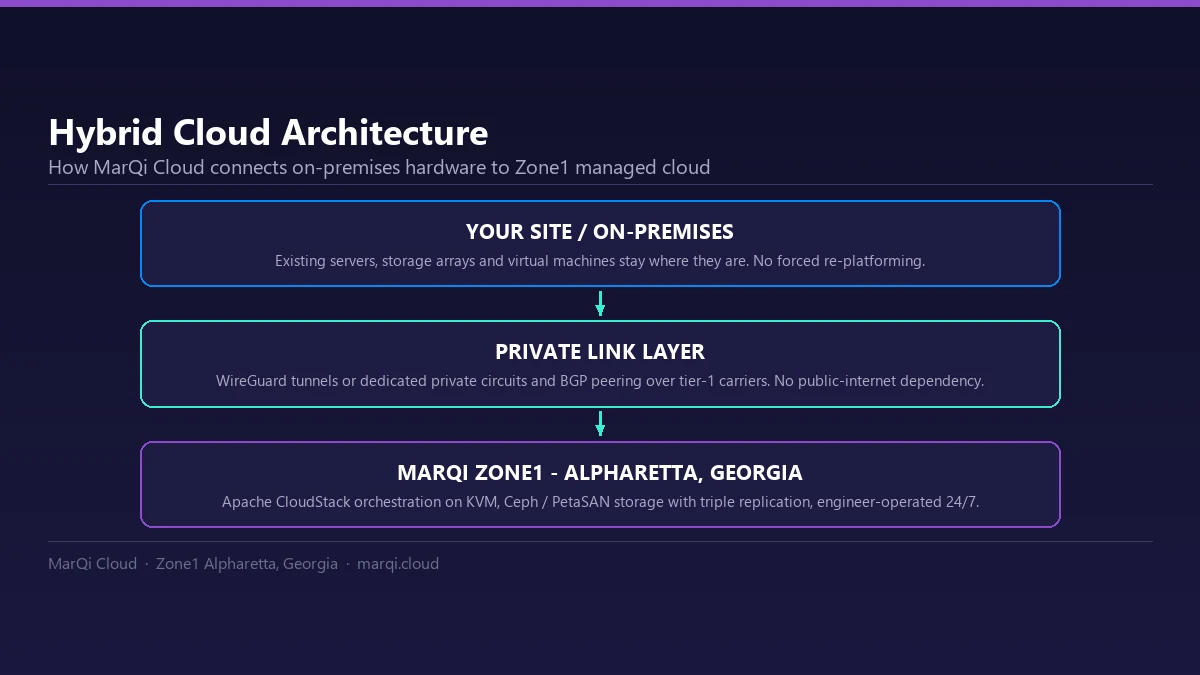
Select a provider that offers hybrid cloud deployment models, allowing for flexibility in resource management and workload distribution.
3. Security Measures
Ensure that the hosting environment is private and secure, particularly if sensitive data will be processed using the GPU clusters.
4. Support and Expertise
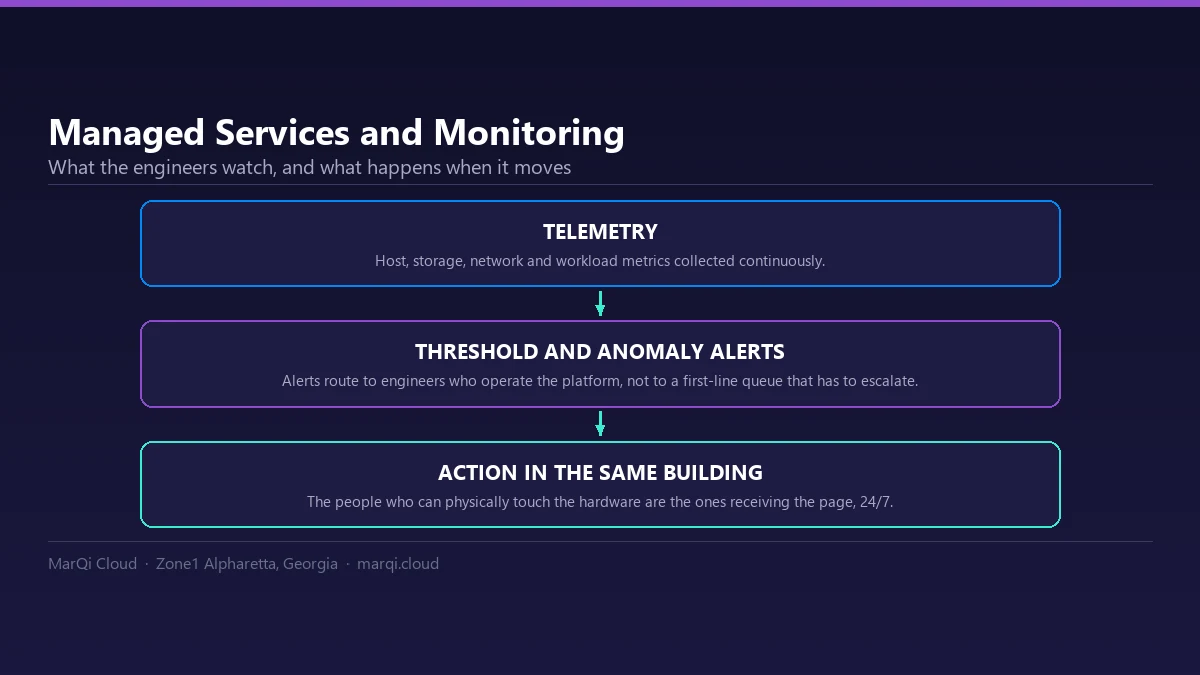
US-based infrastructure and support can be a significant advantage. Choose a provider with a knowledgeable support team that can assist with any technical issues.
5. Flexible Pricing Models
Evaluate pricing structures to find a model that aligns with your budget and usage patterns. Flexible pricing can help businesses manage costs effectively.
Conclusion
High-density GPU clusters are revolutionizing the way businesses operate, particularly in data-intensive industries. The Southeast United States has positioned itself as a favorable location for these technologies, offering the necessary infrastructure, talent, and cost advantages. By leveraging high-density GPU clusters, organizations can unlock new possibilities, drive innovation, and maintain a competitive edge in their respective markets.
Frequently Asked Questions (FAQ)
1. What is a high-density GPU cluster?
A high-density GPU cluster is a collection of GPUs that work together to perform parallel processing tasks, significantly enhancing computational power for various applications.
2. How do high-density GPU clusters differ from traditional servers?
Unlike traditional servers that rely on CPUs, high-density GPU clusters utilize GPUs designed for parallel processing, allowing for faster performance in data-intensive tasks.
3. What industries benefit from high-density GPU clusters?
Industries such as artificial intelligence, scientific research, financial services, and media and entertainment benefit from the enhanced computational capabilities of high-density GPU clusters.
4. Why is the Southeast a good location for GPU clusters?
The Southeast offers robust infrastructure, access to skilled talent, and cost advantages, making it an attractive region for businesses investing in high-density GPU solutions.
5. What factors should I consider when choosing a GPU cluster provider?
Consider infrastructure quality, hybrid cloud solutions, security measures, support and expertise, and flexible pricing models when selecting a provider for GPU clusters.
6. Are high-density GPU clusters energy-efficient?
Yes, high-density GPU clusters are designed to maximize performance while minimizing energy consumption, making them a more sustainable option for high-performance computing.
7. Can high-density GPU clusters be used for cloud computing?
Yes. High-density GPU clusters are often deployed in cloud environments, providing scalable and accessible computing resources for businesses.
8. What is the future of high-density GPU clusters?
The future looks promising, with advancements in technology likely leading to even greater performance, efficiency, and scalability in high-density GPU clusters.