How Cloud Native App Development Supports Rapid Innovation
December 25, 2025
How Open Source Cloud Storage Reduces Enterprise IT Costs
January 2, 2026

Key Features to Look for in an Open Source Hybrid Cloud Provider
Why Choose an Open Source Hybrid Cloud Provider?
Today, many businesses are choosing hybrid cloud solutions to better manage their data and applications. Hybrid cloud allows companies to use both private and public cloud environments, giving them more flexibility and control. An open source hybrid cloud provider is becoming a popular choice because it offers transparency, customization, and freedom from vendor lock-in. In modern cloud infrastructure, having flexible systems, clear visibility, and full control over resources is essential for smooth operations and future growth.
What Is an Open Source Hybrid Cloud Provider?
An open source hybrid cloud provider helps businesses use both private data centers and public cloud platforms together. This means companies can keep important data in their own systems while using public clouds for extra power and flexibility. Everything works as one connected cloud environment.
Why Open Source Is Important
- Uses best open-source tools like Linux, Kubernetes, and OpenStack
- Offers transparency, flexibility, and easy customization
- Helps avoid being locked into one cloud vendor
An open source hybrid cloud provider uses open standards to keep cloud systems simple and connected.
How It Works
- Same Technology Everywhere
- Uses the same software across private and public clouds
- Ensures applications run smoothly in all environments
- One Management Platform
- Manage workloads, security, and policies from one place
- Makes cloud operations easier to control
- Easy Application Movement
- Build applications once and deploy them anywhere
- Saves time and supports faster development
This setup allows an open source hybrid cloud provider to deliver a smooth and flexible cloud experience.
Main Benefits for Businesses
- Flexibility: Scale resources when needed
- Cost Control: Run workloads where they are most affordable
- Innovation: Use modern tools while keeping data secure
- No Vendor Lock-In: Freedom to move between platforms
Choosing an open source hybrid cloud provider makes cloud infrastructure easier to manage, more flexible, and better suited for long-term growth.
What Is a Multi-Cloud Management Platform?
A multi-cloud management platform, open source, is a software solution that helps businesses manage all their cloud services from one central place. Instead of working separately with AWS, Azure, or Google Cloud, companies can control and monitor everything through a single, user-friendly system built on open-source technology. This approach makes managing multiple clouds easier, faster, and more efficient.
How It Helps
- Manage multiple cloud providers together in one dashboard
- Track workloads, performance, and costs effortlessly
- Move applications between clouds without complications
A multi-cloud management platform open source simplifies cloud operations, giving businesses better control, visibility, and flexibility.
Popular Open-Source Tools
- Kubernetes: Orchestrates and runs applications across different clouds
- OpenStack: Builds and manages private and public cloud infrastructure
- Apache CloudStack: Controls virtual machines in multi-cloud setups
- Cloudify: Automates deployment and management across clouds
Key Benefits
- Freedom from vendor lock-in: Use the best cloud services without dependency on one provider
- Flexible and scalable: Easily adjust resources to meet business needs
- Cost-effective: No licensing fees; pay only for the infrastructure you use
- Continuous improvement: Open-source communities keep the tools updated and enhanced
With a multi cloud management platform open source, businesses can manage their cloud environments more efficiently, save costs, and stay flexible for future growth.
Open Source Cloud Services
Open source cloud services are cloud solutions built with publicly available source code. They allow businesses to view, modify, and share the software freely, giving more control, flexibility, and freedom from vendor restrictions. These services use technologies like Linux, OpenStack, Docker, and Kubernetes and can provide IaaS, PaaS, or SaaS.
Key Features of Open Source Cloud Services
- Free & Open Code: Access and modify the software to fit your needs
- Community-Driven: Developed and maintained by a global community for fast updates and improvements
- No Vendor Lock-In: Freedom to switch providers or integrate multiple systems
- Customizable Tailor loud environments to meet your business requirements
- Cost-Effective: Reduce licensing and maintenance costs compared to proprietary platforms
Choosing the Right Open Source Cloud Service Providers
- Check the strength of community support and documentation
- Consider the long-term sustainability of the open-source project
- Ensure compatibility with your current IT systems
By using open source cloud services, businesses can:
- Manage their cloud environments efficiently
- Save costs
- Stay flexible and innovative while maintaining full control of blogs or websites.
Open Source Cloud Service Provider by MarQi Cloud
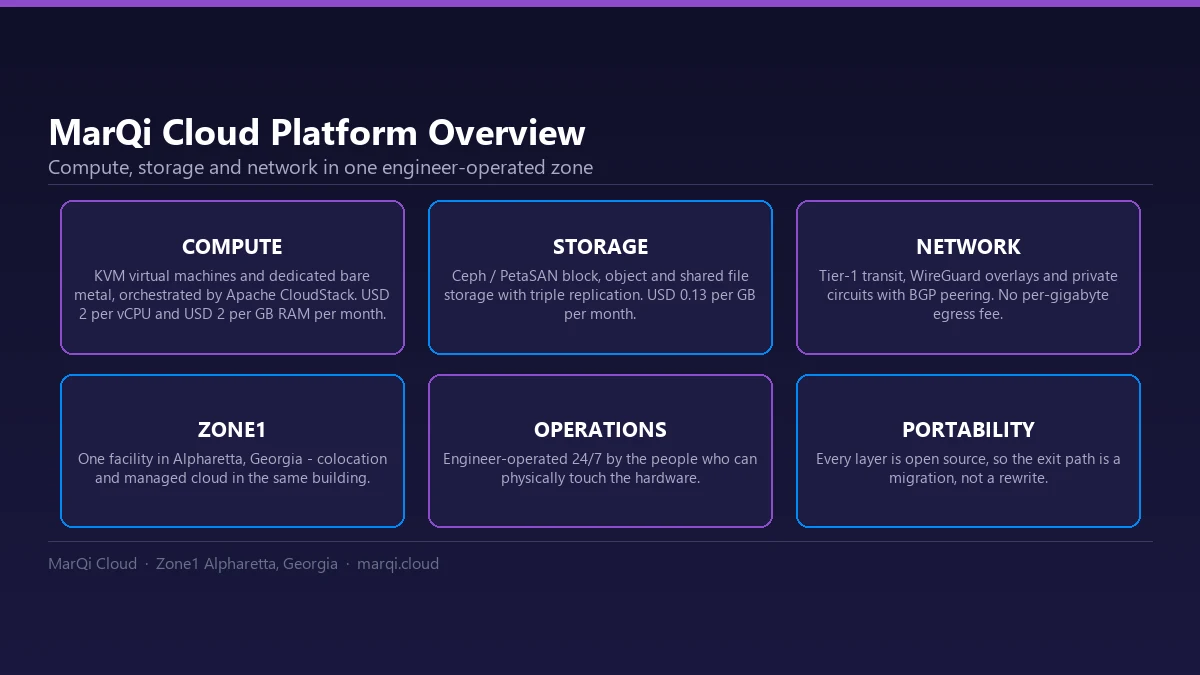
MarQi Cloud is the best open source cloud service provider that helps businesses manage their cloud systems using open-source software like OpenStack and Kubernetes. Our solutions give companies more control, flexibility, and cost savings while avoiding vendor lock-in.
Key Features
- Open Code: Source code is free to view, modify, and share
- Community-Driven: Updates and improvements come from developers worldwide
- No Vendor Lock-In: Easily switch providers or integrate with other systems
- Flexible & Customizable: customize cloud services (IaaS, PaaS, SaaS) to your needs
- Cost-Effective: Lower licensing and maintenance costs
Technologies We Use
- OpenStack: Build and manage private or public clouds
- Kubernetes: Automate deployment and management of applications
- Apache CloudStack: Manage large networks of virtual machines
How It Works
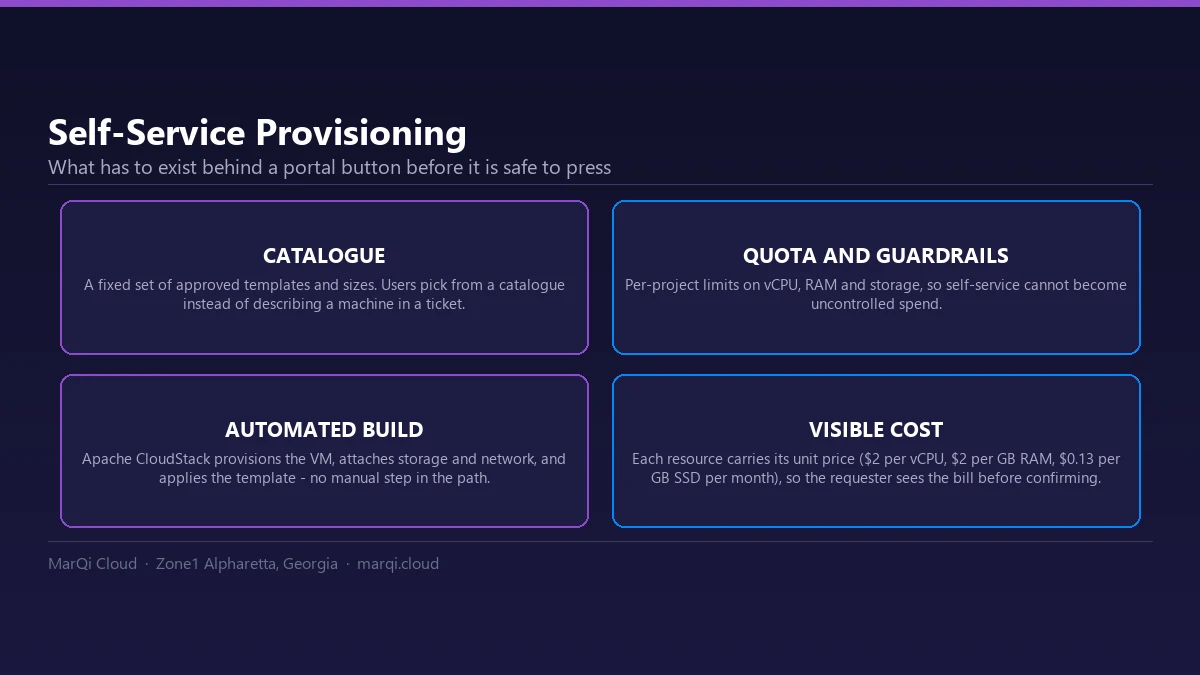
- Infrastructure as a Service (IaaS): Create virtualized compute, storage, and networking
- Management Tools: Tools like Terraform help manage multiple cloud environments
- Hybrid & Private Clouds: Build private clouds or manage workloads across public and private clouds
As a reliable open source cloud service provider, MarQi Cloud helps businesses save costs, stay flexible, and manage their cloud infrastructure easily.
Why MarQi Cloud Stands Out as an Open Source Hybrid Cloud Provider
MarQi Cloud is the open source hybrid cloud provider that gives businesses secure, reliable, and flexible cloud solutions. Here is what makes MarQi Cloud unique:
- Independent Data Center: Full control over infrastructure for security and transparency
- High-Performance Storage Cluster: Fast and reliable storage for all workloads
- Redundant Network Fabric: Ensures your cloud services stay available all the time
- Secure, Scalable, Open-Source Services: Flexible cloud solutions built on trusted open-source technology
Conclusion
Choosing the right open source hybrid cloud provider means looking for security, scalability, transparency, and smooth multi-cloud management.
MarQi Cloud provides all of this with an independent data center, strong storage cluster, and open-source approach.
With MarQi Cloud, businesses get a future-ready hybrid cloud solution that is flexible, secure, and reliable.