Building Enterprise-Ready Hybrid Cloud Storage Architecture
January 2, 2026
Scalability Advantages of an Open Source Hybrid Cloud Provider
January 8, 2026

Best Practices for Hybrid Cloud Reference Architecture Design
Overview
The hybrid cloud reference architecture serves as a guide for building an IT environment that connects public cloud services, private cloud resources, and on-premises systems. It helps businesses understand how to structure their cloud infrastructure clearly and practically. As organizations look for greater flexibility and better control over their data, hybrid cloud models have become increasingly important. A well-designed hybrid cloud reference architecture supports reliable performance, enhances security, and makes it easier for businesses to scale and adapt as their requirements grow.
A Clear Guide to Hybrid Cloud Reference Architecture
A hybrid cloud reference architecture is a well-structured guide that explains how private infrastructure and public cloud services come together to create a single, connected IT environment. It helps businesses build systems that are flexible, secure, and easy to scale, while maintaining control over sensitive data. By blending private and public cloud resources, organizations can achieve better performance and cost efficiency without complexity.
Key elements of a hybrid cloud reference architecture include:
- Private cloud or on-premises systems: Ideal for sensitive data, compliance needs, and legacy applications that require full control.
- Public cloud platforms: Offer scalable and cost-effective resources for changing workloads and growth.
- Integration layer: Secure networking through VPNs and WANs to enable smooth data and workload movement.
- Management and orchestration tools: Centralized solutions to automate, monitor, and manage workloads across environments.
- Security and compliance layer: Consistent policies, encryption, and access controls across all systems.
A thoughtfully designed hybrid cloud reference architecture supports important business goals:
- Flexibility and agility: Adapt quickly to new demands and market changes.
- Cost optimization: Use public cloud capacity when needed and reduce unnecessary infrastructure costs.
- Disaster recovery: Improve reliability and ensure business continuity.
- Gradual modernization: Move to the cloud step by step without disrupting operations.
Overall, a hybrid cloud reference architecture provides a proven framework that simplifies cloud adoption. It improves performance, strengthens security, and ensures seamless integration between on-premises and cloud environments, helping businesses scale confidently and plan for long-term success.
Multi-Cloud Orchestration for Storage Management
Multi-cloud orchestration helps organizations manage storage and data across multiple cloud providers from a single, centralized platform. In today’s hybrid environments, handling storage separately on each cloud can increase complexity and operational effort. With a unified approach, businesses can automate storage deployment, scaling, and management while keeping security policies consistent across all environments.
Key capabilities of multi-cloud orchestration include:
- Centralized management of storage resources across different cloud platforms
- Automated storage provisioning and scaling to reduce manual work
- Seamless data movement between cloud providers based on cost, performance, or availability
- Consistent security, governance, and access controls across all storage environments
Benefits of centralized orchestration for storage management:
- Improved visibility and control over all storage resources
- Reduced operational complexity by managing everything from one system
- Better cost and performance optimization through intelligent data placement
- Stronger reliability and availability for business-critical data
By bringing automation and centralized control together, multi-cloud orchestration enables businesses to avoid vendor lock-in, strengthen disaster recovery strategies, and build a more flexible and efficient storage environment. Overall, multi-cloud orchestration supports scalable growth by ensuring storage resources remain optimized, secure, and easy to manage as business needs evolve.
What Is an Open Source Cloud Server?
An open source cloud server is a cloud platform built on open technologies that give businesses greater control, flexibility, and transparency over their infrastructure. Instead of relying on proprietary systems, organizations can design and manage their cloud environment according to their specific needs, making it a strong choice for hybrid cloud setups that require adaptability and long-term scalability.
Key advantages of an open source cloud server include:
- Customization: Infrastructure can be tailored to meet unique business and technical requirements
- Cost efficiency: Reduces software licensing and operational costs
- Vendor independence: Avoids vendor lock-in and supports long-term flexibility
- Best technologies: Built using reliable open-source tools such as OpenStack, Kubernetes, and Ceph
In hybrid cloud environments, an open source cloud server helps connect private infrastructure with public cloud services smoothly. Its transparent architecture improves visibility, makes management easier, and strengthens security controls. Strong community support and continuous innovation also ensure better performance and future-ready scalability.
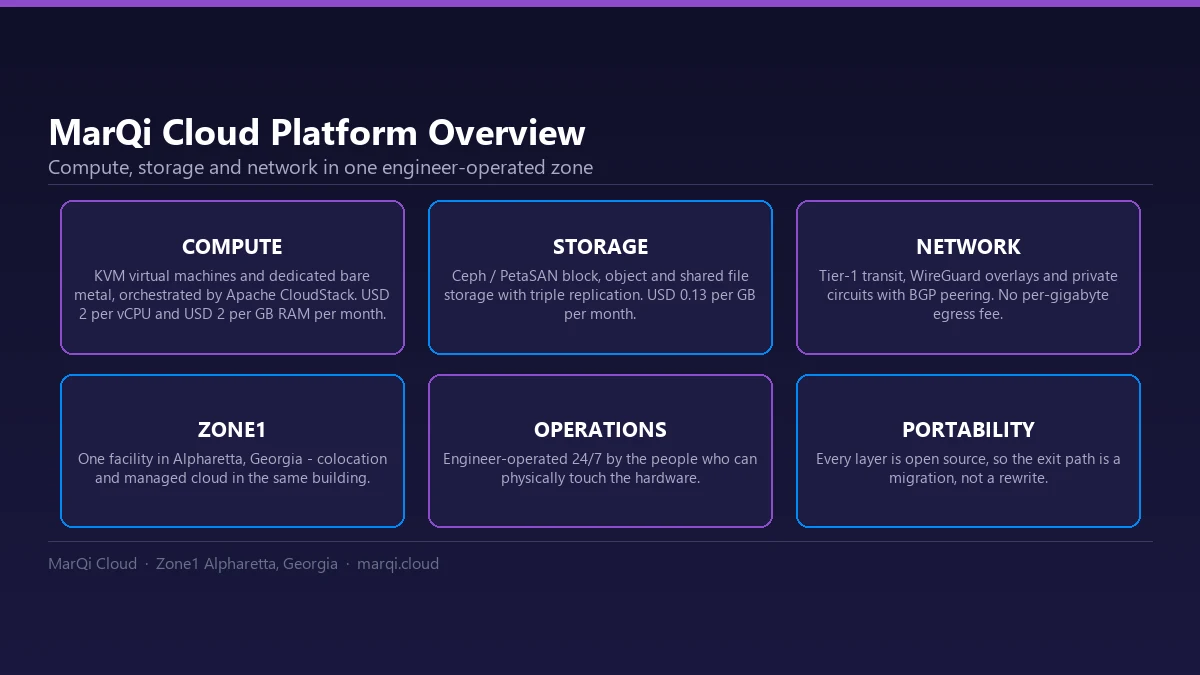
Open Source Cloud Server by MarQi Cloud
- Independent data center for reliable performance
- Dedicated storage cluster for secure and efficient data handling
- Redundant network fabric to ensure high availability and resilience
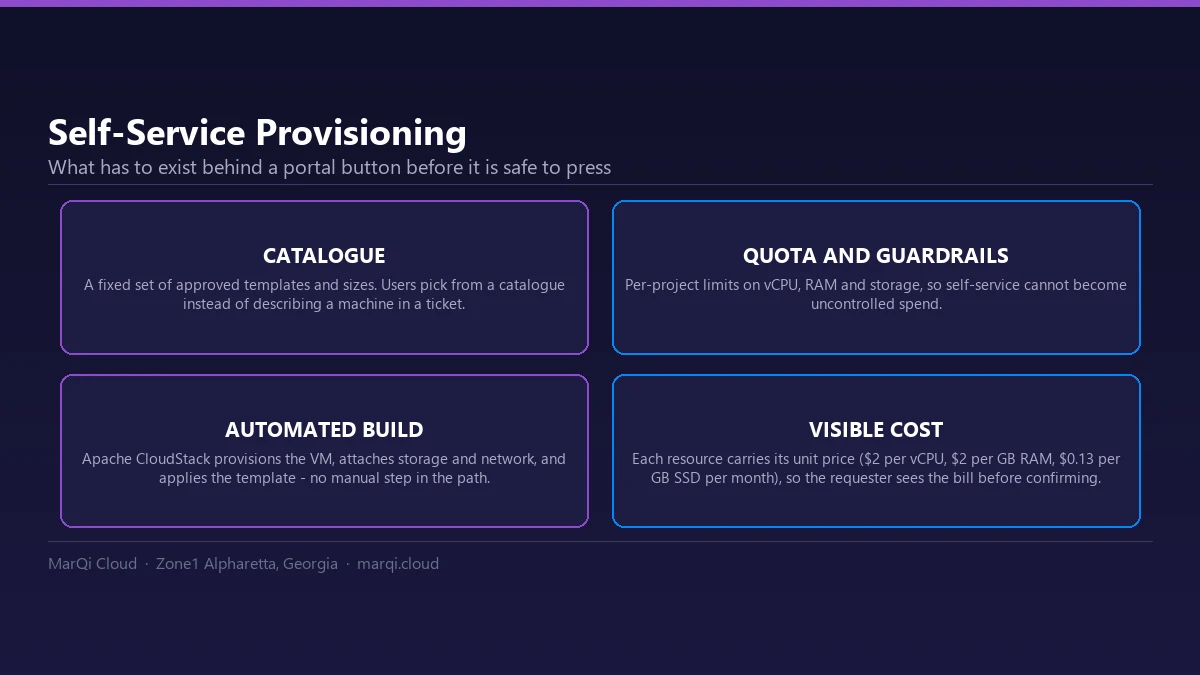
With this setup, MarQi Cloud delivers an open source cloud server that helps businesses build secure, scalable hybrid cloud environments while maintaining full control over their data and infrastructure.
Hybrid Cloud Storage Architecture
A hybrid cloud storage architecture means using both on-premises (private) storage and public cloud storage together in one system. It helps businesses store data in the best place while keeping everything connected and easy to manage. Important and sensitive data stays on-site, while the public cloud is used for extra storage, backups, and growth.
How It Works
In a hybrid cloud storage architecture, data is managed smartly and simply:
- Data placement:
- Sensitive or frequently used data stays on-premises
- Less important or backup data moves to the public cloud
- Workload movement:
- Data and applications can move between on-premises and cloud when needed
- Helps improve performance and reduce costs
- Centralized management:
- One set of tools manages storage, security, and policies across all systems
Key Benefits
A hybrid cloud storage architecture offers clear advantages:
- Easy scalability: Add or reduce storage without buying new hardware
- Cost savings: Use cloud storage only when needed
- Better security: Keep sensitive data private and secure
- Disaster recovery: Use cloud backups to protect data
- Step-by-step cloud adoption: Move to the cloud gradually and safely.
Security and Compliance
- Data encryption and access controls protect information
- Regular backups help prevent data loss
- Supports industry and regulatory requirements
This simple approach gives businesses a flexible, secure, and cost-effective way to manage data while supporting future growth.
Why Businesses Choose a Well-Planned Hybrid Cloud Reference Architecture
- Allows businesses to scale their systems easily as needs grow
- Provides greater flexibility to adapt to changing business demands
- Helps improve cost efficiency by balancing private and public cloud resources
- Reduces unnecessary spending and improves resource usage
- Strengthens business continuity by minimizing downtime
- Enhances agility, allowing faster response to market and operational changes
How MarQi Cloud Supports Modern Infrastructure Needs
- Operates as a reliable wholesaler, supplier, and manufacturer
- Focuses on delivering scalable and reliable solutions
- Committed to building future-ready systems that support business growth
- Aligns operations with modern, technology-driven environments
- Ensures efficiency, adaptability, and long-term stability across services
Conclusion
A thoughtfully designed hybrid cloud reference architecture helps businesses build secure, flexible, and cost-effective systems that support long-term growth. By following best practices, organizations can improve performance, reliability, and operational efficiency. Choosing the right architecture is a critical step toward sustainable success, and working with trusted providers like MarQi Cloud ensures dependable, growth-focused solutions that meet evolving business needs.