Predictable Cloud Billing: How Resource Pools Reduce Surprise Invoices
February 22, 2026
High Availability Architecture on Hybrid Cloud: Patterns That Scale
February 23, 2026
What is the primary difference between private peering and VPN?
The primary difference lies in their connectivity approach: private peering provides a direct connection between networks, while VPN connects users securely over the public internet.
Private Peering vs VPN: When You Need Dedicated Connectivity
In today’s fast-paced digital landscape, organizations are increasingly reliant on robust and secure connectivity solutions to support their operations. With various options available, businesses often find themselves weighing the benefits of private peering against virtual private networks (VPNs). Understanding the nuances between these two approaches can help you make informed decisions regarding your connectivity needs. In this article, we will explore the differences between private peering and VPNs, their respective advantages and disadvantages, and when you should consider each option for dedicated connectivity.
Private Peering vs VPN – When Do You Need Each?
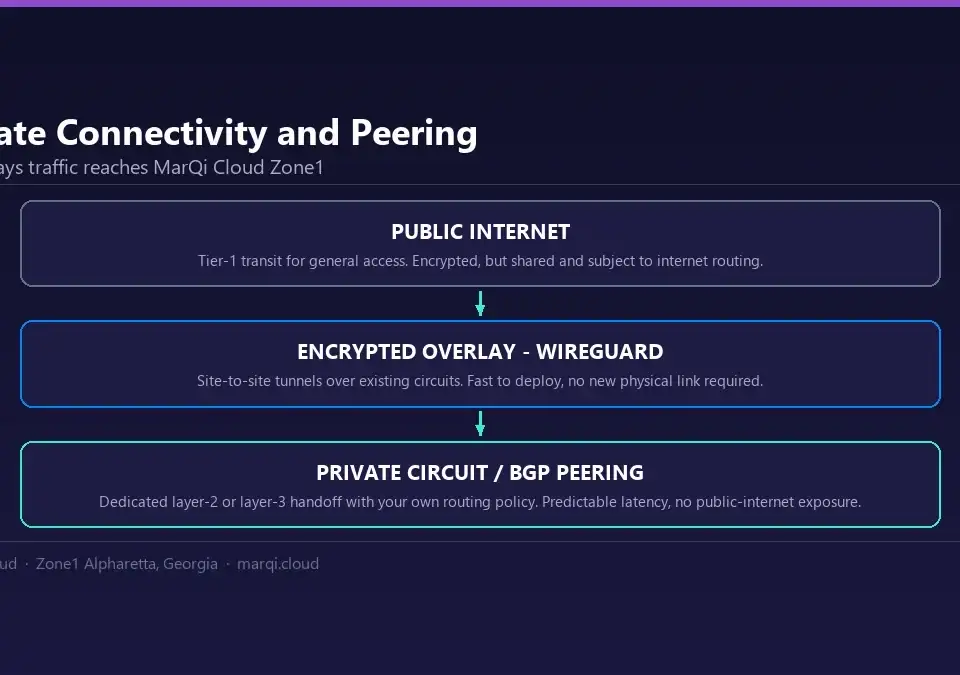
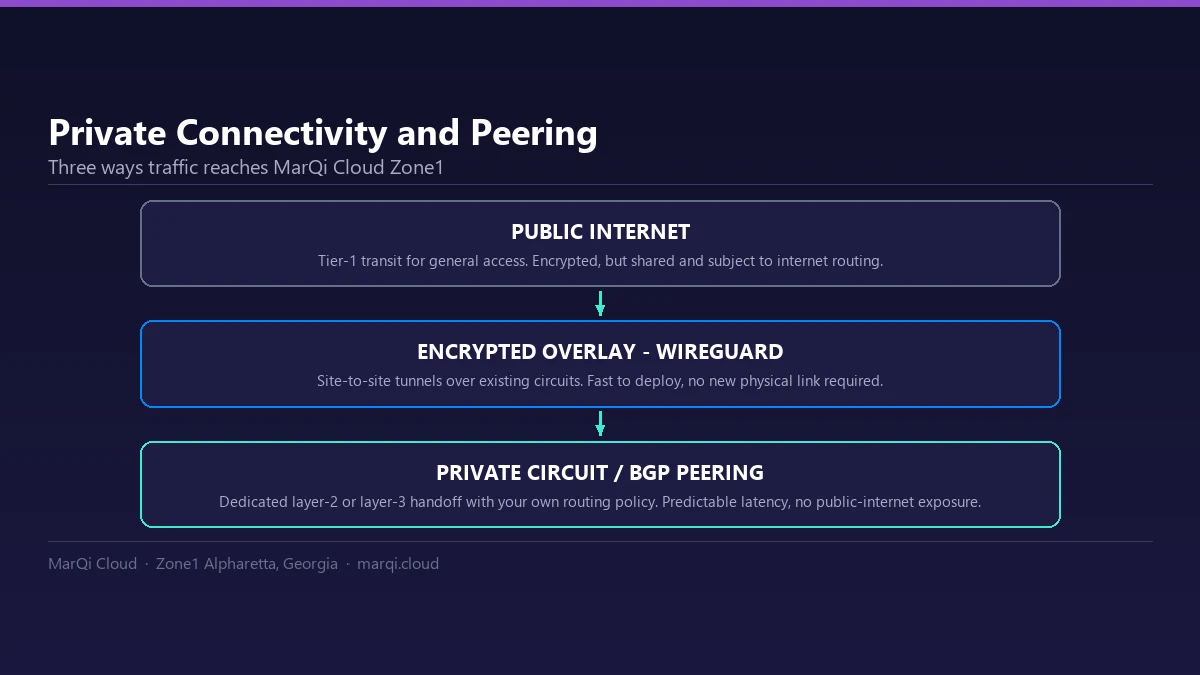
Private peering refers to a direct connection between two networks or organizations, typically established at an Internet Exchange Point (IXP). This form of connectivity allows for the exchange of traffic without the need for a third-party intermediary, resulting in faster and more reliable data transfer. Private peering is often used by large enterprises, cloud service providers, and internet service providers (ISPs) to enhance performance and reduce latency.
Benefits of Private Peering
- Improved Performance: By establishing a direct connection, organizations can bypass the public internet, reducing latency and improving overall performance.
- Enhanced Security: Private peering minimizes exposure to external threats, providing a more secure environment for data transfer.
- Cost Efficiency: While setting up private peering can involve initial costs, it can lead to long-term savings by reducing bandwidth costs associated with public internet usage.
- Increased Control: Organizations have greater control over their data traffic and routing, leading to improved network management.
Use Cases for Private Peering
Private peering is particularly beneficial when:
- Your organization requires high bandwidth for large data transfers, such as video streaming or big data analytics.
- You need reliable connectivity for critical applications that cannot afford latency or downtime.
- Your business involves collaboration with partners or clients that necessitate frequent data exchange.
- You operate in highly regulated industries where data security and compliance are paramount.
Understanding VPNs
A Virtual Private Network (VPN) is a technology that creates a secure and encrypted connection over a public network, allowing users to send and receive data as if they were directly connected to a private network. VPNs are widely used for remote access, secure communications, and protecting sensitive information while browsing the internet.
Benefits of VPNs
- Security: VPNs provide strong encryption, ensuring that data transmitted over the connection is secure from unauthorized access.
- Remote Access: Employees can access the organization’s network from anywhere in the world, making it an ideal solution for remote work.
- Cost-Effective: VPNs are typically less expensive to set up and maintain compared to dedicated private connections.
- Flexibility: VPNs can be easily configured to accommodate various devices and user needs.
Use Cases for VPNs
VPNs are a suitable solution when:
- Your organization has remote employees who need secure access to internal resources.
- You require a cost-effective solution for connecting multiple branch offices.
- You want to protect sensitive data while employees are using public Wi-Fi.
- Your business operates in regions with restrictive internet policies and needs to maintain secure, unrestricted access.
Comparing Private Peering and VPNs
When deciding between private peering and VPNs, it is essential to consider several factors to determine which option best meets your organization’s needs.
Performance
Private peering typically offers superior performance due to the direct connection between networks, resulting in lower latency and higher bandwidth capabilities. In contrast, VPNs may experience slower speeds, especially if the public internet connection is congested.
Security
Both private peering and VPNs provide a measure of security; however, private peering offers enhanced protection as it eliminates exposure to potential threats present on the public internet. VPNs rely on encryption to protect data but can still be vulnerable to certain risks associated with public networks.
Cost
Setting up private peering can involve significant upfront costs, including infrastructure investments and ongoing maintenance. VPNs, on the other hand, are generally more cost-effective and require less investment, making them a popular choice for small to medium-sized businesses.
Scalability
Private peering can be challenging to scale, as it often requires additional infrastructure and planning. VPNs, however, offer greater scalability, allowing organizations to easily add users and connections as needed.
When to Choose Private Peering
Opt for private peering when:
- Your organization requires high-capacity bandwidth for large data transfers.
- You need a highly secure connection for sensitive transactions.
- Your business relies on real-time data processing and collaboration.
- You have the budget and resources for dedicated infrastructure.
When to Choose a VPN
Select a VPN when:
- Your organization has remote or distributed teams that need secure access to internal resources.
- You want a quick and cost-effective solution for secure communications.
- Your business needs to maintain flexibility in accommodating various devices and user access.
- You are looking for an easy way to secure internet connections, especially for remote workers.
Conclusion
In conclusion, both private peering and VPNs offer unique advantages and can serve different connectivity needs. If your organization requires dedicated connectivity for high-performance applications, private peering may be the right choice. However, if you need a flexible and cost-effective solution for remote access and secure communications, a VPN could be more suitable. Ultimately, the decision should be based on your specific business requirements, budget, and long-term connectivity goals.
FAQ Section
1. What is the primary difference between private peering and VPN?
The primary difference lies in their connectivity approach: private peering provides a direct connection between networks, while VPN connects users securely over the public internet.
2. Which option offers better performance?
Private peering typically offers better performance due to lower latency and higher bandwidth capabilities, as it bypasses the public internet.
3. Is private peering more secure than a VPN?
Yes, private peering is generally more secure as it minimizes exposure to external threats present on the public internet.
4. How much does private peering cost?
The costs for private peering can vary significantly based on infrastructure needs, but it usually involves higher initial investments than VPN solutions.
5. Can I use both private peering and VPN?
Yes, organizations can utilize both solutions based on their specific connectivity needs and requirements.
6. Is a VPN suitable for large organizations?
Yes, many large organizations use VPNs to provide secure remote access to employees while managing costs.
7. How does a VPN handle security?
A VPN uses encryption protocols to secure data transmitted over the internet, protecting it from unauthorized access.
8. What industries benefit most from private peering?
Industries that require high security and performance, such as finance, healthcare, and media streaming, often benefit the most from private peering solutions.
9. Are there any drawbacks to using a VPN?
VPNs can experience slower speeds due to public internet congestion and may have limited control over data routing compared to private peering.
10. How do I determine which option is best for my business?
Evaluate your organization’s specific connectivity needs, budget, and performance requirements to determine whether private peering or a VPN is the best fit.