Private Peering vs VPN: When You Need Dedicated Connectivity
February 23, 2026
Backup Strategy for Hybrid Infrastructure: RPO/RTO Without Guesswork
February 23, 2026
High Availability Architecture on Hybrid Cloud: Patterns That Scale
In today’s fast-paced digital landscape, organizations are increasingly relying on hybrid cloud infrastructures to ensure high availability and scalability of their applications. As businesses continue to grow, the demand for seamless performance and uninterrupted service is paramount. This article explores the essential patterns and strategies for achieving high availability architecture on hybrid cloud platforms, enabling organizations to operate efficiently and effectively.
Understanding Hybrid Cloud Architecture
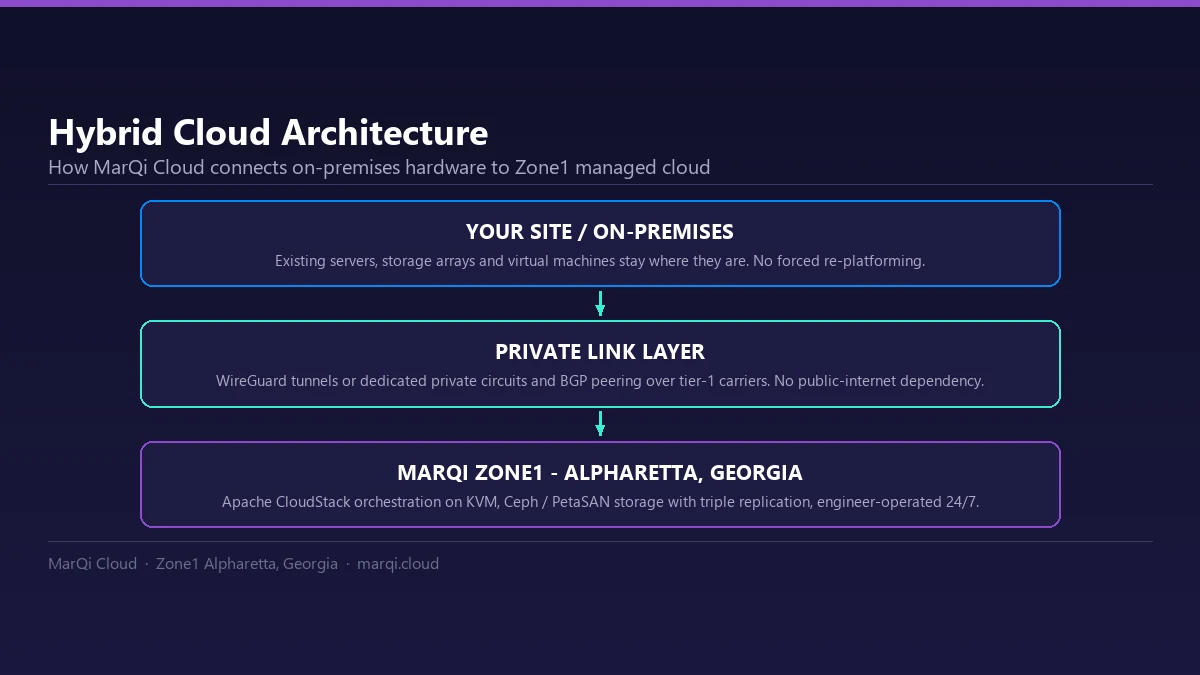
A hybrid cloud architecture combines public and private cloud infrastructures, allowing businesses to leverage the benefits of both environments. This model enables organizations to optimize their workloads, improve flexibility, and manage costs effectively. By utilizing a hybrid cloud model, enterprises can maintain critical applications within a secure private cloud while leveraging the scalability of public clouds for less sensitive operations.
Key Components of Hybrid Cloud Architecture
- Public Cloud: A public cloud is managed by third-party providers, offering resources and services over the internet. It is ideal for non-sensitive workloads that require flexibility and scalability.
- Private Cloud: A private cloud is dedicated to a single organization, providing enhanced security and control over sensitive data and applications.
- On-Premises Infrastructure: Many organizations still rely on traditional on-premises servers for certain operations. Hybrid cloud architecture allows for seamless integration of these resources.
- Management Tools: Effective management tools are essential for monitoring and managing resources across public and private clouds.
Importance of High Availability in Hybrid Cloud
High availability (HA) refers to the ability of a system to remain operational and accessible at all times, even in the face of failures or unexpected events. In a hybrid cloud environment, achieving high availability is critical for several reasons:
- Business Continuity: Ensuring that applications and services are always available minimizes downtime and disruption, safeguarding business operations.
- Improved User Experience: High availability leads to better performance and responsiveness, enhancing customer satisfaction.
- Cost Efficiency: Reducing downtime translates into lower costs related to lost revenue and customer trust.
High Availability Patterns for Hybrid Cloud
Implementing high availability in a hybrid cloud environment involves understanding and applying specific architectural patterns. Here are some proven patterns that organizations can adopt to enhance their hybrid cloud infrastructure:
1. Active-Active Configuration
In an active-active configuration, multiple nodes operate simultaneously, sharing the load and providing redundancy. If one node fails, the remaining nodes continue to handle requests without interruption.
Benefits:
- Load balancing across multiple nodes
- Enhanced fault tolerance
- Improved scalability
2. Active-Passive Configuration
In an active-passive configuration, one node is active while the other remains on standby. The standby node takes over when the active node fails, ensuring continuity.
Benefits:
- Simpler to implement than active-active
- Cost-effective for certain workloads
- Reliable failover mechanism
3. Load Balancing
Load balancing distributes incoming traffic across multiple servers or resources, optimizing resource use and preventing any single node from becoming a bottleneck.
Benefits:
- Improved performance
- Enhanced reliability
- Scalability to handle traffic spikes
4. Data Replication
Data replication involves copying and maintaining database objects in multiple locations for redundancy. This ensures that data is consistently available, even in the event of a failure.
Benefits:
- Improved data availability
- Reduced risk of data loss
- Faster recovery times
5. Geographic Redundancy
Geographic redundancy involves deploying resources in multiple geographical locations. This mitigates the risk of localized failures and natural disasters impacting availability.
Benefits:
- Higher resilience against disasters
- Enhanced disaster recovery capabilities
- Improved user experience for global customers
6. Automated Failover
Automated failover systems monitor the health of applications and resources, automatically redirecting traffic to healthy instances in the event of a failure.
Benefits:
- Minimized downtime
- Improved response times
- Reduced manual intervention
Best Practices for Implementing High Availability
To successfully implement high availability architecture in a hybrid cloud environment, organizations should consider the following best practices:
1. Regular Testing
Regularly test failover mechanisms, backup systems, and disaster recovery plans to ensure they function as expected during an actual event.
2. Monitor Performance
Utilize monitoring tools to continually assess the performance and health of all components within the hybrid cloud architecture.
3. Establish SLAs
Define and enforce service level agreements (SLAs) with cloud service providers to ensure they meet the required availability standards.
4. Optimize Resource Allocation
Make use of analytics to optimize resource allocation, ensuring that resources are used efficiently and effectively to meet demand.
5. Invest in Training
Ensure that your IT team is well-trained in managing hybrid cloud environments, including understanding high availability principles and practices.
Conclusion
High availability architecture is essential for organizations leveraging hybrid cloud environments. By adopting proven patterns and best practices, businesses can ensure their applications remain accessible and performant, regardless of the challenges they face. As the demand for scalable and reliable infrastructures continues to grow, investing in high availability solutions will be a key driver of success for organizations in the digital age.
Frequently Asked Questions (FAQ)
1. What is high availability in the context of hybrid cloud?
High availability refers to systems designed to remain operational and accessible without interruption, even in the event of failures.
2. Why is high availability important for businesses?
It minimizes downtime, enhances user experience, and reduces costs related to lost revenue and customer trust.
3. What are the common patterns for achieving high availability?
Common patterns include active-active configurations, active-passive configurations, load balancing, data replication, geographic redundancy, and automated failover.
4. How does load balancing contribute to high availability?
Load balancing distributes incoming traffic across multiple resources, preventing any single node from becoming a bottleneck and ensuring consistent performance.
5. What role does geographic redundancy play in high availability?
Geographic redundancy mitigates the risk of localized failures by deploying resources in multiple locations.
6. How often should businesses test their high availability mechanisms?
Regular testing should be conducted, typically on a quarterly basis, to ensure that systems function correctly during actual events.
7. What are SLAs, and why are they important?
Service level agreements (SLAs) define the expected performance and availability standards from cloud service providers, ensuring accountability.
8. How can organizations optimize resource allocation in a hybrid cloud?
Using analytics and performance monitoring tools allows organizations to assess and optimize resource allocation based on demand.
9. What training is beneficial for IT teams managing hybrid cloud environments?
Training should focus on high availability principles, cloud management tools, and disaster recovery best practices.
10. How can automated failover improve high availability?
Automated failover systems monitor application health and redirect traffic to healthy instances, minimizing downtime and improving response times.