The MarQi Cloud Glossary: Every Term You Need to Know Before Buying Cloud
April 20, 2026
MarQi Cloud for Cybersecurity Firms: Isolated Infrastructure That Protects Sensitive Data
April 20, 2026
How to Run PostgreSQL at Scale on MarQi Cloud Without Query Latency Issues
PostgreSQL is a powerful, open-source relational database system that is widely used for handling large volumes of data. When running PostgreSQL at scale, companies frequently encounter query latency issues that can hinder performance and user experience. However, with the right infrastructure and strategies in place, it is entirely possible to run PostgreSQL efficiently and effectively on MarQi Cloud. In this article, we will explore the best practices for managing PostgreSQL at scale, specifically focusing on avoiding query latency issues.
Understanding PostgreSQL and Its Scalability
PostgreSQL is known for its robustness and scalability. It has features that support large data sets and high transaction rates. However, to achieve optimal performance, particularly at scale, it is essential to understand how PostgreSQL operates and the factors that can affect its performance.
The Importance of Database Performance
Database performance is crucial for applications that rely on real-time data processing and analytics. Slow queries can lead to user dissatisfaction, reduced productivity, and ultimately, lost revenue. Understanding the factors that contribute to query latency is essential for mitigating these issues.
Factors Affecting Query Latency
Several factors can lead to increased query latency, including:
- Data Volume: As the amount of data grows, queries can take longer to execute.
- Complex Queries: Complex SQL commands, especially those involving multiple joins and subqueries, can significantly impact performance.
- Hardware Limitations: Insufficient CPU, memory, or storage resources can lead to bottlenecks.
- Configuration Settings: Default PostgreSQL configurations may not be optimized for high-load environments.
Optimizing PostgreSQL Performance on MarQi Cloud
MarQi Cloud offers an enterprise-grade cloud infrastructure that is well-suited for hosting PostgreSQL databases at scale. Here are several strategies for optimizing performance and eliminating query latency issues.
1. Choose the Right Deployment Model
MarQi Cloud provides various deployment options, including hybrid cloud and private cloud solutions. Depending on your business needs, selecting the appropriate deployment model can enhance performance. A hybrid cloud model allows for flexibility in data placement, while a private cloud may offer more control and security.
2. Implement Scalable Infrastructure
One of the primary advantages of using MarQi Cloud is the ability to scale compute and storage resources seamlessly. As your database grows, you can easily adjust your infrastructure to meet demand. This scalability ensures that your PostgreSQL instances have the necessary resources to handle increased workloads without performance degradation.
3. Use Connection Pooling
Connection pooling is a technique used to manage database connections efficiently. By reusing existing connections instead of establishing new ones for each query, connection pooling reduces the overhead associated with creating and destroying connections. Tools like PgBouncer can help implement connection pooling effectively.
4. Optimize Database Configuration
PostgreSQL has numerous configuration settings that can be adjusted to optimize performance. Key parameters to consider include:
- shared_buffers: This setting determines how much memory PostgreSQL can use for caching data. Increasing this value can improve performance.
- work_mem: This parameter controls the amount of memory used for sorting operations. Adjusting it based on your typical query patterns can enhance performance.
- maintenance_work_mem: This setting impacts maintenance tasks such as vacuuming. Allocating more memory can speed up these operations.
5. Indexing Strategies
Proper indexing is crucial for optimizing query performance in PostgreSQL. Indexes allow the database to quickly locate and retrieve data without scanning entire tables. Consider the following indexing strategies:
- Use B-Tree Indexes: This is the default index type and is suitable for most queries.
- Partial Indexes: Create indexes on a subset of data to improve performance on frequently queried data.
- Indexing Foreign Keys: Always index foreign keys to enhance join performance.
6. Monitor and Analyze Database Performance
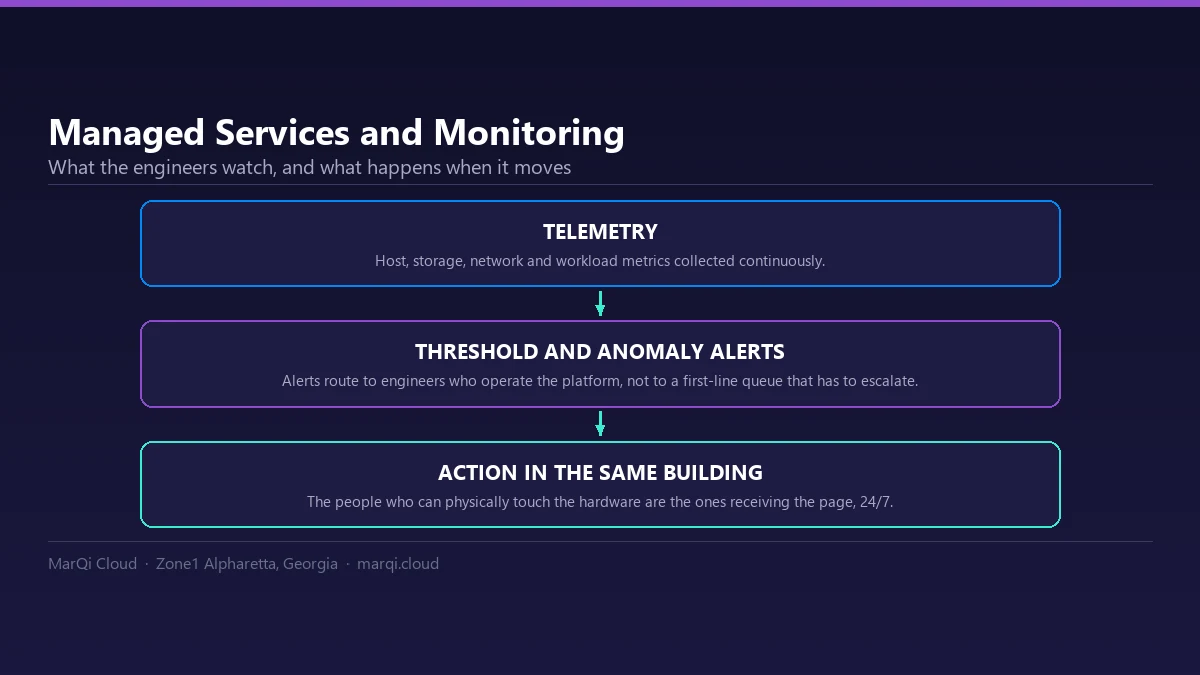
Regularly monitoring your PostgreSQL database is essential to identifying performance issues. Tools like pgAdmin and third-party monitoring solutions can provide insights into query performance, resource utilization, and potential bottlenecks. By analyzing this data, you can make informed decisions about optimizations.
7. Implement Caching Mechanisms
Caching frequently accessed data can significantly reduce query latency. Consider using caching solutions such as Redis or Memcached to store the results of common queries, thereby reducing the load on your PostgreSQL database.
8. Plan for Business Continuity
Implementing business continuity and disaster recovery solutions is vital for maintaining database availability. MarQi Cloud provides robust solutions that ensure your data is backed up and recoverable in case of an outage.
Choosing MarQi Cloud for PostgreSQL Hosting
MarQi Cloud offers a powerful platform for hosting PostgreSQL databases at scale. With its US-based infrastructure and support, you can rest assured that you are receiving high-quality service. Additionally, flexible pricing models allow you to tailor your cloud resources to fit your budget and performance needs.
Benefits of MarQi Cloud
- Enterprise-grade Cloud Infrastructure: Designed to handle high workloads and ensure optimal performance.
- Hybrid Cloud Deployment: Provides flexibility and scalability for diverse workloads.
- Private Hosting Environments: Ensures data security and compliance.
- Performance-driven Design: Infrastructure optimized for speed and efficiency.
Conclusion
Running PostgreSQL at scale on MarQi Cloud without query latency issues is achievable through careful planning, optimization, and the right choice of infrastructure. By implementing the strategies outlined in this article, you can enhance your database performance, ensuring that it meets the demands of your business and users. Whether you are a startup or an enterprise, MarQi Cloud provides the tools and resources necessary to run PostgreSQL efficiently.
FAQ
1. What is PostgreSQL?
PostgreSQL is an open-source relational database management system known for its robustness and scalability.
2. How can I prevent query latency in PostgreSQL?
Implementing connection pooling, optimizing configurations, and using proper indexing can help prevent query latency.
3. What are the advantages of using MarQi Cloud for PostgreSQL?
MarQi Cloud offers enterprise-grade infrastructure, hybrid cloud deployment options, and US-based support, making it ideal for PostgreSQL hosting.
4. What is connection pooling?
Connection pooling is a method of managing database connections that improves performance by reusing existing connections.
5. How does scalable infrastructure benefit PostgreSQL?
Scalable infrastructure allows you to adjust compute and storage resources to meet increasing workload demands, preventing performance degradation.
6. What is the role of indexing in PostgreSQL?
Indexing improves the speed of data retrieval operations, significantly enhancing query performance.
7. How can I monitor PostgreSQL performance?
Using tools like pgAdmin and third-party monitoring solutions can help you analyze and monitor database performance.
8. What are business continuity solutions?
Business continuity solutions ensure that your data is backed up and recoverable in case of a disaster or outage.
9. Can I use MarQi Cloud for hybrid cloud deployments?
Yes, MarQi Cloud supports hybrid cloud deployments, providing flexibility for diverse workloads.
10. What are flexible pricing models in MarQi Cloud?
Flexible pricing models allow you to tailor your cloud resources to fit your budget and performance requirements.