How to Benchmark a GPU Server Before Renting: A Comprehensive Guide
March 16, 2026Local GPU Hosting for AI SaaS Companies: Elevating Performance and Scalability
March 17, 2026
Bare Metal vs Cloud VMs for AI Training: Which Is Right for Your Project?
Introduction
As artificial intelligence (AI) continues to evolve and impact various industries, organizations are increasingly investing in robust computing resources for AI training. The choice between bare metal servers and cloud virtual machines (VMs) has become a critical decision point for businesses striving to maximize performance while managing costs. This article explores the advantages and disadvantages of both options, helping you understand which solution may best fit your AI training needs.
Understanding Bare Metal Servers
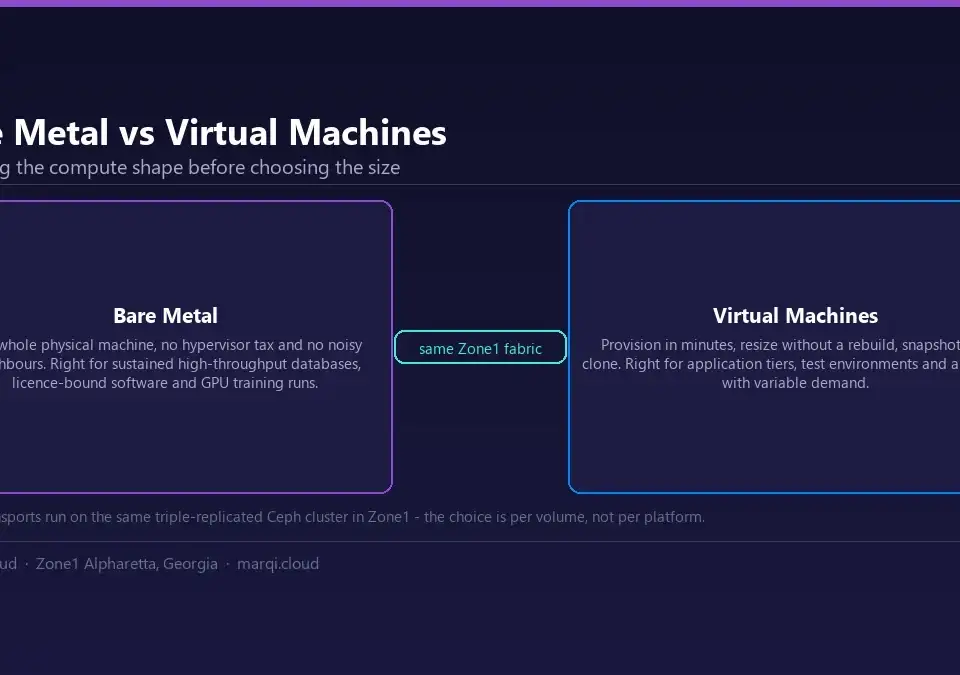
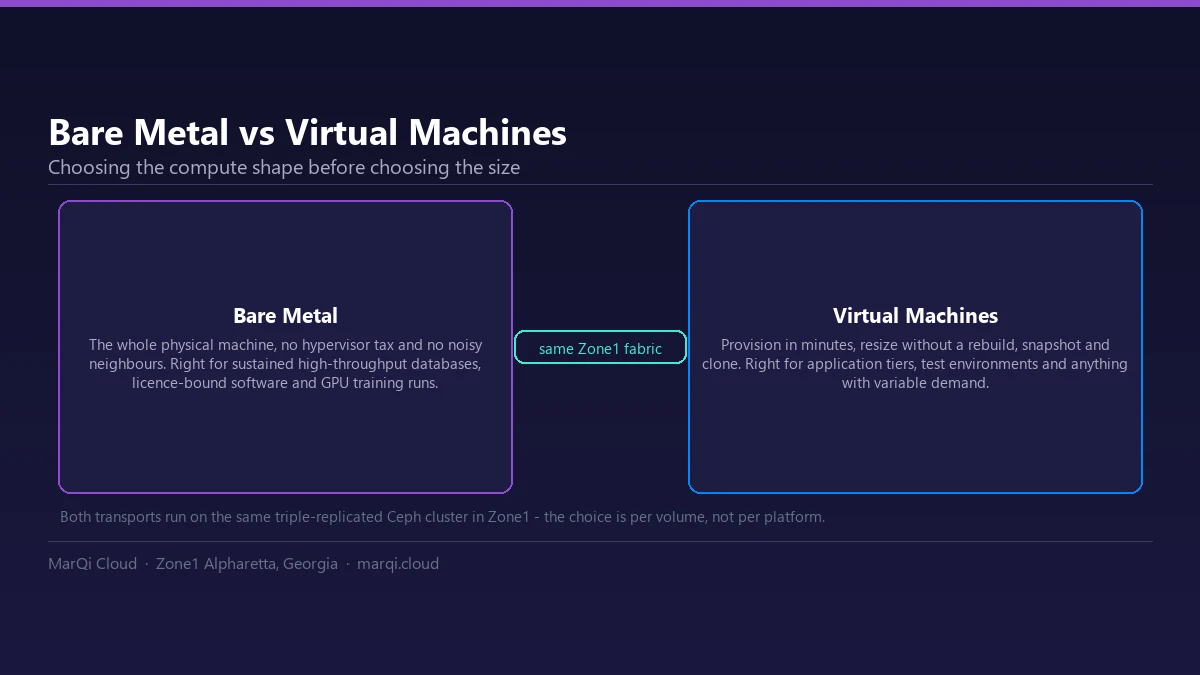
Bare metal servers refer to physical machines that are dedicated to a single user or organization. Unlike cloud VMs, which utilize virtualization technology to run multiple instances on a single server, bare metal servers provide exclusive access to the hardware, ensuring maximum performance and control.
Advantages of Bare Metal Servers
- Performance: Bare metal servers are known for their high performance. Since there is no virtualization layer, applications can access hardware resources directly, which is crucial for compute-intensive tasks like AI training.
- Customization: Organizations can customize hardware configurations (CPU, GPU, RAM, and storage) to meet their specific AI workloads, optimizing performance further.
- Predictable Performance: With dedicated resources, performance remains consistent and predictable, aiding in training model accuracy and reducing downtime.
- Enhanced Security: Bare metal provides a higher level of security as there are no shared resources, minimizing the risks of data breaches and unauthorized access.
Disadvantages of Bare Metal Servers
- Cost: The initial investment in bare metal servers can be high, including hardware costs, maintenance, and potential upgrades.
- Scalability: Scaling up or down requires physical hardware changes, which can be time-consuming and inflexible compared to cloud environments.
- Management Overhead: Organizations need to maintain and manage the hardware, including monitoring, updates, and troubleshooting, which can require dedicated IT staff.
Exploring Cloud Virtual Machines
Cloud virtual machines, on the other hand, utilize virtualization technology to run multiple instances on shared physical hardware. This allows organizations to leverage cloud providers’ infrastructure without investing in physical servers.
Advantages of Cloud VMs
- Cost-Effectiveness: Cloud VMs typically operate on a pay-as-you-go pricing model, allowing businesses to only pay for the resources they use, reducing upfront costs.
- Scalability: Cloud environments offer unparalleled scalability, enabling organizations to quickly scale resources up or down based on their AI training needs without delay.
- Accessibility: Cloud VMs can be accessed from anywhere with an internet connection, facilitating collaboration among teams across different geographies.
- Managed Services: Many cloud providers offer managed services, reducing the management burden on organizations and allowing them to focus on their core tasks.
Disadvantages of Cloud VMs
- Performance Variability: Since resources are shared among multiple users, performance can vary based on workload, potentially impacting the consistency of AI training.
- Limited Customization: While cloud providers offer various instance types, organizations may face limitations in customizing hardware configurations compared to bare metal.
- Security Concerns: Sharing resources with other tenants can pose security risks, and organizations must ensure proper security measures are in place.
Performance Comparison: Bare Metal vs Cloud VMs
When it comes to AI training, performance is a crucial factor. Bare metal servers typically outperform cloud VMs due to the absence of a virtualization layer and dedicated resource allocation. AI training often requires significant computational power, especially for deep learning models, where GPU performance is paramount.
Cloud VMs can still offer sufficient performance for many AI tasks, especially when using high-performance instances equipped with powerful GPUs. However, organizations may experience variability in performance based on the cloud provider’s resource allocation and other users’ workloads.
Cost Analysis
Cost is often a deciding factor for many organizations when choosing between bare metal and cloud VMs. Bare metal servers come with higher upfront capital expenditures, while cloud VMs generally operate on a subscription or usage-based model, making them more appealing for startups or smaller businesses with limited budgets.
However, for larger organizations or those with consistent, high-demand AI workloads, investing in bare metal may lead to lower long-term costs, especially when considering the performance benefits and reduced need for scaling investments.
Use Cases: When to Choose Bare Metal or Cloud VMs
Both bare metal servers and cloud VMs have their place in the AI training landscape. Here are some use cases for each:
When to Choose Bare Metal
- Organizations with large-scale AI training workloads that require consistent, high performance.
- Teams needing specific hardware configurations tailored to their AI models.
- Businesses that prioritize security and require dedicated resources for sensitive data.
- Organizations with the IT staff and resources to manage and maintain physical infrastructure.
When to Choose Cloud VMs
- Startups or smaller businesses with limited budgets looking for cost-effective solutions.
- Organizations with fluctuating workloads that need the flexibility to scale resources quickly.
- Teams that require remote access and collaboration across different locations.
- Businesses that prefer managed services to minimize infrastructure management overhead.
Conclusion
Choosing between bare metal servers and cloud virtual machines for AI training depends on various factors, including budget, performance requirements, security needs, and management capabilities. While bare metal servers offer superior performance and customization options, cloud VMs provide flexibility and cost-effectiveness. By carefully evaluating your organization’s needs and goals, you can make an informed decision that aligns with your AI training strategy.
FAQ
1. What is the main difference between bare metal servers and cloud VMs?
Bare metal servers are physical machines dedicated to one user, while cloud VMs operate on shared infrastructure using virtualization technology.
2. Which option is better for AI training, bare metal or cloud VMs?
It depends on your specific needs. Bare metal offers better performance and customization, while cloud VMs provide flexibility and cost savings.
3. Can I scale resources easily with bare metal servers?
Scaling bare metal servers can be challenging and often requires physical hardware changes, whereas cloud VMs allow for easy and quick scaling.
4. Are cloud VMs secure for AI training?
Cloud VMs can be secure if proper security measures are implemented. However, there are inherent risks due to shared resources.
5. How do costs compare between bare metal and cloud VMs?
Bare metal servers have higher upfront costs, while cloud VMs typically operate on a pay-as-you-go model, which can be more cost-effective for smaller organizations.
6. Can I customize hardware configurations in cloud VMs?
Cloud VMs offer various instance types, but customization options may be limited compared to bare metal servers.
7. What type of organizations should consider bare metal servers?
Organizations with large-scale AI workloads, specific hardware needs, and the capacity to manage infrastructure should consider bare metal servers.
8. What are the advantages of using cloud VMs for AI training?
Cloud VMs offer cost-effectiveness, scalability, accessibility, and managed services, making them suitable for many organizations.
9. Is performance consistency an issue with cloud VMs?
Yes, performance can vary with cloud VMs due to shared resources, which can affect AI training consistency.
10. How can I decide which option is best for my AI project?
Evaluate your budget, performance needs, security requirements, and management resources to determine if bare metal or cloud VMs are the best fit for your AI project.