Why Cloud Network Segmentation Prevents Lateral Movement of Security Threats
September 3, 2026
Future-Proof Your Network: The Essential Guide to IPv6 Adoption in Cloud Infrastructure
September 3, 2026
The Complete Guide to Cloud DNS Architecture for High-Availability Applications
In today’s digital landscape, the robustness and reliability of your applications can make or break your business. This is where cloud DNS architecture plays a pivotal role, particularly for high-availability applications. If you’re an IT professional or a business leader looking to ensure that your applications remain accessible and performant, understanding cloud DNS architecture is crucial. In this comprehensive guide, we will explore the fundamentals of cloud DNS, its architecture, best practices, and how it contributes to high-availability applications.
What is Cloud DNS?
Cloud DNS refers to a domain name system (DNS) service that operates in the cloud, providing DNS resolution services for domain names over the internet. Unlike traditional DNS services that may rely on a single server or a limited set of servers, cloud DNS leverages a distributed architecture, enhancing scalability, resilience, and performance. This architecture is particularly beneficial for high-availability applications where downtime can lead to significant losses.
Importance of High-Availability Applications
High-availability applications are designed to remain operational and accessible even in the event of failures. The cost of downtime varies widely with the size of the organization and the nature of the application, and for revenue-critical systems it adds up quickly. This highlights the critical need for robust cloud DNS architecture that can support high-availability applications. By ensuring that DNS queries are resolved quickly and reliably, businesses can maintain application uptime and enhance user experiences.
Cloud DNS Architecture Explained
The architecture of cloud DNS typically involves several key components that work together to ensure efficient DNS resolution:
- DNS Resolvers: These are the servers that receive DNS queries from clients and return the corresponding IP addresses. In a cloud DNS architecture, these resolvers are often distributed across multiple geographical locations to enhance performance and reliability.
- Authoritative DNS Servers: These servers hold the DNS records for a domain and respond to queries with the appropriate IP addresses. Cloud DNS providers usually have redundant authoritative servers to ensure high availability.
- Anycast Routing: This technique allows multiple servers to share the same IP address. When a DNS query is made, it is routed to the nearest server, reducing latency and improving response times.
- Load Balancers: Load balancers distribute incoming traffic across multiple servers to ensure no single server becomes overwhelmed. This is crucial for maintaining application performance and availability.
Key Components of Cloud DNS
Understanding the key components of cloud DNS is essential for designing a robust architecture. Here are some of the most critical elements:
1. DNS Records
DNS records are the building blocks of DNS architecture and include various types such as:
- A Records: Maps a domain name to an IP address.
- CNAME Records: Allows you to alias one domain name to another.
- MX Records: Specifies mail servers for email delivery.
- TXT Records: Provides text information to external sources, often used for verification purposes.
2. Redundancy and Failover
To ensure high availability, cloud DNS architectures typically involve redundancy and failover mechanisms. This means having multiple DNS servers that can take over if one fails. For example, health-checked failover records route DNS queries away from servers that stop responding, which minimizes downtime.
3. Monitoring and Analytics
Monitoring the performance of your DNS is vital for maintaining high availability. Tools that provide analytics can help identify issues before they affect your applications. DNS monitoring tools provide insights into DNS performance, allowing IT teams to proactively address potential issues.
Best Practices for Cloud DNS Architecture
Implementing best practices is crucial for optimizing your cloud DNS architecture. Here are some essential tips:
1. Use Multiple DNS Providers
To mitigate the risk of vendor lock-in and potential outages, consider using multiple DNS providers. This can enhance redundancy and reliability.
2. Implement DNS Caching
DNS caching can significantly reduce latency by storing DNS query results. This is particularly useful for frequently accessed domains.
3. Regularly Update DNS Records
Keep your DNS records up to date to ensure that users are directed to the correct resources. Regular audits can help identify outdated records.
4. Leverage Anycast DNS
Utilizing Anycast DNS can improve response times by directing users to the nearest DNS server, thereby reducing latency.
5. Monitor DNS Performance
Regular monitoring of DNS performance can help identify bottlenecks and improve overall system reliability. Tools like MarQi Cloud’s monitoring services can provide valuable insights.
Running Reliable DNS on MarQi Cloud
On MarQi Cloud, DNS reliability comes from how you deploy it. A few patterns keep resolution available:
- Redundant name servers: Use at least two authoritative name servers on separate networks, for example a managed DNS provider plus servers you run on MarQi Cloud virtual machines, so one failure does not take resolution down.
- Load balancer targets: Point records at a load balancer, which is included with every MarQi Cloud plan, rather than at a single instance.
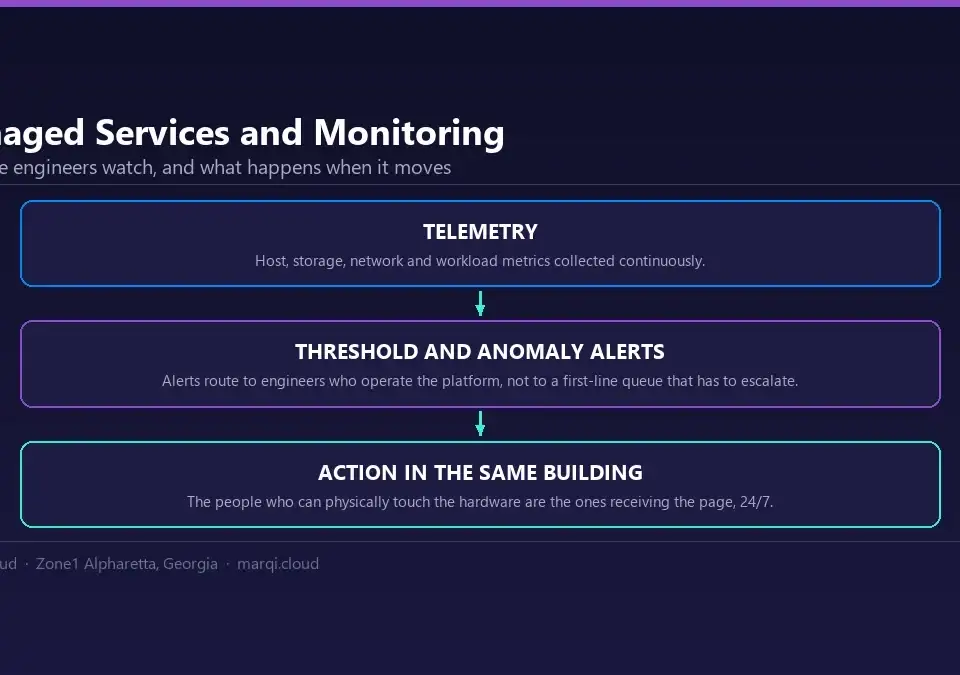
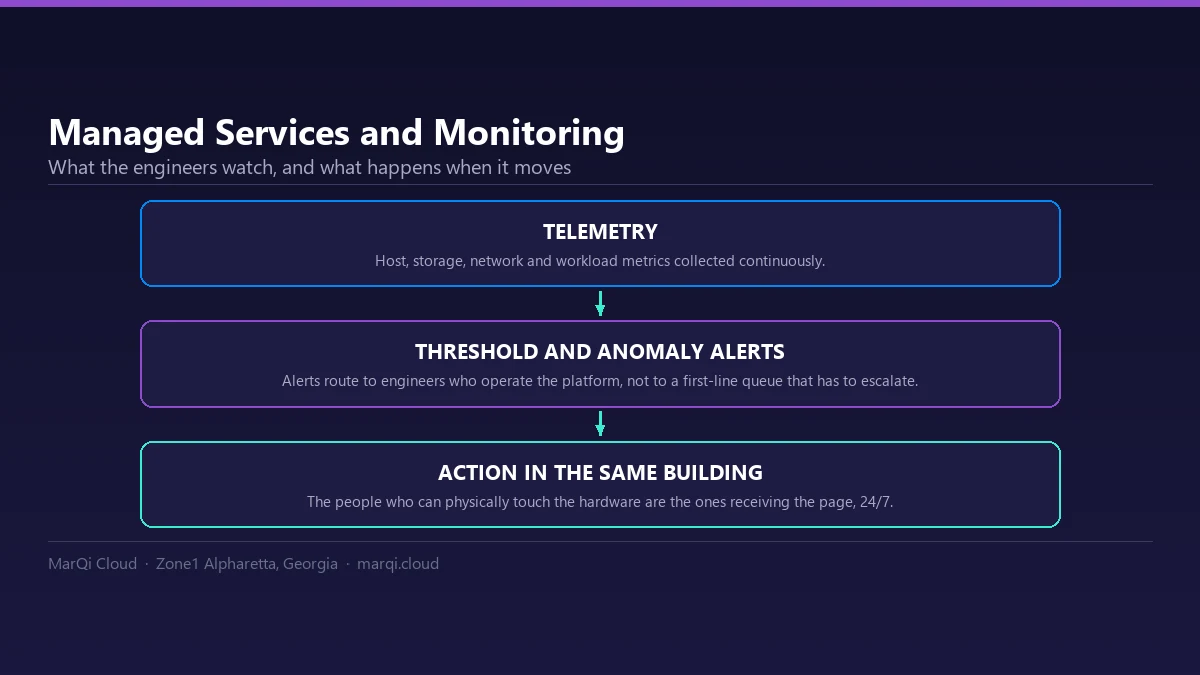
- Expert Support: MarQi Cloud’s managed services add 24/7 engineer-run operations and monitoring for the infrastructure behind your DNS.
Frequently Asked Questions (FAQ)
1. What is cloud DNS architecture?
Cloud DNS architecture refers to the design and implementation of DNS services that operate in a cloud environment, providing scalable and reliable DNS resolution.
2. Why is high availability important for applications?
High availability ensures that applications remain operational and accessible, minimizing downtime and associated costs.
3. What are the key components of cloud DNS?
The key components include DNS resolvers, authoritative DNS servers, Anycast routing, and load balancers.
4. How can I improve my DNS performance?
Implementing DNS caching, using multiple DNS providers, and monitoring performance can significantly enhance DNS efficiency.
5. What role does redundancy play in cloud DNS?
Redundancy ensures that if one DNS server fails, another can take over, maintaining service availability.
6. How does MarQi Cloud enhance DNS reliability?
DNS on MarQi Cloud is kept reliable by how it is deployed: redundant name servers on separate networks, records that point at a load balancer included with every plan, and 24/7 engineer-run operations and monitoring through MarQi Cloud’s managed services.
7. Can cloud DNS services handle high traffic?
Yes, cloud DNS services are designed to scale and handle high traffic effectively, especially when utilizing load balancing and Anycast routing.
8. What are the benefits of using Anycast DNS?
Anycast DNS reduces latency by routing queries to the nearest DNS server, improving response times and overall performance.