Why Recovery Point Objectives Should Drive Your Backup Architecture Decisions
July 20, 2026
Ultimate Guide to Building a Disaster Recovery Strategy for Multi-Site Enterprises
July 20, 2026
The Complete Guide to Continuous Data Replication for Near-Zero RPO
In today’s digital landscape, where data is the lifeblood of organizations, having an effective data replication strategy is crucial. Continuous data replication (CDR) allows businesses to maintain near-zero Recovery Point Objectives (RPO), ensuring that data loss is minimized, and business continuity is preserved. This comprehensive guide will explore the intricacies of continuous data replication, its importance, implementation strategies, and how MarQi Cloud’s hybrid cloud solutions can help your organization achieve robust data resilience.
What is Continuous Data Replication?
Continuous Data Replication (CDR) is a data management technique that ensures data is consistently and automatically copied from one location to another as changes occur. This process enables organizations to maintain real-time data availability across multiple environments, which is essential for minimizing downtime and ensuring data integrity. In contrast to traditional backup methods, which typically operate on a scheduled basis, CDR continuously monitors data changes and replicates them instantaneously.
The Importance of Near-Zero RPO
Recovery Point Objective (RPO) is a critical metric that defines the maximum tolerable period in which data might be lost due to a major incident. Near-zero RPO is the goal for many organizations, particularly those that rely heavily on data for operations, customer interactions, and compliance. Achieving near-zero RPO means that businesses can recover almost all their data without significant losses, which is vital for maintaining trust and operational efficiency.
Organizations with near-zero RPO can:
- Enhance Business Continuity: By ensuring minimal data loss, organizations can maintain ongoing operations during and after an incident.
- Improve Customer Trust: Clients expect reliable services; near-zero RPO helps businesses meet these expectations.
- Comply with Regulations: Many industries have strict data retention and recovery requirements, making near-zero RPO essential for compliance.
How Continuous Data Replication Works
The mechanics of continuous data replication involve several key processes:
- Change Data Capture (CDC): This technique identifies and captures changes made to data in real-time, ensuring that only the modified data is replicated.
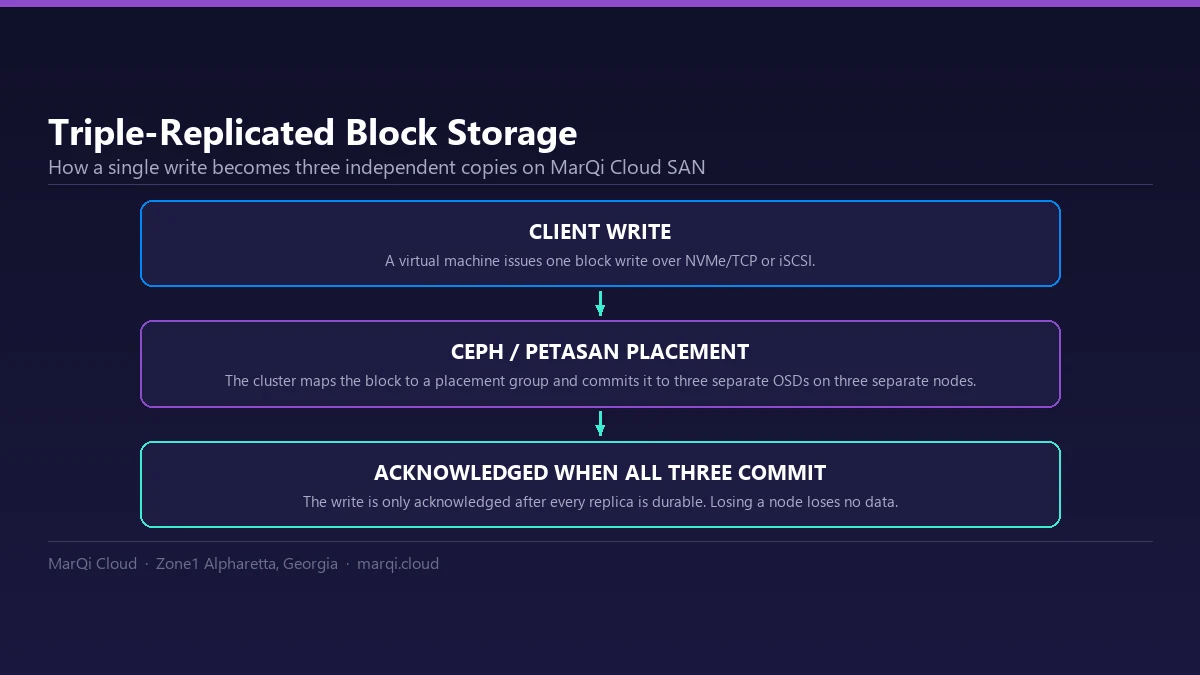
- Data Transmission: The captured changes are transmitted to the target environment using secure and efficient protocols. This can involve direct connections or managed services like those offered by MarQi Cloud.
- Data Synchronization: The target environment receives the changes and integrates them, maintaining a consistent state with the source environment.
- Monitoring and Management: Continuous monitoring ensures that the replication process is functioning correctly, with alerts for any issues that may arise.
Comparison of Continuous Data Replication vs. Traditional Backup
| Feature | Continuous Data Replication | Traditional Backup |
|---|---|---|
| Data Recovery Time | Near-instant | Hours to days |
| Data Loss Potential | Minimal | Significant |
| Frequency of Backups | Continuous | Scheduled (daily/weekly) |
| Resource Utilization | Efficient, only changes | Resource-intensive, full backups |
Benefits of Continuous Data Replication
Implementing continuous data replication offers numerous advantages for organizations, including:
- Reduced Downtime: With real-time data availability, businesses can quickly recover from disruptions, minimizing downtime.
- Lower Data Loss Risk: Continuous replication significantly reduces the window of potential data loss, ensuring more data remains intact during failures.
- Cost Efficiency: While the initial setup may require investment, the long-term savings from reduced downtime and data loss can outweigh the costs.
- Enhanced Operational Efficiency: Organizations can maintain productivity and avoid interruptions in service delivery, leading to better overall performance.
Implementing Continuous Data Replication
To successfully implement continuous data replication, organizations should follow these steps:
- Assess Your Needs: Identify critical data and applications that require continuous replication based on RPO requirements.
- Select the Right Technology: Choose data replication tools that align with your infrastructure and business goals. Consider solutions that offer flexibility and scalability.
- Design Your Architecture: Develop a replication architecture that meets your organization’s needs, including network considerations and data security.
- Test Your Implementation: Conduct rigorous testing to ensure the replication process works as intended and meets RPO objectives. Utilize disaster recovery simulations to validate your strategy.
- Monitor and Optimize: Continuously monitor the replication process, adjusting as necessary to maintain optimal performance and address any issues that arise.
Best Practices for Continuous Data Replication
To maximize the effectiveness of continuous data replication, consider the following best practices:
- Implement Security Measures: Ensure that data in transit is encrypted and that access controls are in place to protect sensitive information.
- Regularly Review and Update Processes: Periodically assess your data replication strategy to incorporate technological advancements and address changing business needs.
- Train Your Team: Providing training for your IT staff on best practices and tools used in continuous data replication can enhance efficiency and effectiveness.
- Utilize Managed Services: Leverage managed cloud services, such as those offered by MarQi Cloud, to simplify implementation and management of continuous data replication.
How MarQi Cloud Supports Continuous Data Replication
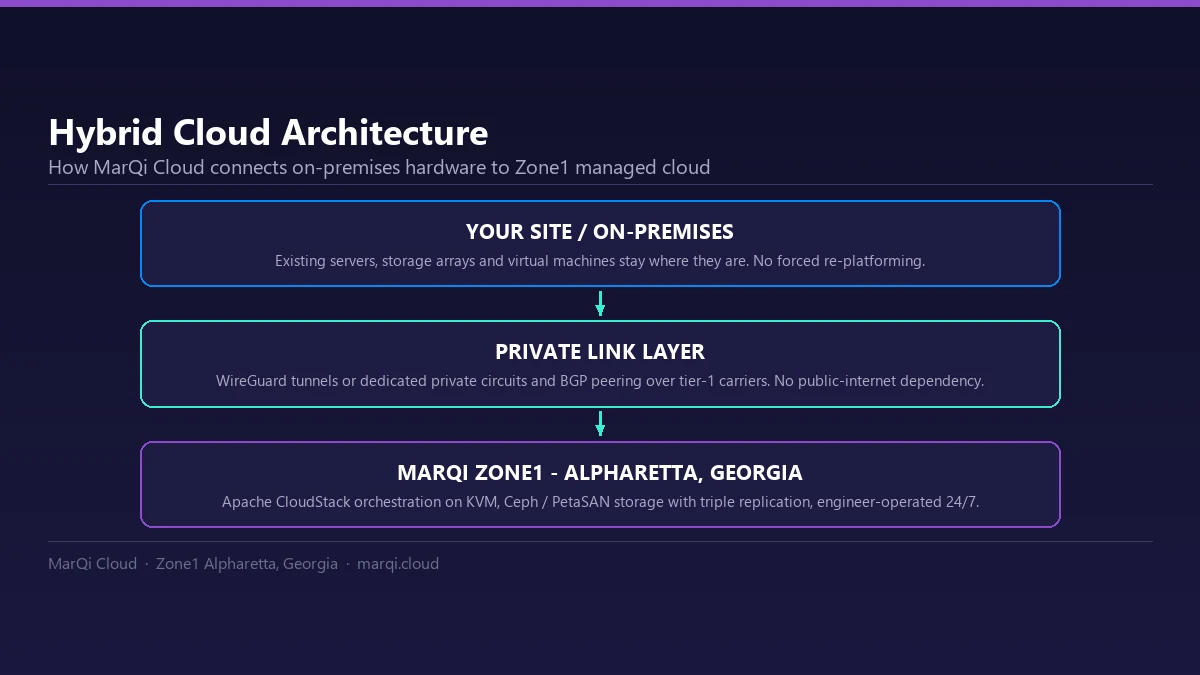
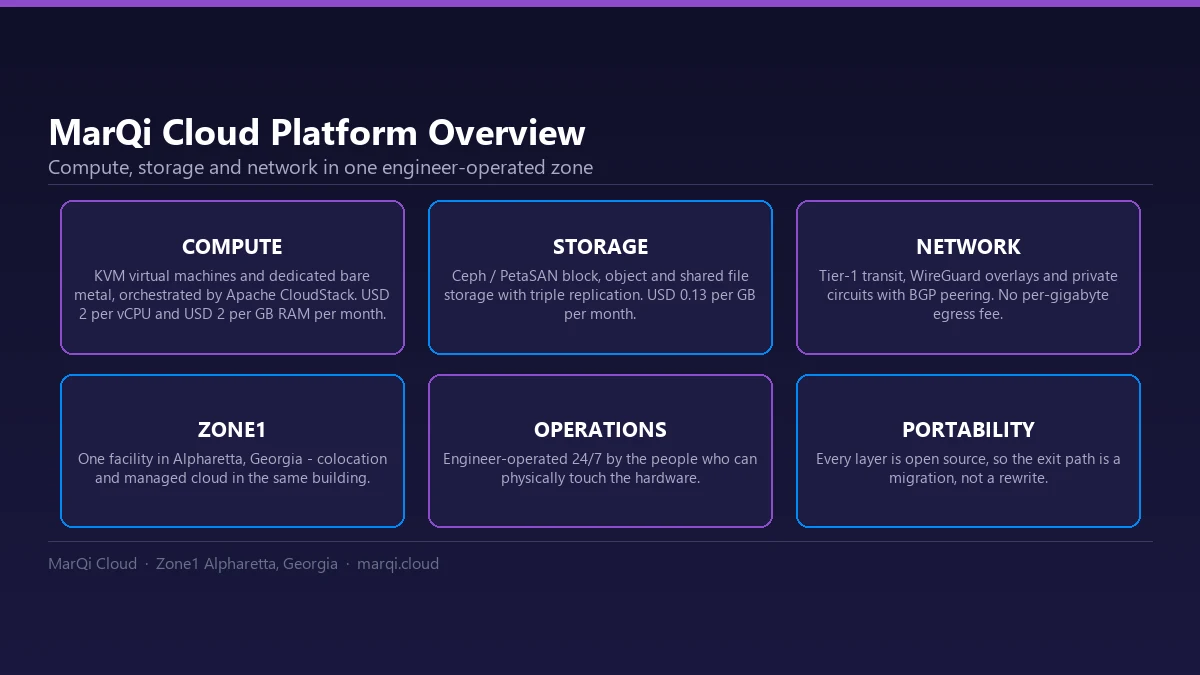
MarQi Cloud specializes in enterprise-grade cloud infrastructure, providing robust hybrid cloud solutions that support continuous data replication. Our state-of-the-art data centers are equipped with advanced security measures and high-performance networking capabilities to ensure your data is replicated efficiently and securely.
With MarQi Cloud, organizations can:
- Leverage Flexible Pricing Models: Enjoy scalable pricing structures that adapt to your organization’s evolving needs.
- Benefit from Zero Lock-In: Maintain control over your data without the fear of being locked into a specific vendor.
- Access White-Glove Managed Services: Our expert team ensures seamless implementation and ongoing support for your continuous data replication strategy.
For more information on how MarQi Cloud can help your organization achieve near-zero RPO through continuous data replication, contact us today.
Frequently Asked Questions
What is the difference between RPO and RTO?
RPO (Recovery Point Objective) refers to the maximum acceptable amount of data loss measured in time, while RTO (Recovery Time Objective) is the maximum acceptable time to restore systems after a failure.
How does continuous data replication improve disaster recovery?
By continuously replicating data, organizations can ensure that they have the most up-to-date information available for recovery, significantly reducing data loss and downtime during disaster recovery efforts.
Can continuous data replication be used with cloud solutions?
Yes, continuous data replication is highly compatible with cloud solutions, allowing organizations to replicate data across on-premises and cloud environments seamlessly.
What are the costs associated with continuous data replication?
The costs can vary based on the technology used, the amount of data replicated, and the infrastructure required. However, the long-term savings from reduced downtime often outweigh the initial investment.
How often should I test my data replication strategy?
It is recommended to test your data replication strategy at least quarterly and after any major infrastructure changes to ensure it functions as intended.
What data can be replicated continuously?
Continuous data replication can be applied to databases, file systems, and applications, ensuring that all critical data is consistently available.
Is continuous data replication suitable for small businesses?
Yes, continuous data replication can be scaled to meet the needs of small businesses, providing them with robust data protection without the complexity often associated with larger implementations.
Are there any regulatory considerations for continuous data replication?
Organizations must ensure compliance with industry regulations regarding data protection and privacy, which may influence their data replication strategies.
Conclusion
Continuous data replication is an essential strategy for organizations aiming to achieve near-zero RPO, minimizing data loss and ensuring business continuity. By understanding the mechanics of CDR, implementing best practices, and leveraging solutions like MarQi Cloud, businesses can safeguard their data and maintain operational efficiency in an increasingly data-driven world. For expert guidance and tailored solutions for your organization’s data replication needs, reach out to MarQi Cloud today.