How Geographic Redundancy Across Cloud Zones Protects Against Regional Failures
July 20, 2026
The Complete Guide to Continuous Data Replication for Near-Zero RPO
July 20, 2026
Why Recovery Point Objectives Should Drive Your Backup Architecture Decisions
In today’s fast-paced digital landscape, ensuring data integrity and availability is paramount for organizations of all sizes. As businesses increasingly rely on data-driven decision-making, the concept of Recovery Point Objectives (RPO) has emerged as a critical factor in shaping effective backup architecture. This article delves into why RPO should be the cornerstone of your backup strategy, exploring its implications for data management, disaster recovery, and overall business continuity.
What is Recovery Point Objective (RPO)?
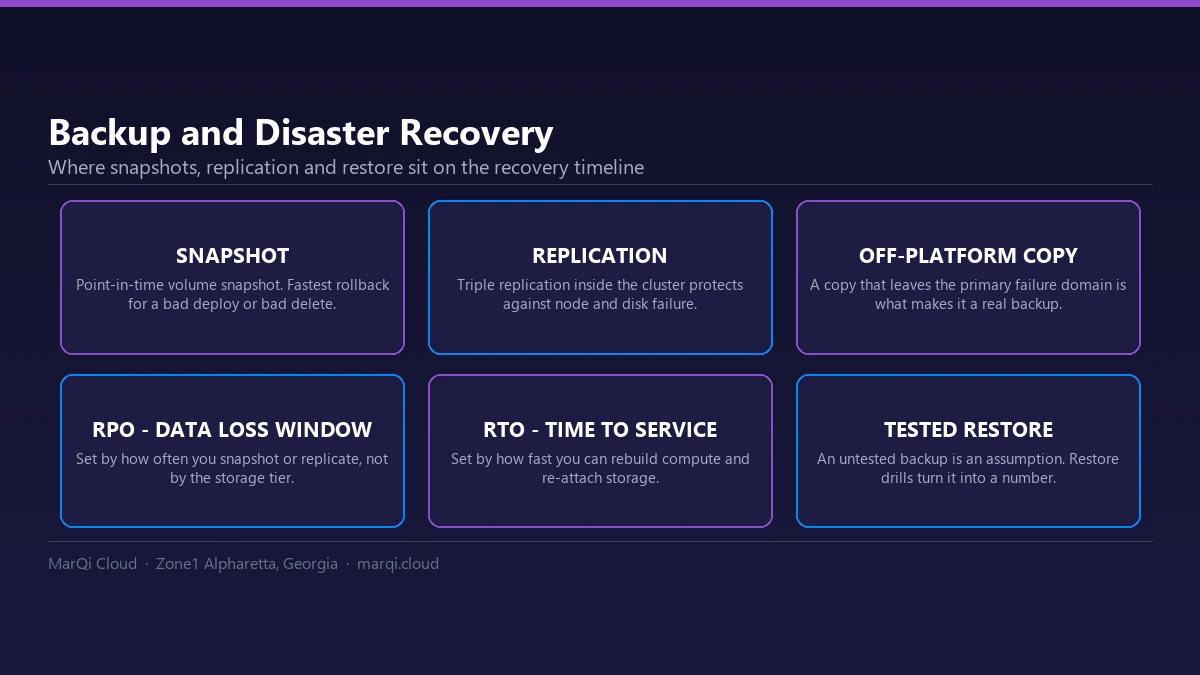
Recovery Point Objective (RPO) is a critical metric in data backup and disaster recovery that defines the maximum acceptable amount of data loss measured in time. In simpler terms, RPO determines how far back in time a business can afford to recover its data after an incident, such as a cyberattack, hardware failure, or natural disaster. For example, if your RPO is set to 4 hours, this means that, in the event of a disruption, you can only afford to lose data that was generated in the last 4 hours. Understanding RPO is essential for enterprises aiming to ensure data resilience and continuity.
The Importance of RPO in Backup Architecture
RPO plays a pivotal role in shaping backup architecture decisions for several reasons:
- Data Loss Minimization: By establishing a clear RPO, organizations can implement backup solutions that minimize potential data loss, thus protecting critical business information.
- Cost Management: Different RPOs come with varying costs and resource allocations. Understanding your RPO helps in budgeting for backup solutions that align with your business needs.
- Compliance Requirements: Many industries have strict regulations regarding data retention and recovery. Setting an appropriate RPO ensures compliance with these regulations, mitigating legal risks.
- Customer Trust: A robust backup architecture based on RPO fosters customer confidence, as clients are assured that their data is secure and recoverable.
RPO vs. RTO: Understanding the Differences
While RPO focuses on data loss, another crucial metric is Recovery Time Objective (RTO), which measures the time it takes to restore data after a disruption. To understand their interplay, consider the following:
| Metric | Definition | Focus |
|---|---|---|
| Recovery Point Objective (RPO) | Maximum acceptable data loss in time | Data integrity |
| Recovery Time Objective (RTO) | Maximum acceptable downtime | Operational continuity |
For effective disaster recovery planning, organizations must balance both RPO and RTO according to their operational needs. A lower RPO often necessitates more frequent backups, while a lower RTO may require more robust infrastructure and resources.
Factors Influencing RPO Decisions
Multiple factors influence how organizations set their RPOs:
- Data Criticality: Assess the importance of different data types. Mission-critical data may warrant a lower RPO, while less critical data can have a higher tolerance for loss.
- Business Processes: Evaluate how various business processes depend on specific data. Determine the impact of data loss on these processes to inform RPO settings.
- Compliance and Regulatory Standards: Understand industry regulations that dictate data retention and recovery requirements, as these can directly influence your RPO.
- Infrastructure Capabilities: Your current IT infrastructure and backup solutions will affect how you can achieve your desired RPO. Ensure that your architecture can support the necessary backup frequency.
Designing Backup Architecture Based on RPO
When designing a backup architecture, align your strategy with your established RPO. Here are some steps to consider:
- Assess Data Types: Classify your data based on criticality and RPO requirements. Implement tiered backup solutions that cater to these classifications.
- Choose Backup Types: Depending on your RPO, choose from full, incremental, or differential backups. For example, a lower RPO may necessitate more frequent incremental backups.
- Implement Real-time Replication: For critical data, consider solutions that offer near real-time replication to minimize data loss.
- Leverage Cloud Solutions: Explore cloud-based backup solutions that provide scalable and flexible options to meet your RPO requirements.
- Test Your Backup Strategy: Regularly test your backup and recovery processes to ensure they align with your RPO. This includes running drills to verify that data can be restored within the desired timeframe.
Best Practices for Setting RPO
Establishing an effective RPO involves several best practices:
- Conduct Regular Risk Assessments: Regularly evaluate potential risks to your data and adjust your RPO accordingly.
- Engage Stakeholders: Collaborate with various departments to understand their data needs and how they affect RPO settings.
- Utilize Automation: Leverage automation tools for backup processes to ensure timely execution and reduce human error.
- Document Your Processes: Maintain clear documentation of your backup architecture and RPO strategy to facilitate compliance and audits.
Case Studies: RPO in Action
Here are examples of organizations that successfully implemented RPO-driven backup architectures:
Case Study 1: Financial Institution
A financial institution set an RPO of 1 hour to comply with regulatory requirements. They implemented a hybrid cloud backup solution that enabled real-time data replication, ensuring minimal data loss during outages.
Case Study 2: E-commerce Platform
An e-commerce company faced challenges during peak sales periods. By analyzing their RPO needs, they transitioned to incremental backups every 30 minutes, which significantly reduced potential data loss during high-traffic moments.
Conclusion
In conclusion, Recovery Point Objectives should be at the forefront of your backup architecture decisions. By understanding the importance of RPO, organizations can design more effective backup strategies that minimize data loss, ensure compliance, and maintain customer trust. As businesses continue to navigate an increasingly digital world, prioritizing RPO will be essential for robust data management and disaster recovery planning.
FAQs
What is the difference between RPO and RTO?
RPO measures the maximum acceptable amount of data loss in time, while RTO measures the maximum acceptable downtime.
Why is RPO important for businesses?
RPO is crucial as it helps businesses minimize data loss, manage costs, ensure compliance, and maintain customer trust.
How can I determine the right RPO for my organization?
To determine the right RPO, assess data criticality, business processes, compliance requirements, and infrastructure capabilities.
What backup solutions are best for achieving a low RPO?
Solutions like real-time replication, cloud-based backups, and frequent incremental backups can help achieve a low RPO.
How often should I review my RPO?
You should review your RPO regularly, especially after major business changes, risk assessments, or compliance updates.
Can RPO vary for different types of data?
Yes, RPO can vary depending on the criticality of the data. Mission-critical data often requires a lower RPO.
What role does automation play in managing RPO?
Automation helps ensure timely execution of backup processes, reducing human error and supporting the achievement of defined RPOs.
Why should I consider cloud solutions for backup?
Cloud solutions offer scalable and flexible options that can effectively meet varying RPO requirements while ensuring data availability and integrity.