Understanding GPU Hosting SLAs: What You Need to Know
March 28, 2026
Building Robust AI Infrastructure for SaaS Founders: A Comprehensive Guide
March 29, 2026
Cost Savings with Dedicated GPU Clusters: Unlocking Efficiency and Performance
In today’s fast-paced digital landscape, businesses are constantly looking for ways to optimize their operations while reducing costs. One area that has gained significant traction is the utilization of dedicated GPU clusters. These powerful computing resources are transforming the way organizations approach complex computational tasks, including artificial intelligence (AI), machine learning (ML), and data processing. In this article, we will explore the cost savings associated with dedicated GPU clusters, their impact on performance, and how they can benefit your organization.
Understanding GPU Clusters
A graphics processing unit (GPU) cluster is a set of interconnected computers equipped with multiple GPUs, which are designed to handle parallel processing tasks more efficiently than traditional CPUs. GPU clusters are particularly effective for workloads that require high-performance computing, such as rendering graphics, training deep learning models, and running simulations.
Why Choose Dedicated GPU Clusters?
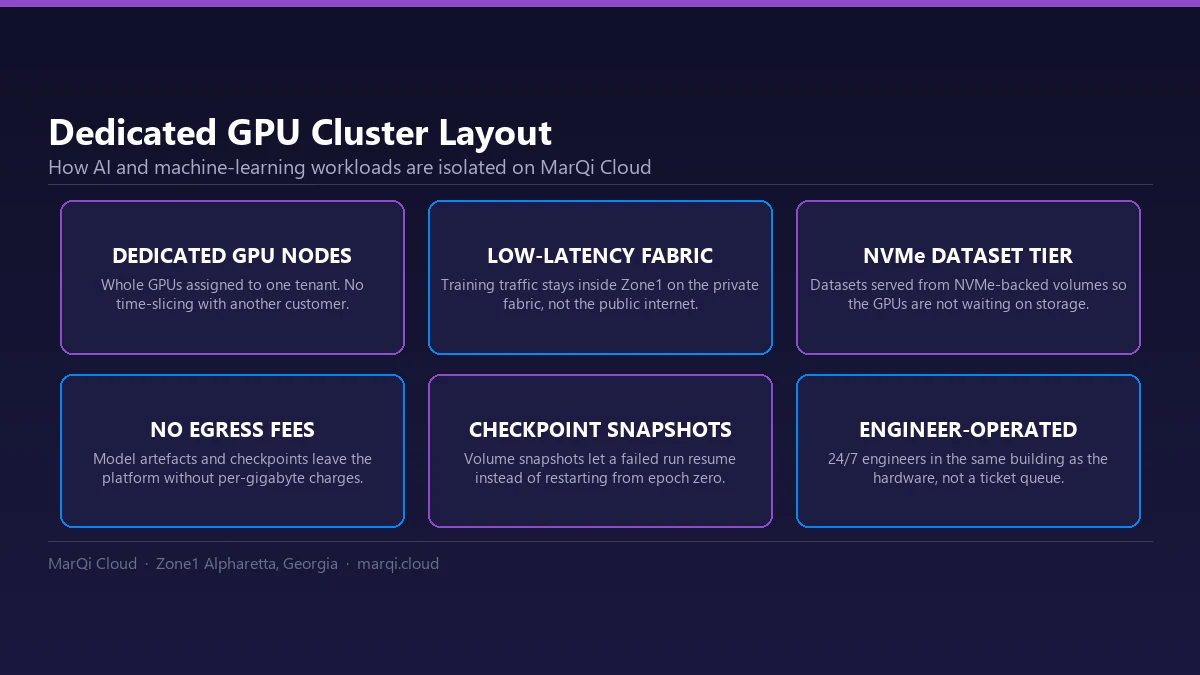
Dedicated GPU clusters offer several advantages over other computing solutions. They provide optimized performance for specific workloads, allowing organizations to run complex calculations faster and more efficiently. Additionally, dedicated clusters ensure that resources are exclusively available for the tasks at hand, eliminating the competition for resources that can occur in shared environments.
Cost Savings with Dedicated GPU Clusters
One of the primary benefits of using dedicated GPU clusters is the potential for significant cost savings. Here are several ways in which organizations can achieve financial efficiency through the use of these advanced computing resources:
1. Enhanced Performance Reduces Time to Market
Dedicated GPU clusters can dramatically reduce the time it takes to complete computationally intensive tasks. By leveraging the parallel processing capabilities of GPUs, organizations can expedite project timelines, ultimately reducing time to market. This time savings translates into financial benefits, as faster project completion allows businesses to seize market opportunities more quickly and generate revenue sooner.
2. Increased Resource Utilization
When organizations invest in dedicated GPU clusters, they can maximize resource utilization. Traditional CPU-based systems often face bottlenecks when processing large datasets, leading to underutilized resources. With dedicated GPU clusters, businesses can ensure that their computing resources are used to their full potential, resulting in a more cost-effective solution.
3. Lower Operational Costs
Operating dedicated GPU clusters can lead to lower operational costs in several ways. Firstly, GPU clusters consume less power compared to traditional CPU clusters, which can result in significant savings on energy bills. Additionally, organizations can reduce their overall infrastructure costs by consolidating workloads onto fewer machines, minimizing the need for additional hardware and maintenance expenses.
4. Scalable Infrastructure
Dedicated GPU clusters offer scalable infrastructure that can grow with your business needs. As demand for computational power increases, organizations can easily scale their GPU clusters by adding more nodes or GPUs. This flexibility allows businesses to avoid over-provisioning resources upfront, ensuring that they only pay for what they need, when they need it.
5. Predictable Pricing Models
Many cloud providers offer dedicated GPU clusters with flexible pricing models, enabling organizations to choose a payment structure that aligns with their budget and usage patterns. Pay-as-you-go models, reserved instances, and spot pricing can all contribute to cost savings by allowing businesses to select the most economical option for their specific needs.
Industry Applications of Dedicated GPU Clusters
Dedicated GPU clusters are increasingly being adopted across various industries due to their cost-saving potential and performance advantages. Here are some key sectors that are benefiting from this technology:
1. Healthcare
The healthcare industry is leveraging dedicated GPU clusters for tasks such as medical imaging, genomics, and drug discovery. By utilizing GPU clusters, researchers can analyze vast amounts of data quickly, leading to faster diagnoses and more effective treatments.
2. Finance
In the finance sector, organizations are using GPU clusters for risk analysis, fraud detection, and algorithmic trading. The ability to process large datasets rapidly enables financial institutions to make better-informed decisions and stay ahead of market trends.
3. Entertainment and Media
The entertainment and media industry relies heavily on GPU clusters for rendering graphics, visual effects, and animation. By utilizing dedicated GPU clusters, production companies can enhance the quality of their content while reducing rendering times.
4. Automotive
Automakers are employing GPU clusters for simulations and autonomous vehicle development. The computational power of GPU clusters allows for the rapid testing and validation of algorithms, which is essential for ensuring safety and performance in self-driving cars.
Implementing Dedicated GPU Clusters in Your Organization
Transitioning to dedicated GPU clusters may seem daunting, but with the right approach, organizations can seamlessly integrate this technology into their existing infrastructure. Here are some steps to consider:
1. Assess Your Workload Requirements
Before implementing dedicated GPU clusters, it’s essential to assess your organization’s workload requirements. Identify which tasks would benefit most from GPU acceleration and calculate the potential cost savings associated with improved performance.
2. Choose the Right Provider
When selecting a provider for dedicated GPU clusters, consider factors such as performance capabilities, pricing models, and customer support. Look for a provider that offers enterprise-grade cloud infrastructure with US-based support to ensure reliability and responsiveness.
3. Monitor and Optimize Usage
After deploying dedicated GPU clusters, it’s crucial to monitor their usage and performance continuously. By analyzing resource utilization, organizations can identify opportunities for optimization and make data-driven decisions to maximize cost savings.
4. Train Your Team
Investing in training for your team is vital to ensure they can effectively utilize dedicated GPU clusters. Providing education on best practices and tools can lead to greater efficiency and improved outcomes.
Conclusion
Dedicated GPU clusters present a unique opportunity for organizations to achieve cost savings while enhancing performance. By leveraging the power of GPU acceleration, businesses can optimize their operations, reduce time to market, and ultimately drive growth. As industries continue to evolve and demand for computational power increases, investing in dedicated GPU clusters may well be the key to staying competitive in the digital age.
Frequently Asked Questions (FAQ)
1. What is a dedicated GPU cluster?
A dedicated GPU cluster is a set of interconnected computers equipped with multiple GPUs designed to handle parallel processing tasks efficiently.
2. How do dedicated GPU clusters differ from traditional CPU clusters?
Dedicated GPU clusters utilize GPUs for parallel processing, making them more efficient for workloads requiring high-performance computing compared to traditional CPU clusters.
3. What are the primary benefits of using dedicated GPU clusters?
The primary benefits include enhanced performance, increased resource utilization, lower operational costs, scalable infrastructure, and predictable pricing models.
4. Which industries benefit most from dedicated GPU clusters?
Industries such as healthcare, finance, entertainment and media, and automotive are among those that benefit significantly from dedicated GPU clusters.
5. How can organizations implement dedicated GPU clusters?
Organizations can implement dedicated GPU clusters by assessing workload requirements, choosing the right provider, monitoring usage, and training their teams.
6. Are dedicated GPU clusters cost-effective?
Yes, dedicated GPU clusters can be cost-effective due to enhanced performance, lower operational costs, and flexible pricing models.
7. Can dedicated GPU clusters be used for AI and machine learning?
Yes, dedicated GPU clusters are highly effective for AI and machine learning tasks due to their ability to process large datasets rapidly.
8. What should organizations consider when selecting a GPU cluster provider?
Organizations should consider performance capabilities, pricing models, customer support, and the provider’s infrastructure reliability.
9. How do GPU clusters help with business continuity?
GPU clusters can enhance business continuity by providing scalable resources that can adapt to changing workloads and ensuring high availability of computing power.
10. What is the future of dedicated GPU clusters?
The future of dedicated GPU clusters looks promising, with advancements in technology and increasing demand for high-performance computing across various sectors.