The Complete Guide to Cloud Storage Migration Without Service Interruption
September 15, 2026
The Complete Guide to Cloud Data Warehouse Solutions for Business Analytics
September 15, 2026
Ultimate Guide to Building a Data Lake Architecture on Enterprise Cloud Infrastructure
In today’s data-driven world, organizations are increasingly harnessing the power of data lakes to facilitate advanced analytics, machine learning, and big data processing. A well-structured data lake architecture on enterprise cloud infrastructure not only supports vast amounts of data storage but also provides the necessary agility and scalability for modern businesses. In this comprehensive guide, we will explore how to build a data lake architecture on enterprise cloud infrastructure, focusing on the best practices, components, and strategies that ensure optimal performance and security. By the end of this article, you will have the knowledge needed to implement a robust data lake architecture that meets your organization’s needs.
Understanding Data Lakes
A data lake is a centralized repository that allows you to store all your structured and unstructured data at any scale. Unlike traditional databases, which require a predefined schema, data lakes are designed to accommodate a variety of data formats, including text, images, videos, and logs. This flexibility makes data lakes an ideal solution for organizations looking to leverage big data analytics and machine learning capabilities.
According to a report by Gartner, organizations that implement data lakes can achieve a 20% reduction in the time spent on data preparation and a 30% increase in analytics productivity. This efficiency is crucial for enterprises aiming to make data-driven decisions swiftly.
Key Components of a Data Lake Architecture
Building a successful data lake architecture requires understanding its key components:
- Data Storage: The backbone of your data lake, which can be built on enterprise cloud infrastructure like MarQi Cloud’s scalable compute and storage resources.
- Data Ingestion: Mechanisms to bring data into the lake from various sources, including batch and real-time streaming methods.
- Data Processing: Tools and frameworks for transforming and analyzing data, such as Apache Spark or Apache Flink.
- Data Governance: Policies and procedures to manage data quality, security, and compliance.
- Data Access: APIs and query engines that facilitate data retrieval for analytics and reporting.
Designing Your Data Lake Architecture
When designing your data lake architecture, consider the following steps:
- Define Your Objectives: Determine what you want to achieve with your data lake, whether it’s real-time analytics, machine learning, or historical data analysis.
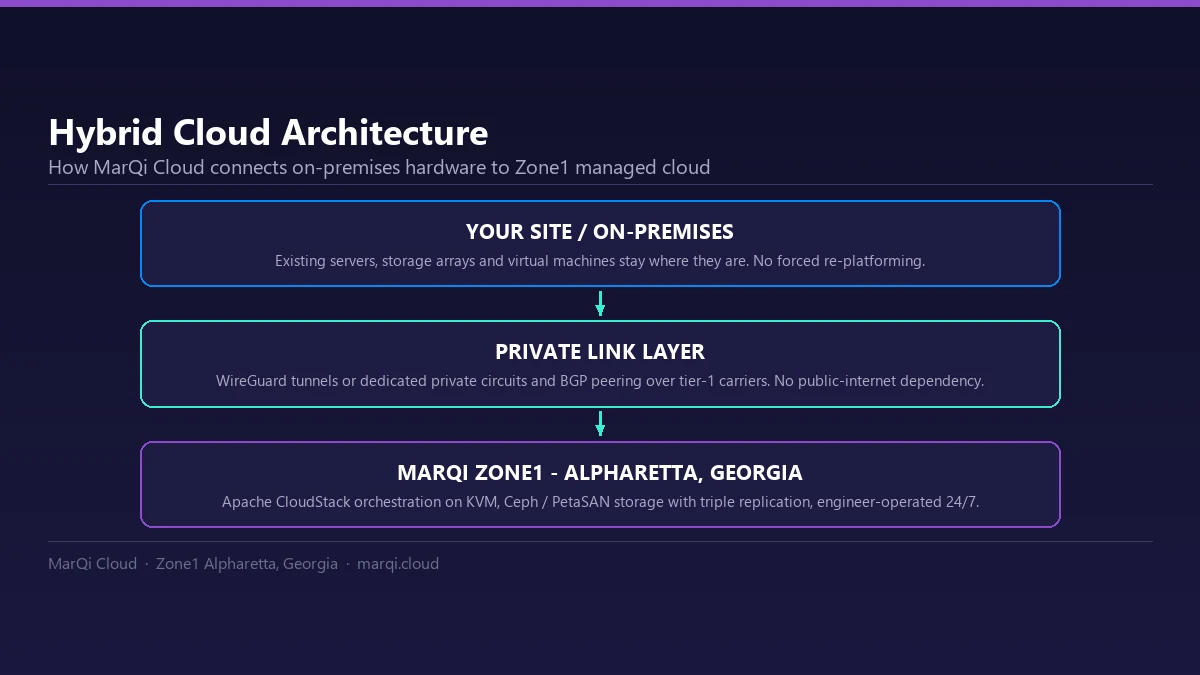
- Select the Right Cloud Provider: Choosing an enterprise cloud provider like MarQi Cloud ensures that you have access to a secure and scalable infrastructure. With hybrid cloud solutions, you can blend on-premises and cloud resources to optimize performance.
- Establish Data Ingestion Pipelines: Use tools like Apache Kafka for streaming data ingestion and Apache NiFi for batch processing. This allows you to collect data from various sources seamlessly.
- Implement Data Governance: Define roles and responsibilities for data management and establish policies for data quality, privacy, and compliance.
- Enable Data Access: Use technologies like Presto or Apache Drill to provide SQL-like query capabilities for data analysts and business users.
Choosing the Right Cloud Infrastructure
When it comes to selecting the right cloud infrastructure for your data lake, consider the following factors:
- Scalability: Ensure that the infrastructure can scale horizontally as your data grows. MarQi Cloud offers scalable compute and storage resources that can adapt to your needs.
- Performance: Look for low-latency access to data and high throughput for data processing. Performance-driven infrastructure design is essential for analytics workloads.
- Security: Data lakes often contain sensitive information. Choose a provider that offers robust security measures, such as encryption, access controls, and compliance certifications.
- Cost Management: Consider flexible pricing models that allow you to manage costs effectively. MarQi Cloud’s zero lock-in and zero egress fees can help you optimize your cloud spending.
Data Ingestion Strategies
Data ingestion can be accomplished through various strategies, including:
Batch Ingestion
This method involves collecting and processing data in large chunks at scheduled intervals. Batch ingestion is ideal for historical data analysis and is often easier to manage.
Real-Time Ingestion
For organizations that require immediate access to data, real-time ingestion is crucial. This method uses streaming technologies to continuously collect and process data as it arrives, enabling timely insights.
Hybrid Ingestion
A combination of batch and real-time ingestion can provide flexibility, allowing organizations to optimize their data processing based on specific use cases.
Data Governance and Security
Implementing effective data governance and security measures is vital for protecting sensitive information within your data lake architecture:
- Data Classification: Categorize data based on its sensitivity and apply appropriate security measures accordingly.
- Access Controls: Implement role-based access controls to ensure that only authorized users can access specific data sets.
- Data Encryption: Use encryption both at rest and in transit to protect sensitive information from unauthorized access.
- Compliance: Ensure that your data lake architecture complies with industry regulations such as GDPR or HIPAA, especially if you’re handling healthcare or financial data.
Performance Optimization Techniques
To maximize the performance of your data lake architecture, consider the following optimization techniques:
- Data Partitioning: Organize your data into partitions to improve query performance and reduce latency.
- Indexing: Implement indexing strategies to speed up data retrieval and enhance query performance.
- Data Compression: Use data compression techniques to reduce storage costs and improve data transfer speeds.
- Monitoring and Tuning: Continuously monitor your data lake’s performance and make adjustments as necessary to optimize resource usage.
Case Studies: Successful Data Lake Implementations
To illustrate the effectiveness of data lake architectures, let’s explore a couple of real-world examples:
Case Study 1: Financial Services
A leading financial institution implemented a data lake architecture on MarQi Cloud to centralize their data from multiple sources, including transactions, market data, and customer interactions. By leveraging real-time data ingestion, they were able to enhance their fraud detection capabilities, resulting in a 25% reduction in false positives.
Case Study 2: Healthcare
A healthcare provider utilized a data lake to aggregate patient records, clinical data, and research studies. This centralized repository allowed them to perform advanced analytics, leading to improved patient outcomes and a 15% increase in operational efficiency.
Frequently Asked Questions
What is a data lake?
A data lake is a centralized repository that allows you to store vast amounts of structured and unstructured data at any scale, enabling advanced analytics and machine learning.
How does a data lake differ from a data warehouse?
Data lakes store raw data in its native format, while data warehouses store processed and structured data optimized for reporting and analysis.
What are the benefits of using a data lake?
Data lakes provide scalability, flexibility, and cost-effectiveness, allowing organizations to store large volumes of data and perform advanced analytics without stringent schema requirements.
What technologies are commonly used for data lakes?
Common technologies for data lakes include Hadoop, Apache Spark, Amazon S3, and cloud solutions like MarQi Cloud’s infrastructure.
How can I ensure data security in my data lake?
Implement data governance policies, access controls, and encryption measures to protect sensitive information within your data lake.
Can data lakes support real-time analytics?
Yes, data lakes can support real-time analytics by utilizing streaming technologies for data ingestion and processing.
What are some challenges of building a data lake?
Challenges include data governance, ensuring data quality, managing access controls, and optimizing performance.
How do I choose the right cloud provider for my data lake?
Consider factors such as scalability, performance, security, and cost management when selecting a cloud provider for your data lake architecture.
Conclusion
Building a data lake architecture on enterprise cloud infrastructure is a strategic move for organizations looking to leverage their data effectively. By understanding the key components, selecting the right cloud provider like MarQi Cloud, and implementing best practices for data governance and security, you can create a robust data lake that meets your business needs. As data continues to grow, the ability to manage and analyze it efficiently will be crucial for gaining a competitive advantage in your industry.