Why Phased Cloud Migration Reduces Risk Compared to Big-Bang Approaches
July 14, 2026
The IT Director’s Guide to Cloud Migration Project Management and Governance
July 15, 2026
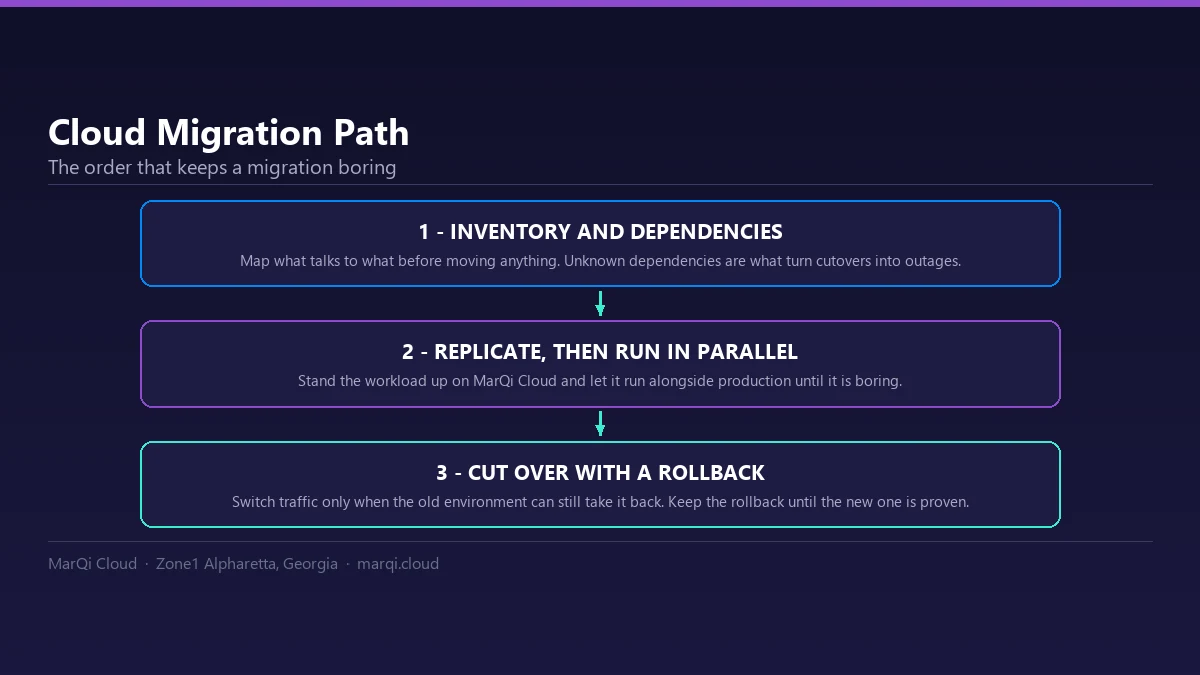
How do you assess an application portfolio for cloud migration?
Inventory every application with its dependencies, data gravity and compliance constraints, then score each one on business value against migration difficulty. That grid is what tells you which applications to rehost, refactor, retire or leave alone — and it is the only defensible way to sequence the waves.
Essential Guide: Assessing Your Application Portfolio for Cloud Migration Readiness
As organizations increasingly move towards cloud solutions, the need to assess your application portfolio for cloud migration readiness has never been more critical. This essential guide will walk you through the strategic steps necessary to evaluate your applications, ensuring a seamless transition to the cloud. By the end of this article, you will understand how to identify applications that are ripe for migration, the criteria for assessing cloud readiness, and how to leverage enterprise cloud providers like MarQi Cloud for a successful migration.
Understanding Cloud Migration
Cloud migration refers to the process of transferring data, applications, and other business elements from on-premises infrastructure to a cloud-based environment. This transition can involve moving to public, private, or hybrid cloud solutions, where organizations can benefit from enhanced scalability, flexibility, and cost-effectiveness. As a leading enterprise cloud provider, MarQi Cloud specializes in hybrid cloud solutions that help businesses optimize their IT infrastructure, with security controls that support their own compliance programs.
Why Assess Your Application Portfolio?
Before embarking on a cloud migration journey, organizations must conduct a thorough assessment of their application portfolio. This evaluation is crucial for several reasons:
- Identify Migration Candidates: Not all applications are suited for migration. Some may require re-architecting, while others may need to stay on-premises due to compliance or performance issues.
- Cost Analysis: Understanding the total cost of ownership (TCO) for each application helps organizations make informed decisions about which applications to migrate and which to retain.
- Mitigate Risks: Assessing application readiness allows organizations to identify potential risks and develop strategies to mitigate them, ensuring a smoother migration process.
- Optimize Resources: By identifying applications that can benefit from cloud scalability, organizations can better allocate resources to maximize efficiency and performance.
Criteria for Assessing Application Readiness
When assessing your application portfolio, consider the following criteria:
1. Technical Complexity
Evaluate the technical architecture of each application. Consider whether the application is built on legacy technology or if it uses modern microservices architecture. Applications that are tightly coupled with other systems may require more effort to migrate.
2. Compliance and Security Requirements
Understand the compliance and security requirements for each application. Certain industries, such as healthcare and finance, have strict regulations that may necessitate keeping specific applications on-premises or in a private cloud. For example, HIPAA mandates stringent data protection measures for healthcare applications.
3. Performance and Availability
Assess the performance requirements of each application. Applications with high availability needs or low latency requirements may not be suitable for all cloud environments. Use performance monitoring tools to gauge how each application performs under varying loads.
4. Integration Needs
Determine how each application integrates with other systems. Applications that rely heavily on real-time data exchange may require specific cloud configurations or additional middleware to function optimally in the cloud.
5. User Experience
Consider the user experience implications of migrating an application. Applications that are mission-critical or heavily used by end-users should be prioritized for migration readiness assessments.
Steps to Assess Your Application Portfolio
Follow these steps to conduct a comprehensive assessment:
Step 1: Inventory Your Applications
Begin by creating a comprehensive inventory of all applications within your organization. Include details such as:
- Application name
- Purpose and functionality
- Technical architecture
- Integration points
- Compliance requirements
- Performance metrics
Step 2: Evaluate Each Application Against the Criteria
Using the criteria outlined above, rate each application on a scale (e.g., 1-5) for factors such as complexity, compliance, performance, and integration needs. This quantitative assessment will help prioritize applications for migration.
Step 3: Conduct a Cost-Benefit Analysis
For each application, analyze the costs associated with migration versus the potential benefits. Consider factors such as:
- Licensing and subscription costs
- Operational savings
- Increased scalability and performance
- Improved security and compliance
Step 4: Develop a Migration Strategy
Based on your assessment, create a migration strategy that outlines:
- Which applications to migrate first
- Migration timelines
- Required resources and technologies
- Risk mitigation strategies
Step 5: Engage Stakeholders
Involve key stakeholders in the assessment process, including IT staff, business unit leaders, and compliance officers. Their input will provide valuable insights and help ensure alignment with organizational goals.
Tools and Methodologies for Assessment
Several tools and methodologies can facilitate the assessment of your application portfolio:
1. Application Portfolio Management (APM) Tools
APM tools provide a centralized platform for tracking application performance, usage, and costs. These tools can help automate the assessment process and generate reports for better visibility.
2. Cloud Readiness Assessment Frameworks
Frameworks such as the NIST Cloud Computing Standards Roadmap offer guidelines for assessing cloud readiness and help organizations identify best practices for migration.
3. Cost Analysis Tools
Utilize cloud cost analysis tools to forecast the financial implications of migrating each application. These tools can help organizations understand the long-term financial impact of their migration decisions.
Benefits of Migrating to the Cloud
The advantages of migrating to the cloud are numerous:
- Scalability: Easily scale resources up or down based on demand.
- Cost Savings: Reduce operational costs by eliminating the need for on-premises hardware.
- Enhanced Security: Benefit from advanced security features and compliance support offered by cloud providers.
- Improved Collaboration: Foster collaboration among teams with cloud-based applications accessible from anywhere.
Common Challenges and Mitigation Strategies
While cloud migration offers significant benefits, organizations may encounter challenges during the process. Here are some common challenges and strategies to mitigate them:
1. Data Security Concerns
Mitigation Strategy: Choose a reputable cloud provider like MarQi Cloud that prioritizes security and compliance. Implement encryption and access controls to protect sensitive data during and after migration.
2. Application Downtime
Mitigation Strategy: Plan migrations during off-peak hours and use load balancing to minimize downtime. Conduct thorough testing before going live.
3. Integration Issues
Mitigation Strategy: Assess integration needs early in the migration process and invest in middleware solutions to facilitate seamless data exchange between applications.
Example Scenarios of Cloud Migrations
The scenarios below are illustrative examples of how organizations typically apply these practices; they do not describe specific MarQi Cloud customers or measured results.
Example Scenario 1: Healthcare Provider
A healthcare provider migrated its patient management system to a private cloud environment to ensure compliance with HIPAA regulations while improving system performance. By conducting a thorough application portfolio assessment, they identified key performance metrics and compliance requirements, leading to a successful migration.
Example Scenario 2: E-commerce Company
An e-commerce company transitioned its inventory management system to a hybrid cloud solution. Through careful evaluation of application dependencies and performance needs, the company was able to enhance its system’s scalability while reducing operational costs.
Frequently Asked Questions
What is cloud migration readiness?
Cloud migration readiness refers to the assessment of an organization’s applications and infrastructure to determine their suitability for migration to the cloud.
How do I know which applications to migrate?
Evaluate each application based on technical complexity, compliance requirements, performance needs, and integration requirements to identify suitable candidates for migration.
What tools can help with application portfolio assessment?
Application Portfolio Management tools, cloud readiness assessment frameworks, and cost analysis tools can facilitate the assessment process.
What are the benefits of migrating to the cloud?
Benefits include scalability, cost savings, enhanced security, and improved collaboration among teams.
What challenges might I face during cloud migration?
Common challenges include data security concerns, application downtime, and integration issues.
How can I mitigate migration risks?
Choose a reputable cloud provider, plan migrations carefully, and test applications thoroughly before going live.
What is the role of stakeholders in the assessment process?
Engaging stakeholders ensures alignment with organizational goals and provides valuable insights during the assessment.
How can MarQi Cloud assist with cloud migration?
MarQi Cloud offers enterprise-grade cloud infrastructure and managed services to support organizations throughout their cloud migration journey.
Conclusion
Assessing your application portfolio for cloud migration readiness is a crucial step in ensuring a successful transition to the cloud. By following the outlined steps and leveraging the expertise of a trusted provider like MarQi Cloud, organizations can navigate the complexities of cloud migration with confidence. Start your journey today by evaluating your applications and unlocking the benefits of cloud technology.