The MarQi Cloud Colocation FAQ: Everything You Were Afraid to Ask
May 17, 2026
MarQi Cloud Peering Explained: How Your Traffic Never Touches Public Internet
May 17, 2026
How to Build a Hybrid IT Strategy That Grows With Your Business on MarQi Cloud
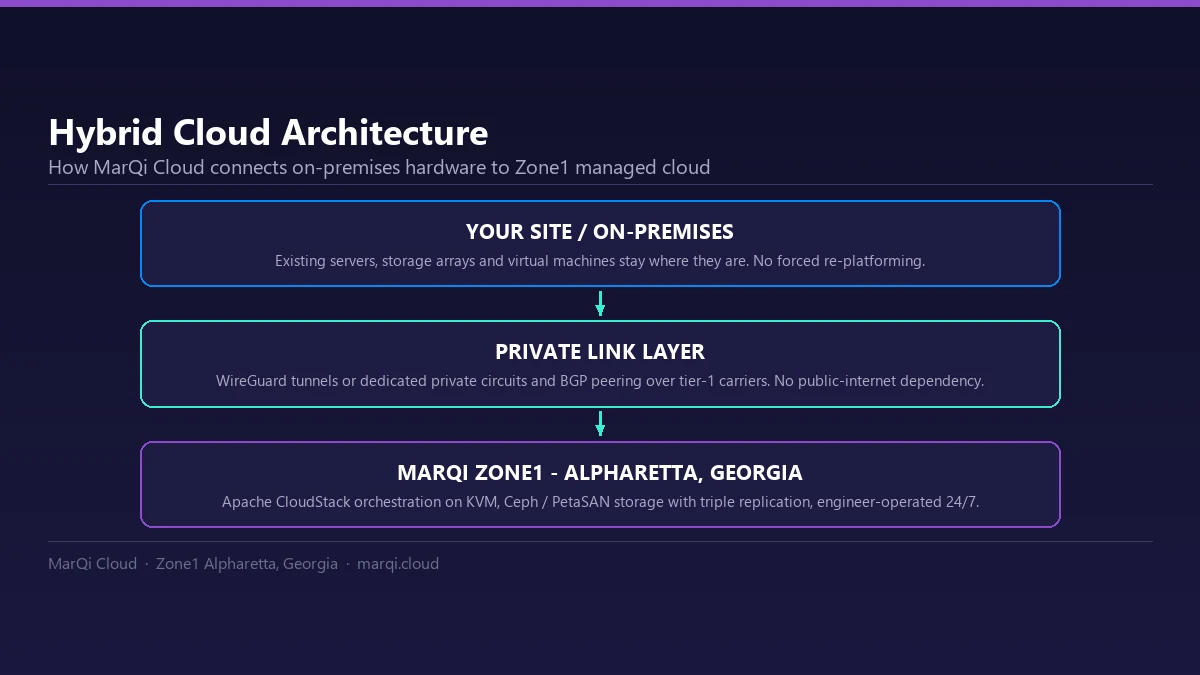
In today’s rapidly evolving digital landscape, businesses are continually seeking innovative ways to streamline operations, enhance efficiency, and ensure scalability. One of the most effective solutions that has emerged is the hybrid IT strategy. This approach combines the best of both worlds—on-premises infrastructure and cloud resources—allowing businesses to optimize their IT operations. In this article, we will explore how to build a hybrid IT strategy that not only meets your current needs but also grows with your business using MarQi Cloud’s enterprise-grade solutions.
Understanding Hybrid IT
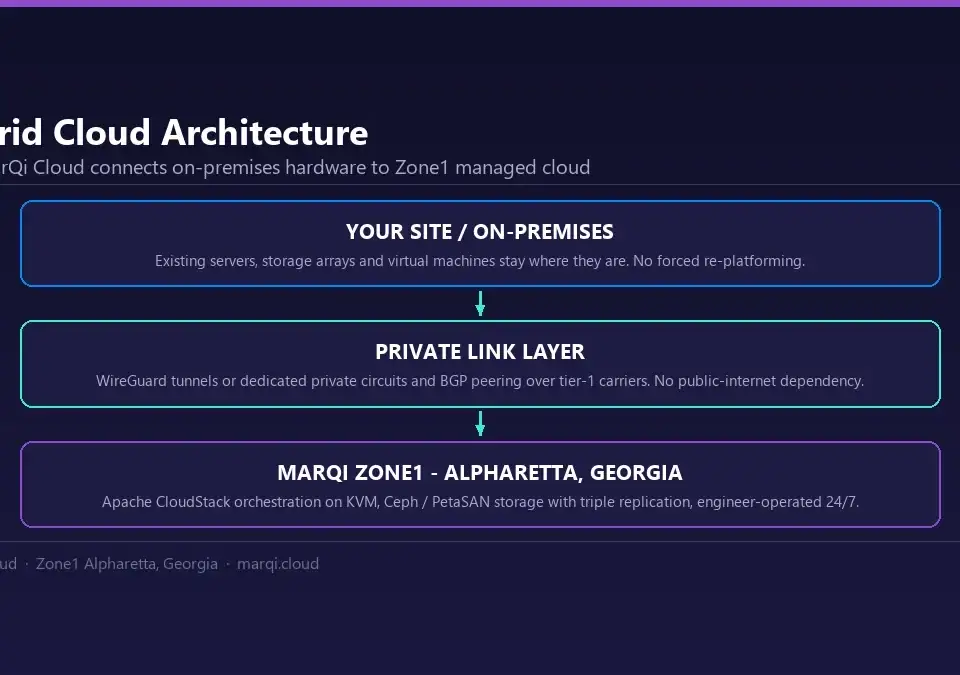
Before diving into the specifics of building a hybrid IT strategy, let’s define what hybrid IT is. Hybrid IT refers to an IT architecture that incorporates a mix of on-premises, private cloud, and public cloud services. This approach provides organizations with greater flexibility, enabling them to leverage the advantages of each environment.
Benefits of Hybrid IT
1. Flexibility: Organizations can choose where to deploy applications and data based on performance, cost, and security needs.
2. Scalability: Hybrid IT allows businesses to scale their resources up or down based on demand, ensuring optimal performance.
3. Cost Efficiency: By using a combination of on-premises and cloud solutions, businesses can optimize their IT spending.
4. Improved Agility: The hybrid model enables quicker responses to market changes and customer demands.
Steps to Build Your Hybrid IT Strategy
Now that we understand hybrid IT, let’s explore the steps to create a robust strategy that aligns with your business objectives.
1. Assess Your Current IT Environment
The first step in building a hybrid IT strategy is to assess your current IT infrastructure. Evaluate your existing systems, applications, and data storage solutions. Identify what is working, what needs improvement, and what can be migrated to the cloud.
2. Define Your Business Goals
Establish clear business goals that your hybrid IT strategy should support. Whether it’s enhancing customer experience, increasing operational efficiency, or reducing costs, your strategy should align with these objectives.
3. Identify Workloads for Migration
Not all workloads are suitable for migration to the cloud. Identify which applications and services can benefit from cloud hosting, and which should remain on-premises. Consider factors such as performance requirements, security, and compliance.
4. Choose the Right Cloud Deployment Model
There are various cloud deployment models to choose from, including public, private, and hybrid clouds. MarQi Cloud offers flexible hybrid cloud deployment models that can be tailored to your organization’s specific needs, providing the right balance of control and scalability.
5. Implement Security Protocols
Security is a critical concern in any hybrid IT strategy. Ensure that robust security measures are in place to protect sensitive data and applications across both on-premises and cloud environments. This includes encryption, access controls, and regular security audits.
6. Establish Data Governance Policies
Data governance is essential for managing data integrity, security, and compliance. Develop policies that dictate how data is handled, stored, and protected across your hybrid environment.
7. Monitor and Optimize Performance
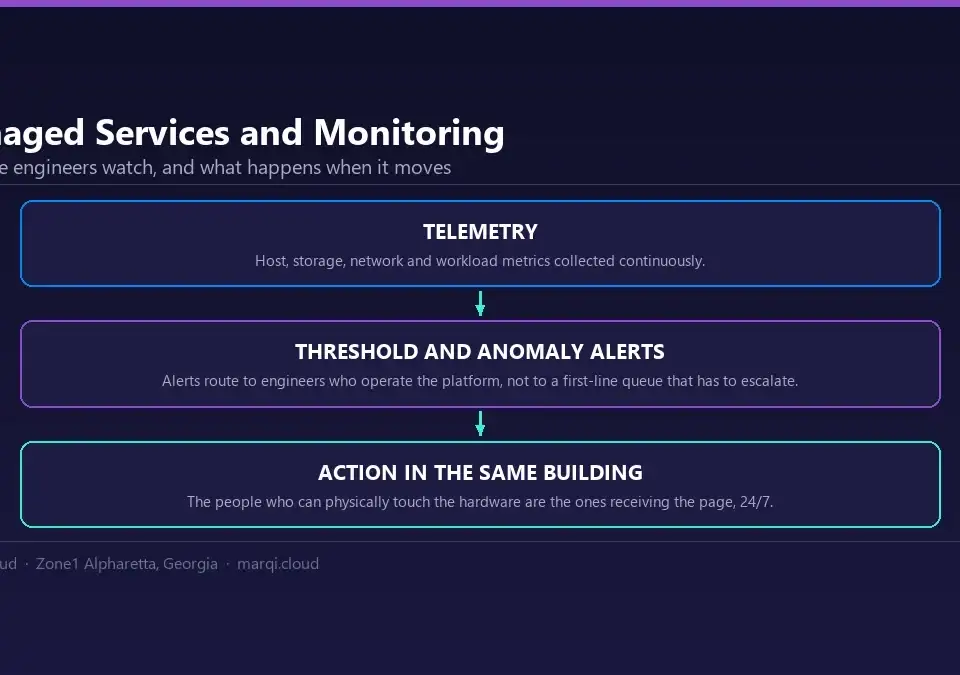
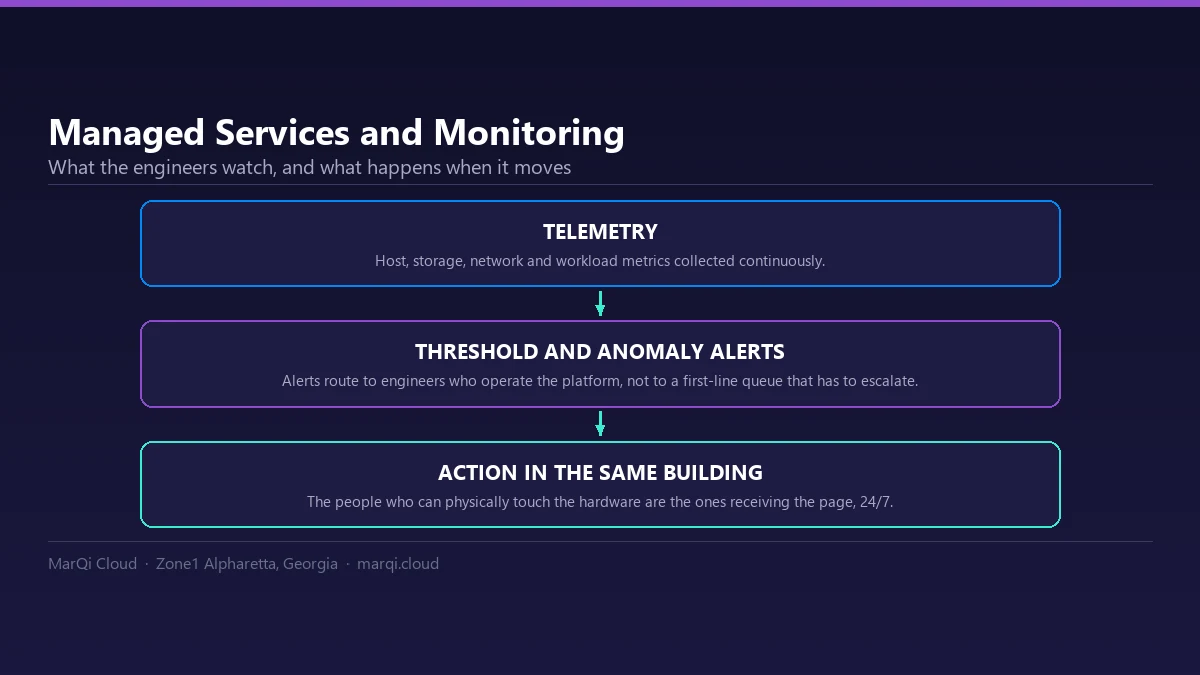
Once your hybrid IT strategy is in place, it’s important to continuously monitor performance. Use analytics tools to assess the efficiency of your infrastructure and make adjustments as needed to optimize performance.
8. Train Your Team
Your team must be equipped with the knowledge and skills to manage a hybrid IT environment. Provide training and resources to ensure they understand how to operate and maintain both on-premises and cloud systems effectively.
Leveraging MarQi Cloud for Your Hybrid IT Strategy
MarQi Cloud is well-positioned to support your hybrid IT strategy with its enterprise-grade cloud infrastructure. Here are some key features that make MarQi Cloud an ideal partner:
1. Private and Secure Hosting Environments
With MarQi Cloud, you’ll benefit from secure hosting environments that ensure your data remains protected. Their infrastructure is designed with security in mind, offering peace of mind for businesses handling sensitive information.
2. Scalable Compute and Storage Resources
MarQi Cloud provides scalable compute and storage resources that can grow with your business. This flexibility allows you to adjust your IT resources in response to changing demands without the need for significant upfront investment.
3. Business Continuity and Disaster Recovery Solutions
Ensure your business remains operational during unforeseen events with MarQi Cloud’s business continuity and disaster recovery solutions. These services safeguard your data and applications, providing quick recovery options when needed.
4. US-Based Infrastructure and Support
MarQi Cloud offers US-based infrastructure and support, ensuring reliable performance and immediate assistance whenever you need it. This is particularly beneficial for organizations that require compliance with industry regulations.
5. Flexible Pricing Models
With MarQi Cloud’s flexible pricing models, you can select the payment structure that best fits your budget and financial strategy. This adaptability makes it easier to manage costs associated with your hybrid IT strategy.
Conclusion
Building a hybrid IT strategy that grows with your business requires careful planning and execution. By assessing your current IT environment, defining your business goals, and leveraging the capabilities of MarQi Cloud, you can create a robust hybrid IT architecture that meets your evolving needs. Embrace the flexibility, scalability, and security that hybrid IT offers, and position your organization for future success.
FAQ
1. What is hybrid IT?
Hybrid IT is an IT architecture that combines on-premises infrastructure with cloud resources, allowing businesses to optimize their operations.
2. What are the benefits of adopting a hybrid IT strategy?
Benefits include flexibility, scalability, cost efficiency, and improved agility in responding to market demands.
3. How do I determine which workloads to migrate to the cloud?
Evaluate the performance, security, and compliance requirements of your applications to identify suitable workloads for migration.
4. What security measures should I implement in a hybrid IT environment?
Implement encryption, access controls, and regular security audits to protect data and applications across both environments.
5. How can I ensure data governance in a hybrid IT strategy?
Develop clear data governance policies that dictate how data is handled, stored, and protected across your hybrid environment.
6. What support does MarQi Cloud offer for hybrid IT strategies?
MarQi Cloud provides enterprise-grade infrastructure, secure hosting, scalable resources, and US-based support.
7. How can I monitor the performance of my hybrid IT environment?
Use analytics tools to continuously assess the efficiency of your infrastructure and make necessary adjustments.
8. What training should my team receive for managing hybrid IT?
Provide training on operating and maintaining both on-premises and cloud systems effectively.