How White-Glove Managed Services Transform the Enterprise Cloud Experience
July 10, 2026
The Complete Guide to Cloud Compute Resource Planning for Business Workloads
July 10, 2026
How to Build a Multi-Tier Application Architecture on Enterprise Cloud Infrastructure
In today’s digital landscape, the demand for scalable, reliable, and efficient applications has never been higher. As organizations strive to meet the needs of their users, building a multi-tier application architecture on enterprise cloud infrastructure has emerged as a best practice. This approach not only enhances application performance but also provides the flexibility required to adapt to changing business demands. In this comprehensive guide, we will explore how to effectively design and implement a multi-tier architecture on enterprise cloud infrastructure, with a focus on leveraging the capabilities offered by MarQi Cloud.
Understanding Multi-Tier Architecture
Multi-tier architecture, also known as n-tier architecture, is a software architecture pattern that separates an application into distinct layers or tiers. Each tier has its own responsibility, which allows for better organization, scalability, and maintainability. The most common tiers in a multi-tier architecture include:
- Presentation Tier: This is the user interface layer where users interact with the application.
- Application Tier: Also known as the business logic layer, this tier processes user requests, performs computations, and communicates with the data tier.
- Data Tier: This layer manages data storage and retrieval, typically involving a database or data storage solution.
By decoupling these layers, organizations can independently scale, update, and manage each component without impacting the overall application.
Benefits of Multi-Tier Architecture
Implementing a multi-tier application architecture offers several advantages:
- Scalability: As user demand increases, individual tiers can be scaled horizontally or vertically without affecting other layers.
- Flexibility: Changes can be made to one tier without requiring modifications to others, allowing for quicker iterations and updates.
- Improved Security: By isolating different layers, sensitive data can be kept secure within the data tier, while the presentation tier can be exposed to the public.
- Enhanced Performance: Load balancing can be applied to distribute requests across multiple application servers, improving response times.
Designing Your Multi-Tier Architecture
Designing a robust multi-tier architecture involves several key steps:
Step 1: Define Your Requirements
Before diving into the architecture design, it’s crucial to outline your application’s requirements. Consider factors such as:
- User load and performance expectations
- Data storage needs
- Security and compliance requirements
- Integration with existing systems
Step 2: Choose Your Technology Stack
Your choice of technology stack will significantly impact the performance and maintainability of your application. Consider using:
- Frontend Technologies: Frameworks like React, Angular, or Vue.js for building responsive user interfaces.
- Backend Technologies: Languages such as Node.js, Python, or Java for handling business logic.
- Database Solutions: SQL databases like PostgreSQL or NoSQL options like MongoDB, depending on your data structure needs.
Step 3: Define Communication Protocols
Establishing clear communication protocols between tiers is essential for a seamless user experience. Common options include:
- RESTful APIs for web services
- GraphQL for flexible data queries
- Message queues like RabbitMQ or Kafka for asynchronous communication
Step 4: Plan for Deployment
Deployment planning is critical to ensure a smooth transition from development to production. Consider using containerization technologies like Docker to package your application and orchestrate deployments with Kubernetes. This approach enhances scalability and simplifies the management of multi-tier applications.
Step 5: Implement Security Measures
Security should be a top priority when designing your architecture. Implement measures such as:
- Data encryption at rest and in transit
- API authentication and authorization
- Regular security audits and vulnerability assessments
Choosing the Right Cloud Infrastructure
When building a multi-tier application architecture, selecting the right cloud infrastructure is paramount. MarQi Cloud offers enterprise-grade cloud infrastructure tailored to meet the needs of mid-size and enterprise-level organizations. Here’s why MarQi Cloud is an excellent choice:
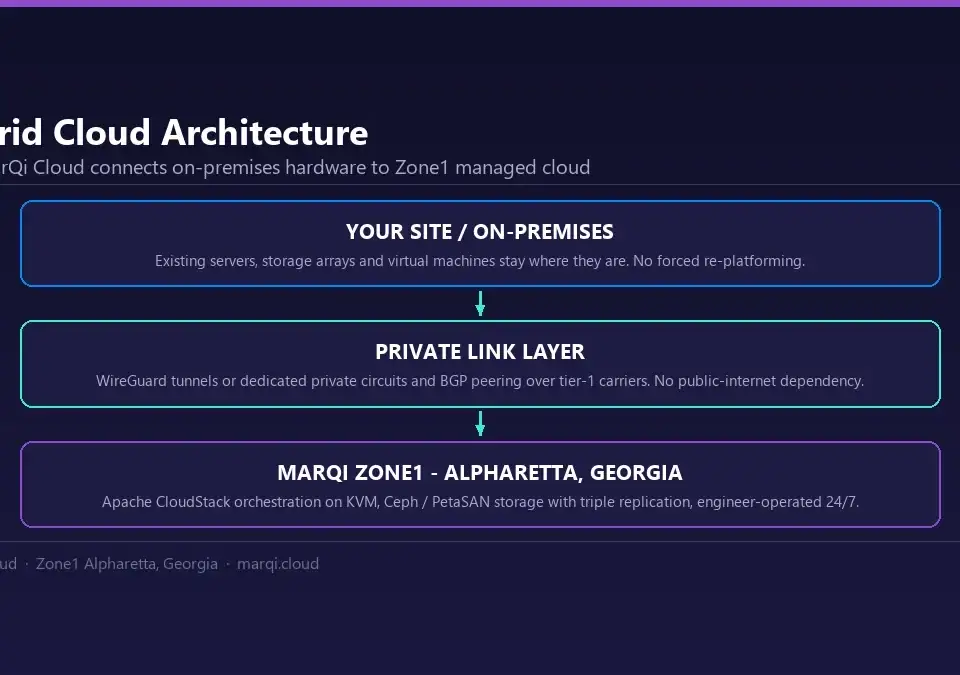
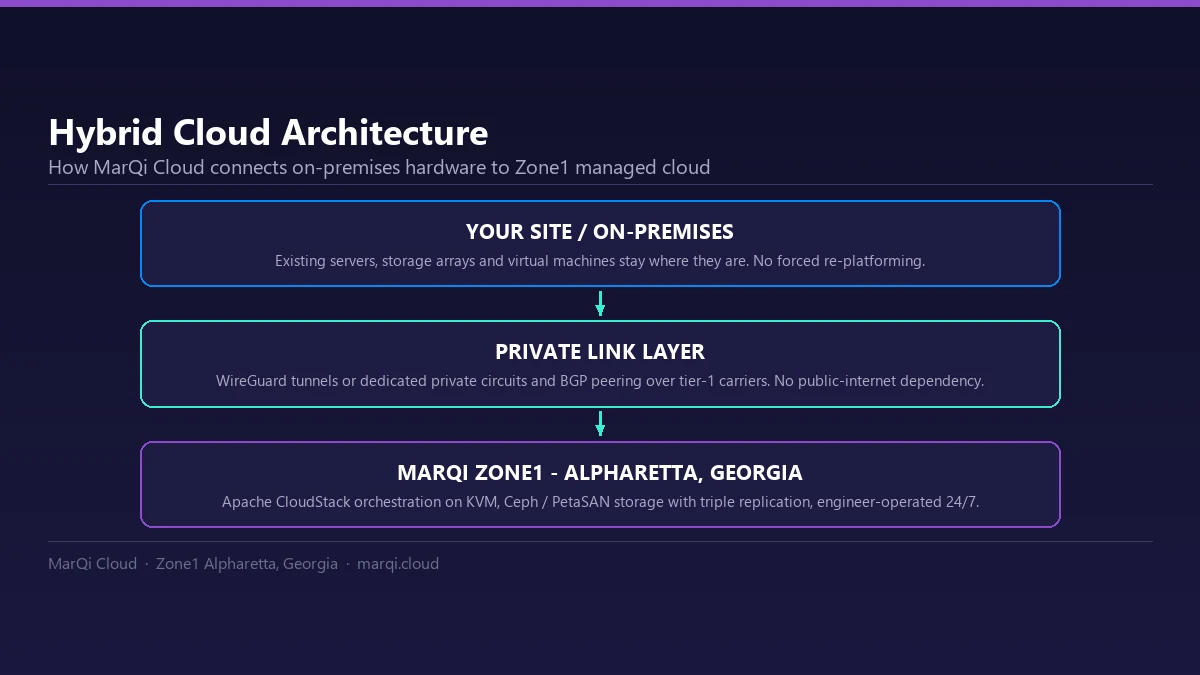
- Hybrid Cloud Deployment: MarQi Cloud provides flexible hybrid cloud deployment models that allow you to integrate on-premises resources with cloud-based solutions.
- Scalable Resources: With MarQi Cloud’s scalable compute and storage resources, you can easily adjust your infrastructure based on application demand.
- Secure Hosting Environments: Our private cloud solutions ensure that your data remains secure and compliant with industry regulations.
- Business Continuity Solutions: MarQi Cloud offers disaster recovery solutions that protect your application and data from unexpected failures.
To learn more about how MarQi Cloud can support your multi-tier application architecture, explore our Hybrid Cloud Solutions.
Implementing Your Multi-Tier Application
With your architecture designed and cloud infrastructure selected, it’s time to implement your multi-tier application. Here’s a step-by-step guide:
Step 1: Set Up Your Cloud Environment
Begin by provisioning your cloud resources on MarQi Cloud. Create virtual machines or containers for each tier of your application, ensuring they are appropriately sized based on your requirements.
Step 2: Deploy the Presentation Tier
Deploy the frontend application to your designated presentation tier. Ensure that it communicates effectively with the application tier through APIs. Use a content delivery network (CDN) to enhance performance and reduce latency for end users.
Step 3: Deploy the Application Tier
Next, deploy your backend application to the application tier. Configure load balancers to distribute traffic evenly across multiple application servers, ensuring high availability and reliability.
Step 4: Set Up the Data Tier
Finally, deploy your database or data storage solution. Ensure that it is optimized for performance and scalability. Configure backup and disaster recovery solutions to protect your data.
Step 5: Monitor and Optimize
After deployment, continuously monitor the performance of your multi-tier application. Use tools like application performance monitoring (APM) to identify bottlenecks and optimize resource usage.
Best Practices for Maintaining Your Architecture
To ensure the long-term success of your multi-tier application architecture, consider the following best practices:
- Regular Updates: Keep your technology stack updated to leverage new features and security enhancements.
- Automated Testing: Implement automated testing to detect issues early in the development cycle.
- Documentation: Maintain comprehensive documentation for your architecture, including deployment processes and configurations.
- Performance Reviews: Conduct regular performance reviews to identify areas for improvement and ensure optimal resource usage.
Frequently Asked Questions
1. What is a multi-tier application architecture?
A multi-tier application architecture is a software design pattern that separates an application into distinct layers or tiers, each with its own responsibility, such as presentation, application logic, and data storage.
2. What are the benefits of using a multi-tier architecture?
Benefits include improved scalability, flexibility, enhanced security, and better performance due to the decoupling of application components.
3. How do I choose the right cloud infrastructure for my application?
Consider factors such as scalability, security, compliance, and the specific needs of your application when choosing cloud infrastructure. MarQi Cloud offers tailored solutions for enterprise needs.
4. What technologies are commonly used in multi-tier applications?
Common technologies include frontend frameworks like React and Angular, backend languages like Node.js and Java, and database solutions like PostgreSQL and MongoDB.
5. How can I ensure the security of my multi-tier application?
Implement measures such as data encryption, API authentication, and regular security audits to protect your application from vulnerabilities.
6. What is the role of load balancers in multi-tier architecture?
Load balancers distribute incoming traffic evenly across multiple servers in the application tier, ensuring high availability and optimized performance.
7. How do I monitor the performance of my multi-tier application?
Use application performance monitoring tools to track metrics such as response times, error rates, and resource usage to identify and resolve performance issues.
8. What are some common pitfalls to avoid when building a multi-tier architecture?
Avoid pitfalls such as inadequate planning, neglecting security measures, and failing to document your architecture effectively.