MarQi Cloud Uptime Guarantee: What It Means and How It Protects Your Business
June 27, 2026
MarQi Cloud vs. Google Cloud: Which Wins for AI/ML Workloads in 2026?
June 27, 2026
How to Build a Scalable AI Pipeline on MarQi Cloud GPU Infrastructure
In today’s digital landscape, artificial intelligence (AI) plays a crucial role in transforming industries and enhancing operational efficiencies. Organizations are increasingly looking to build scalable AI pipelines to handle massive datasets and complex computations. MarQi Cloud offers enterprise-grade cloud infrastructure that provides the necessary resources for developing robust AI applications. In this article, we will explore how to build a scalable AI pipeline using MarQi Cloud’s GPU infrastructure.
Understanding AI Pipelines
Before diving into the construction of a scalable AI pipeline, it is essential to understand what an AI pipeline entails. An AI pipeline is a series of processes that enable the development, training, and deployment of machine learning models. The pipeline typically includes data collection, data preprocessing, model training, model evaluation, and model deployment.
Key Components of an AI Pipeline
- Data Collection: Gathering data from various sources is the first step in building an AI pipeline. This data can come from databases, APIs, or external datasets.
- Data Preprocessing: Raw data often requires cleaning and transformation to make it suitable for analysis. This step includes handling missing values, normalizing data, and feature extraction.
- Model Training: This is where the actual machine learning takes place. The model is trained using a labeled dataset, allowing it to learn patterns and make predictions.
- Model Evaluation: After training, the model’s performance is evaluated using metrics such as accuracy, precision, and recall to ensure it meets business needs.
- Model Deployment: The final step is deploying the trained model into a production environment, where it can provide real-time predictions.
Why Choose MarQi Cloud for Your AI Pipeline?
MarQi Cloud stands out as an ideal platform for building scalable AI pipelines due to several key features:
1. Enterprise-Grade Cloud Infrastructure
MarQi Cloud provides a robust infrastructure that supports high-performance computing, ensuring that AI workloads run smoothly and efficiently. The enterprise-grade architecture is designed to handle the complexities of AI applications.
2. Hybrid Cloud Deployment Models
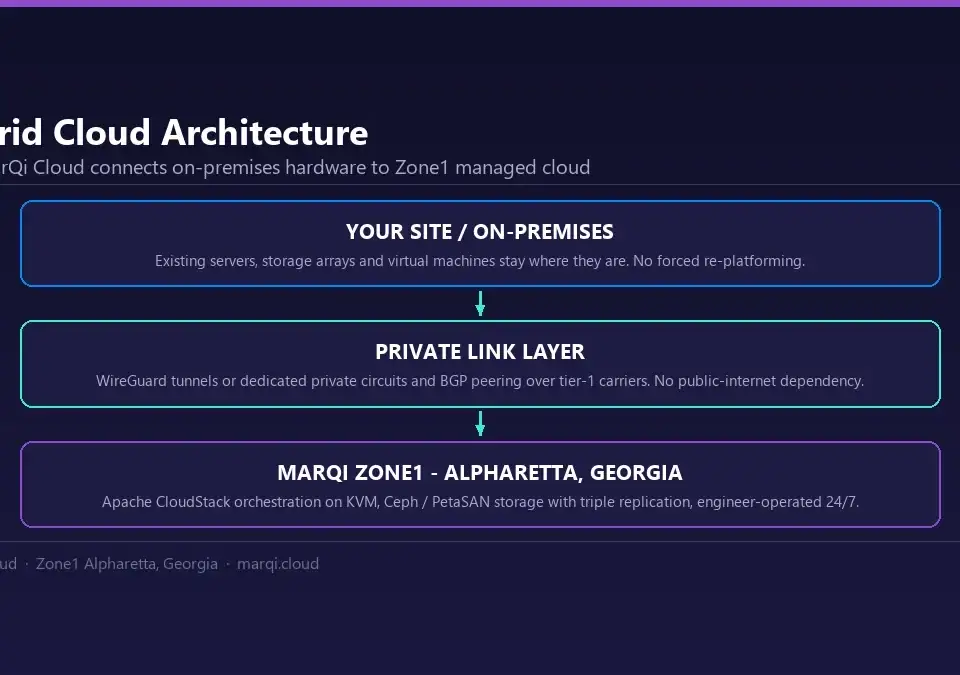
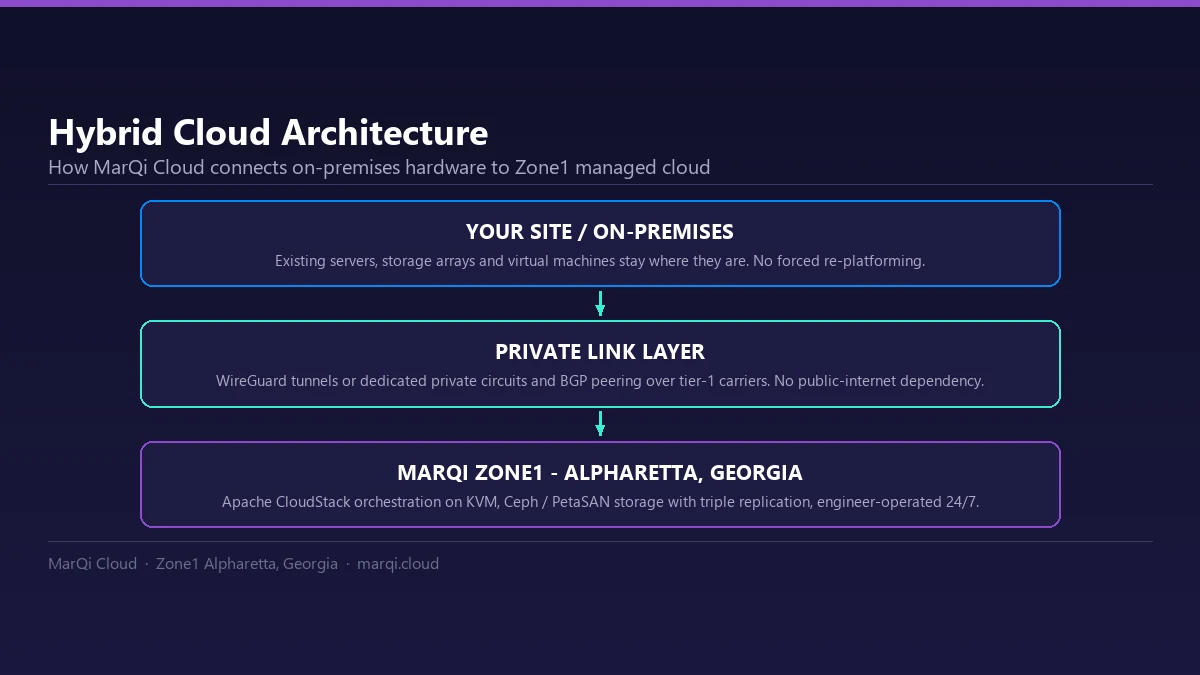
With flexible hybrid cloud deployment models, businesses can choose to run their AI pipelines on-premise, in the cloud, or a combination of both. This flexibility allows organizations to optimize their resources and costs effectively.
3. Private and Secure Hosting Environments
Data security is paramount when dealing with sensitive information. MarQi Cloud offers private and secure hosting environments, ensuring that your data is protected from unauthorized access.
4. Scalable Compute and Storage Resources
As AI projects grow, so do the demands for computational power and storage. MarQi Cloud enables seamless scaling of resources, allowing you to adjust according to your project’s needs.
5. Business Continuity and Disaster Recovery Solutions
MarQi Cloud provides robust business continuity and disaster recovery solutions to ensure that your AI pipeline remains operational even in the face of disruptions.
6. Performance-Driven Infrastructure Design
The performance-driven design of MarQi Cloud’s infrastructure ensures that AI models train faster and deliver results quicker, enhancing overall productivity.
7. US-Based Infrastructure and Support
Having US-based infrastructure means lower latency and better support responsiveness, which is critical for time-sensitive AI applications.
8. Flexible Pricing Models
MarQi Cloud offers flexible pricing models that cater to different business sizes and budgets, making it easier for companies to invest in AI without breaking the bank.
Steps to Build a Scalable AI Pipeline on MarQi Cloud
Now that we understand the benefits of using MarQi Cloud for AI pipelines, let’s outline the steps to build a scalable AI pipeline.
Step 1: Define Your AI Objectives
Before starting the technical aspects, clearly define your AI objectives. What problem are you trying to solve? What data do you need? Understanding your goals will guide the entire pipeline building process.
Step 2: Set Up Your MarQi Cloud Account
To begin, sign up for a MarQi Cloud account. Choose a plan that fits your needs, considering factors such as expected workload, data size, and budget. Once you have access, you can start provisioning resources.
Step 3: Provision GPU Resources
MarQi Cloud offers powerful GPU instances that are essential for training AI models efficiently. Provision the necessary GPU resources based on your model’s requirements. Ensure that you choose the right instance type to match your workload.
Step 4: Data Ingestion
Ingest your data into the MarQi Cloud environment. Use data collection tools and APIs to gather data from various sources. Depending on your data’s size, you may opt for batch ingestion or real-time streaming.
Step 5: Data Preprocessing
Once your data is in the cloud, perform data preprocessing. This step may include cleaning the data, transforming it into a suitable format, and performing exploratory data analysis (EDA) to understand the patterns within your data.
Step 6: Model Selection and Training
Choose the appropriate machine learning model for your task. Utilize libraries such as TensorFlow or PyTorch to build and train your model on the GPU resources. Monitor the training process to ensure the model learns effectively.
Step 7: Model Evaluation and Hyperparameter Tuning
After training, evaluate the model’s performance using a separate validation dataset. Adjust hyperparameters to optimize the model further. This iterative process is crucial for achieving the best results.
Step 8: Deployment
Once satisfied with the model’s performance, deploy it into a production environment using MarQi Cloud’s deployment tools. Ensure that you set up monitoring to track the model’s performance in real-time.
Step 9: Continuous Monitoring and Improvement
After deployment, continuously monitor the model’s performance. Gather feedback and retrain the model as needed to adapt to new data or changing conditions.
Step 10: Scale as Needed
As your AI project grows, leverage MarQi Cloud’s scalable resources to expand your pipeline. Adjust compute and storage resources dynamically to meet the increasing demands of your AI workloads.
Best Practices for Building AI Pipelines
To ensure the success of your AI pipeline, consider the following best practices:
- Maintain a clear documentation process to track changes and updates.
- Implement version control for your models and datasets.
- Utilize automated testing to ensure the reliability of your models.
- Encourage collaboration among team members to foster innovation.
- Stay informed about the latest trends and technologies in AI.
Conclusion
Building a scalable AI pipeline on MarQi Cloud’s GPU infrastructure is a strategic move for organizations looking to enhance their AI capabilities. With its enterprise-grade features, flexible deployment options, and robust support, MarQi Cloud provides the perfect environment for developing, training, and deploying AI models. By following the outlined steps and adhering to best practices, you can create a pipeline that not only meets your current needs but also scales with your organization’s growth.
FAQs
1. What is an AI pipeline?
An AI pipeline is a series of processes that facilitate the development, training, and deployment of machine learning models.
2. Why should I use MarQi Cloud for my AI projects?
MarQi Cloud offers enterprise-grade infrastructure, hybrid cloud deployment, and scalable resources tailored for AI applications.
3. How do I start on MarQi Cloud?
Sign up for an account, choose a suitable plan, and provision the required GPU resources to begin building your AI pipeline.
4. What tools can I use for model training?
You can use popular libraries such as TensorFlow and PyTorch for training your AI models on MarQi Cloud.
5. How do I ensure data security on MarQi Cloud?
MarQi Cloud provides private and secure hosting environments to protect your data from unauthorized access.
6. Can I scale my resources as needed?
Yes, MarQi Cloud allows you to dynamically scale compute and storage resources based on your project’s requirements.
7. How do I monitor my AI model’s performance?
Implement monitoring tools provided by MarQi Cloud to track your model’s performance in real-time.
8. What are the best practices for building AI pipelines?
Maintain documentation, implement version control, utilize automated testing, encourage collaboration, and stay updated on AI trends.
9. Can I deploy my model using MarQi Cloud?
Yes, MarQi Cloud provides deployment tools that allow you to deploy your trained models into a production environment.
10. How can I improve my AI model over time?
Continuously monitor its performance, gather feedback, and retrain the model as needed to adapt to new data or conditions.