How to Build a Scalable AI Pipeline on MarQi Cloud GPU Infrastructure
June 27, 2026
MarQi Cloud vs. Azure: A Head-to-Head Infrastructure Comparison
June 28, 2026
MarQi Cloud vs. Google Cloud: Which Wins for AI/ML Workloads in 2026?
The cloud computing landscape is evolving rapidly, especially with the growing demand for artificial intelligence (AI) and machine learning (ML) workloads. As we approach 2026, two players have emerged prominently in the market: MarQi Cloud and Google Cloud. This article delves deep into the comparative analysis of these two platforms, focusing on their capabilities to handle AI/ML workloads, infrastructure, features, pricing, and support.
Understanding AI/ML Workloads
Before we dive into the comparison, it’s essential to understand what AI/ML workloads entail. These workloads require significant computational power, efficient data processing, and scalable storage solutions. Companies leveraging AI and ML capabilities expect to train models on huge datasets, perform real-time data analysis, and develop applications that can learn and adapt over time.
MarQi Cloud: An Overview
MarQi Cloud is a rising player in the cloud infrastructure space, focusing on providing enterprise-grade solutions tailored for businesses looking for robust AI/ML capabilities. With a focus on hybrid cloud deployment models, MarQi offers flexible and scalable cloud solutions designed to meet the unique needs of organizations.
Key Features of MarQi Cloud
- Enterprise-Grade Infrastructure: MarQi Cloud offers high-performance computing resources specifically optimized for AI/ML tasks.
- Hybrid Cloud Deployment: Businesses can seamlessly integrate on-premises resources with cloud capabilities, allowing for greater flexibility.
- Private and Secure Hosting: Security is paramount, especially for sensitive data. MarQi Cloud provides private hosting environments that ensure data protection.
- Scalable Resources: Organizations can scale compute and storage resources easily based on their workload demands.
- Business Continuity Solutions: MarQi offers disaster recovery solutions that ensure uninterrupted service.
- US-Based Infrastructure: With a focus on US-based data centers, MarQi Cloud provides local support and compliance with regulations.
- Flexible Pricing Models: Businesses can choose from various pricing options to suit their budget and usage requirements.
Google Cloud: An Overview
Google Cloud has been a dominant player in the cloud market, particularly known for its powerful AI and ML capabilities. With a suite of tools and services tailored for data scientists and developers, Google Cloud aims to facilitate the development and deployment of AI applications.
Key Features of Google Cloud
- Machine Learning Engine: Google Cloud provides a robust set of AI/ML tools, including TensorFlow and AutoML, which streamline model development.
- BigQuery: This fully-managed data warehouse allows for rapid SQL querying of large datasets, critical for AI/ML workloads.
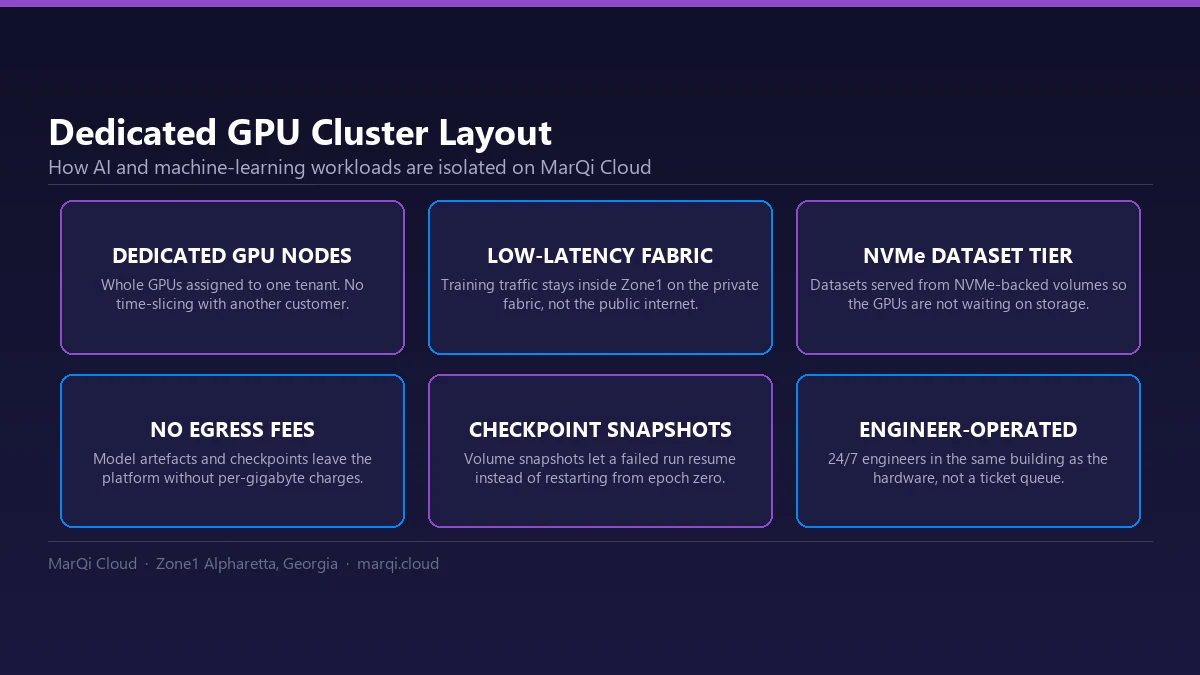
- AI Optimization: Google Cloud’s infrastructure is optimized for AI workloads, providing GPU and TPU compute resources.
- Comprehensive Data Services: From storage to analytics, Google Cloud offers a wide range of data services that integrate seamlessly with its AI tools.
- Global Network: Google Cloud leverages its global network infrastructure to provide low-latency access to data and applications.
- AI Ethics and Governance: Google places a strong emphasis on responsible AI and provides tools for ethical AI development.
Comparative Analysis
Performance and Scalability
Performance is a critical factor when handling AI/ML workloads. Both MarQi Cloud and Google Cloud provide scalable solutions, but their approaches differ. MarQi Cloud focuses on hybrid environments, allowing businesses to scale resources based on specific needs, which is advantageous for organizations with fluctuating workloads. In contrast, Google Cloud offers a plethora of powerful compute options, including GPUs and TPUs, which are specifically designed for heavy data processing and model training.
Security and Compliance
Security is paramount in AI/ML workloads, especially when sensitive data is involved. MarQi Cloud’s private hosting environments ensure that business data remains secure, while its US-based infrastructure provides a layer of compliance with local regulations. Google Cloud also offers robust security measures, including encryption and identity management tools, but its global nature can introduce complexities depending on data residency requirements.
Cost Considerations
Pricing models play a significant role in the decision-making process for businesses. MarQi Cloud’s flexible pricing models allow organizations to choose options that best fit their budget and usage patterns. In contrast, Google Cloud’s pricing can sometimes be complex due to its vast array of services and options, which may lead to unexpected costs if not managed correctly.
Support and Community
Support is crucial when adopting any cloud platform. MarQi Cloud prides itself on US-based infrastructure and support, ensuring that businesses have access to timely assistance. Google Cloud, while also providing extensive support, may not offer the same level of personalized service, especially for smaller businesses.
Future Trends in AI/ML Workloads
As we look towards 2026, several trends are likely to shape the landscape of AI/ML workloads:
- Increased Demand for Edge Computing: As IoT devices proliferate, the need for processing data at the edge will grow, influencing cloud architecture.
- Focus on Responsible AI: Ethical considerations in AI/ML will drive the development of frameworks and tools for responsible AI practices.
- Greater Emphasis on Interoperability: Businesses will seek solutions that integrate seamlessly across multiple platforms, making hybrid models more appealing.
- Advancements in Natural Language Processing: As AI continues to evolve, NLP capabilities will become more sophisticated, impacting various industries.
Conclusion
Choosing between MarQi Cloud and Google Cloud for AI/ML workloads in 2026 will depend on various factors, including specific business needs, budget, and performance requirements. While Google Cloud may have the upper hand in terms of established AI tools and global infrastructure, MarQi Cloud offers a compelling value proposition with its hybrid deployment models, security, and personalized support. Ultimately, businesses should assess both platforms in the context of their unique requirements to make an informed decision.
FAQs
1. What is MarQi Cloud?
MarQi Cloud is a cloud infrastructure provider that focuses on enterprise-grade solutions for businesses, offering hybrid cloud deployment models and scalable resources.
2. How does Google Cloud support AI/ML workloads?
Google Cloud offers a suite of tools including TensorFlow, BigQuery, and optimized compute resources like GPUs and TPUs to support AI/ML workloads.
3. What are the key benefits of using MarQi Cloud?
Key benefits include private hosting environments, flexible pricing, US-based support, and scalable resources tailored for AI/ML workloads.
4. Is security better with MarQi Cloud or Google Cloud?
Both platforms offer robust security measures, but MarQi Cloud focuses on private hosting for enhanced data protection, particularly for sensitive information.
5. Can I integrate MarQi Cloud with my existing on-premises infrastructure?
Yes, MarQi Cloud’s hybrid deployment model allows for seamless integration with on-premises resources.
6. What pricing models does MarQi Cloud offer?
MarQi Cloud offers flexible pricing models that cater to different business needs and usage patterns.
7. How do I choose between MarQi Cloud and Google Cloud?
Consider your specific business requirements, budget, performance needs, and the level of support you desire when choosing between the two platforms.
8. What trends should I watch for in AI/ML?
Watch for increased demand for edge computing, a focus on responsible AI, and advancements in natural language processing.