The IT Leader’s Ultimate Guide to Multi-Cloud Data Management
September 16, 2026
Why Data Residency and Sovereignty Requirements Drive Cloud Provider Selection
September 16, 2026
How Real-Time Data Streaming Architecture Works on Cloud Infrastructure
In an increasingly data-driven world, organizations are leveraging real-time data streaming architecture to gain insights, enhance decision-making, and improve operational efficiency. As businesses evolve, the demand for real-time analytics has surged, making understanding the architecture behind data streaming on cloud infrastructure crucial. This article will delve into how real-time data streaming architecture works, its components, benefits, and best practices for implementation. By the end of this guide, you will have a comprehensive understanding of the mechanisms that enable effective real-time data processing in the cloud.
1. Understanding Real-Time Data Streaming
Real-time data streaming refers to the continuous flow of data generated by various sources, processed, and analyzed in real-time. This architecture allows organizations to capture, process, and act on data as it is generated, enabling immediate insights and actions. In contrast to batch processing, which involves collecting data over a period and processing it later, real-time data streaming focuses on delivering information instantaneously.
According to a study by Gartner, by 2022, 75% of organizations will have migrated to cloud infrastructure, making it essential to understand how real-time data streaming operates within this environment.
2. Key Components of Real-Time Data Streaming Architecture
Real-time data streaming architecture consists of several critical components that work together to enable efficient data processing. These components include:
- Data Sources: Devices or applications that generate data, such as IoT devices, user interactions, or social media feeds.
- Data Ingestion: The process of collecting and transporting data from various sources to the processing layer. Tools like Apache Kafka and Amazon Kinesis are commonly used for this purpose.
- Stream Processing Engines: These engines analyze and process the incoming data streams. Examples include Apache Flink, Apache Spark Streaming, and AWS Lambda.
- Data Storage: Storage solutions such as cloud databases and data lakes that hold the processed data for further analysis. Options include Amazon S3, Google Cloud Storage, and Azure Blob Storage.
- Data Visualization and Analytics Tools: Tools that provide insights through dashboards and reports. Examples include Tableau, Power BI, and Google Data Studio.
3. How Real-Time Data Streaming Works on Cloud Infrastructure
Real-time data streaming on cloud infrastructure operates through a series of steps that facilitate the continuous flow of data from source to insight:
- Data Generation: Data is generated from various sources, including applications, sensors, and logs.
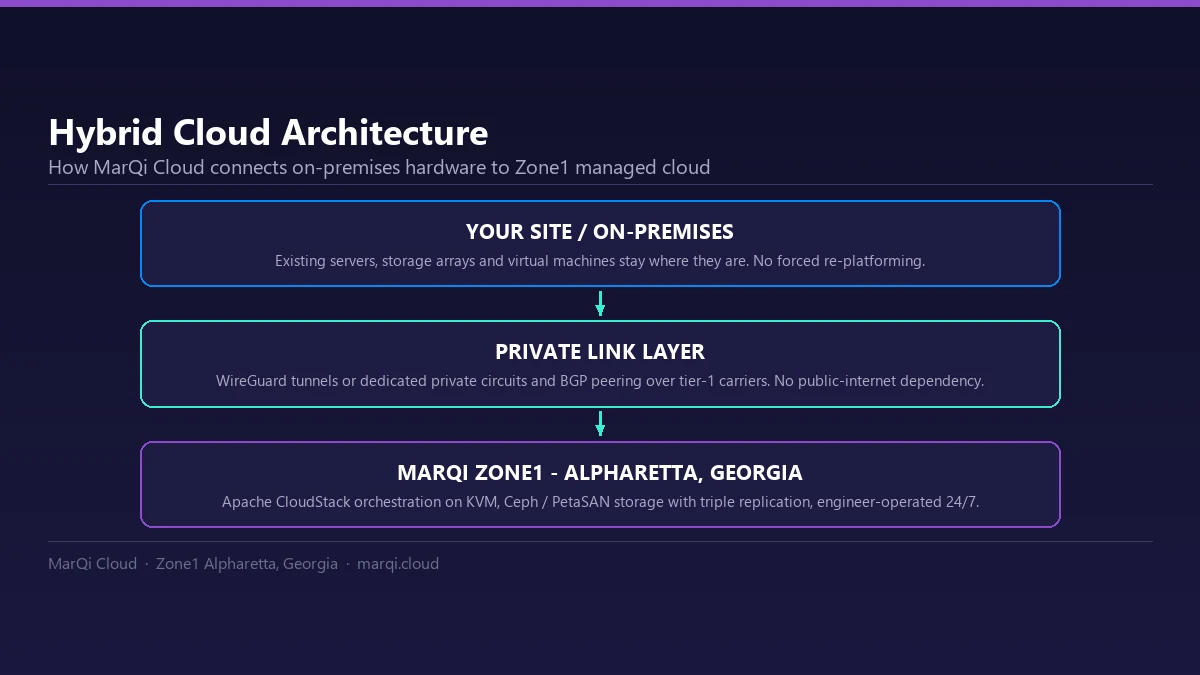
- Data Ingestion: Data is ingested using a data streaming tool, which captures the data in real-time and sends it to the processing layer. For instance, using MarQi Cloud’s hybrid cloud solutions can enhance the ingestion process.
- Stream Processing: The data is processed in real-time by stream processing engines, which apply transformations, filtering, and aggregations.
- Data Storage: Processed data is stored in cloud storage solutions, where it can be accessed for future analysis and reporting.
- Data Visualization: Finally, data visualization tools display the insights derived from the processed data, enabling organizations to make informed decisions.
4. Benefits of Real-Time Data Streaming in Cloud
Implementing real-time data streaming on cloud infrastructure offers numerous advantages:
- Immediate Insights: Organizations can make decisions based on the latest data, improving responsiveness to market changes and customer needs.
- Scalability: Cloud infrastructure allows businesses to scale their data processing capabilities as needed, accommodating fluctuating data volumes.
- Cost-Effectiveness: By leveraging cloud resources, companies can reduce operational costs associated with maintaining on-premises infrastructure.
- Enhanced Collaboration: Real-time data streaming fosters collaboration among teams, as everyone has access to the same up-to-date information.
- Improved Customer Experience: Organizations can provide personalized services and respond to customer inquiries in real-time, enhancing overall satisfaction.
5. Best Practices for Implementing Real-Time Data Streaming
To successfully implement real-time data streaming architecture on cloud infrastructure, organizations should consider the following best practices:
- Choose the Right Tools: Select data ingestion and processing tools that align with your organizational needs and technical capabilities.
- Ensure Data Quality: Implement data validation and cleansing processes to maintain the integrity of the data being processed.
- Design for Scalability: Architect your data streaming solution to accommodate future growth and increased data volumes.
- Monitor Performance: Continuously monitor the performance of your data streaming architecture to identify bottlenecks and optimize processing times.
- Implement Security Measures: Ensure that data is securely transmitted and stored, adhering to compliance regulations.
6. Real-World Applications of Real-Time Data Streaming
Real-time data streaming architecture is utilized across various industries for a multitude of applications:
- Finance: Financial institutions use real-time data streaming to detect fraudulent transactions and monitor market fluctuations.
- Healthcare: Healthcare providers leverage real-time data to track patient vitals and manage resources effectively.
- E-commerce: Online retailers utilize real-time data to personalize user experiences and manage inventory dynamically.
- Telecommunications: Telecom companies use real-time streaming for network monitoring and optimizing service delivery.
7. Challenges in Real-Time Data Streaming and Solutions
While real-time data streaming offers significant benefits, organizations may encounter challenges such as:
- Data Latency: Delays in data processing can hinder real-time insights. Implementing efficient data pipelines and optimizing processing engines can mitigate this issue.
- Data Security: Protecting sensitive data during transmission and storage is paramount. Utilizing encryption and access controls can enhance security.
- Complexity of Integration: Integrating various data sources and tools can be challenging. Adopting standardized protocols and APIs can simplify integration efforts.
8. Conclusion
Real-time data streaming architecture on cloud infrastructure provides organizations with the tools necessary to harness the power of data in real-time. By understanding its components, benefits, and best practices, businesses can successfully implement a robust streaming solution that enhances decision-making and operational efficiency. As cloud technology continues to evolve, so too will the capabilities of real-time data streaming, making it an essential component of modern data strategies.
9. FAQ
What is real-time data streaming?
Real-time data streaming refers to the continuous flow of data processed and analyzed as it is generated, allowing organizations to gain immediate insights.
How does real-time data streaming work in the cloud?
It works by ingesting data from various sources, processing it through stream processing engines, and storing it in cloud storage for analysis.
What are the benefits of real-time data streaming?
Benefits include immediate insights, scalability, cost-effectiveness, enhanced collaboration, and improved customer experience.
What tools are commonly used for real-time data streaming?
Common tools include Apache Kafka, Amazon Kinesis, Apache Flink, and AWS Lambda.
How can organizations ensure data quality in real-time streaming?
Organizations can implement data validation and cleansing processes to maintain data integrity during streaming.
What industries benefit from real-time data streaming?
Industries such as finance, healthcare, e-commerce, and telecommunications benefit from real-time data streaming applications.
What challenges are associated with real-time data streaming?
Challenges include data latency, security concerns, and the complexity of integrating various data sources.
How can organizations address data latency issues?
Organizations can optimize data pipelines and processing engines to reduce delays and improve real-time insights.
What security measures should be implemented for data streaming?
Security measures include encryption, access controls, and compliance with data protection regulations.
Is real-time data streaming suitable for small businesses?
Yes, real-time data streaming can be beneficial for small businesses looking to improve decision-making and customer engagement.
How does cloud infrastructure support real-time data streaming?
Cloud infrastructure provides scalable resources, cost-effectiveness, and flexibility, enabling efficient real-time data processing.
What are the future trends in real-time data streaming?
Future trends include increased adoption of AI and machine learning, enhanced security measures, and the integration of edge computing.