Why Employee Training Is Essential for Successful Cloud Migration
July 17, 2026
The Ultimate Guide to Migrating Development and Staging Environments Before Production Workloads
July 18, 2026
The Complete Guide to Post-Migration Optimization and Performance Tuning
After migrating to a new cloud infrastructure, the journey doesn’t end; in fact, it’s just the beginning. To truly harness the power of your new environment, post-migration optimization and performance tuning are critical. In this comprehensive guide, we will explore what post-migration optimization entails, why it is essential for your enterprise, and how you can effectively implement these strategies to ensure optimal performance. As an enterprise cloud provider, MarQi Cloud understands the intricacies involved in transitioning to a new infrastructure and the necessity of fine-tuning for peak performance.
What is post-migration optimization?
Post-migration optimization involves fine-tuning your cloud infrastructure to improve performance, efficiency, and cost-effectiveness after moving your workloads to a new environment. This process is crucial because even small inefficiencies can lead to significant performance degradation over time. By optimizing your cloud setup, you can minimize latency, enhance resource utilization, and ultimately improve user experience.
Key Components of Post-Migration Optimization
- Resource Allocation: Ensuring that your cloud resources are appropriately allocated based on workload demands.
- Configuration Management: Regularly reviewing and adjusting configurations to match evolving business needs.
- Scaling Strategies: Implementing auto-scaling to adapt to workload changes dynamically.
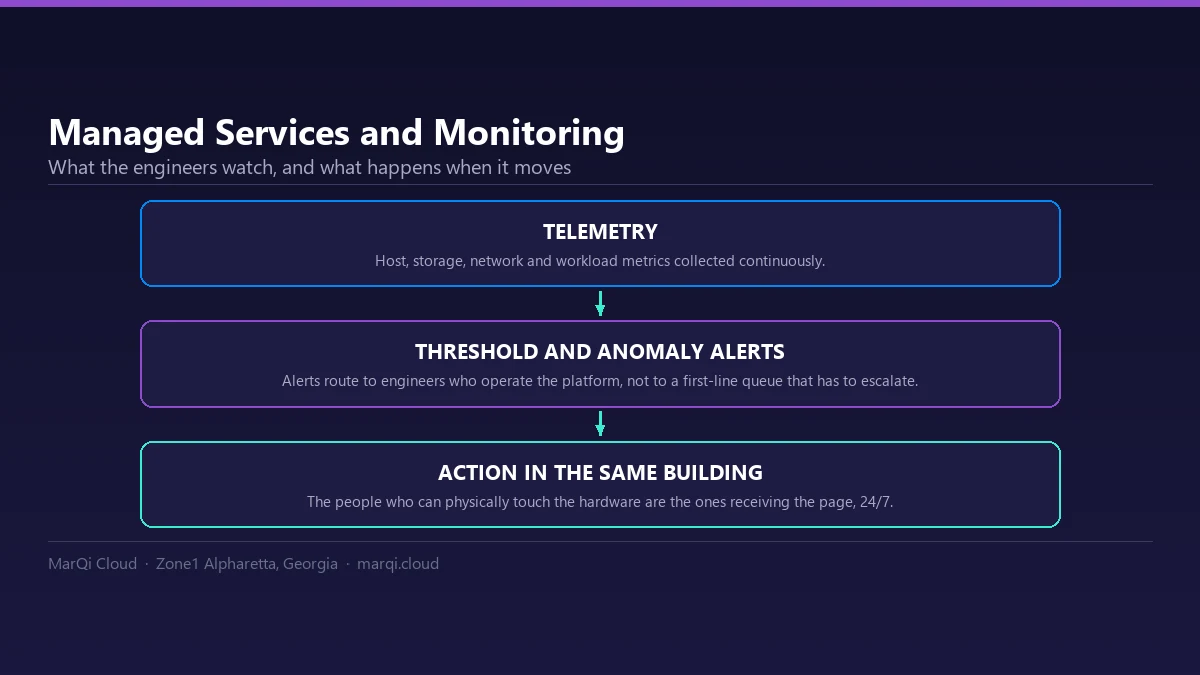
- Monitoring Tools: Utilizing performance monitoring tools to gain insights into your infrastructure’s performance.
Understanding these components will set the foundation for effective post-migration optimization. MarQi Cloud’s enterprise-grade cloud infrastructure provides the flexibility needed for these optimizations, allowing businesses to scale resources seamlessly.
The Significance of Performance Tuning
Performance tuning is a vital aspect of maintaining a healthy cloud environment. It helps mitigate issues like slow response times, application downtime, and resource wastage. Performance tuning after a migration routinely recovers headroom that the lift-and-shift itself left on the table. This not only enhances user satisfaction but also contributes to overall business growth.
Advantages of Performance Tuning
- Enhanced User Experience: Faster load times and improved application responsiveness.
- Cost Savings: Efficient resource utilization leads to lower operational costs.
- Increased Reliability: Fewer errors and downtime, ensuring business continuity.
By investing time and resources into performance tuning, organizations can achieve their operational goals while remaining competitive in an ever-evolving marketplace.
Steps for Effective Post-Migration Optimization
To effectively optimize your cloud environment after migration, follow these actionable steps:
1. Assess Current Performance
Begin by evaluating the current performance of your applications and infrastructure. Utilize monitoring tools such as New Relic or Datadog to gather data on resource utilization, response times, and error rates.
2. Analyze Resource Allocation
Review your current resource allocation to ensure it aligns with your workload requirements. Look for underutilized resources that can be scaled down or eliminated. Conversely, identify workloads that may require additional resources to enhance performance.
3. Implement Auto-Scaling
Leverage auto-scaling features to dynamically adjust resources based on real-time demand. This helps maintain optimal performance while minimizing costs. For example, MarQi Cloud’s hybrid cloud solutions allow businesses to scale resources seamlessly, adapting to fluctuating demands.
4. Optimize Configurations
Regularly review and optimize configurations for your compute, storage, and networking components. Ensure that security settings, load balancers, and firewalls are correctly configured to avoid bottlenecks.
5. Conduct Load Testing
Perform load testing to simulate different traffic patterns and assess how your applications respond under stress. Tools like BlazeMeter can help in conducting these tests effectively.
6. Implement Caching Strategies
Reduce latency and improve response times by implementing caching strategies. Utilize tools like Redis for in-memory caching or explore CDN options to serve static content faster.
7. Monitor Continuously
Establish a culture of continuous monitoring to ensure ongoing optimization. Regularly review performance metrics and adjust strategies as necessary to maintain peak performance.
Best Practices for Performance Tuning
To maximize the effectiveness of your performance tuning efforts, consider the following best practices:
- Prioritize Critical Applications: Focus on tuning the applications that are most critical to your business operations.
- Document Changes: Keep a record of all changes made during the tuning process to facilitate troubleshooting and further optimization.
- Involve Stakeholders: Engage relevant stakeholders, including IT and business units, to ensure alignment with business goals.
- Stay Updated: Keep abreast of the latest cloud technologies and optimization techniques to enhance your strategies continuously.
Monitoring and Evaluating Performance
Effective monitoring and evaluation are crucial for successful post-migration optimization. Utilize a combination of native cloud monitoring tools and third-party solutions to gain comprehensive insights into your infrastructure’s performance. Key metrics to monitor include:
- CPU Utilization: Monitor CPU utilization to ensure resources are effectively used.
- Memory Usage: Keep an eye on memory usage to avoid bottlenecks.
- Disk I/O Performance: Evaluate disk read/write speeds to maintain application responsiveness.
- Network Latency: Measure network latency to ensure fast data transfer and application performance.
By regularly evaluating these metrics, you can identify trends and proactively address potential performance issues.
Common Challenges and How to Overcome Them
Post-migration optimization and performance tuning can present various challenges. Here are some common issues organizations face and strategies to overcome them:
1. Resource Over-Provisioning
Organizations often provision more resources than necessary, leading to increased costs. Conduct regular audits to align resource allocation with actual usage.
2. Lack of Monitoring Tools
Without proper monitoring tools, it’s challenging to identify performance issues. Invest in reliable monitoring solutions to gain visibility into your cloud environment.
3. Inadequate Testing
Failing to conduct thorough load testing can result in unexpected performance issues. Ensure comprehensive testing is part of your optimization strategy.
4. Skill Gaps
Performance tuning requires specialized skills that may be lacking within the team. Consider engaging external consultants or investing in training for your staff.
Conclusion
Post-migration optimization and performance tuning are essential for maximizing the value of your cloud infrastructure. By following the steps outlined in this guide and implementing best practices, organizations can enhance performance, reduce costs, and improve user satisfaction. At MarQi Cloud, we specialize in enterprise-grade cloud solutions tailored to meet the dynamic needs of businesses. Contact us today to learn how we can help you optimize your cloud environment for success.
FAQ
What is post-migration optimization?
Post-migration optimization involves fine-tuning cloud infrastructure after migrating workloads to improve performance, efficiency, and cost-effectiveness.
How do I monitor my cloud performance?
Utilize monitoring tools like New Relic or Datadog to track resource utilization, response times, and error rates in your cloud environment.
What are the benefits of performance tuning?
Performance tuning enhances user experience, reduces operational costs, and increases application reliability.
What metrics should I monitor post-migration?
Key metrics include CPU utilization, memory usage, disk I/O performance, and network latency.
How can I improve application response times?
Implement caching strategies, optimize configurations, and conduct load testing to enhance application response times.
What is auto-scaling?
Auto-scaling allows cloud resources to be dynamically adjusted based on real-time demand, ensuring optimal performance and cost management.
How do I identify underutilized resources?
Regular audits and monitoring tools can help identify underutilized resources that can be scaled down or eliminated.
Why is continuous monitoring important?
Continuous monitoring ensures ongoing optimization and helps proactively address performance issues as they arise.