The Complete Guide to Post-Migration Optimization and Performance Tuning
July 18, 2026
Why Parallel Running During Migration Validates Cloud Performance Before Cutover
July 18, 2026
The Ultimate Guide to Migrating Development and Staging Environments Before Production Workloads
In an era where rapid deployment and continuous integration are crucial for business success, ensuring a seamless migration of development and staging environments before production workloads is paramount. Understanding how to effectively manage this migration can not only enhance application performance but also reduce downtime and prevent costly errors. In this comprehensive guide, we will explore best practices, actionable strategies, and expert insights on migrating development and staging environments, focusing on how MarQi Cloud’s enterprise-grade solutions can support your journey.
Understanding Environment Migration
Environment migration refers to the process of transferring applications and their respective configurations from one environment to another. This can include migrating from a local development setup to a staging environment, and ultimately to a production environment. The goal is to ensure that the application behaves consistently across all environments, minimizing the risk of errors and downtime during the transition to production.
Migration is especially critical for organizations that rely on hybrid cloud solutions, as it allows for greater flexibility and scalability. By leveraging MarQi Cloud’s hybrid cloud infrastructure, businesses can achieve seamless integration between on-premises systems and cloud environments, ensuring a smooth migration process.
Key Considerations for Migration
Before initiating the migration process, several key considerations should be taken into account:
- Environment Configuration: Ensure that the staging and production environments mirror the development setup as closely as possible. This includes configurations, software versions, and dependencies.
- Data Integrity: Assess how data will be handled during migration. Will you need to migrate databases? If so, ensure data integrity and consistency through proper backup and migration strategies.
- Testing Procedures: Establish a comprehensive testing plan to validate the migrated environment. This should cover functional, performance, and security testing.
- Rollback Strategy: Prepare a rollback plan in case the migration encounters issues. This ensures that you can revert to a previous stable state without significant downtime.
- Team Collaboration: Foster collaboration between development, operations, and QA teams to ensure everyone is aligned on migration objectives and timelines.
Step-by-Step Migration Guide
To successfully migrate your development and staging environments, follow these actionable steps:
Step 1: Assess Current Environments
Begin by documenting the current state of your development environment. Identify all components, including:
- Applications and services
- Database configurations
- Networking settings
- Security protocols
This assessment will serve as a baseline for your migration plan.
Step 2: Plan the Migration
Develop a detailed migration plan that outlines:
- Timeline for each phase of the migration
- Resources required (human and technical)
- Risk assessment and mitigation strategies
Utilize MarQi Cloud’s managed services to assist in planning and executing the migration process efficiently.
Step 3: Prepare the Staging Environment
Set up the staging environment to match the production setup as closely as possible. This includes:
- Provisioning resources (compute, storage, and networking)
- Configuring software and settings
- Implementing security measures
Refer to the infrastructure solutions offered by MarQi Cloud for optimal configurations.
Step 4: Data Migration
Transfer data from the development environment to the staging environment. Consider using tools and services that automate this process, ensuring:
- Data consistency
- Minimal downtime
- Robust error handling
For more information on data migration strategies, explore our article on disaster recovery solutions.
Step 5: Testing the Staging Environment
Once the staging environment is prepared and data is migrated, conduct thorough testing:
- Functional Testing: Verify that all features work as intended.
- Performance Testing: Assess the environment’s responsiveness under load.
- Security Testing: Ensure that security protocols are effectively implemented.
Step 6: Final Review and Approval
Before moving to production, obtain approval from all stakeholders. This final review should cover:
- Test results
- Compliance with security standards
- Readiness of the production environment
Step 7: Launch to Production
Once approved, you can proceed to migrate to production. Implement your rollback strategy to address any unforeseen issues during the launch.
Step 8: Post-Migration Monitoring
After launching to production, continuously monitor the environment for:
- Performance issues
- Error logs
- User feedback
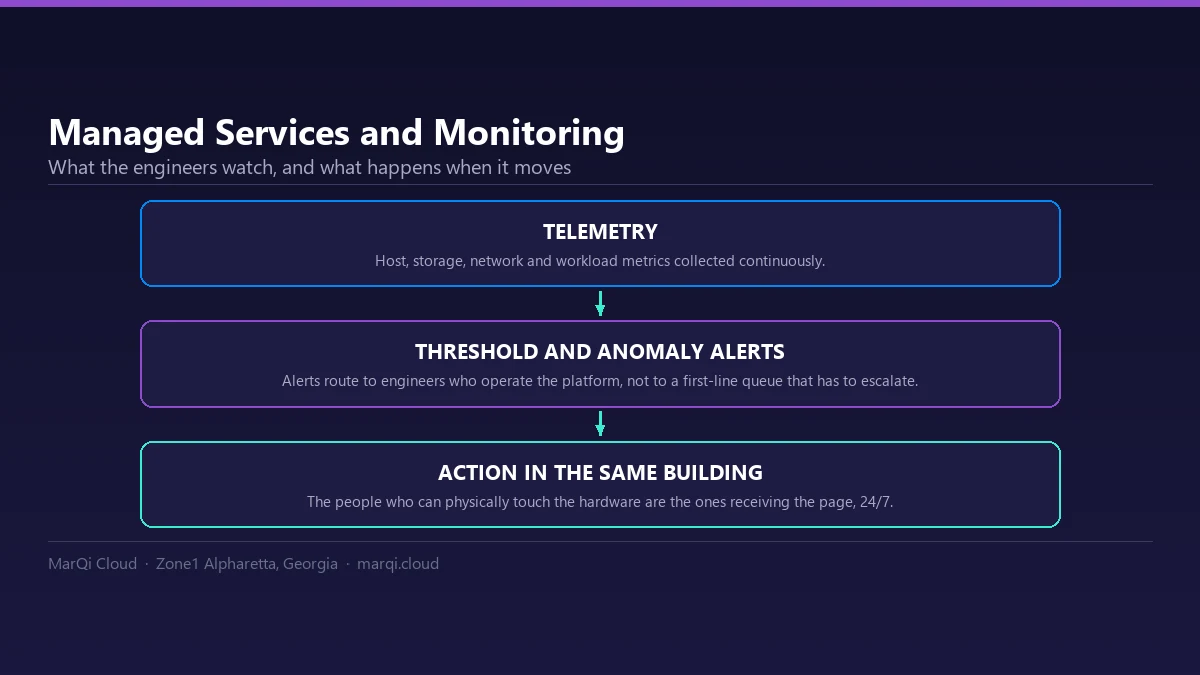
Utilize MarQi Cloud’s status monitoring services to keep track of system performance.
Common Challenges and Solutions
While migrating development and staging environments, several challenges may arise:
Challenge 1: Data Loss
Solution: Implement robust backup strategies before migration. Regularly test backup integrity to ensure data can be restored if needed.
Challenge 2: Environment Configuration Mismatches
Solution: Utilize infrastructure as code (IaC) tools like Terraform to create consistent environments across development, staging, and production.
Challenge 3: Downtime During Migration
Solution: Schedule migrations during off-peak hours and consider blue-green deployment strategies to minimize disruption.
Challenge 4: Security Vulnerabilities
Solution: Regularly review security configurations and conduct vulnerability assessments during the migration process.
Post-Migration Tips for Success
To ensure a successful transition post-migration, consider the following tips:
- Maintain documentation of the migration process for future reference.
- Encourage team feedback to improve future migration strategies.
- Continuously evaluate performance metrics to identify areas for optimization.
Frequently Asked Questions
1. What is the importance of migrating development and staging environments?
Migrating development and staging environments is crucial to ensure consistency, minimize errors, and prepare applications for production workloads.
2. How can I ensure data integrity during migration?
Implement robust backup and validation processes to ensure data integrity throughout the migration process.
3. What tools can assist in environment migration?
Tools such as Terraform, Ansible, and cloud migration services can assist in automating and managing the migration process.
4. What are common challenges during migration?
Common challenges include data loss, configuration mismatches, downtime, and security vulnerabilities.
5. How can I minimize downtime during migration?
Schedule migrations during off-peak hours and utilize blue-green deployment strategies to minimize downtime.
6. What testing procedures should be implemented after migration?
Functional, performance, and security testing should be conducted to validate the migrated environment.
7. How important is team collaboration during migration?
Team collaboration is essential to align objectives and ensure a successful migration process.
8. What steps should I take if the migration fails?
Implement your rollback strategy to revert to a stable state and investigate the issues that caused the failure.